Wiki for Sustainability (PART 3)
19.07.2022 - It's the buzzword of our time. "Sustainability" encompasses a wide range of topics that can hardly be summarised in their entirety. Steinbeis Papier nevertheless attempts to describe the most important terms and creates a wiki for real sustainability.
Sustainability
We understand the term sustainability to mean a very specific principle for dealing with natural resources: namely one according to which we utilise resources for our needs, but ensure that the systems from which we draw retain their natural ability to regenerate. This principle originally comes from forestry and began with this simple rule: You can only cut down as many trees as will grow back.
Good to know: Steinbeis papers have been made exclusively from 100 per cent recycled paper since 1976 and protect our forests - sustainably!
Natural resources
Natural resources are all natural raw materials that serve as means of production and supplies. A distinction is made between renewable resources such as solar energy, wind energy or hydropower, and non-renewable or fossil resources such as coal or oil.
Good to know: The word resource comes from the French and means "aid".
NGO
NGO is the English abbreviation for "Non-Governmental Organisation". This is why it is sometimes referred to as an NGO in German. But what does that mean? NGOs are private and non-profit organisations that represent a common interest or concern. They work independently of state funding and are not subject to the state or government. In addition, an NGO is a non-profit organisation, which means that it is primarily financed by donations and membership fees. NGOs are involved in various topics ranging from social justice to climate protection. The aim of their work is to influence developments in society and politics. In Germany, they are often organised as registered associations (e.V.) or private foundations. The best-known NGOs include Greenpeace and Amnesty International.
Good to know: The number of people worldwide who donate money to NGOs/NGOs rose from 1.2 billion to 1.4 billion between 2011 and 2014. This figure is expected to rise to 2.5 billion by 2030.
Natural papers
Uncoated papers are white or coloured papers that are not coated, i.e. they have no coating (coating or cast coating, impregnation, parchment or lamination). This means that the surfaces are not finished. This makes uncoated papers particularly absorbent - thirsty for printing ink, so to speak. They are therefore not suitable for printing fine screens or intricate motifs.
Good to know: Natural papers are very inexpensive to produce. That's why books are particularly popular when printed on them.
Sustainability triangle
The sustainability triangle describes the relationship between the three dimensions of sustainability: ecology, economy and social issues. All three dimensions are equally important and interdependent. In the long term, the model helps companies and countries to act sustainably and make better decisions for environmental protection - and thus for a better life for all.
Good to know: You can read more about this topic in our blog post "A sustainable triangular relationship".
Renewable raw materials
Renewable raw materials are organic raw materials from agriculture and forestry that are not used as food or animal feed. They include wood, vegetable oils, plant fibres, sugar and starch, for example.
These raw materials are used for both energy and material applications. In contrast to fossil raw materials, which are limited in supply, renewable raw materials renew themselves in foreseeable periods of time. They also help to combat climate change, as they release fewer greenhouse gases during energy production than fossil raw materials, for example.
Good to know: In 2019, an estimated 2.67 million hectares of plants were cultivated as renewable raw materials in Germany, the majority as so-called energy crops. Maize and rapeseed were the two most important energy crops.
Nature conservation
Nature conservation involves the preservation and promotion of plants and animals as well as their habitats and natural resources. Nature conservation also includes measures to safeguard landscapes and parts of landscapes under natural conditions. The most important goal of nature conservation is to safeguard and guarantee biodiversity.
Good to know: Nature conservation in Germany is governed by the "Federal Nature Conservation Act". This regulates, for example, who is responsible for nature conservation or what a nature reserve is.
Ecological footprint
The ecological footprint includes all the resources that a person needs in everyday life - and also how much land and energy is needed to provide the energy and raw materials consumed. Quite complex, but it is this holistic view that makes the ecological footprint an important indicator of sustainability.
Good to know: With the Steinbeis sustainability calculator, you can calculate exactly how your ecological footprint improves through the use of Steinbeis recycled papers.
Organic farming
Organic farming - also known as sustainable organic farming, biological farming or ecological farming - refers to a resource-conserving and environmentally friendly type of agriculture in which the production of food works in closed material cycles, using the natural interactions of the ecosystem to optimise and maximise yield and quality. If animals are involved, attention is paid to species-appropriate husbandry.
Good to know: Compared to conventional agriculture, organic farming has a great energy balance and thus works against climate change.
Ecosystem
Ecosystem (Greek oikos = house; systema = connected) refers to the interaction between living organisms and their habitat. Communities of animals, plants or even microorganisms are called biocenoses - and the habitat that these living organisms inhabit is called a biotope. Together, biocenosis and biotope form an ecosystem.
In all ecosystems there are material cycles, i.e. recurring processes in which organic and inorganic substances are transformed. These include, for example, respiration, photosynthesis and fermentation.
Good to know: Like the ecosystem, Steinbeis Papier always thinks in cycles. You can find out more about the cycles at the Glückstadt site here.
Life cycle assessment
A life cycle assessment is drawn up in order to better assess and understand the potential environmental impact of a product so that we can act more sustainably in the long term. The life cycle assessment covers the entire life cycle of a product, from the cultivation of raw materials and production to transport, use and disposal. This is why it is also referred to as a life cycle analysis.
The life cycle assessment can be used to compare products with each other.
Good to know: Steinbeis recycled paper has an excellent life cycle assessment from the extraction and provision of fibre raw materials from waste paper to waste paper processing and production using environmentally friendly energy.
Eco-effectiveness
Eco-effectiveness is a concept in environmental and economic science that follows the example of nature: the focus is therefore on the sustainability of products and manufacturing processes. Products are manufactured that are either returned to biological cycles or can also be kept in technical cycles on an ongoing basis, for example through recycling. Eco-effectiveness therefore actually describes a form of circular economy.
Good to know: Steinbeis also operates a circular economy in its paper production. You can find out more here.
Ecology and economy
The word ecology comes from the Greek and means "science of the household". It describes the relationships of organisms and their interactions with the inanimate environment (such as water or air). In the second half of the 20th century, the term was increasingly used to describe the current overall environmental situation. Colloquially, the term "ecological" is now predominantly used to describe an environmentally friendly attitude, an environmentally friendly product or environmentally friendly behaviour.
The term "economics" also comes from the Greek and means household management or administration. The central subject of this term is the planned management within an organisation (e.g. a household). The economy depends primarily on supply and demand. Its goals are economic growth and profit maximisation.
Good to know: Together with the social dimension, ecology and economy form the three dimensions of the sustainability triangle, as mentioned earlier in this article.
Paris Climate Agreement
On 12 December 2015, 196 countries and the entire EU met in Paris to conclude a treaty that is binding under international law. The aim of this agreement is to halt climate change and minimise its consequences. In addition, the global economy is to be reorganised in a climate-friendly way. The Paris Climate Agreement stipulates, among other things, that the global temperature rise must not exceed two degrees compared to pre-industrial levels. The states also want to limit man-made global warming to 1.5 degrees.
Good to know: The Paris Protocol took the place of the Kyoto Protocol in 2021, which was the predecessor treaty, so to speak.
Plastic
Plastic is an integral part of modern everyday life. But plastic products are not biodegradable, which is why we are endeavouring to massively reduce our consumption of disposable plastic and switch to sustainable alternatives. We expect just as much from the alternatives as we do from plastic: they should be lightweight, heat-insulating, heat-resistant, clean, flexible and, above all, affordable, but also absolutely natural and biodegradable. Phew! Fortunately, research is already in full swing and is experimenting with hemp, mushrooms, algae and corn starch to come up with suitable substitutes. And plastic can also be recycled to a certain extent; you can read more about this topic at the Steinbeis subsidiary PolyVert.
Good to know: there is a fungus that can eat petroleum-based plastic: it is called "Pestalotiopsis microspora" and can be found in the rainforest of Ecuador, for example.
Quality
The term quality is generally associated in a positive way: people think of something high quality, good and therefore often automatically of something long-lasting. At the pure product level, it seems quite simple and logical: a high-quality product lasts longer, can be used for longer and therefore makes the production and purchase of a similar product superfluous. So far so good. For many people, quality now also means that the entire value chain is clean. And also that no harmful substances are involved. Both aspects of sustainability. This means that for more and more people, a high-quality product automatically means a sustainable and fairly produced product.
Good to know: "Quality instead of quantity" is a common saying in German for a reason.
Reduce, Reuse, Recycle
Behind these terms lies nothing more than the endeavour to reduce the amount of waste we produce or the amount of materials we use, to ensure the reusability of products and to enable recycling. Waste minimisation means that we choose the right amount for things like packaging and at the same time reduce the amount of new material we use. You can find out more about this topic in our article "Recyclable" - what this means and which materials it applies to.
Good to know: Germany ranks sixth in the World Waste Index, behind South Korea, Sweden, Japan, Switzerland and the Netherlands.
Conserving resources
Conserving resources means using natural raw materials with care. This includes both renewable and non-renewable raw materials. In simple terms, it means that we use everything that nature offers us sparingly, carefully and efficiently so that it lasts as long as possible and for everyone.
Good to know: Many people believe that countries with a high standard of living in particular have a moral obligation to conserve resources. On the one hand, this is because their prosperity has historically always come at the expense of poorer countries; on the other hand, the latter should now have the opportunity to use resources to develop a better standard of living themselves.
Council for Sustainable Development
That's right, Germany has a Council for Sustainable Development (RNE)! It is an independent council made up of 15 public figures from civil society, science, business and politics. The RNE is appointed by the Federal Government every three years to advise it on sustainability policy issues. However, this is not the only reason for its existence; the RNE is always pursuing its own work programmes and projects.
Good to know: Dr Werner Schnappauf has chaired the Council since 2020, with Prof Dr Imme Scholz as deputy chair.
Second-hand
Related to the previous point "reuse", second-hand means "second-hand" - in other words, buying something that has already been used. The term is also often used in connection with worn clothing. Buying second-hand not only saves money, but also protects the environment by reusing goods such as clothing or furniture. It also avoids a lot of packaging waste.
Good to know: Steinbeis papers also carry the second-hand spirit to a certain extent, as they are made from one hundred per cent recycled paper.
Seal (organic/eco seal)
For over 20 years there has been a state organic seal: the hexagonal symbol with the word "Bio" stands for the fulfilment of the requirements of the EC Organic Regulation. The label defines minimum criteria and is trustworthy. To ensure that it remains standardised throughout the EU, the EU organic logo, which consists of a stylised leaf with small stars on a green background, has also been in use since 2010. The logo promises compliance with the European Organic Regulation. This guarantees, among other things: Freedom from genetic engineering, species-appropriate animal husbandry and the renunciation of organic-synthetic pesticides and chemical-synthetic fertilisers. The terms "organic" and "eco" have been legally protected since 1993. Anyone using them in connection with their own products must fulfil the conditions of the EC Organic Regulation.
Good to know: Terms such as "natural" or "close to nature", "untreated", "controlled for harmful substances", "from contract farming", "from integrated cultivation", "from environmentally friendly farming" or "from free-range farming" are no guarantee of genuine organic food.
Slow movement
The slow movement, or simply deceleration, is a way of life that is directed against the fast pace of a performance-orientated society. It is all about living with more attention and mindfulness - and in turn gaining more quality of life. The slow movement endeavours to achieve a healthy balance in everyday life in order to avoid stress and a hectic pace. The so-called Cittaslow, an international seal of quality that stands for the association of liveable cities in Europe, was also created in this context. The aim of these cities is to combine innovation, sustainability and the improvement of quality of life and make it a tangible experience. There are already 21 Cittaslow cities in Germany.
Good to know: Minimalism can help with deceleration and conscious consumption. You can find more information on this in our article on the topic.
Saving electricity
Electricity or electrical energy is usually generated in power stations. This involves burning fossil fuels such as oil, coal or natural gas. These processes release a lot ofCO2, which is responsible for the so-called "greenhouse effect" in the atmosphere. So if you save electricity, lessCO2 is released into the atmosphere. Another great side effect is that saving electricity also saves you money. Sourcing electricity from renewable energy sources such as solar and wind power also helps to combat the greenhouse effect.
Good to know: The electricity consumed by 100 search queries on Google could light up an old 60-watt light bulb for half an hour - or an LED for several hours.

Transparency
Transparency refers to the disclosure of actions. For example, certain procedures or processes should be made more understandable and comprehensible. Applied to a company, transparency creates closeness and trust - with donors, potential sponsors and the target group. This also benefits the internal corporate culture, as it creates a positive atmosphere that provides space and motivation for continuous development. Transparency therefore promotes high-quality work.
Good to know: Conserving resources, sustainability and transparency - all of these characterise Steinbeis Papier. The company favours open communication and makes production processes and other important data and figures public - as you can see here.
Transport options
Food is often imported from distant production countries. International trade in food used to be severely restricted - because the means of transport were simply not fast enough. This has changed a lot in recent decades. However, air transport has the highestCO2 emissions, followed by lorries, freight transport and container ships. However, as transport routes are not indicated on the products, shoppers ultimately don't know how the food got to the shop and can hardly make an informed decision in this regard.
Good to know: In Germany, only around four per cent of food is imported from overseas - but due to the very long distances involved, these transports account for almost 70 per cent of the kilometres travelled by all food.
Author
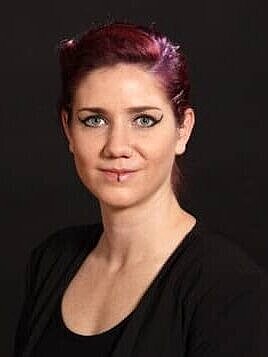
Isabella Bigler is an editor and copywriter. Here she writes about sustainable topics, the past and the future - occasionally with the support of her dedicated interns Lumen Nguyen and Liam Jennings.