Unleashing synergies: Steinbeis Holding's vision for a sustainable future

11.06.2024 - In times of disruptive change, companies like Steinbeis Holding are faced with the challenge of developing innovative answers and strategies. With a broadly diversified portfolio of business areas, the holding company harbours enormous potential to successfully meet these challenges and create forward-looking solutions. In this interview, Michael Söffge, Managing Director of Steinbeis Holding GmbH, provides insights into the strategy and future plans of the family-owned company.
Steinbeis Holding is focussing on the interaction of different business areas as the key to future success. The realignment in a shrinking paper market, investments in renewable energies and the promotion of an efficient circular economy are the central elements of the Steinbeis Group's corporate strategy. This is based on the pillars of innovation and sustainability and aims to strengthen the company's position in the market. Having been with the company for 32 years, Michael Söffge, paper engineer and Managing Director of Steinbeis Holding, is an expert in the Group's strategic interrelationships. Hardly anyone knows the Group's structures and developments as well as he does. In this interview, he presents the strategies behind the business segments Ecological Paper, Environmentally Friendly Energy and Circular Economy. Michael Söffge also outlines how the holding company promotes cooperation between its subsidiaries. The vision for the coming years is presented, in which the Steinbeis Group intends to continue its growth and take on a pioneering role in terms of sustainable business:
How would you characterise the Steinbeis family business?
Steinbeis Holding manages the entrepreneurial assets of the Steinbeis family. Its main task is to expand the investment portfolio and secure the family association. In doing so, Steinbeis Holding pursues an industrial approach. This means that we do not act like a financial investor, but take an interest in the respective company and actively support it. This industrial approach also means that we support the companies through an advisory board and, ideally, through employees from the Group. This allows us to accelerate integration and better communicate our approach and our understanding of values. When looking for companies, we focus on growth areas that are highly compatible with our core competences. We also favour medium-sized companies. Based on the mandatory condition that we only invest in sustainable business areas, we have focussed on the search field of environmental technology. This includes segments such as energy efficiency, raw material and material efficiency, circular economy and environmentally friendly energy.
The following business strategies have been formulated for the three business segments.
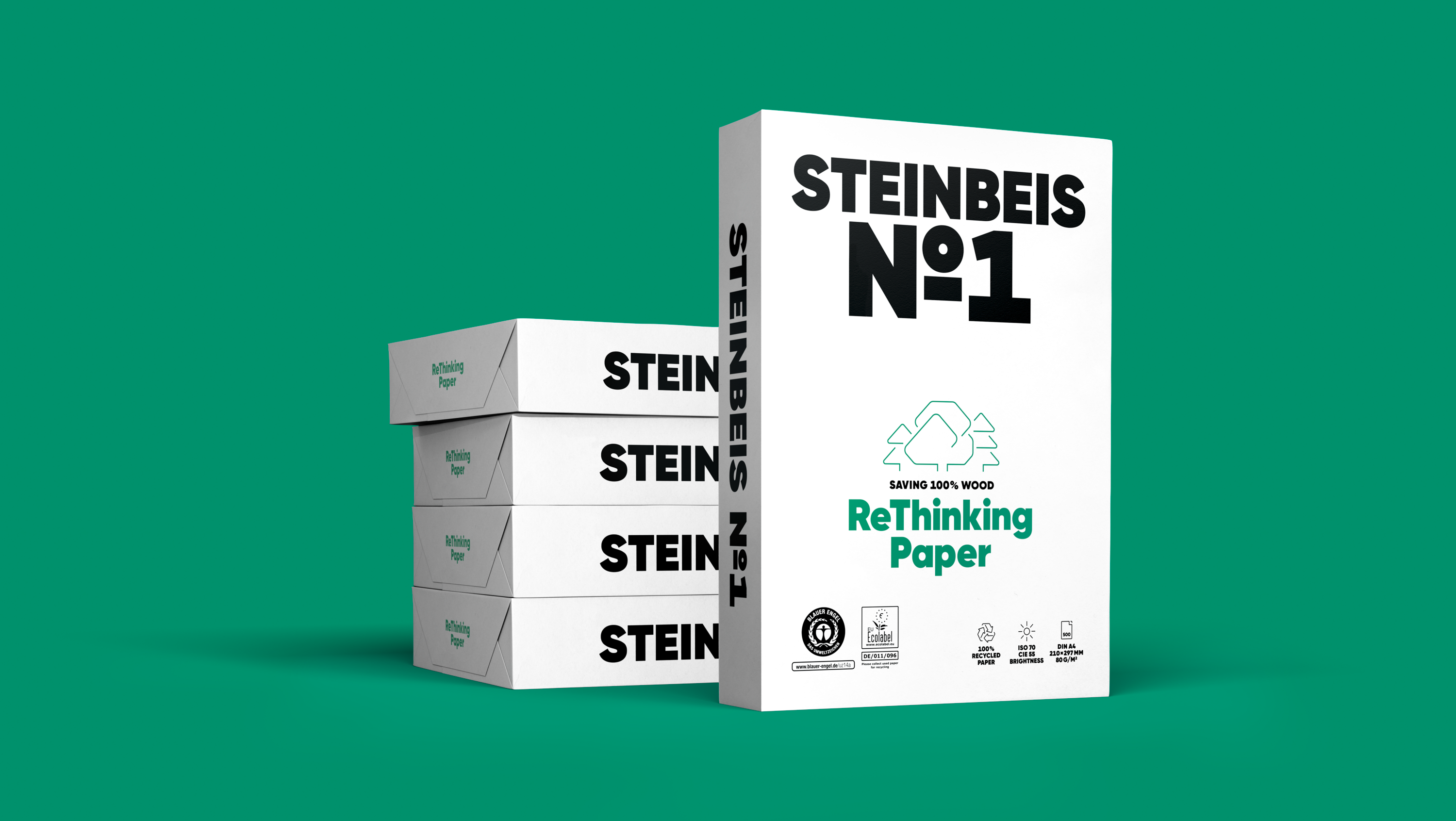
- Paper: Our "Rethinking Paper" strategy aims to grow in a declining market by developing an environmentally friendly and economically favourable graphic paper portfolio.
- Energy: We are investing in renewable energies in order to create a base load-capable energy generation park that meets our needs and supplies at least as much energy and heat as the Group requires.
- Circular economy: We are securing the supply of our companies, closing value creation cycles and transferring the expertise of our fully integrated Glückstadt site concept to other sites in order to promote an efficient circular economy.
Overall, we want our new activities to achieve at least the same level of turnover and economic viability as the paper mill.

What are the tasks of the holding company?
The strategies of the companies are developed by the managing directors of the individual companies. The holding company accompanies these processes and supports acquisitions with expertise and the financing of equity requirements. The holding company also supports, advises and monitors the operating units and managing directors. The holding company will take on additional functions in the future. Christian Sprunk, who is responsible for both the Group and the individual companies as Head of Human Resources, is the first step in this direction. Others will follow once the new Commercial Director has taken up his position at the holding company.
You can look back on a long career at Steinbeis. Where do you see the entrepreneurial milestones in this period?
A major milestone for the paper mill was the existential crisis in 1994/95. The subsequent reorientation of the company towards LWC and Copy as well as the focus on paper made from 100% recovered paper with a completely changed, professional brand image were essential for the successful development of the company. The restructuring was followed by the expansion of the Glückstadt site with major investments in PM6, PM4, the new construction of the AP plants and, crucially, the RDF power plant. In addition, the founding of the joint venture companies AP Concept ensured the supply of recovered paper and EBS Concept ensured a sufficient supply of secondary materials for utilisation in the power plant. Both are two key sources of strength for ensuring cost-efficient paper production and survival in the highly competitive market environment. The Steinbeis family's decision to buy back the shares in the paper mill and provide financial resources for the Group's development was certainly a very important milestone for the Group. This led to the reactivation of the holding company, the development of a growth strategy based on several pillars, and it was possible to raise the necessary equity for the construction of the EBS power plant and finance the investments made in the following years.
As the former Managing Director of Steinbeis Papier GmbH and the current Managing Director of Steinbeis Holding, you were able to adopt two perspectives. Where do you see the major differences or similarities between these two positions of responsibility?
As Managing Director of the paper mill, you are in charge of a manufacturing company. It is intensive work with many interest groups, new challenges every day, and the day-to-day business characterises the daily routine to a large extent. You are part of a large network and can coordinate and consult with outstanding experts at any time. There is a great deal of creative freedom and successes can be shared more frequently. In contrast, the distance to the operational business in the holding company is significantly greater. The team size is very manageable with currently seven employees. The focus is therefore different. We focus on accompanying, supporting and monitoring the operating units. This also includes the active search for potential new investments or new business areas. With project management, we are still closest to the current issues in this respect, where we prepare and support the implementation of projects. The degree of freedom is certainly even greater, the topics even more complex, but the direct influence is more limited.
How would you describe the last ten years as Managing Director of Steinbeis Holding in the face of disruptive transformations?
Today, we think and work much more in terms of scenarios, as the half-life of knowledge has been significantly reduced and external changes, such as political decisions or crises, occur much more frequently. If you just look at the intervals between crises since 2009, this becomes clear. While we had a few stable and successful years after this economic slump caused by the bursting of the property bubble, this was followed by the refugee crisis in 2016, the renewed currency crisis in Greece, the coronavirus outbreak in 2020 including its consequences in 2021, the cost explosion in 2022, the war in Ukraine and currently the war in the Middle East as well as the massive change in the climate with storms, floods, droughts, etc. Short-term and early development of scenarios, formulation and elaboration of alternative courses of action and conscious, reflective action along these considered lines of action have so far enabled companies to manoeuvre through these phases largely successfully. We will have to continue to develop these abilities to act flexibly in order to further strengthen the sustainability of the group.
Today, we think and work much more in scenarios, as the half-life of knowledge has been significantly reduced and external changes occur much more frequently.

How does Steinbeis Holding promote cooperation and the exchange of knowledge between the various subsidiaries?
As already mentioned, we endeavour to have individual employees in each of our companies who can look back on a past in one of the Steinbeis companies. In addition, we organise joint events, temporary internships, further training and professional exchanges between employees. Examples of this are standardised regulations, for example for the development of accounting, support for the companies with major investment measures by the paper mill's purchasing department or in the financing of investments, the use of the technical expertise in energy industry issues of colleagues from Steinbeis Energie or the even more closely coordinated HR work following the appointment of the new Group HR manager. Personnel development, from activities at foreman level or young professionals through to our managers, has also been taking place beyond the Glückstadt site for several years now and helps us to promote the exchange of knowledge.

The companies have the same status in the various business areas. What role does Steinbeis Papier play in this, particularly with regard to strategic priorities and long-term goals?
The paper mill was the starting point for the development, and many managers in the new companies have a past at Steinbeis Papier. In addition, some central functions are still performed by employees of the paper mill for the sister companies. This applies to bookkeeping, accounting, payroll accounting, personnel support, IT services and the areas already mentioned. In addition, the paper mill still has the highest turnover of all the individual companies and generally also the highest individual result. However, as already mentioned, the paper mill benefits greatly from its sister companies AP Concept, EBS Concept and Steinbeis Energie and the high level of commitment of the colleagues working there. This intensive cooperation in circular economy systems is crucial to the success of the site. The business model would not be viable without securing the supply of waste paper, even in difficult market phases, or securing the energy supply through EBS Concept and Steinbeis Energie, based on long-term municipal contracts, among other things.
A power plant with combined heat and power generation was built for sustainable paper production and energy efficiency at the Glückstadt site. To what extent does Steinbeis Papier contribute to the holding company's overall strategy and what role does it play in the diversification of business activities?
The decision in favour of a new power plant in 2007 and the successful commissioning in 2009 were and still are a decisive source of strength for the successful positioning of Steinbeis Papier in the competitive environment. The subsequent very skilful handling of the complex energy industry issues by Jörg Warnke and his employees has allowed the segment to grow strongly and the paper mill to safely manoeuvre past the shoals of misguided energy policy. But the successes of the past must not allow us to rest on our laurels. Last year, the paper mill developed a strategy with an ambitious volume and investment programme. The environmentally friendly energy segment is currently formulating its considerations for further development. And in the Plastics segment, we will address this issue once the major investments made in the last two years, totalling around 50 million euros, have been completed.
How is the Steinbeis Group positioned in the face of multidimensional crises?
Sustainability can be an attractive growth area if you do it right. Customers want sustainably manufactured products, but generally don't want to pay more for them than for a less ecologically produced good. We therefore need efficient processes, modern facilities, excellently trained, motivated employees and a high degree of flexibility in order to meet the changing challenges of the future. This has been the recipe for success in the difficult past few years. Added to this is the company's broader positioning, which helps to compensate for weaknesses in one area with the strengths of the other segments. We invest large sums in the further development of the companies and the diversification of the Group. This strengthens our resilience to crises.
Sustainability can be an attractive growth area if you do it right.
What lessons has the Group learnt from past crises and how will these experiences be incorporated into future planning?
With our sustainable corporate orientation, we are in a growth market, even if we are experiencing opposing trends in individual segments. Focussing on lean, cost-efficient processes and a high degree of flexibility in production and administration gives us the opportunity to react quickly to changes. As a medium-sized company, we have the advantage of short decision-making processes and, thanks to our positive earnings performance, we also have sufficient financial strength.
Could you give us an overview of the main elements of the 2024/25 strategy?
We are looking for further investment opportunities for the Group in the areas of energy and the circular economy. The strategies of the business areas are even more diversified in this respect. The paper mill wants to continue to grow with labels and office papers. The energy sector must consolidate and, if necessary, realign itself due to the strong regulatory interventions, and in the circular economy sector it is important to secure the availability of raw materials and, in the case of the plastics companies, to successfully bring the investments into operation and the volumes onto the market.
What key objectives do you have for the current year 2024 and the outlook for 2025, particularly in terms of business areas, growth, market position and, of course, sustainability in the various dimensions (social, economic and ecological)?
We have various challenges for 2024/25. The successful commissioning of the polyolefin processing plant in Austria and the hot wash in Großenlüder for PET processing are certainly key. We need to get the waste paper sorting project off the ground and stabilise production with the measures decided for the paper mill. Furthermore, it is important to me that our sustainability-focused group of companies continues to develop positively, that we can establish the paper mill's closed-loop model in the plastics sector as well and that we can at least supply our companies with 100 per cent sustainable or green energy. Whether we will succeed in doing this this year is certainly questionable, but everyone is working hard on it. If we succeed, we will have created real sustainable value - regardless of market position or growth figures.
Are there specific sectors or regions that the holding company would like to focus on more?
The holding company is focussed on growth segments in environmental technology in German-speaking countries. I have already mentioned that we are currently prioritising the energy and plastics sectors in particular. However, this does not mean that we are not also interested in comparable industries or companies that match our core competences.
Where do you see the Steinbeis Group and Steinbeis Papier as part of it in the next five to ten years?
The Steinbeis Group should continue to grow. On the one hand by investing in its own facilities, as the paper mill has done successfully for decades, and on the other hand through acquisitions. The Group should be a positive example of sustainable management and, like Steinbeis Papier, be known as a pioneer for economically and ecologically manufactured products.
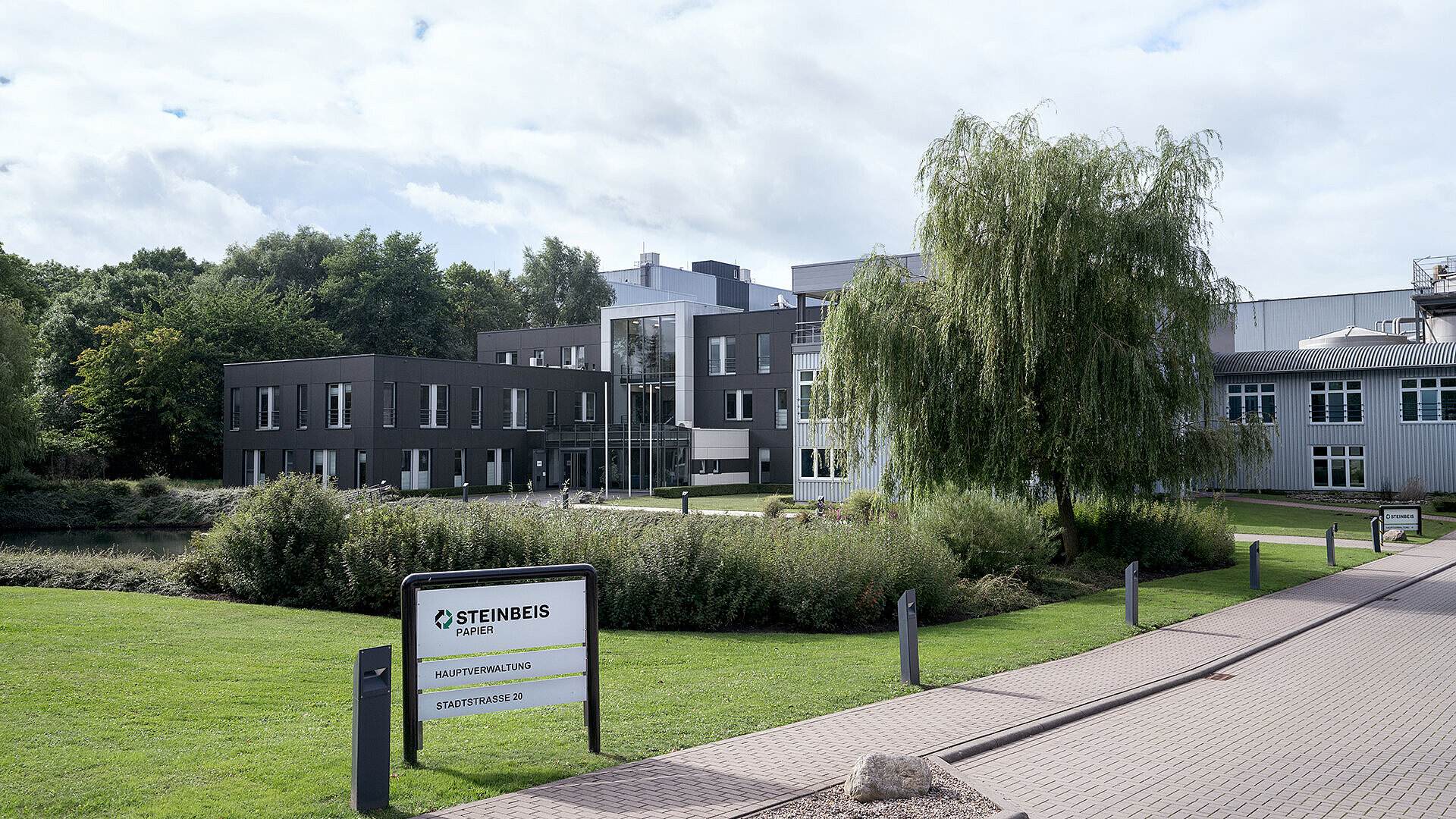
Cover picture: Florian Thoss for Steinbeis Papier
Author

As a senior editor, Benjamin Seibring specialises in developing content on sustainability, mobility, technology and lifestyle. An editorial traineeship at a German media group and his many years of experience in corporate publishing form the basis. With a high affinity for trend topics and innovative AI tools, he implements cross-media storytelling.