Do we read differently when reading on paper?
Paper is no longer necessary for reading. Texts can also be read on a screen. Yet despite laptops, tablets, smartphones and e-book readers, there is no sign of paper disappearing as a medium for reading. On the one hand, this is down to people’s personal preferences. On the other hand, reading on paper offers added value that goes beyond individual preferences.

The invention of the printing press marked the beginning of the unprecedented success story of reading and the flow of information in Europe. In terms of media history, the printing press catapulted European civilisations from the Middle Ages into the modern era.
From the very beginning, the success story of printing has been closely linked to its medium – paper. For over 500 years, right up until the last quarter of the 20th century, paper and reading were effectively one and the same. With the dawn of the information age, however, a gradual shift towards digital media began: email instead of letters, e-books instead of printed books, and online magazines instead of newspapers and magazines.
Digital prophets have already predicted the end of paper. However, it is not a case of ‘either/or’, but rather ‘both/and’. People still read on paper. According to an Allensbach survey, in 2025 over 34 million Germans aged 14 and over still preferred to read longer texts on paper – only around 6.5 million preferred to read longer texts digitally on a screen. Paper still plays a major role in reading.
Are we better at taking notes on longer texts when we use paper?
When we read longer and more complex texts, we enhance our cognitive abilities – for example, our ability to concentrate and our memory, but of course also the development of our vocabulary. Are these skills at risk from digital formats? The research initiative ‘Evolution of Reading in the Age of Digitisation’ (E-READ) addressed this question between 2014 and 2019. Over 200 researchers from across Europe joined forces for the E-READ initiative. In their ‘Stavanger Declaration on the Future of Reading’, they put forward the core thesis that comprehension of long texts is better when reading on paper than when reading on a screen.
Several years have passed since then. More recent research has yielded more nuanced findings. There is a prevailing assumption that many people find reading on paper more pleasant and infer from this pleasant reading experience that it constitutes ‘better’ reading. For a study from 2023, conducted (of all places!) at Johannes Gutenberg University Mainz, researchers investigated brain activity whilst reading on different media. Here, too, the participants reported that reading on paper was the most pleasant experience. However, no significant differences in brain activity were found – except that the information was actually processed more easily when reading on a tablet.
From a scientific point of view, therefore, reading on digital devices cannot, in principle, be considered ‘worse’.
How digital media are changing the way we read
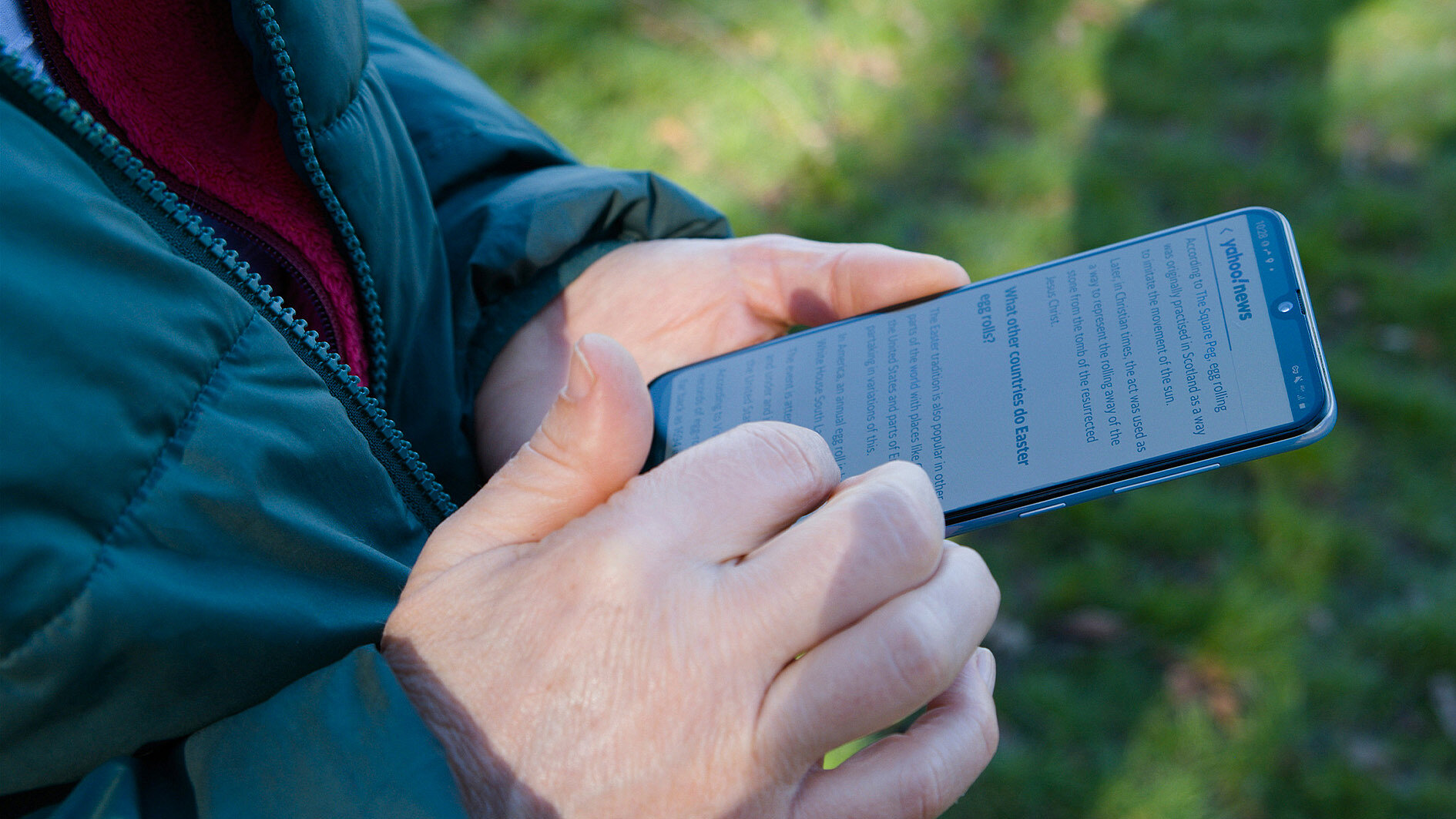
So are the concerns of paper advocates merely cultural pessimism? It’s not quite that simple. Digital reading works differently and influences our reading behaviour. In the digital reading world, we are constantly pulled out of our primary reading flow by other notifications on the same device and diverted onto side paths before we find our way back to the main flow. Reading on a screen thus conditions us to distraction. We fail to engage in deep reading and often remain on the surface.
The result: we read diagonally, skim passages or simply search for keywords. An additional problem is that, with long texts on screens, we cannot tell how many paragraphs a text has or where it ends. When reading on paper, we have a broad overview and notice such textual cues. We adapt to the quantitative demands, which can already be gauged by the thickness of a book or the length of a newspaper article. This mental preparation aids comprehension. When scrolling through a digital text, this support is lacking.
This can be particularly noticeable with more complex non-fiction texts. Accordingly, reading research has found that longer non-fiction texts read digitally are understood and retained less well than their printed counterparts. This poses a potential problem for schools, higher education and academia itself. This is because the academic journals that publish relevant non-fiction texts have, for the most part, made a complete transition to digital formats.
What, on the other hand, does not pose a problem – and there is broad consensus on this within the research community – is the digital reading of fiction. This is partly because narrative literature and poetry are primarily read digitally on e-book readers. When reading fiction, this medium does not compromise text comprehension, particularly as the level of distraction on e-book readers is comparable to that of a printed book. No push notifications or emails pop up here.
A small personal experiment in reading research
Even if you don’t currently have access to a device for measuring brain activity, such as those used by the Mainz researchers, you can still conduct your own reading study: gather a few participants and divide them into a digital group and a paper group. Everyone is given the same text to read – for example, from a popular science magazine – and is allowed a quarter of an hour to do so. This involves a short text; a non-fiction text of around 2,000 words can usually be read comfortably in a quarter of an hour, whether on digital media or on paper.
One group is given the text as a printout, whilst the other reads it on digital devices. Once the time is up, the participants are instructed to put the paper away or switch off their devices. They are then questioned in one-to-one interviews about the text’s key messages – as previously identified by the experimenters – as well as statistical data and similar details. Points are awarded for correct answers – who’s in the lead?
Of course, this study design does not meet scientific standards. Nevertheless, such an experiment is exciting and revealing. This much can be revealed: in our experiment, we were able to confirm the findings of serious research in that the balance did not swing significantly in either direction – as was to be expected with a short, less complex text.

Good reading is not a question of the medium
Reading has become more diverse. But whether in print or digital form, reading is and remains the central cultural skill of humankind. To read effectively, the right mindset is paramount. The digital reading habit of selective skimming encourages superficial reading in other contexts as well. Anyone who has become too accustomed to skimming texts quickly must, when tackling more demanding reading material, effectively flick a switch in their mind to enter a more intensive reading mode. Only in this way is it possible to read with the same level of comprehension on a screen as on paper.
Reading long texts with comprehension can be more taxing digitally than on paper. Processing short pieces of information, on the other hand, works exceptionally well in the digital medium. The reading context and intention should therefore determine the choice of medium. The results of the last federal election, for example, can be followed very easily in digital articles. When it comes to authors such as Thomas Mann or Jürgen Habermas, however, picking up a book can enhance both comprehension and the pleasure of reading.
Of course, the feel of books, the rustling of newspapers and the smell of paper also contribute to this pleasure. Libraries and second-hand bookshops have a unique, characteristic smell; it is as though one could already smell the accumulated knowledge and the exciting stories. Reading on paper appeals to different sensory channels. This may not result in any cognitive advantage, but it makes reading a sensory experience.
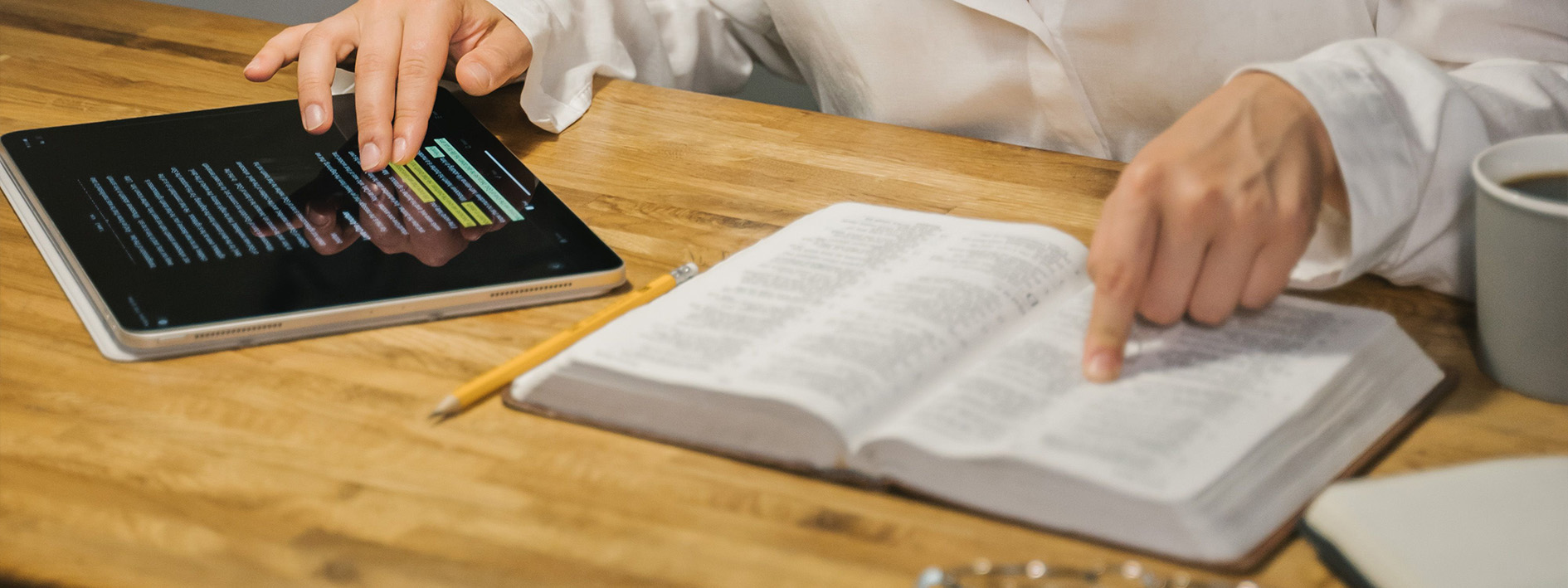
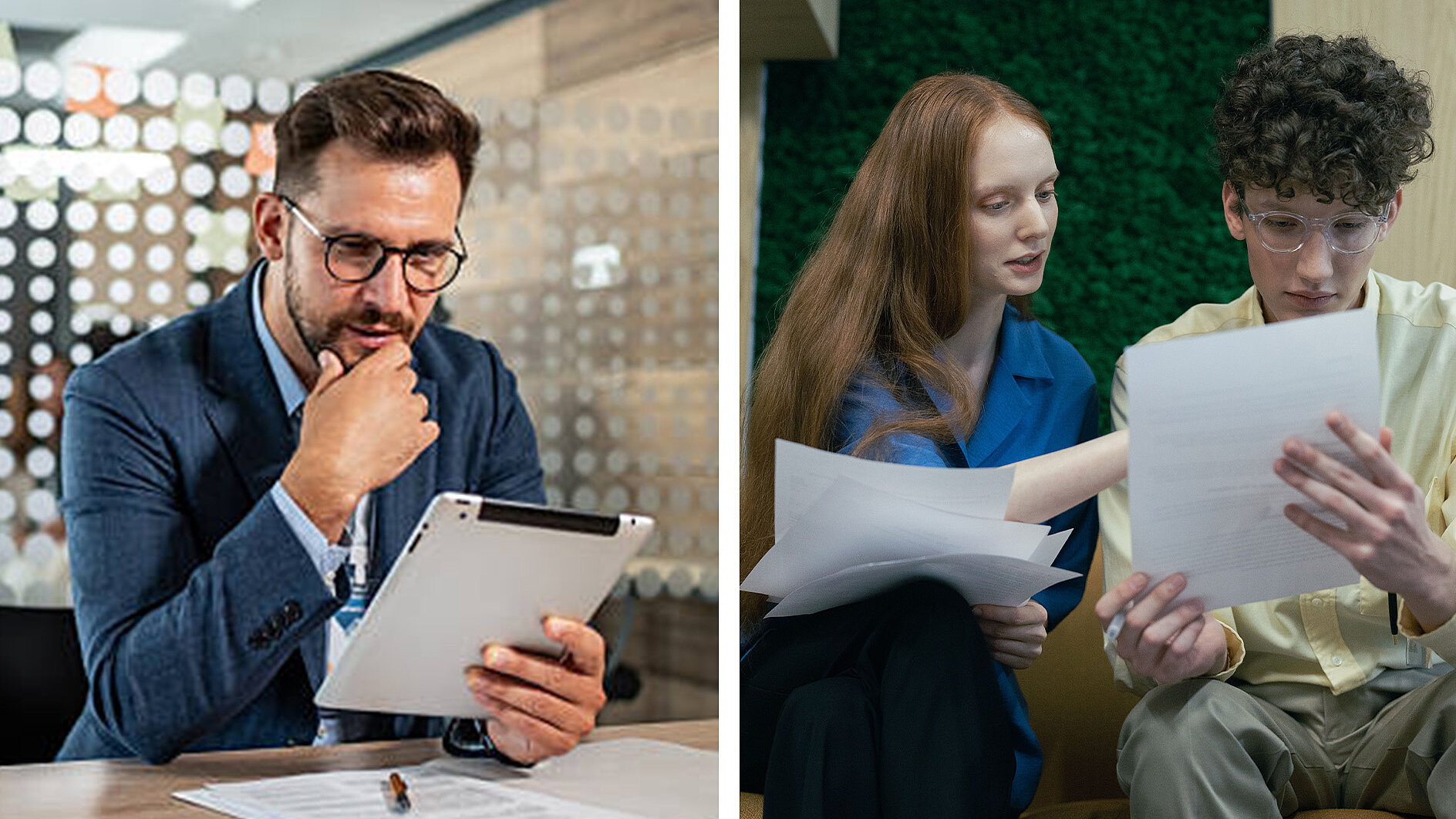
Cover image: Reading – in print and digitally (Image: Tima Miroshnichenko-5199817/Pexel)
Author
A German studies scholar with a Ph.D., he spent a long time conducting academic research on what others had written — until he changed careers in 2009. Since then, he has been writing as a freelance author about anything that interests him (or others) and is relevant. Environmental sustainability is at the top of that list. That’s why he focuses primarily on how we can live and conduct business sustainably.