Paper vs. digital, part 3: Neuroscience & marketing

21.02.2023 - Advertising delivers information and conveys emotions. How these messages are received and perceived is determined by the human brain - sometimes consciously, sometimes unconsciously. Neuroscience provides insights into how advertising works. Comparing advertising on paper and on the screen also reveals the advantages and disadvantages of each communication channel.
"Man can do what he wants, but he cannot want what he wants" - philosopher Arthur Schopenhauer already recognised that the influence on our emotions is limited. How strongly do they influence our behaviour? Can we make ourselves aware of what controls us unconsciously? However, the neuro-research on which this is based not only benefits scientific discourse, it also becomes a marketing tool and makes the reception of advertising measurable. This also raises the question of how physical advertising on paper and digital advertising are perceived differently.
Brain research and marketing
In recent years, hardly any other science has gained as much importance as neuroscience. Findings from brain research are increasingly being utilised in other areas such as business and social science. Models of this kind are often based on neuroscientific principles. Neuroscience is also increasingly being used in advertising and marketing to better understand consumers. Three phases can be identified through which an advertising stimulus can pass. First, the message must be recognised, then processed and stored and finally evaluated.
A stimulus, such as an advertising poster or a commercial, must also prevail over other messages and stimuli in the same space before it is recognised. Humans tend to ignore information, as processes in the brain consume energy and should therefore be used sparingly. From the perspective of neuroscience, the processes of perception and attention merge at the neuronal level. These areas involve many complementary processes in different brain structures. In general, a distinction can be made between conscious and unconscious perception, which are localised in different regions of the brain.
Measurable perception
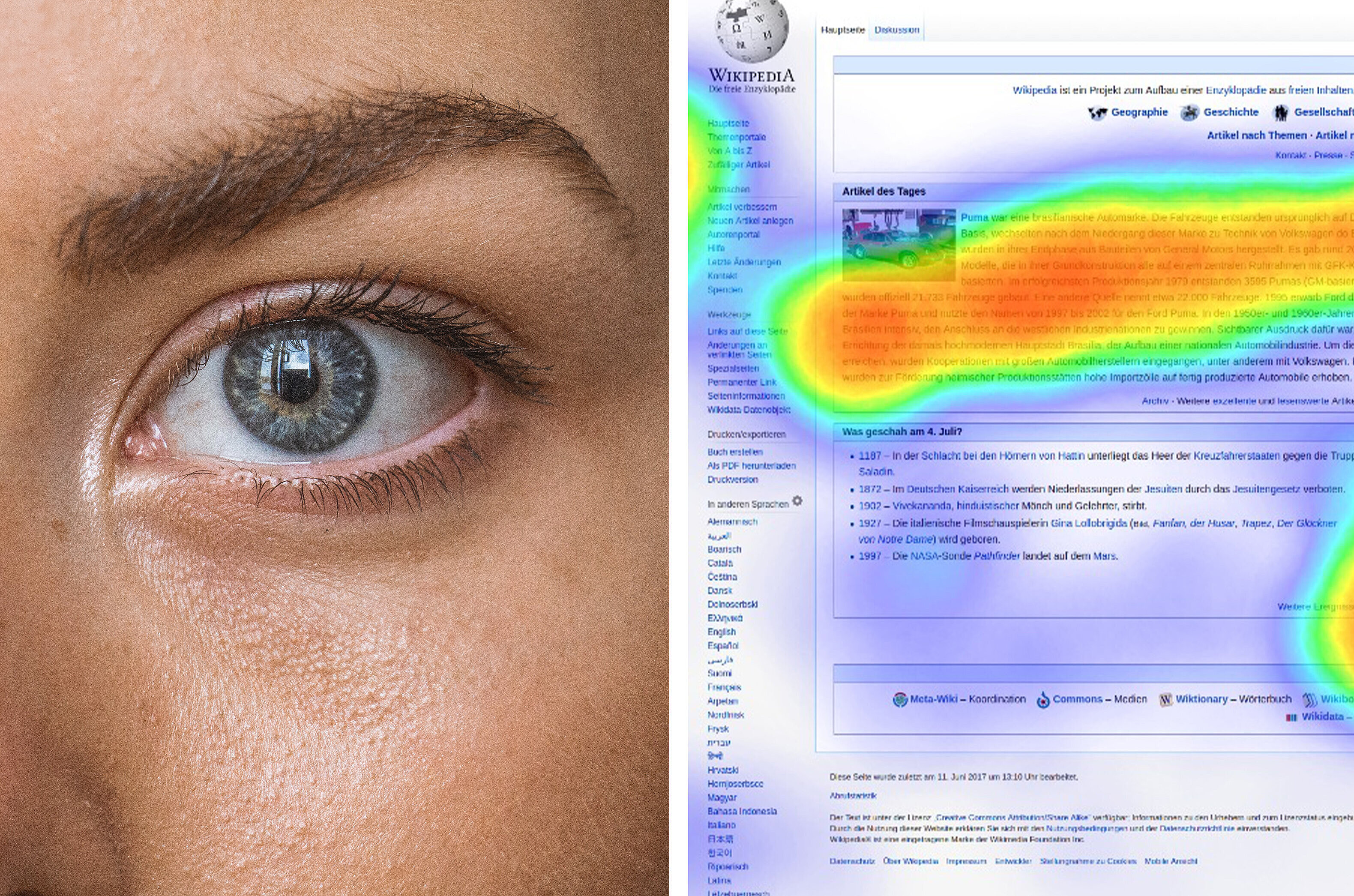
Various measurement options are available to analyse the effect of advertising media on the human brain:
- Eye-tracking: this method uses special cameras to track the eye movements of test persons while they are viewing advertising material and thus find out which areas of the advertising material are particularly attention-grabbing.
- Functional magnetic resonance imaging (fMRI): This method uses strong magnetic fields and radio waves to create images of the brain and thus measure the brain activity of test persons while viewing advertising material.
- Electroencephalography (EEG): This method uses electrodes placed on the scalp to measure the electrical activity of test subjects' brains while viewing advertising material.

Conditions for the perception of printed messages
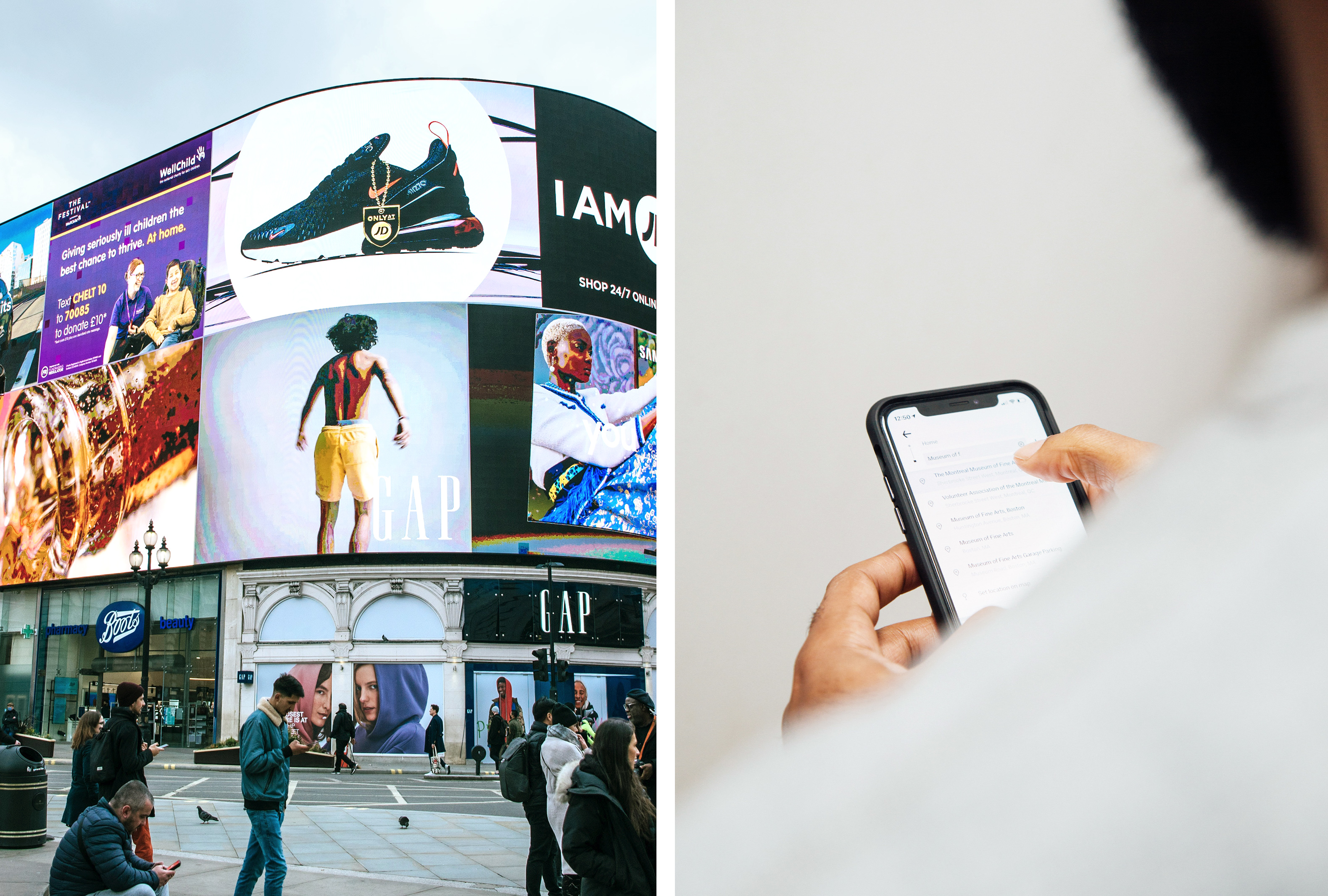
The perception of advertising on paper depends on many factors, such as the layout, the colour scheme, the text and the content of the advertisement. The context in which advertising is presented also plays a role, such as in which magazine or where the advert is placed. Some studies have shown that advertising on paper is often perceived as more trustworthy and credible than digital advertising, as the physical presence has a greater impact. On the other hand, if the advertising message on paper gets lost among many other messages in a magazine, this can greatly reduce attention and the effect of separate perception. It is important to note that this reception of advertising - according to neuroscientific studies - varies from person to person. The decisive factors here are individual experiences, attitudes and values, which also influence cognitive approaches.
The effect of advertising on paper
Print advertising in particular increases activity in certain areas of the brain such as the visual cortex and the hippocampus. This can help the brain to process and remember information better. Studies have shown that advertising - presented in a physical form - leads to greater attention and emotionality being generated during reception. Ergo: The information sticks better in the memory. However, it is important to note that the perception of print advertising depends on various factors, such as the target group, the content of the advert, the environment and the type of printed message.
Digital advertising - faster, but not necessarily better
Studies on the reactions of test subjects to digital advertising messages have shown that activity in certain areas of the brain, such as the prefrontal cortex and the visual cortex, increases during reception. This helps the brain to process the information more quickly. However, the faster speed of digital advertising also has an impact on memorability. The ability to click away or skip the advertising message means that there is less time to absorb, process and ultimately remember messages. In addition, an excessive amount of digital advertising leads to recipients being overwhelmed and no longer noticing the adverts. Filter bubbles also restrict the view of other topics beyond the horizon of interest. Various types of digital advertising, such as pop-up adverts or autoplay videos, are perceived as annoying, which impairs the user experience. The adverts are then viewed negatively.
The best of both worlds
A combination of both worlds has now become established in terms of reception. With the help of neuroscience, marketing experts can better identify where print and digital advertising have their respective advantages and disadvantages. This also makes it possible to determine which type of advertising is best suited to the objectives and target group and which measures achieve the best possible effect. There are now also approaches in which print and digital advertising almost merge in order to optimally utilise the advantages of both types: In cross-media marketing, print and digital advertising measures are linked together, for example by placing QR codes in print advertising that link to digital content. Or vice versa, where an online campaign is supported by print adverts. Multichannel marketing uses both digital and analogue channels to address the target group in different ways and at different times. For example, an online campaign can be supported with direct marketing mailings or print adverts.
Depending on the situation, information, images and intrinsic emotions can be conveyed in different ways. And the cognitive effect can be optimally utilised with the help of neuroscience. Ultimately, this shows that both forms of communication will continue to exist alongside and with each other in the future.
Cover picture: DeepMind Chris Schramm/Unsplash
Author

As a senior editor, Benjamin Seibring specialises in developing content on sustainability, mobility, technology and lifestyle. An editorial traineeship at a German media group and his many years of experience in corporate publishing form the basis. With a high affinity for trend topics and innovative AI tools, he implements cross-media storytelling.