Our daily rubbish ..
14.05.2019 - Resources are becoming scarcer, sustainability is playing an increasingly important role. Even in the office. In our Green Office series, we show you how you can make your everyday office life more sustainable with just a few tricks. Small changes - such as waste separation - can have a big impact. This is not only good for the eco-balance, but can even reduce your operating costs, depending on the topic.
If the rubbish bin under our desk could talk ..
This is where everything usually ends up: envelopes, banana peels, packaging, printer paper, crown caps, tissues, etc. Waste is often not separated in everyday office life. Even the cleaning staff don't do it for us. Nor should they. For health and safety reasons, cleaning staff are not allowed to reach into the rubbish bin. And even if they did, do we really expect someone to rummage in the bin for us and separate our rubbish? We can do better than that.
Share and rule
Waste is usually not separated in the office because nobody has a concept for it. It's easy to sort printer paper properly. It belongs in the waste paper. It's more difficult with the milk cartons from the kitchenette. Do they belong in the residual waste? Or in the yellow bin? But aren't they made of paper? So should they go in the blue bin?
Legislation doesn't make it any easier: there is currently no standardised nationwide regulation for waste separation. Packaging is sometimes collected in yellow bags and bins, sometimes in recycling containers and occasionally in orange bins.
As a rule of thumb, there are five types of household waste. Either (coloured) bins are available in the office building or you can dispose of the waste in publicly accessible depot containers. The rest is hazardous waste and should be taken to the recycling centre.
Colourful waste memory: Which colour belongs to which waste?
Yellow for all used metal and plastic packaging. Also composite materials such as drinks cartons, which consist of several materials. The industry refers to this as lightweight packaging. Food or other residual contents should be removed beforehand. What exactly belongs in the yellow bag, the yellow bin or the recycling container varies from region to region. In some places, for example, polystyrene may only be disposed of in normal commercial quantities in the normal yellow bag.
Brown for organic waste. This means: banana peels, squeezed lemons for tea and coffee grounds including filters - and all other food waste produced in the (tea) kitchen.
Blue for paper, cardboard and carton. Coated paper or packaging such as milk cartons do not belong here. But newspapers, brochures and office supplies do. In theory, you can also dispose of books here. EU figures presented on the occasion of World Recycling Day on 18 March 2019 show that the recycling rate for paper and folding carton packaging waste in the 28 EU countries is currently 85.8%. This saves resources! Think of paper as a raw material that requires conscious handling. And: every scrap counts!
Glass for waste glass - the most important raw material for new glass packaging. Glass can be recycled as often as you like. Around 300,000 glass containers are available throughout Germany for this purpose. Used glass can cause logistical problems in the office. It therefore makes sense to ensure that not too much of it accumulates - by using water crates with a deposit system or a water heater in the kitchen tap. A basket is then sufficient for collecting the rest. Who takes it away can either be agreed with the cleaning staff or organised by the staff.
Grey/black for the rest. If you separate everything correctly, there won't be much left over for the grey or black bin. This is where (almost) everything that is not allowed in the other bins ends up, such as tissues.
You can easily find out which regulations apply to your waste from your local waste disposal company.
Create the right conditions
No matter how well informed you and your work colleagues are - if there is only one bin for everything in the kitchen, nothing can change when it comes to waste separation. Waste bins are now available in a variety of designs and materials and with a smart layout that can fit anywhere. Try to find out where which type of waste is produced, provide appropriate disposal options and label them clearly. The more convenient waste separation is, the easier it is to accept.
Yellow, brown, grey and glass should always be found in the kitchen. Experience has shown that paper waste makes sense next to the printer. Perhaps a separate bin for paper in every office, if not under every desk. And without plastic bags, please.
Useful tips on sustainability for office waste
- Say goodbye to plastic: Don't use window envelopes as they are much more difficult to recycle.
- Avoid disposable products: Straws, paper cups, paper towels, paper plates, etc.
- Use rechargeable batteries.
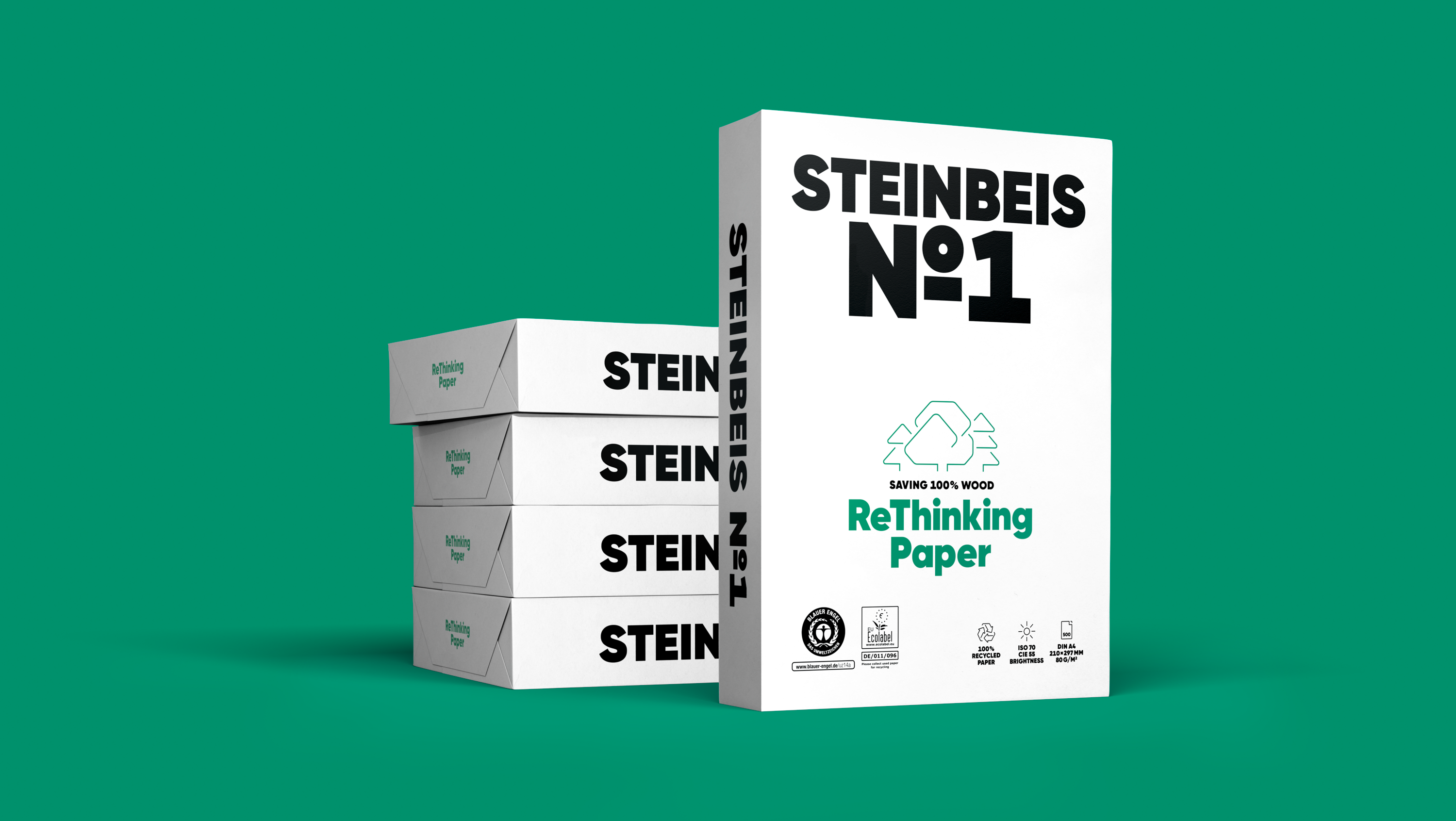
- Be careful when choosing paper: The production of recycled paper - such as Steinbeis copy paper - saves around 70% water and 60% energy compared to virgin fibre paper. What's more, one tonne of recycled paper saves the amount ofCO2 that an average car emits over a distance of around 1,000 km compared to virgin fibre paper made from cellulose.
Avoid waste
The most sustainable way to deal with waste in everyday office life is certainly not to produce any in the first place. If that's not possible, you can try to extend the life of items by recycling and reusing them.
If the rubbish bin under our desk could talk ..
Cover picture: Rawpixel.com/shutterstock enterprise
Author

Valerie Bachert is a journalist, chief of staff and sustainability officer. She is interested in the areas of organic farming, conscious consumption, species extinction, social injustice and sustainable nutrition.