Our approach to water

21.02.2021 - Water is an essential resource and a human right. We often forget that we should treat it with care, just like any other resource, for two reasons: 1. our water supply in the country is excellent. We do not know what it is like not to have clean water at our constant disposal. 2. We live on the "blue planet", 71 per cent of whose surface is covered by water. However, around 97 per cent of this is salt water, three per cent fresh water - and only one per cent of this is directly available drinking water. This article is about how we consume water and how we can use this resource more carefully.
Alongside Denmark, Germany has the lowest water consumption of all industrialised countries. Per capita consumption in this country is 125 litres per day. This is not necessarily due to our thrifty nature, although this certainly plays a role: After all, water also costs more here - and just as much in Denmark, by the way - than in other industrialised countries. But above all, we have created an infrastructure for water in which little can be lost. Thanks to dense pipework, this cycle is extremely efficient. Our entire sewer system stretches over more than half a million kilometres. An efficient water cycle also means that we "recycle" our water.
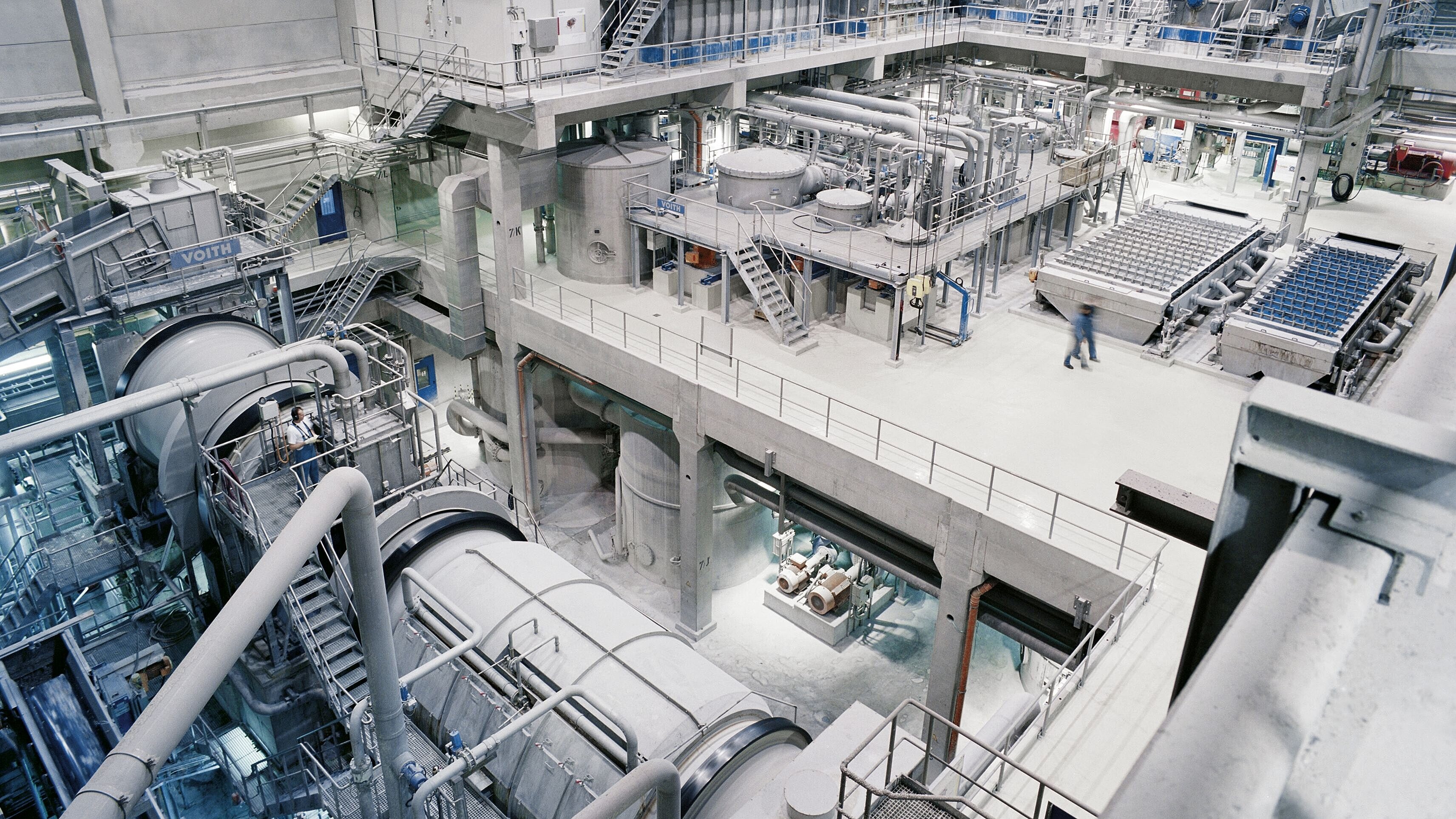
In a European comparison, we are the front runners in this respect, with a recycling rate of 96 per cent for private households and public facilities. According to the Water Resources Act (WHG), wastewater must never be discharged untreated into rivers and lakes, regardless of where it comes from - this applies to large-scale industry as well as businesses and households. Of course, there is nothing to be done with dirty water anyway, so there is only one thing to do: treat it in one of the many sewage treatment plants. There, all the pollutants contained must be reduced as far as the state of the art allows. And, as we all know, technology is at a very high level these days. This is why our 10,000 or so wastewater treatment plants can treat a good 10.07 billion cubic metres of wastewater every year - 0.1 percent mechanically, 1.9 percent biologically without targeted nutrient removal and the remaining 98 percent biologically with targeted nutrient removal. Incidentally, the Steinbeis paper mill also has its own fully biological wastewater treatment plant, find out more here.

Need for clarification
Does this mean that we perhaps don't need to be so careful with our water, as it is always cleaned and channelled back into the cycle anyway? Is it perhaps considerate enough not to make life unnecessarily difficult for the sewage treatment plants by disposing of things like medicines and wall paint properly instead of tipping them down the toilet? As is so often the case, it can't be that simple. So - we absolutely must dispose of potentially harmful substances such as those just mentioned correctly, that much is certain. One litre of mineral oil, for example, can make a million litres of water undrinkable, and even a sewage treatment plant has to make quite an effort to sort it out. And if we leave the tap running for the entire two minutes it takes to brush our teeth, it is a tiny act of ignorance that we rightly have to compensate for with money.
At the same time, we should realise that we as private individuals are just a drop in the ocean when it comes to water consumption. We need very little water. Most of it is needed by the economy, mainly agriculture. And this is where prudent behaviour is particularly important. Our soils, or more precisely soil layers, are also very competent water purifiers, but of course they can do much less with pollutants than the sewage treatment plants built specifically for this purpose. It is therefore very important not to add anything to the soil that it cannot deal with on its own. A concrete example of this is the restrained use of fertiliser on fields. The majority of our drinking water comes from groundwater.
Don't worry - this is also purified. That's the difference between the spring on the hiking trail with the little sign that says "No drinking water" and the fizzy water bottle at home that contains "natural spring water". However, depending on the severity and type of contamination, and especially if chemicals, pesticides and the like are involved, it is incredibly time-consuming and expensive to purify the water back to a safe level. It shouldn't be necessary at all, because the soil is actually the best purification system. Let's be clear: all the water we have access to is of excellent quality. However, this is associated with great effort and high costs and therefore does not mean that we can be carefree about this issue.
Saving water in everyday life
We now also know that our water cycle is safe and reliable and that we use comparatively little of it - contrary to what you might think, per capita consumption is actually falling because the infrastructure is constantly being optimised. So water consumption doesn't exactly depend on whether we treat ourselves to a bubble bath every week. Or does it? How much water do we actually need for what? Let's take a look at some statistics:

This means that bubble baths actually account for the largest proportion of private water consumption. If you want to reduce your own direct water consumption, you can consider the following things: Wash your hands with cold water, take a shower instead of a bath, install an economical toilet flush, run the dishwasher and washing machine as full as possible, fit flow restrictors to taps. Most people can think of many other options after just a brief discussion of the topic.
We can keep a good overview of direct water consumption ourselves, but what about indirect consumption? What about the water that is used to produce our food, clothing and everyday objects? If we include this indirect water, we add around 3900 litres to the 125 litres per person per day. We are talking about so-called virtual water and the water footprint, which is very similar in its calculation to the CO₂ footprint.
Virtual water
The theory of virtual water can be summarised quickly, even if it is based on complex relationships: it is all the water that a particular product requires for its manufacture or creation, including transport. It is impossible to calculate virtual water precisely, but estimates are becoming increasingly accurate as studies continue. It does not matter where the water comes from, whether from a cumulus cloud or a sewage treatment plant. To give you an idea of the quantities of virtual water, here are a few numerical examples: An orange needs 50 litres. A pair of jeans 6,000 litres. One kilogramme of beef from domestic farming requires 16,000 litres.
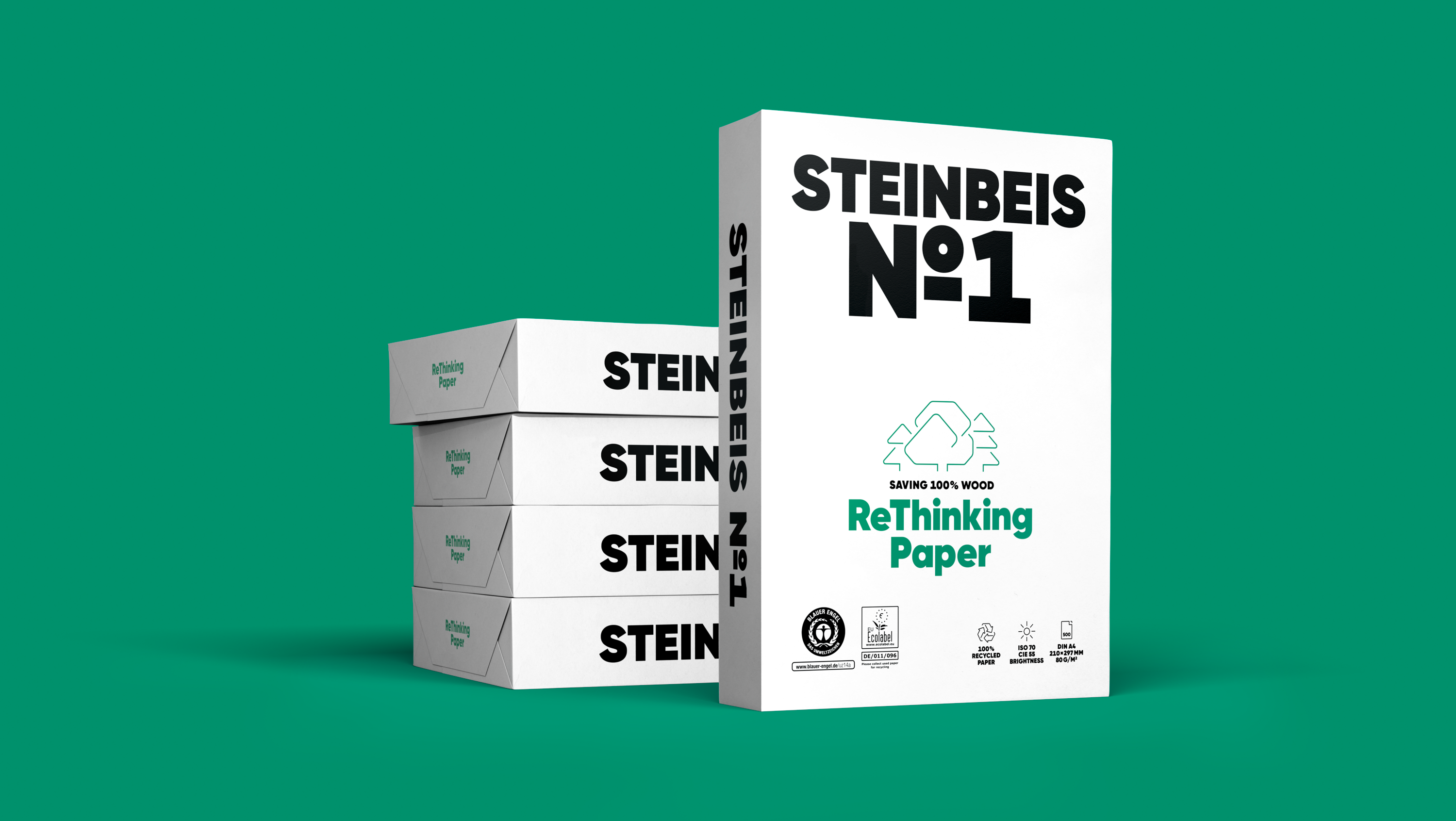
Hardly anyone would have estimated these figures without prior knowledge, but their order seems logical. To produce an orange, only the tree on which it hangs needs to be watered. It has to be harvested and transported to the point of sale. The water footprint of an orange from Spain is therefore smaller than that of an orange from South Africa. In the case of jeans, we count the cotton - a very thirsty plant - its processing into denim, dyeing, further processing of the fabric into trousers and transport. The production of meat generally consumes a lot of water because an animal has to be fed, watered and housed for its entire short life. Slaughter, further processing, packaging and transport are also involved. Of course, we are also interested in how much virtual water is hidden in a sheet of paper. The answer is: it all depends. A sheet of virgin fibre paper needs a good 250 millilitres, so a pack of 500 sheets needs around 130 litres. A sheet of Steinbeis paper needs 4 ml. 500 sheets of Steinbeis need around 22 litres. So which paper you use makes a big difference in terms of virtual water - 83 per cent, to be precise.
Saving water in everyday life 2
With this in mind, we have therefore compiled a second list of tips for saving water that takes virtual water into account. A positive side effect is that most of the tips also reduce the carbon footprint.
- Buy regional, seasonal, organic and fair.
- Drink tap water.
- A predominantly plant-based diet, no throwing away food.
- Avoid conventional plastic and conventional paper made from fresh fibre.
- Wear clothes until they break or pass them on.
- Avoid using the car as often as possible.
- Reduce overall consumption.
You should also keep the regional context in mind when following these tips. Simply ask yourself: Does the product come from a region with little or plenty of water? What are the social conditions there? In this way, you will quickly arrive at a trend that will help you make your decisions. Finally, we would like to remind you of a nice fact about water: We always talk about "consuming" water. But strictly speaking, we can't do that at all, because the water is not gone once we have used it. It always remains in the earth's water cycle, whether liquid, frozen, gaseous or as a life stage companion of the orange mentioned earlier. Our only task is to protect water by keeping it clean and distributing it more fairly around the world.
Cover picture: Tom Rogers/Unsplash
Author

Isabella Bigler is an editor and copywriter. Here she writes about sustainable topics, the past and the future - occasionally with the support of her dedicated interns Lumen Nguyen and Liam Jennings.