With a new dissolving line for the recycling of the future

How can paper that is not actually recyclable be recycled? A team of experts at Steinbeis Papier pondered this question until the idea became a technical innovation. The result is a process that brings even speciality papers such as labels or security prints back into the material cycle. The solution could permanently change the recycling industry - ecologically, economically and strategically.
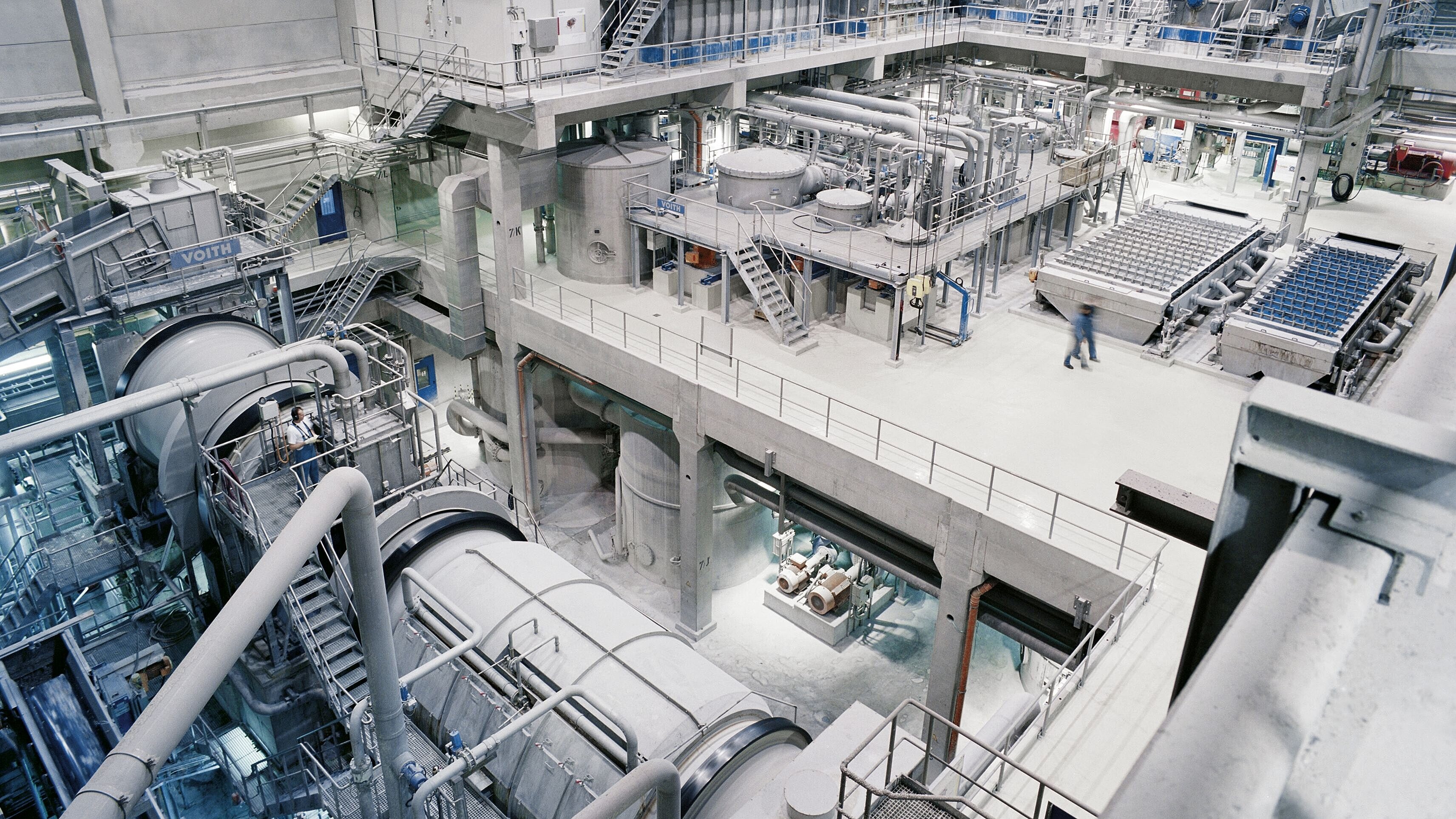
Steinbeis Papier is taking recycling to a new level: an innovative pulping line makes waste paper that was previously difficult to recycle, such as wet-strength labels or coated speciality papers, usable again. The new technology ensures that valuable raw materials are utilised more efficiently and kept in the material cycle in the long term. With this development, Steinbeis Papier is tapping into new recycling potential. Materials such as banknotes, to-go cups or wet-strength labels, which were previously considered almost impossible to recycle, can now be reused. This technological advancement not only optimises the use of raw materials, but also strengthens the sustainable circular economy. One example of this is Steinbeis Label Wet label paper, which was designed for recycling from the outset and can now circulate completely in a closed recycling process.

From the idea to realisation
The basic idea for the new pulping line was born back in 2018/2019, when Steinbeis Papier was faced with the challenge of securing the supply of raw materials in the long term - against the backdrop of the declining availability of graphic waste paper, the product portfolio was also to be expanded to include new, sustainable solutions. The increasing demand for recyclable materials and the desire to integrate paper grades that were previously difficult to recycle, such as wet-strength or alkali-resistant products, into the production process led to a fundamental reorientation. Tamas Kordsachia, process and recovered paper technologist at Steinbeis Papier, explains: "Our vision was to make recovered paper grades usable again that were previously difficult to process due to their special properties. These include materials with wet strength or chemical resistance, such as those found in certain label papers or security papers."

The new dissolving line and the closed-loop process
Labelling papers used on drinks bottles and jars in particular benefit from the new solution. Previously, these often had to be thermally recycled due to their special finish, as they retain their strength in contact with water and thus cause problems in conventional recycling processes. With the newly developed process, such labels are now fed back into the material cycle - including the residues generated during processing, such as printing and die-cutting waste. This results in a completely closed cycle in which new products can be created from 100 per cent recycled paper. The technical challenge was to develop a system that could process the wide range of speciality grades reliably and economically. Intensive research work and extensive testing led to an innovative recycling line that reliably breaks down materials with complex properties and returns them to production.

New recycling options and strategic advantages
With the new pulping line, Steinbeis Papier is not only tapping into new sources of raw materials, but is also securing a more stable, independent supply. The increased capacity of the plant makes it possible to noticeably increase the recycling rate. Veronika Warmers, Head of Marketing at Steinbeis Papier, emphasises: "By reusing materials that could previously hardly be integrated into the recycling cycle, we are making a decisive contribution to resource-conserving production. At the same time, we are strengthening our position as a sustainable pioneer in the industry." One particular example of this is Steinbeis Label Wet - a specially developed wet-strength label paper that can be made from completely recycled fibres thanks to the new recycling line. This enables a significant reduction in the proportion of virgin fibres and helps to conserve natural resources such as wood, water and energy.
Ecological and economic savings
The switch to the new recycling process brings significant environmental benefits: compared to the production of virgin fibre paper, the recycling process consumes 73% less energy and 79% less water - at the same time, CO₂ emissions are reduced. In some cases, these savings even exceed standard industry benchmarks and emphasise the ecological added value of the innovation. Marc Gebauer, Managing Director of Steinbeis Papier, emphasises: "With the new pulping line, we are not only expanding our production portfolio. We are combining ecological responsibility with economic efficiency - and thus securing our competitiveness on the international market."
Future prospects and further development
The commissioning of the new pulping line is an important milestone in Steinbeis Papier's strategic orientation - but the development is not yet complete. Further system expansions are planned to integrate additional types of waste paper and continuously optimise the recycling process. "We see great potential in the further development of this technology and will continuously improve the efficiency of the pulping line," explains Tamas Kordsachia. And Veronika Warmers adds: "For us, sustainability is more than just a trend - it is a responsibility towards the environment, our customers and society. With the new dissolving line, we have taken a decisive step towards a sustainable future."
Cover picture: Steinbeis Papier
Author

As a senior editor, Benjamin Seibring specialises in developing content on sustainability, mobility, technology and lifestyle. An editorial traineeship at a German media group and his many years of experience in corporate publishing form the basis. With a high affinity for trend topics and innovative AI tools, he implements cross-media storytelling.