Energised for the future: sustainability as a driver
How are Steinbeis Papier, Steinbeis Energie and the entire Steinbeis Group shaping the energy transition? Rieke Meier, project engineer and prospective deputy power plant manager, talks about the planning of a new power plant, the interaction between the company's divisions and the philosophy of creating sustainable solutions through trust and innovation. A conversation about responsibility, challenges and visions for the future.
Mrs Meier, how did you experience your development at Steinbeis?
My career at Steinbeis has been an exciting journey. I completed a dual study programme in industrial engineering directly at Steinbeis Papier. This gave me the special opportunity to familiarise myself with all departments of the company - from technology to production. After graduating, I then worked as a management assistant at Steinbeis Energie. After two years in this position, I had the opportunity to continue my education and complete a Master's degree in process and energy technology. I was then able to familiarise myself with the power plant in Papenburg and finally returned to Steinbeis Energie to work as a project engineer. I am now in the process of transitioning to deputy power plant manager. It's exciting to see how my tasks and responsibilities have developed over the years.
What does your day-to-day work look like at the moment?
The last few years have been very varied. As a project engineer, I mainly work on the development of projects - for example in the field of solar energy or district heating. These projects are usually still in the early stages, so I work intensively on planning and feasibility. It is more of a strategic activity than an operational one. After three years of purely strategic work, I decided to move more into the operational side of the power plant. Moving into a management position at the power plant brings with it a completely different challenge.
What is currently changing in the way you work?
The change is really exciting because it comes with a completely different kind of responsibility and tasks. The power plant runs around the clock, which means there are always tasks that need to be done. As deputy power plant manager, I will be more involved in operations in the future, which is a completely new dimension for me. I've already spent two months working various shifts to familiarise myself with everyday life at the power plant. Now I'm taking the next step and working closely with the current deputy power plant manager to familiarise myself with my new tasks. It's an exciting process because I can bring my experience from project work to this new role.
In our day-to-day work, we keep an eye on the energy-related topics of all Steinbeis companies.

How is collaboration organised within the company?
I often work alone on my projects, but not entirely without support. Many of our projects, such as the construction of solar parks or the implementation of district heating, require external expertise. This means that I regularly work with external consultants, authorities or municipal utilities. Internally, it is more the case that I have independent responsibility in my role as a project engineer. Of course, there are interfaces with other departments from time to time, and there is a good dialogue with my colleagues who focus on renewable energies and commercial project topics in particular. Having worked at Steinbeis for many years, I know a lot of my colleagues very well, which makes communication and collaboration much easier.

What specific projects in the field of environmentally friendly and renewable energies are you currently managing at Steinbeis Energie?
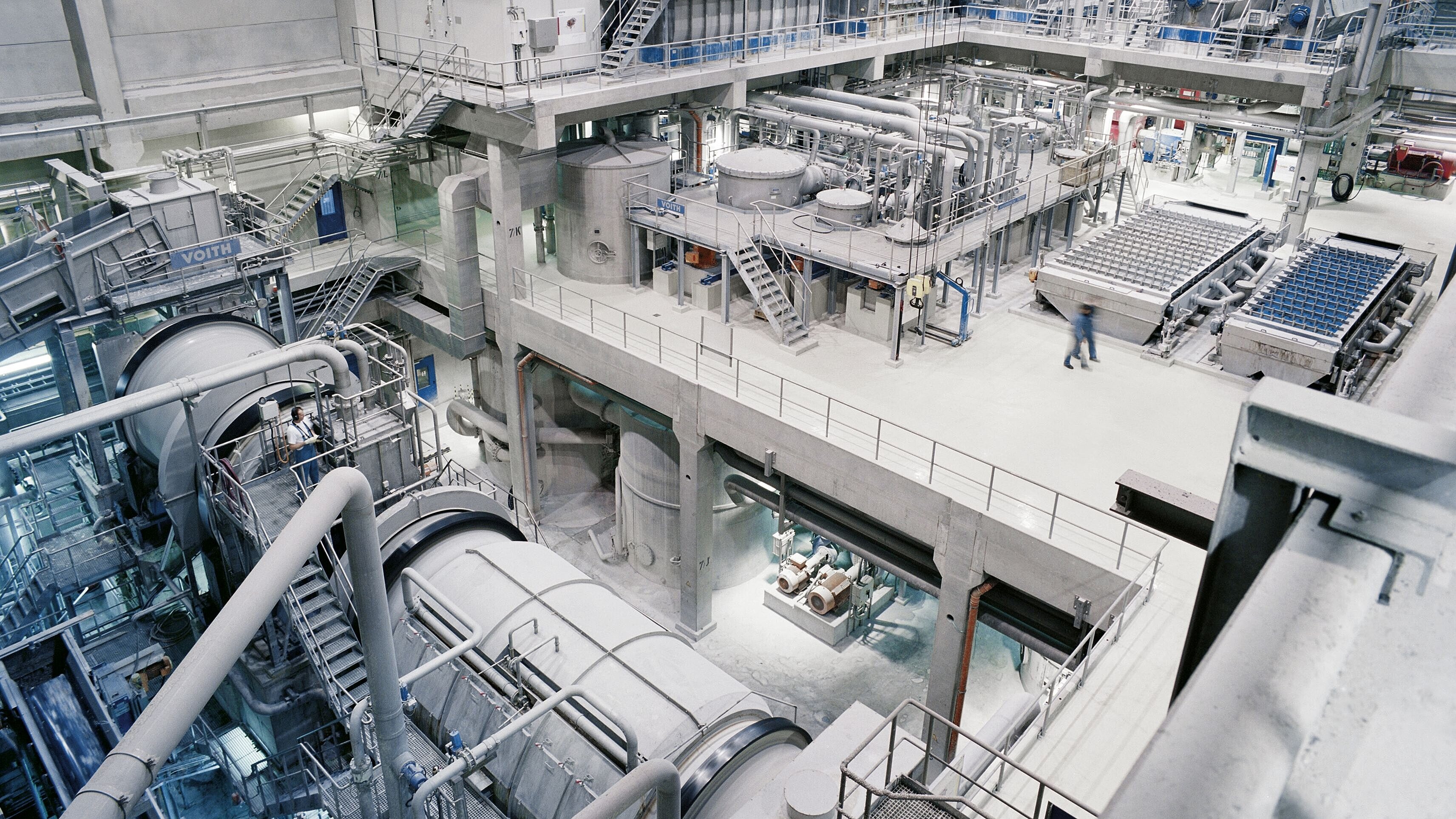
We are currently in the final phase of a major project - the licence application for a new power plant here at the site. The aim is to recycle the fibre residues from paper production, some of which Steinbeis Papier currently has to dispose of externally, internally and utilise their energy potential. These fibre residues are paper fibres and printing inks that are too short and are produced during the recycling process. In the power plant, we also want to utilise this proportion of residual materials for energy, thereby increasing electricity and steam generation and, above all, strengthening long-term disposal security. The application for the power plant has already been submitted and we expect to receive the approval notice in the coming weeks. This is a key project that we are pushing ahead with intensively.
To what extent are sustainability goals incorporated into the planning and implementation of such projects?
Sustainability is an essential part of the strategic orientation of the Steinbeis Group and our projects, particularly in the area of energy. If we handle paper fibre waste more efficiently, we not only avoid transport costs and routes, but also increase the use of resources. In addition, the increased utilisation of waste heat and the possibility of marketing it as district heating is a further step towards improving our environmental footprint. Sustainability and efficiency go hand in hand for us. This not only strengthens our economic position, but also our responsibility towards the region and the environment.
What role does the collaboration between Steinbeis Energie and Steinbeis Papier play in the development of sustainable energy and production solutions?
The co-operation between Steinbeis Energie and Steinbeis Papier is crucial for the sustainable success of our companies. Our main objective is the reliable and efficient energy supply for paper production with electricity and steam. By working closely together, we achieve predictable and reliable conditions and reduce our dependence on external markets. Close coordination in energy management is essential here. Projects such as the new power plant or the complete integration of Steinbeis Energie Papenburg on the way to a CO₂-neutral power supply for Steinbeis Papier and the disposal of paper fibre residues always require close coordination and a view of the big picture. Thanks to this close collaboration, we can continuously increase energy efficiency and at the same time fulfil Steinbeis Papier's production requirements.
What challenges arise in the joint development of new projects?
The challenges lie primarily in the close coordination and integration of new technologies that are both ecologically and economically sustainable. For specific projects such as the disposal of paper fibre waste, we work on an interdisciplinary basis, which means that all relevant departments are involved. This close networking has proven itself in practice, but requires precise communication and flexible adaptation to new requirements. We also have to ensure that major infrastructure projects, such as the new power plant, are not only perceived positively internally, but also by the public.
What technical and regulatory challenges arise in optimisation projects and how does Steinbeis deal with them?
Uncertainty regarding regulatory requirements is a major challenge. This is clearly illustrated by the example of CO₂ and carbon capture (carbon recovery from exhaust gas). The technical solutions are often already available, but the political framework conditions have not yet been defined. Thanks to our forward-looking project work, we can react quickly and flexibly to changes. By continuously monitoring political developments and obtaining external expertise, we ensure that our projects are optimally implemented in terms of both technology and regulation.
Are different solutions taken into consideration when designing a project in order to be able to react flexibly to regulatory changes?
That depends on the project. For large projects such as carbon capture, we pursue a multi-track strategy to ensure that we remain flexible and can adapt to political decisions. For other projects, such as the new boiler, we already have a clear solution in mind and need to react less flexibly to different political scenarios.
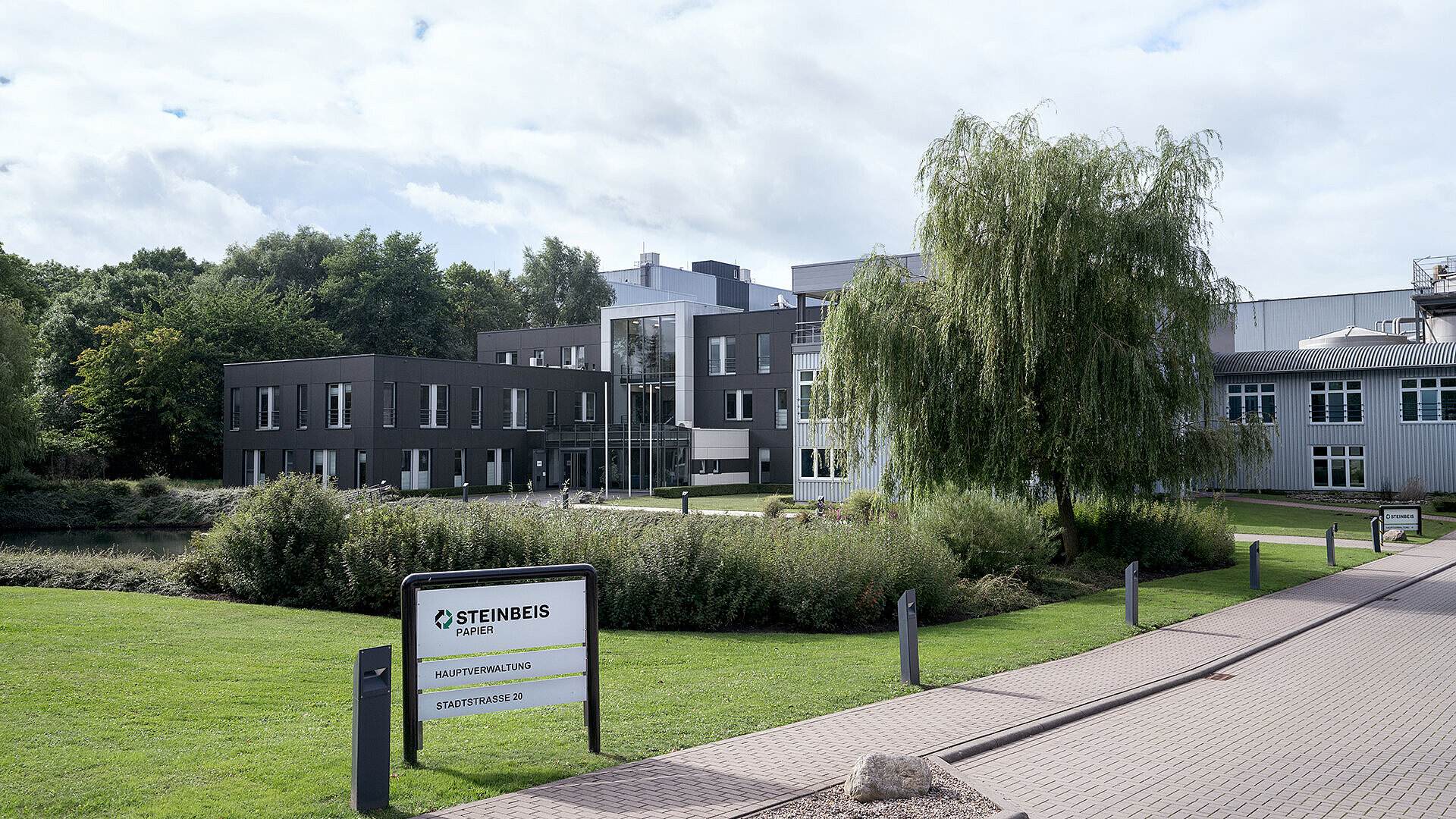
The company's own power plant ensures energy independence, production stability and promotes a sustainable energy supply not only for Steinbeis Papier.
Steinbeis Energie not only plays a role in the further development of sustainable energy solutions, but is also a key guarantor for the production of Steinbeis Papier. How important is external energy independence for the site?
Energy independence is a decisive factor for us. Energy costs are and have always been a key factor for paper production. The establishment of Steinbeis Energie has enabled us to build up expertise in this area, which we now utilise both internally and externally. We reliably secure Steinbeis Papier's production, regardless of external crises or market fluctuations. With our own RDF power plant and the variety of other energy sources such as biomass, biogas, solar and wind power, we are able to organise our energy supply in a stable and flexible manner. The advantage of this independence is particularly evident in times of energy shortages or geopolitical uncertainties. We can react quickly to fluctuations and ensure that paper production does not come to a standstill. This not only makes us crisis-proof, but also strengthens the entire location and ultimately our competitiveness. Our independence allows us to plan for the long term and operate sustainably at the same time - this is a clear advantage that characterises us as a group. We have recently been able to add another important building block: Through the complete takeover of Steinbeis Energie Papenburg, we are significantly strengthening our energy generation within the Group. Further synergy effects such as the utilisation of paper fibre residues and the intensification of technical exchange are on our to-do list.
How do you see Steinbeis Energie in the coming years?
I am convinced that we will successfully continue on our chosen path and expand further. Our independent focus has already proven its worth and the potential of this approach is now also being recognised by other companies. We are already one step ahead of others with many of our initiatives. One outstanding example of this is the project in Papenburg, which represents decisive progress for us. In the coming years, I see Steinbeis Energie as a pioneer in the realisation of innovative, sustainable solutions. Our combination of research and practical applications will also enable us to drive forward technological developments and efficiently implement resource-saving processes in the future. In addition to internal, pioneering projects, we will utilise our broad positioning in regulatory, technical and energy-specific topics and also work externally on the growth of the environmentally friendly energy generation business area. As Deputy Head of Power Plant, I look forward to actively shaping and developing this strategic direction so that Steinbeis can make its contribution to sustainable energy supply and to solving global challenges.
Cover picture: Florian Thoss for Steinbeis Papier
Author

As a senior editor, Benjamin Seibring specialises in developing content on sustainability, mobility, technology and lifestyle. An editorial traineeship at a German media group and his many years of experience in corporate publishing form the basis. With a high affinity for trend topics and innovative AI tools, he implements cross-media storytelling.