HR as a strategic partner: How Steinbeis is rethinking HR work

A strong HR strategy needs more than just concepts - it needs to be actively lived. Christian Sprunk, Head of Group HR at Steinbeis, talks about the importance of data-based personnel development, the challenge of succession planning and the introduction of Personio as a game changer for a modern HR culture. He also explains how Steinbeis is being strengthened as an employer brand and what role sustainability plays in the HR strategy. An insight into the future of HR work in a company that actively shapes change.
What are your core tasks as Head of Group HR?
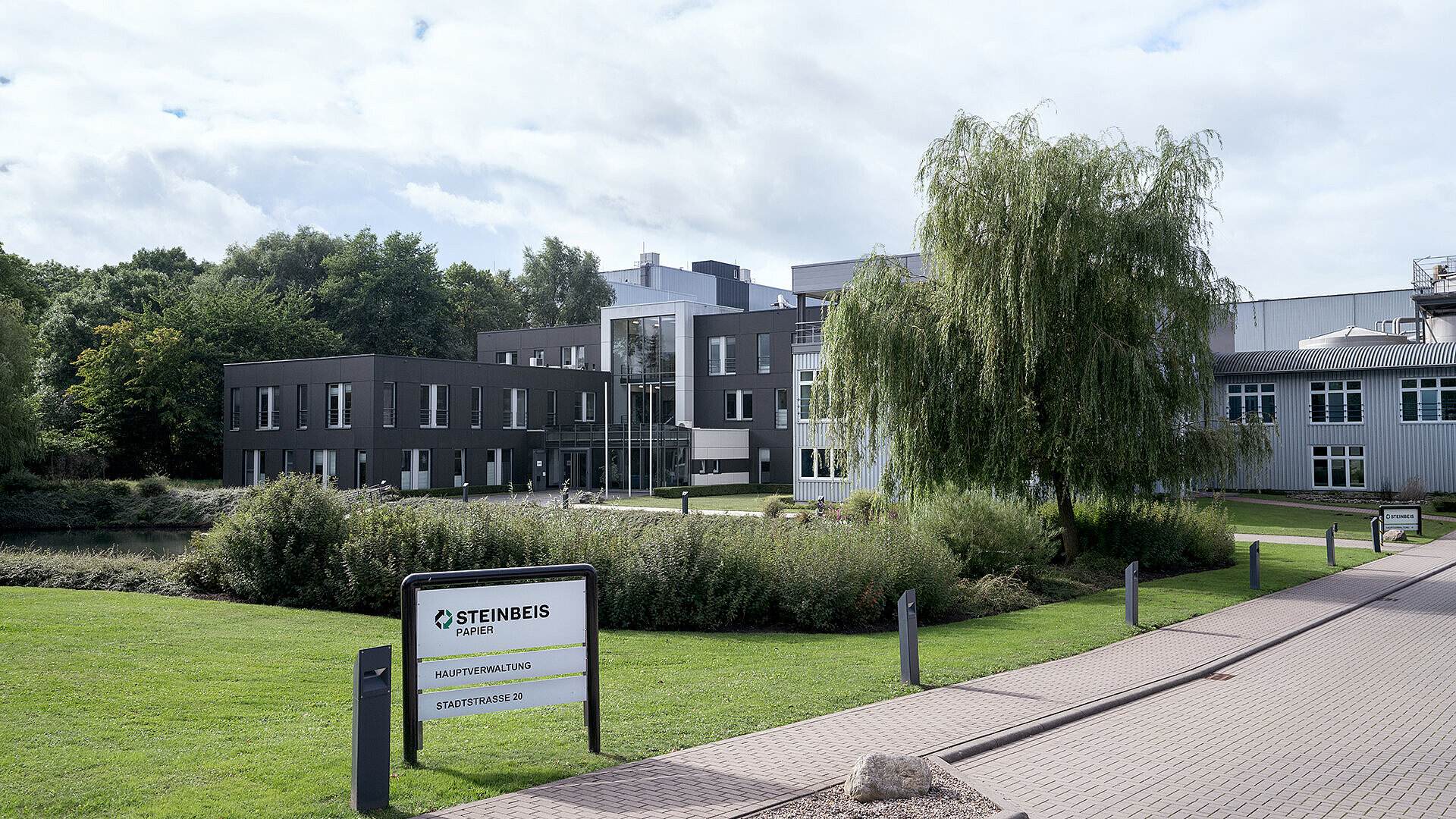
In simple terms, I am responsible for managing all HR work in the Group. This begins with the development of an HR strategy, which is derived from the overarching Group strategy, and includes the implementation of these strategic measures by my strong teams in the subsidiaries. At the Glückstadt site, I am also directly involved in HR management. This means that, alongside Ann-Kathrin Stoldt, I act as a further point of contact for employees, managers and employee representatives, not only for Steinbeis Papier, but also for the other subsidiaries based there. I also liaise closely with the management teams at the other locations to support them in HR-related issues and accompany strategic HR measures. I don't just hand over a strategy and hope that it will be implemented, but actively support the implementation process with the dedicated HR team at the location, provide advice and ensure that the strategic HR objectives harmonise with the corporate strategy.

Which topics are currently a particular priority?
One of the most important projects at the moment is succession planning within the Group. Demographic change means that many experienced employees will be leaving in the coming years - both at management level and at specialist level. Our task is to shape this process with foresight by identifying, developing and promoting internal talent. This is not just about retirements, but also about individual development paths. Many employees have been in a position for three or more years and have the desire to develop further. This requires a structured personnel development concept that is based on data. The aim is to make decisions based less on gut instinct and more on sound key figures and to establish HR as an essential business function.
Promoting young talent is a key issue. What programmes are in place and how do you intend to develop them further?
It's not just about the development of existing employees, but also about the targeted recruitment of new talent. In the Glückstadt region, we have very competently centralised training at Steinbeis Papier so that all subsidiaries benefit from an efficient training system. We are in close contact with schools and educational institutions throughout the region, from Elmshorn to Itzehoe. Our commitment ranges from school visits and internship programmes to participation in careers fairs. We have student interns in the company every week - an important component of our young talent strategy. We also use modern methods to increase our visibility: a large QR code on the Stadtstraße in Glückstadt leads directly to the Steinbeis Papier careers page.

How do you position Steinbeis as an attractive employer beyond the region?
We need to utilise the potential of our group of companies even more and create synergies. Our aim is not just to promote individual locations, but to position Steinbeis as an attractive employer as a whole group. This means harmonising our brand presence and providing centralised information for all subsidiaries. In Austria, we are already working on adapting our image as an employer brand. Standardised employer branding creates clarity and makes it easier for applicants to identify with the entire Steinbeis Group. We are also focussing on digital channels to attract talent throughout Germany. A strong online presence with attractive career opportunities and authentic insights into our company is an important step in attracting skilled workers from outside the region.
What strategic goals is Steinbeis pursuing with the introduction of Personio?
The implementation of Personio is a central component of our corporate strategy. For the first time, we have a standardised system for the entire Steinbeis Group that enables consistent personnel data across locations and countries. This not only improves our internal transparency, but also our external perception. Personio is not primarily intended to increase efficiency, but to improve the quality of HR work and offer a modern, intuitive solution for our employees. This strengthens our shared corporate identity and facilitates the future integration of new companies into the Steinbeis Group.
What are the benefits of Personio for employees?
Personio is more than just an HR tool - it is a platform that employees can actively use. Every employee receives a personal profile that they can use to manage changes of address or certificates, for example. The system will also be used in future for standardised processes such as employee appraisals. The intuitive operation makes it easily accessible for everyone and supports a modern digital corporate culture. The aim is to enable standardised and transparent communication within the entire Group.
What challenges are there during the introduction and how does Steinbeis deal with them?
The biggest challenge lies in migrating existing, different systems to a centralised tool. Data protection and the error-free integration of payroll processes are particularly sensitive here, as the punctual payment of salaries has top priority. Personio is already the leading system in Austria, while we are gradually implementing it in Germany. Our approach is to proceed with great care and ensure that each element works reliably before it is rolled out. In this way, we ensure a smooth transition and successful long-term utilisation.
Personio is more than just an HR tool - it creates transparency, simplifies processes and strengthens our corporate culture across all locations.

How do you counter the shortage of skilled labour and how do you attract employees?
A company must have an attractive product and a clear employer brand in order to both attract and retain skilled labour in the long term. At Steinbeis Papier, sustainability is a core value that appeals to many applicants who can identify with an environmentally conscious company. In addition, our transparent and authentic corporate culture creates a working environment that attracts the right candidates. In the SME sector, our stable ownership structure and family atmosphere enable us to offer long-term prospects and job security, which is particularly important for specialists who are looking for close collaboration and job security.
How has the labour market situation changed in recent years and what role does digital support play in recruiting employees?
Despite the difficult labour market situation, Steinbeis Papier is receiving positive application responses, particularly in the technical sector. A strong employer brand and transparent communication have helped to attract the right applicants. Digital tools such as Personio are a great advantage as they make the application process more efficient. However, it remains particularly challenging to attract highly qualified professionals for specialised technical positions such as mechatronics engineers and electronics technicians, as there is a shortage of young talent in these areas.
What importance do you attach to corporate culture and feedback from employees?
The corporate culture at Steinbeis Papier is characterised by openness and honesty, which is supported by regular employee forums organised by our management and digital surveys such as Mentimeter. In this way, we promote transparent communication in which the management is always available for feedback. Employee feedback is continuously incorporated into the company's development. We use discussions to ensure constant feedback and personal dialogue between managers and employees, which creates trust and promotes personal development. In addition, we see increasing cross-group collaboration as a development that offers new opportunities for the company and employees and fundamentally changes the way we work.
An open feedback culture is essential for a strong corporate culture - it creates trust, promotes development and strengthens cooperation.

As a holding company, how does Steinbeis ensure that sustainability is implemented uniformly in all subsidiaries?
The holding company plays a key role in coordinating and managing the sustainability strategies in the subsidiaries. In doing so, we ensure that all subsidiaries pursue a common sustainability vision that encompasses both ecological and social responsibility. We achieve this by implementing clear guidelines that are regularly reviewed and adapted, as well as by sharing best practices and promoting a continuous learning process. At the same time, we maintain the flexibility of the individual subsidiaries so that they can also incorporate their regional characteristics and specific requirements into the sustainability strategy.
How does the HR department support the implementation of Steinbeis' sustainability strategy within the subsidiaries?
The Human Resources department supports Steinbeis' sustainability strategy in a variety of ways. One important aspect is the integration of sustainability principles in company takeovers, for example by examining cultural aspects and adapting to the values and processes of the Steinbeis Group. Smaller measures such as the promotion of electric vehicles in the vehicle fleet are also supported in order to offer more environmentally friendly options. Sustainability is also emphasised in long-term personnel planning and management development. The focus is on a stable corporate culture that has grown over time and is effective in the long term. Finally, HR ensures that all measures are financially sustainable and that the company remains successful in the long term so that it can continue to offer attractive jobs in the future.
What challenges will HR face in the coming years?
HR work will be characterised by increasing legal requirements such as data protection, labour law and sustainability reporting (CSRD). However, Steinbeis benefits from a clear corporate strategy that proactively prepares for these challenges, such as compliance with the Supply Chain Act and the integration of sustainable practices. This forward-looking approach enables Steinbeis to respond more flexibly to change while creating an attractive working environment that is geared towards long-term stability and growth.
How will digitalisation change the world of work in the paper and recycling industry?
Digitalisation is becoming increasingly important in the paper and recycling industry. At Steinbeis, we use camera systems and digital processes to efficiently sort and process raw materials. These technologies enable us to monitor and optimise the entire production process in real time. A major advantage of Steinbeis is the increasing cross-industry appreciation of the circular economy. Recycling is now respected and seen as forward-thinking, which makes the industry attractive for skilled labour. This not only strengthens our employer branding, but also shows that Steinbeis has actively contributed to the development of this sector.
What made the position of Head of Human Resources at Steinbeis particularly appealing?
The opportunity to help shape new business areas in the circular economy in the paper industry and to take on responsibility in HR was an exciting challenge for me. My many years of experience in the paper and metal recycling industry as well as in the global automotive and technology sector have shaped me both in the areas of cost management and agile changes in companies. I was able to successfully build teams, systems and structures, particularly in personnel management, and it is precisely this experience that I would like to bring to Steinbeis. The positive discussions with the management have strengthened my decision to take this opportunity.
Important values have already been discussed. How do you deal with the tension between speed and perfection?
For me personally, speed is often more important than perfection. I once heard the saying: "I'd rather be 98.5 per cent than a year and a half late", and that has left a deep impression on me. The world is turning faster and it is crucial to act quickly and decisively in what we do. Of course, we also have to accept mistakes that occur along the way - they are part of our learning process. As an HR manager, but also as a personnel developer, I know that we must constantly learn, including from mistakes. A mistake is problematic if it is made again and again. It is important that we act consistently and transparently, address mistakes and continue to develop. This is how I try to present myself to my colleagues, the team and the management - predictable, open and approachable. But whether I always succeed in this is for others to judge.
Cover picture: Steinbeis Papier
Author

As a senior editor, Benjamin Seibring specialises in developing content on sustainability, mobility, technology and lifestyle. An editorial traineeship at a German media group and his many years of experience in corporate publishing form the basis. With a high affinity for trend topics and innovative AI tools, he implements cross-media storytelling.