How Germany became a recycling nation

06.10.2020 - Germany, the Mecca of waste separation. Up to 80 per cent of waste in our country is recycled, and every household helps. This is not only good for the environment and climate protection, but also an important economic factor - and the most important measure on the way out of a throwaway culture that we simply can no longer afford. Even if there is still a lot to do, it is important to look back from time to time in order to look to the future with optimism. And to realise how far we have already come as a society through our gradual rethinking. Or can you still remember the time before the Green Dot? A household without piles of waste paper? Exactly!
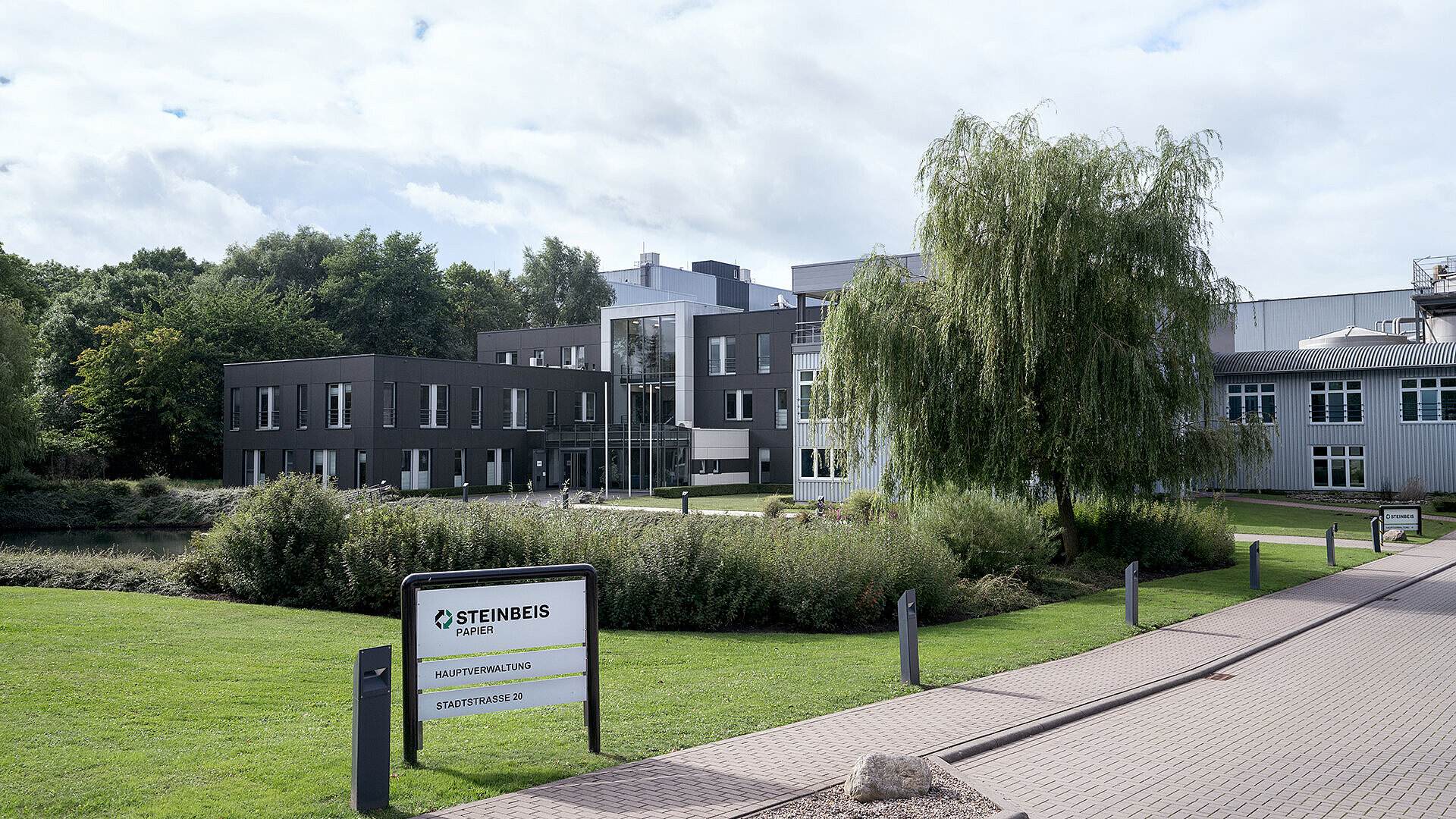
Steinbeis Papier is a recycling pioneer. This becomes particularly clear when you realise how recent the history of the waste and recycling industry in Germany actually is: the first law on mandatory waste separation was passed in the early 1990s - by which time the Glückstadt-based company had already been switching completely to the recycling of waste paper as a secondary raw material for over 15 years.
Since then, Steinbeis Holding has expanded its business area to include many levels of waste management and recycling production. The sister company AP Concept, founded in 2001 as a joint venture, processes waste paper for recycling. Since May 2011, EBS Concept GmbH has been sorting residual materials and producing substitute fuels from them; these are then utilised for energy directly at the site, in the Steinbeis Energie GmbH combined heat and power plant. And since 2019, Kruschitz GmbH has also been part of the holding family: the Austrian-German company with over 60 years of company history is considered a pioneer in plastics recycling. The recycled granulate produced by Kruschitz is used to make bottles, packaging, films and furniture, for example.

All of these industries have one common denominator: sustainability through resource conservation. Value creation from secondary raw materials takes centre stage. Against this backdrop, it is hard to imagine that just 50 years ago, valuable, sometimes hazardous and in any case laboriously extracted materials ended up in landfill sites after their initial use. On the one hand, our environment and our quality of life suffered considerably as a result. On the other hand, millions of euros were literally thrown away. But how and when did today's appreciation of secondary resources - and thus our waste separation system - actually come about?
The beginnings
Waste in the 1960s: a problem of almost unmanageable proportions. In November 1971, the magazine "Der Spiegel" reported that a 3,000 metre-high mountain of waste could be piled up over the oval of Munich's Olympic Stadium every year from German household waste - and a new three-thousand metre mountain was added every year. What German households and companies threw away ended up in barely controlled, open rubbish tips. Almost every municipality had its own; at the end of the 1960s there were around 50,000.
This was no coincidence: thanks to the new mass suitability of plastic and the general rise in prosperity, people were consuming more and faster than ever before. As a result, the amount of packaging and waste also grew to unimagined heights.
The turning point
As early as 1971, the German government's environmental programme stated that despite the rapid increase in packaging and industrial waste, "more than 90% of all waste materials were being deposited somewhere in the countryside without any special hygienic precautions, just as they had been a hundred years ago". So the problem was known. A law passed in 1972 on the disposal of waste became the first milestone. For the first time, waste management was standardised and disposal obligations were laid down. Above all, the large number of small rubbish dumps was to be reduced to a few, easily controlled landfill sites with higher environmental standards. In fact, the number of household waste landfill sites in the old federal states fell significantly; in 1984, only 385 of the 50,000 or so landfill sites were left.
New impetus
The German government's waste management programme had already formulated the new target hierarchy of modern waste management in 1975: The best waste is that which is not produced in the first place. Recycling was formulated as the second-best objective and its costs were to be borne by those responsible. For the time being, these new priorities were more like proposals to the general public and were not legally binding. But the first step had been taken.
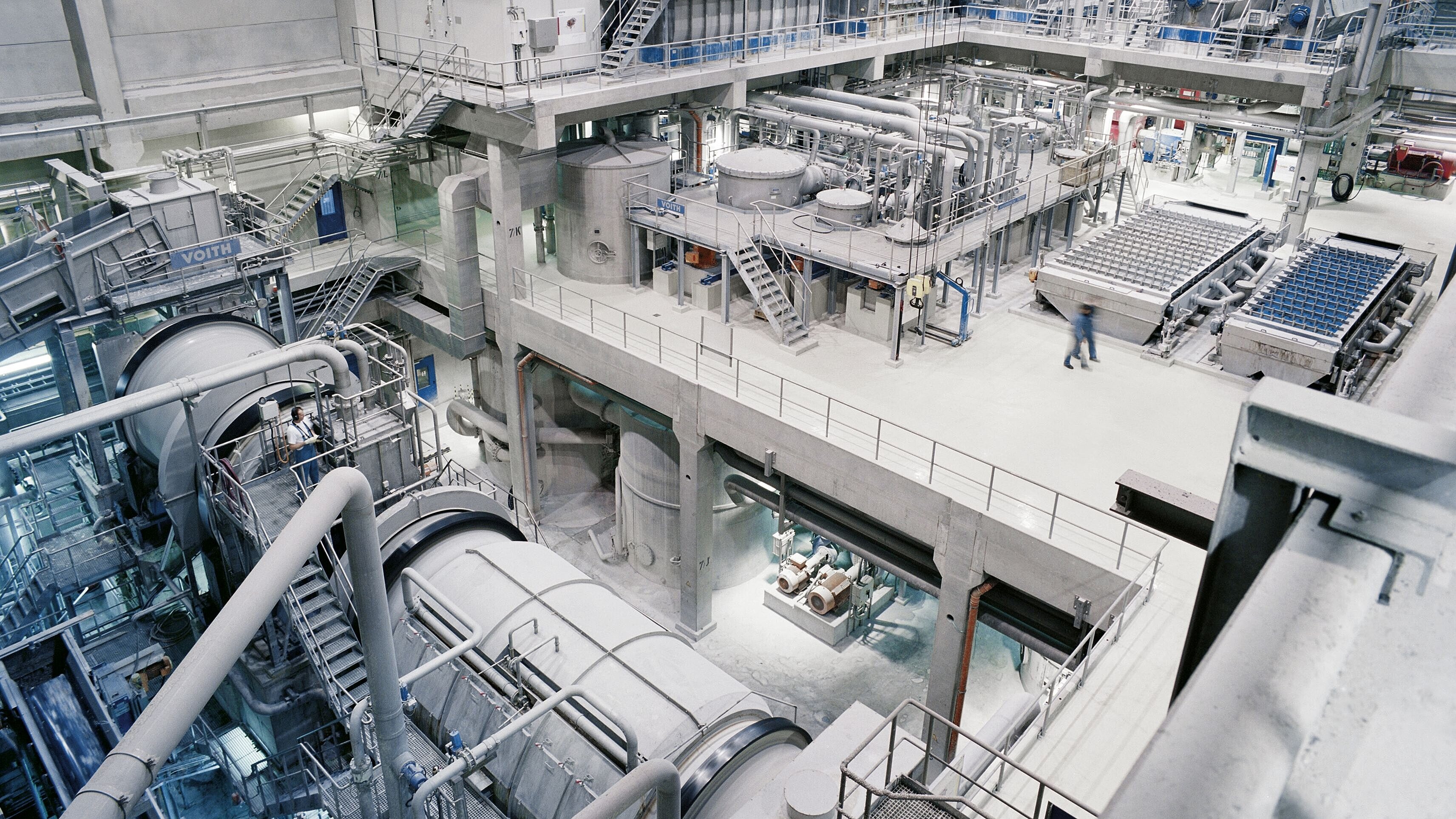
At the end of the 1970s, more and more local authorities set up containers for used glass, and in the mid-1980s waste paper containers were added. In this way, waste separation was made suitable for everyday use on a voluntary, private basis, and these pilot schemes changed society's attitude towards waste. Then there were the phenomena of the time: a frightening forest dieback at the end of the 1970s to the mid-1980s - and the oil price crisis, which also created an awareness of the finite nature of natural resources in everyday life. At the same time, landfill, especially in urban centres, once again reached the limits of what was feasible. Germans began to recycle materials. Innovative measures to reuse waste paper made a start - pioneer Steinbeis Papier switched completely to these technologies in 1976 - and the focus was now increasingly on the economically viable reprocessing of all types of waste materials. Waste became a valuable economic asset: a secondary raw material.

The Packaging Ordinance of 1991
If the mountains of waste were to be brought under control, greater levers had to be applied - this realisation also grew in the government at the time. This gave rise to the pioneering idea of binding product responsibility for manufacturers and distributors. They should be responsible for taking back their own products or the waste that arises from their use. Only they had the opportunity - and now also the incentive - to develop products that were easy to recycle.
In the course of the 1980s, this also led to a partial change in the waste disposal system: away from state and municipal responsibility and towards primarily private responsibility. in 1991, this guiding principle was finally implemented in a statutory packaging ordinance. Producers were now responsible for collecting and disposing of packaging - which made up a large proportion of municipal waste. As part of the legislation, an association of German food manufacturers founded the company Duales System Deutschland (DSD) and entrusted it with the organisation of this task. In order to create competition, other systems were added from 2001 onwards. The DSD's trademark: the Green Dot. It is now one of the most internationally recognised trademarks and is used as a licence mark for packaging recycling in many countries.
Where do we stand today?
We have had a new Packaging Act since 1 January 2019. Its aim is to transfer significantly more waste from private households to the recycling process. Its most recent amendment came into force in June 2020. The law is aimed at manufacturers, online retailers and companies that put recyclable packaging into circulation. Packaging waste should be "primarily avoided" and "prepared for reuse or recycled" - in that order. Although the waste management industry is now one of the cleanest industries in our country and is doing surprisingly well in terms of climate protection, one realisation has remained true for 45 years: the best waste is no waste at all.
Cover picture: Friedrich Gahlbeck/Bundesarchiv/wikimedia commons, CC-BY-SA 3.0
Author:in Nadine Kaminski