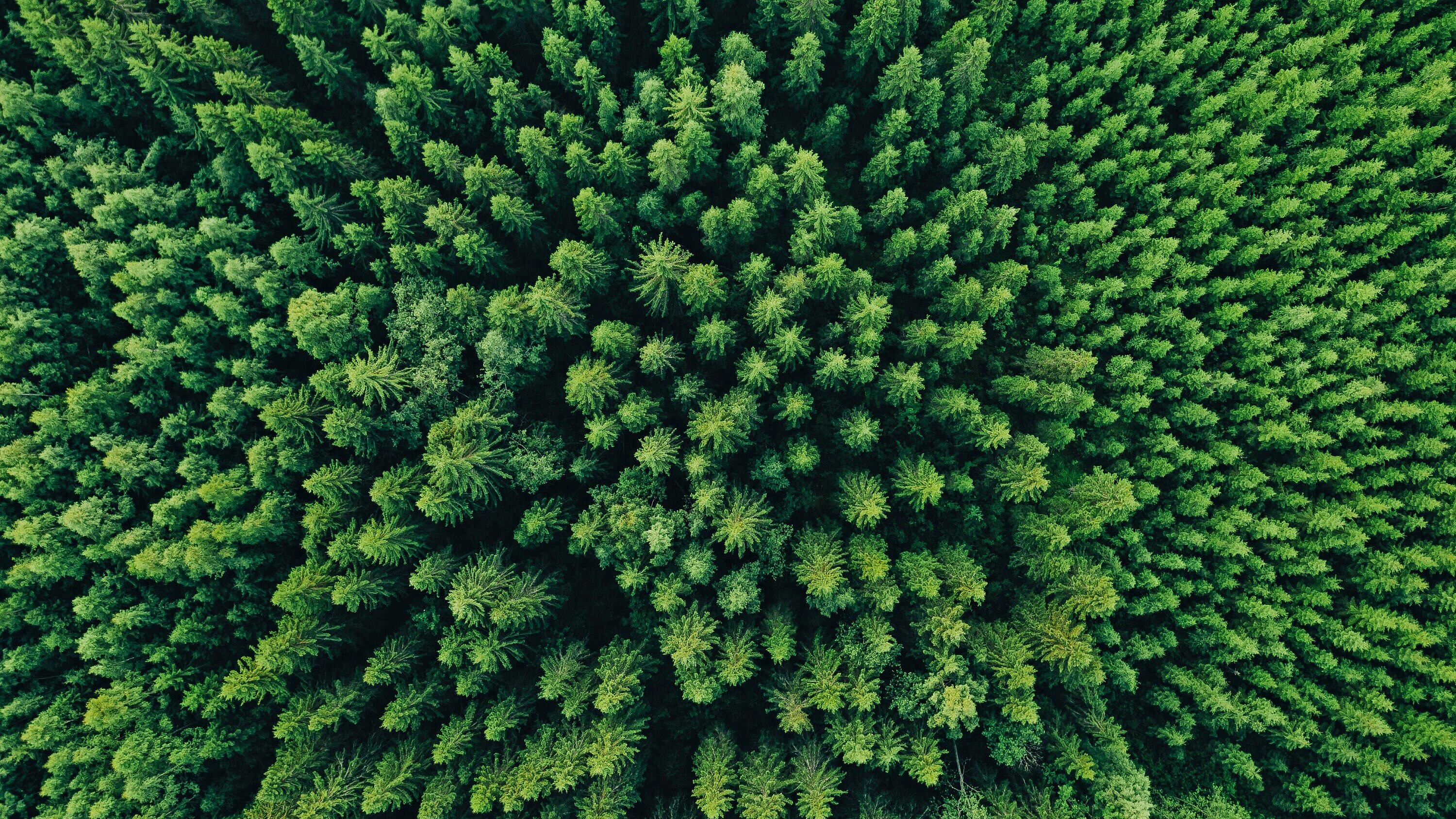
Forest bathing: How to succeed with relaxing nature therapy

07.05.2024 - Protecting and preserving our forests is of crucial importance. They are not only an idealCO2 reservoir, but also contribute to our well-being. Especially in our hectic everyday lives, many people are looking for ways to calm down and improve their health. How about forest bathing? Originally from Japan, this form of nature therapy is also conquering our forests. It is based on consciously experiencing the forest with all the senses and has proven positive effects on our health and well-being.
Contrary to what one might initially assume, "forest bathing" does not mean swimming in forest waters. Rather, it refers to the conscious perception of nature: immersing yourself in nature, experiencing the forest with all your senses and increasing your own well-being in the process - this is what is known as "shinrin-yoku", which translates from Japanese as "taking a bath in the atmosphere of the forest". This form of nature therapy is more than just a walk in the countryside. You can hear, smell, see, feel and taste the forest.
A forest bath can be undertaken on its own as a self-care method, for example to find peace and quiet. In Schleswig-Holstein, there are also opportunities to experience a forest bath in a group, for example as a kind of team event organised by your employer or for families.
What a forest bath does for people
A forest bath creates a conscious connection to nature, which serves to promote our well-being and strengthen our health. Numerous scientific studies have proven the positive effects of forest bathing on our body and mind. The atmosphere of the forest also has a calming effect on people and promotes the activation of the parasympathetic nervous system, our "rest and regeneration nerve".
In addition, the forest influences our body directly through the essential oils emitted by the trees. These contain terpenes, messenger substances originally intended for the animal world, but which also have positive effects on our nervous system when inhaled. They strengthen our immune system, reduce stress, improve digestion and promote the production of serotonin and dopamine. To get the most out of a forest bath and intensify the experience of nature, there are various aspects to consider.

Breathing exercises in the forest
Conscious breathing is a central aspect of forest bathing. By breathing deeply and slowly, we can relax our body and calm our mind. It is recommended to start forest bathing with a few deep breaths. As we breathe in, the fresh forest air flows into our lungs and supplies the body with oxygen. As we breathe out, we let go and release all tension. For a safe feeling, you can lean against or hold onto a tree during this exercise. Conscious breathing not only helps you to relax, but also enables a more intensive connection with nature.
No strenuous hikes
Forest bathing is about experiencing nature with all your senses. This is not effectively possible on a strenuous hike. On the contrary: it could increase your physical stress levels. To maximise the benefits of nature for body and mind, you should plan at least four hours for a forest bath. If you also want to strengthen your immune system, a day trip is not enough. You should spend about two to three days in the forest. It is important to find a place where you can linger. It's important to take your time and appreciate nature with all your senses. A tip: combine forest bathing with a wellness weekend. This will also help you to cope with stress.
Forest meditation for more mindfulness
Forest meditation is an effective method for connecting deeply with nature and finding inner peace. It utilises the healing power of the forest to reduce stress and increase general well-being. The first step is to find a quiet place in the forest where you are undisturbed and feel at ease. Then close your eyes and focus your attention on the sounds, smells and sensations around you. Listen to the birds singing, the rustling of the leaves or the babbling of a nearby stream. Forest meditation helps you to ground yourself, gain clarity and recharge your batteries.
Digital detox in the forest
With digitalisation, constant accessibility and networking, the Shinrin Yoku method is perfect for a digital detox. Even though it is important to have a smartphone to hand in case of an emergency, you should refrain from using any digital devices when bathing in the forest. This is the only way to engage intensively with the nature around you and feel it with all your senses.
Hugging trees makes you happy
It may sound a little unusual to some, but hugging trees can actually contribute to our well-being. Tree hugging has its roots in ancient traditions and cultures that emphasise the deep connection between humans and nature. When we hug a tree, we can feel its energy and feel grounded. It is a physical connection that reminds us that we are part of nature. In addition, touching a tree has a calming effect and can help to reduce stress.
Scientific Studies have shown that hugging trees can release the hormone oxytocin, often referred to as the 'cuddle hormone'. It promotes feelings of happiness, relaxation and connection.
Why it is important to preserve our forests
A forest bath makes you happy and healthy - and is just one of many reasons why it is necessary to protect forests and trees. They are an important part of our ecosystem and serve as a habitat for numerous animal and plant species. They help to protect the climate and provide valuable raw materials.
As a company that specialises in the production of environmentally friendly paper, Steinbeis Papier is aware of the importance of forests. Our portfolio is made from 100 per cent recycled paper and is produced in an energy-efficient, low-emission and resource-saving manner.
Cover picture: Cup of Couple/Pexels
Author

Nadia Riaz-Ahmed is an online editor. She is most interested in everything to do with digitalization and new technologies.