Example of a progressive environmental policy - the Blue Angel

06.11.2018 - Dr Volker Gehr, Managing Director of Steinbeis Papier GmbH, gave the laudatory speech in Berlin on 24 October 2018 as part of the Blue Angel's 40th anniversary celebrations. Read what he said here:
The founding genes of the Blue Angel
"Forty years ago, Sigmund Jähn was the first German to fly into space. This event may have helped to raise awareness of the limits of our planet and to drive forward a progressive environmental policy with the introduction of the Blue Angel. The Blue Angel has not remained a flash in the pan, because it was created with foresight. The values of sustainability and trustworthiness were firmly anchored from the outset in the founding genes of what is probably the most famous environmental label. That is why we can celebrate forty years of the Blue Angel today - congratulations!
The Blue Angel stands for sustainability and trustworthiness
The Blue Angel stands for sustainability and trustworthiness and in times like ours, which are characterised by ecological challenges, digitalisation and loss of trust, these are strengths that cannot be valued highly enough. As the latest Edelmann Trust Barometer shows, people's trust in political and social institutions continues to dwindle. There is also uncertainty when it comes to purchasing decisions. There is hardly a product left that is not advertised with eco, nature or other environmental promises. Consumers are finding it increasingly difficult to assess what the claims and labelling really mean and what they are worth. However, an increasing loss of trust and an unprecedented flood of information are the hour of the Blue Angel. The Blue Angel has been reliably and safely summarising demanding ecological standards for 40 years now. With a brand awareness of over 90 per cent, the Blue Angel is the face par excellence for convincing environmental products. It provides clear orientation and is highly trustworthy thanks to its independence and environmental performance. The product with the well-known Blue Angel label is quite rightly the most environmentally friendly alternative, i.e. the best product in its respective segment. The Blue Angel is therefore a reliable, trustworthy signpost for consumers.

The Blue Angel award criteria
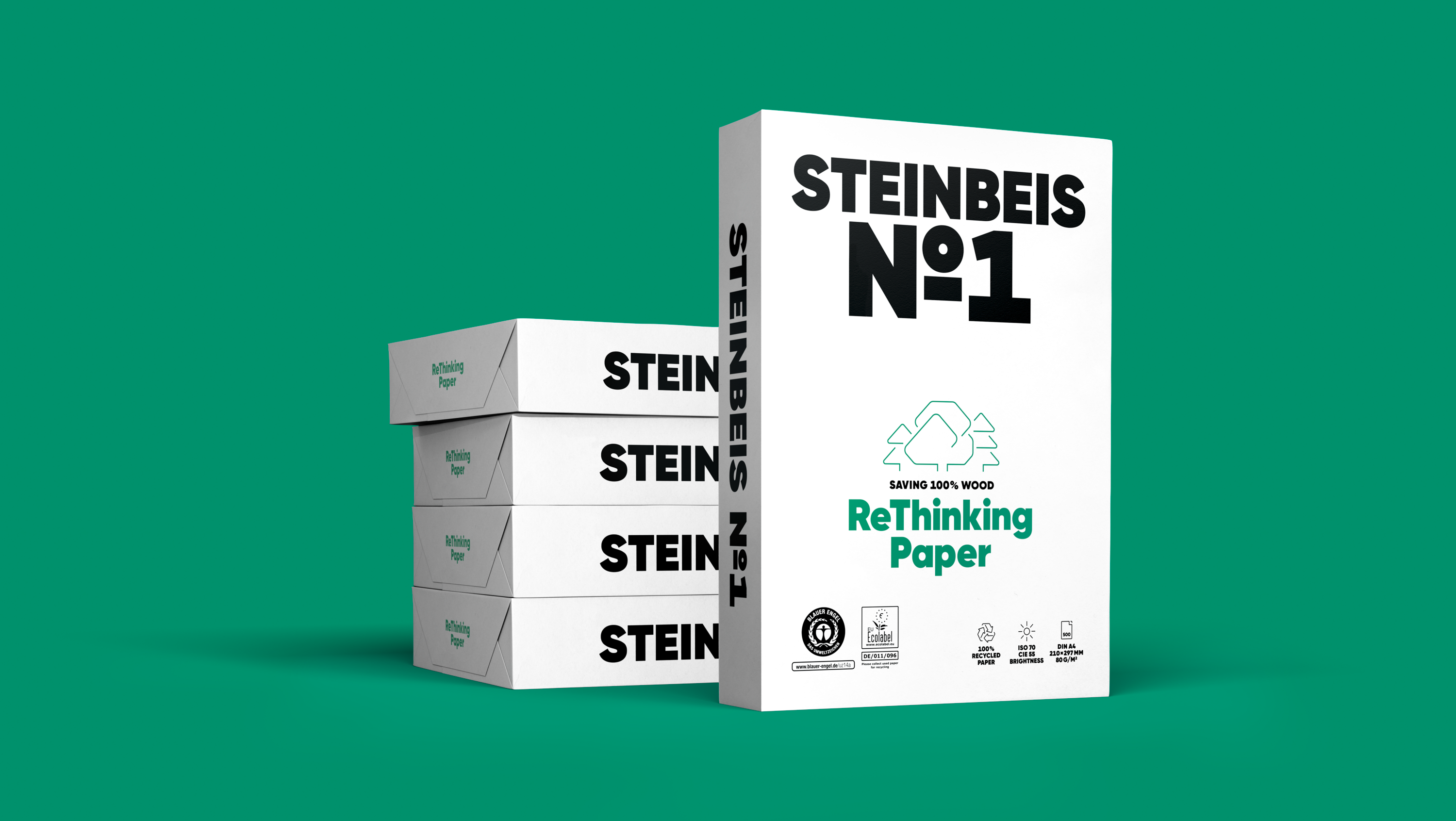
It can also fulfil this task credibly because the award criteria are continuously being developed. Let me illustrate this using the example of our industry, the paper industry. In January 1981, the decision was taken to award the eco-label to recycled paper in order to prioritise the collection and recycling of waste paper. The prerequisite for obtaining the label was the processing of 100% waste paper. Before 1981, a large proportion of waste paper still ended up in landfill sites - something that is difficult to imagine today. Two years later, in 1983, the Greens entered the German Bundestag for the first time. A small earthquake shook political Bonn. Also in 1983, the first paper from Steinbeis was awarded the Blue Angel. We didn't even agree with the Greens! in 1989, the criteria for awarding the Blue Angel became stricter. Since then, mainly lower and medium grades of waste paper must be used in the production of recycled paper. This ensures that the majority of waste paper is recycled. And since 1992, for example, no bleaching chemicals containing chlorine, which are considered carcinogenic, may be used in the production of recycled paper.
However, it is not only the requirements for awarding the Blue Angel that have been and continue to be further developed, but also the extension of the Blue Angel to more and more products and services that characterises its dynamism and topicality. In the paper sector, for example, the label is not only available for copy and magazine paper, but also for other papers, cardboard, packaging and finished products.
Holistic approach for maximum environmental and health protection
The example of recycled paper also shows that the Blue Angel pursues a holistic approach that ensures comprehensive environmental and health protection. Like no other ecolabel, it sets the highest standards for the selection of raw materials and defines the strictest criteria for the paper manufacturing process; a key aspect that substantially distinguishes the Blue Angel from other ecolabels. The benefits for the environment and health are manifold: Blue Angel paper conserves valuable natural resources to a large extent, protects the climate, takes pressure off forests, makes an important contribution to biodiversity and does not use hazardous chemicals. Papers with the Blue Angel ensure competitiveness because they also have to fulfil DIN standards, for example. This proves that the improvement of certain environmental performances does not have to be at the expense of other aspects, such as product quality. The Blue Angel thus paves the way for sustainable products with the greatest ecological added value. It is therefore a strong, successful brand that is up-to-date and at the same time promotes innovative developments to further reduce the ecological footprint.
The Blue Angel as a corporate strategy at Steinbeis Papier
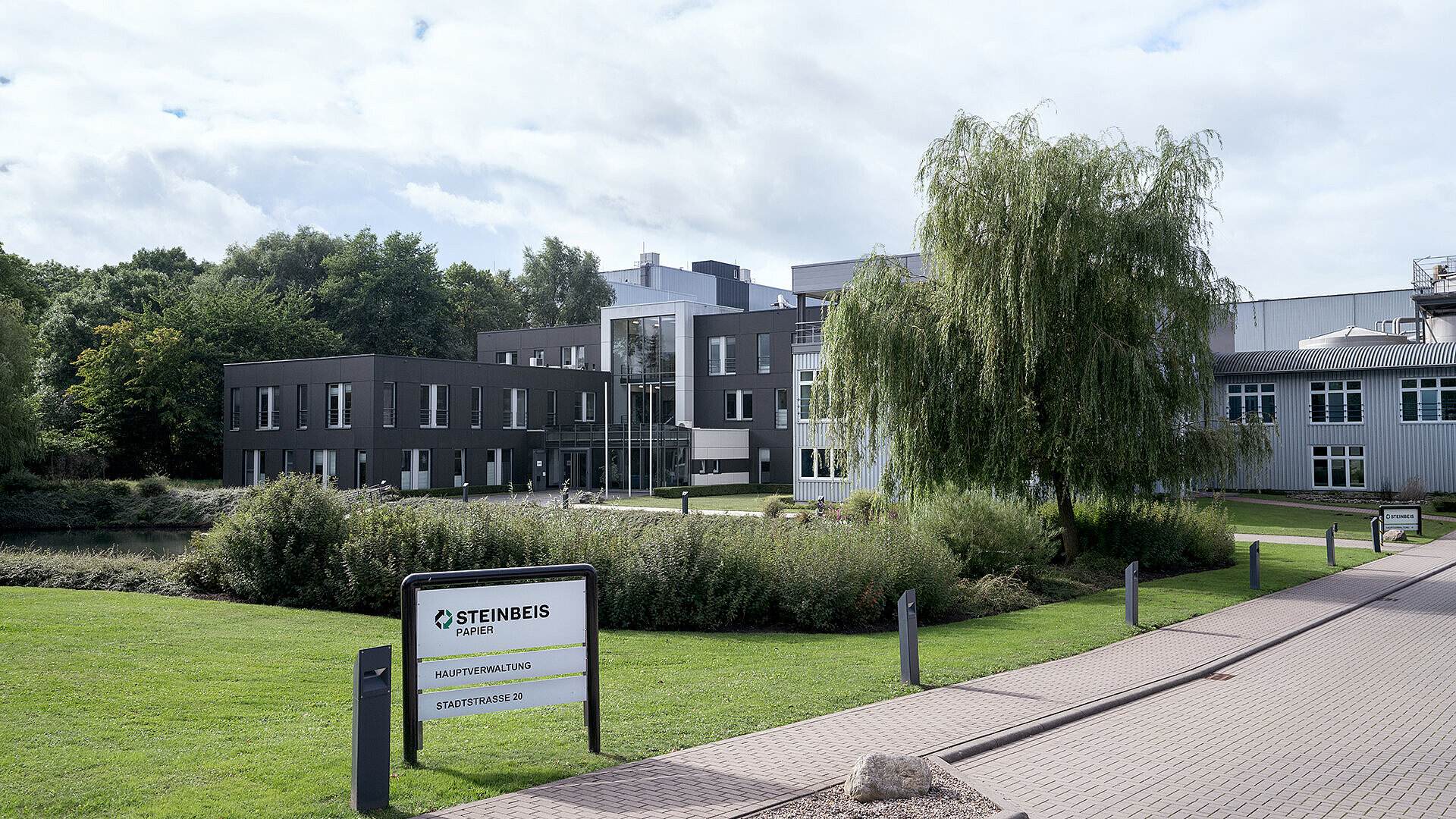
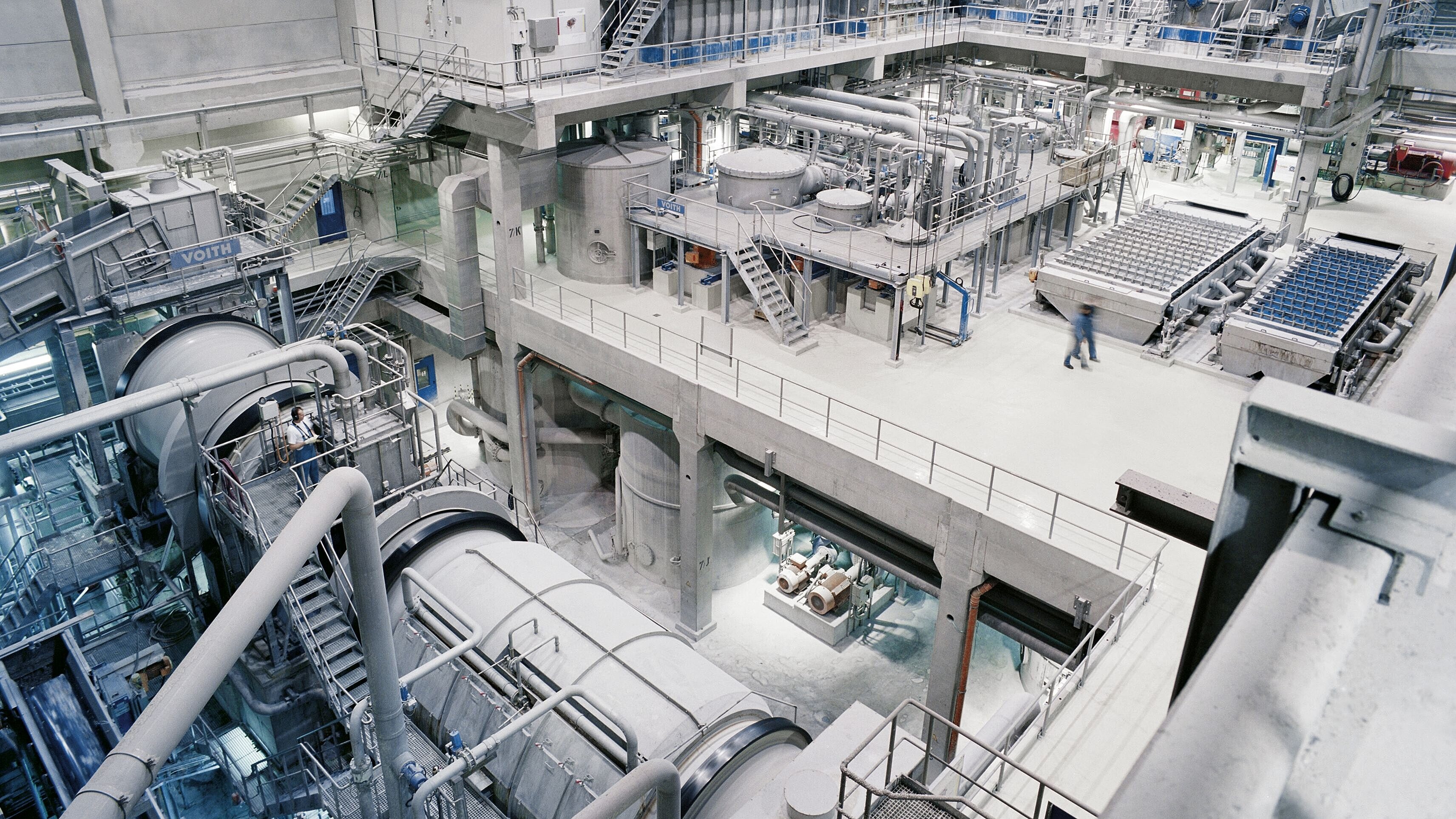
The Blue Angel is often used for marketing purposes. This is a good thing and absolutely necessary. But it is far more than just an attractive marketing tool. It can even have a significant impact on corporate strategy, as is the case at Steinbeis Papier, for example. In our company, the principles of the circular economy and resource efficiency are applied to the entire production process. All value chains function according to this core idea of taking into account the requirements of the entire life cycle of the paper. We only process waste paper and everything that enters the factory is recycled 100 per cent landfill-free.
Using state-of-the-art technology, a used product is turned into a high-quality, high-tech product - which, strictly speaking, should not be called recycled paper, but upcycled paper. We offer products with the best ecological values that are also highly competitive in terms of quality and economy. With this corporate philosophy, we at Steinbeis Papier see ourselves not only as a pioneer, but also as a driving force for a forward-looking industry that sees resource efficiency and climate protection as well as the circular economy and recycling as the guiding principles of its actions.
Federal government target - 30 per cent market share for Blue Angel products by 2030
However, the best supply is of little use if the demand for Blue Angel products does not also increase. Further efforts are required to ensure that the pleasingly high level of brand awareness results in even greater consumer purchasing decisions. We therefore expressly welcome the German government's goal that Blue Angel products should achieve a market share of at least 30 % in their respective segments by 2030. Word should therefore continue to spread that Blue Angel products are the best in their respective segments.
We also welcome the internationalisation of the Blue Angel in order to create benchmarks for ecological standards in many other markets. In view of the global ecological challenges, we believe that the Blue Angel has the potential to become a real export hit.
We wish the Blue Angel continued success in the future, as well as the persuasiveness and courage to play to its true strengths. The foundations for this have been laid in an impressive way."
Cover photo: Blue Angel
(from left to right. dr Volker Gehr - Steinbeis Papier GmbH, Manfred Bräuer - hülsta-werke Hüls GmbH & Co KG, Prof. Dr Edda Müller - Jury Umweltzeichen, Björn-Erik Lønn - Global Ecolabelling Network, Willi Weitzel - moderator)
Author
Responsible for marketing, social media and e-business at Steinbeis Papier. Circular economy, recycling and biodiversity are the topics close to the heart of the graduate business economist. Enthusiastic blogger for the Steinbeis editorial team.