"Every second really counts now"
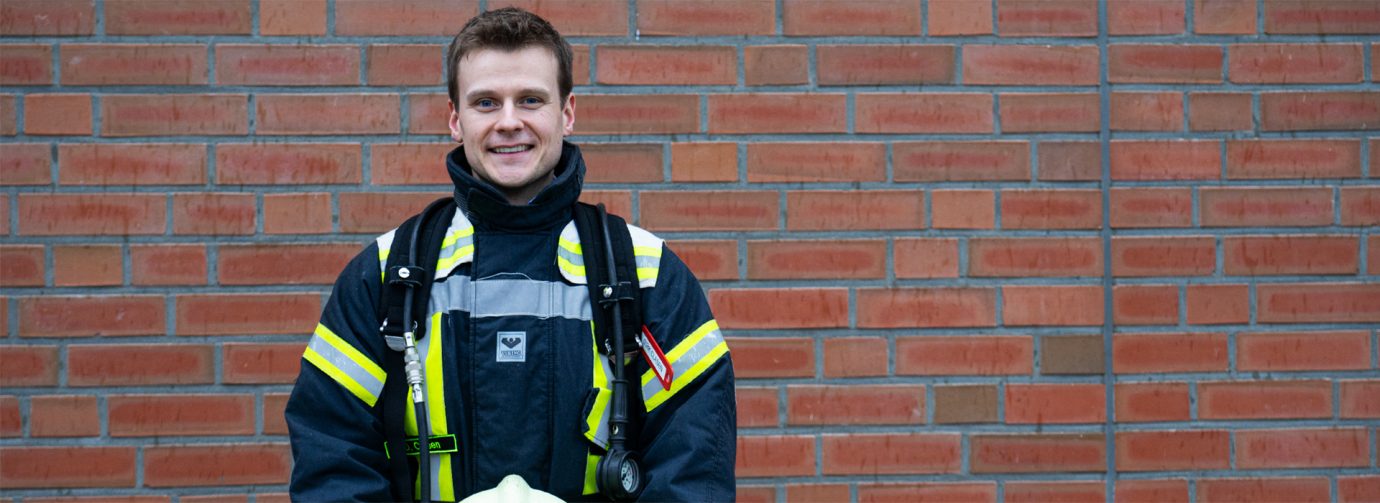
10.03.2020 - Dirk Clasen is a full-time consultant to the commercial management, assists with projects such as the construction of a new warehouse and carries out sub-projects independently. In addition to this typical office job, he also volunteers for the Steinbeis works fire brigade - with heart and soul.
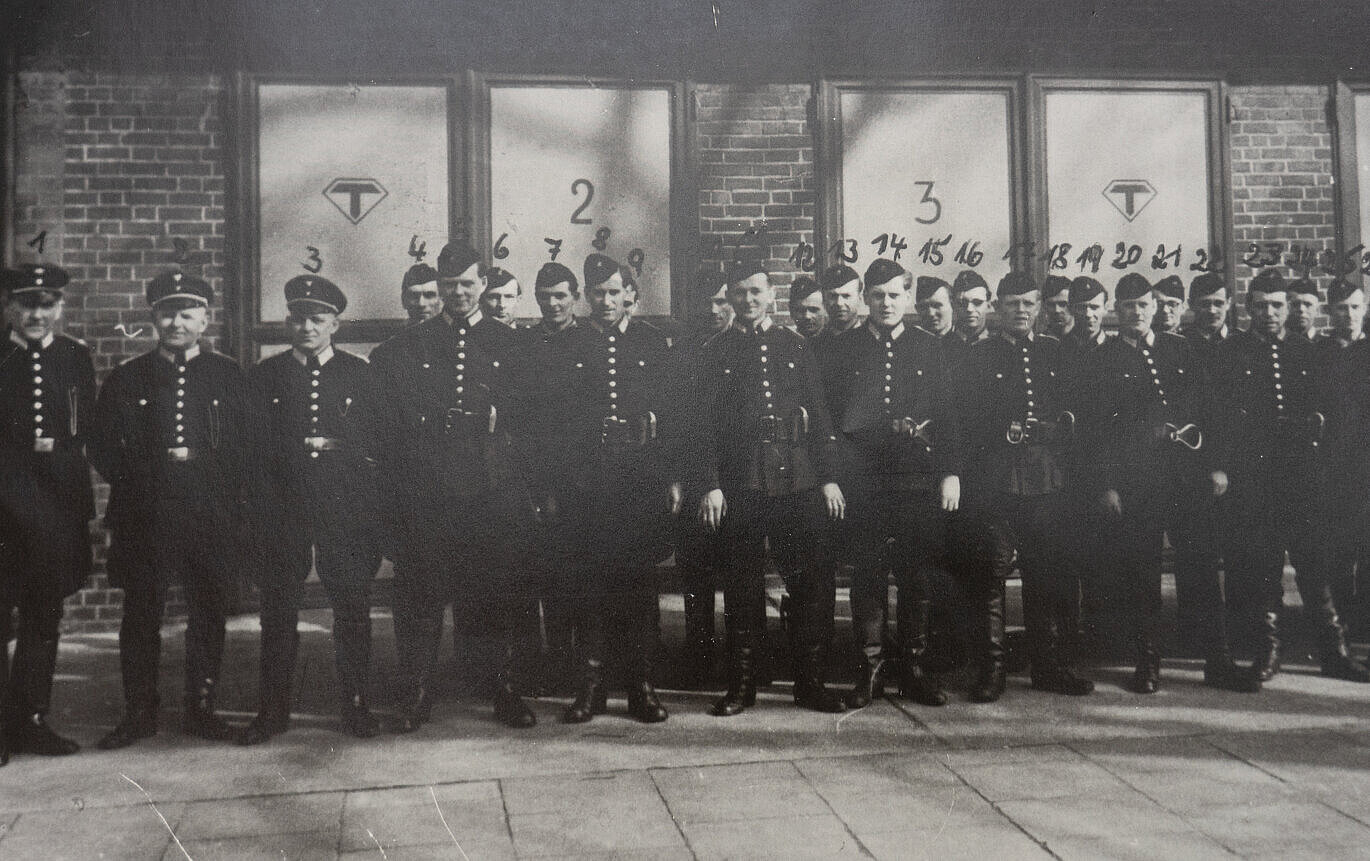
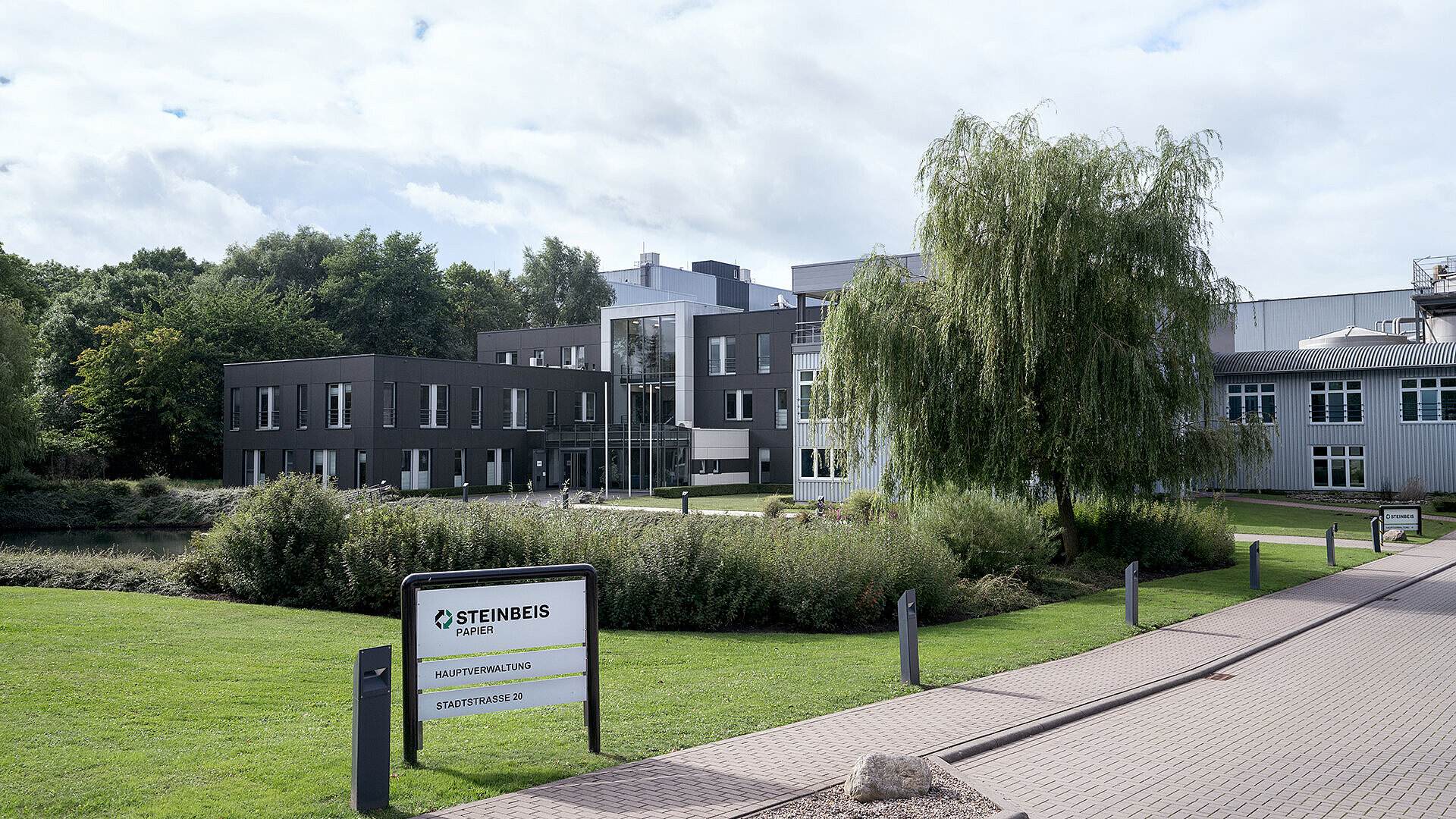
Steinbeis Papier's headquarters rises up like an ocean liner with its round portholes. The image is emphasised by the pond in front and the splashing of the water fountain. The mill has been anchored in the fields of Glückstadt since 1911. Over 300,000 tonnes of recycled paper are produced here every year (as of 2020). The raw material is paper from the blue bin. Imposing mountains of newspapers, brochures, envelopes and magazines are therefore stored in the inner courtyard of the factory premises. With so much paper, fire protection is particularly important. The Steinbeis fire brigade has been recognised as a works fire brigade since 10 September 1951. Over 125 men and women have currently signed up for the service, which is far more than just an honorary position. "The fire brigade is like a big family," says Dirk Clasen. "The comrades work in a wide variety of departments - I only got to know them through the plant fire brigade. This network also allows me to be more agile in my day-to-day work." His main job is as a consultant to the commercial management.
Large multinational corporation vs. small and medium-sized regional company
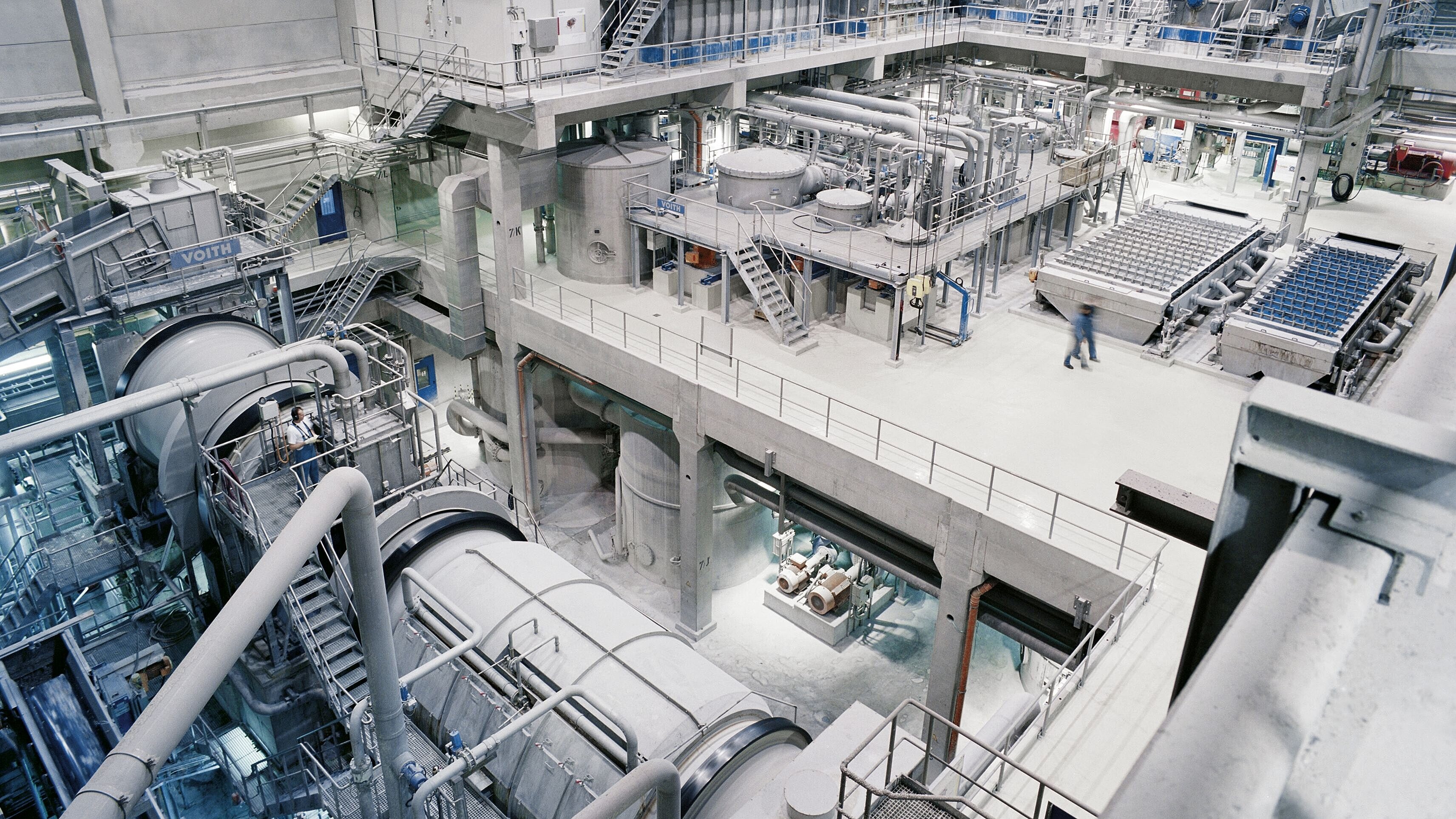
Dirk Clasen was already certain during his A-levels that he wanted to train as an industrial clerk - but at which company? "I asked myself whether a large multinational corporation would even be an option for me - a company that cuts down rainforest for palm oil plantations, produces pesticides or carries out animal testing. That didn't feel right." He got to know Steinbeis at a careers fair. "I was totally fascinated by the fact that Steinbeis had won a sustainability award." The recruiter invited him on a private tour of the plant. He spent two hours touring the company's warehouses and production halls. When Dirk Clasen sat in his car afterwards, his decision was made. "These huge machines, the whole periphery with its own power plant and sewage treatment plant, the recycling process - I wanted to work here," he recalls. His apprenticeship at Steinbeis began on 1 August 2011. Just one week later, he joined the fire brigade.
Climbing the (fire service) ladder
As a rule, every fire service candidate undergoes one year of training, during which they attend all services and familiarise themselves with their duties. This is followed by training to become a squad member or trained firefighter in a basic function. This teaches all the content required to ensure that every candidate can fulfil every function of a tactical unit during an operation and knows exactly what to do. "Once you have completed the basic training, you have understood what firefighting is." Nevertheless, the team remains flexible: "The tasks are clear. But not everyone always has to do the same thing. If you'd rather be a dispatcher one day and explore the situation with the squad leader instead of driving the vehicle as an engine driver, that's perfectly fine," explains Dirk Clasen. Further training is then possible, so that comrades from different stations are in constant dialogue with each other - this creates a strong network with other firefighters and special units. If an emergency then occurs, the plant fire brigade is not only excellently trained, but can also draw on the knowledge of experts.
After completing every course available at district level, Dirk Clasen spent the next five years on duty without a specific function. During this time, he gradually took on more and more administrative tasks - from invitations to the annual team event to organising services and planning operational exercises. Following the departure of a highly esteemed colleague, he took on the role of Deputy Chief of Defence in 2018. "Helping to shape processes and services instead of just carrying them out is what appealed to me the most," he explains.
He is now training to become both a platoon leader and a unit leader at the state fire brigade school in Harrislee near Flensburg, where he is responsible for larger tactical groups. "The training grounds there are amazing. Incidents can be reenacted in houses, including fire simulation and everything that goes with it," enthuses Dirk Clasen. In the exercises, the simulated emergency has to be assessed: How should the team proceed? Who has to go where? Are there people who need to be rescued? Which fire protection equipment makes sense? All in all, how must the operation be structured in order to be successful? At the same time, Dirk Clasen learns in these courses what responsibility comes with the leadership position. Starting with the dangers of the incident site for himself and his comrades. If there is a fire in the basement, for example, the overall situation is already unpleasant - but if power lines are added to the mix, it becomes even more dangerous. In such cases, Dirk Clasen has to point out possible dangers to his team and take them into account when planning the operation.
Always ready for the fire
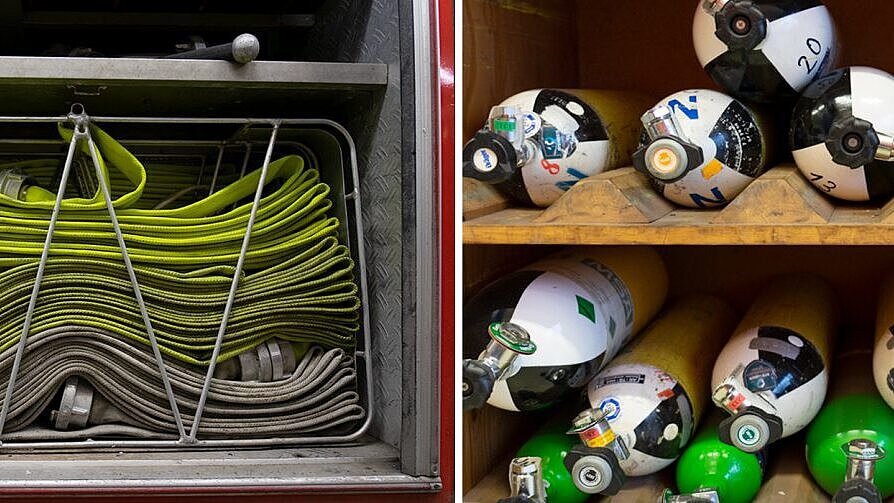
To ensure that these complex decisions are not only made once the fire has already broken out, Dirk Clasen and the other team leaders at Steinbeis regularly work out new theoretical damage scenarios. One example: if there is a fire in paper production, under no circumstances should a cold jet of water be held on the extremely hot roll - it would burst into a thousand pieces. That's why special powder extinguishers hang on the wall here. Together with the other management positions, Dirk Clasen identifies the requirements in the production sections and adapts the deployment strategies accordingly - always taking into account the fire protection and extinguishing equipment already in place. The other team members are given regular tours of the facilities and informed about the hazards that need to be taken into account. Regular fire drills are also essential. The plant fire brigade is therefore on duty every Monday. This involves two hours of training in direct fire defence measures. The fire brigade board is responsible for preparing and conducting the training.
However, a particular challenge arises when new trainees start. Especially when there are as many as this year: ten of the 16 new trainees at Steinbeis have signed up for the fire service. "You teach a sixth form and suddenly get ten new students who can't read or write - you have to get creative so that things still run smoothly in an emergency," says Dirk Clasen. That's why the new arrivals are now receiving basic training with an external trainer. They learn the basics in a week.
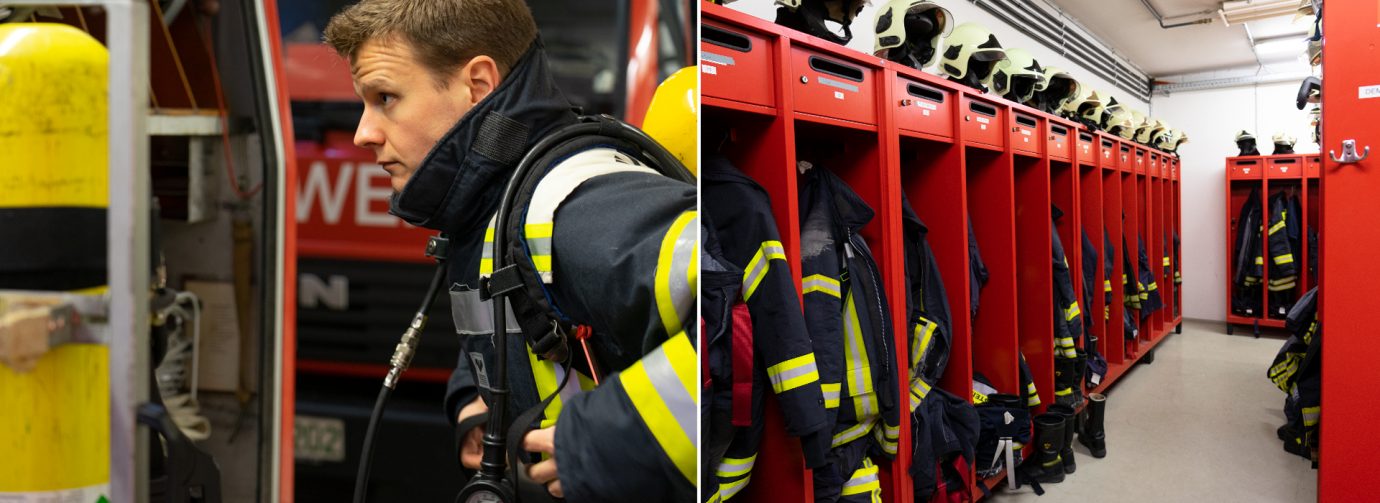
To ensure that the team is fully operational in an emergency, Dirk Clasen and the other group leaders also organise an annual respiratory protection test on the Steinbeis site. Cycling, hammer pulls, climbing up a 20-metre permanent ladder and finally the obstacle course that the fire academy brings along for the test on a truck. This simulates as realistically as possible what it feels like to squeeze through narrow, dark spaces with heavy oxygen cylinders and a breathing mask. The training route is heavily fogged and heated to around 45 degrees Celsius, children's screams penetrate the firefighters' ears from the conveyor belt, and flashing lights and smoke machines obscure their vision. For safety reasons, the line is permanently monitored by a night vision camera, the grid walls have quick access points for emergencies, and the entire facility can be made smoke-free within seconds using emergency extraction. Nevertheless, the exercise is tough and not for the faint-hearted - just like an emergency.
Prevention is the best protection
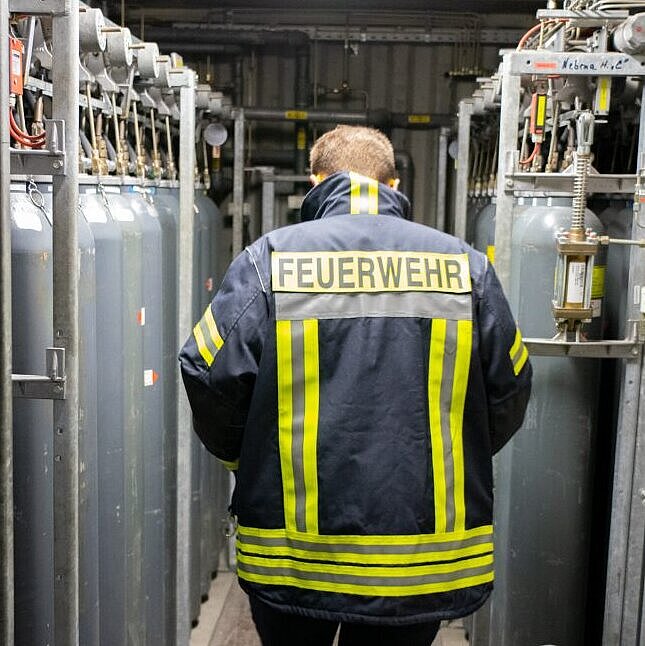
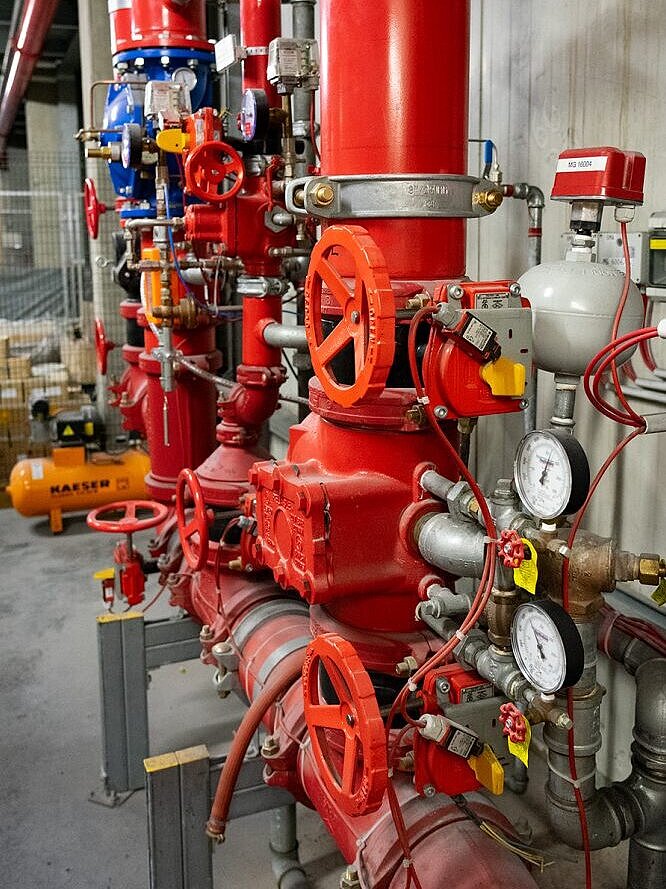
In an ideal world, fire protection systems would work so well that a fire would not break out in the first place. To prevent a fire from breaking out, various structural fire protection measures are therefore installed in the factory buildings, not least due to the requirements of fire protection insurance. For example, the sprinkler systems in the paper warehouse need to be pressurised with water. "In an emergency, our systems don't just timidly distribute a glass of water over the fire, but virtually the entire watering can," says Dirk Clasen. They are activated as soon as a fire starts somewhere and prevent it from spreading further. Foam systems are also typical in the paper industry. There is therefore a 2,000 litre tank under the calender with the extremely hot rollers, in which foam is permanently available. If an alarm is triggered, the entire system fills up. This smothers the fire without blowing up the rollers.CO2and argon systems are also available for the electrical systems. No matter how good the equipment is and how many preventative measures are taken: The most important thing for Dirk Clasen is the crew. Nothing works without them.
"When the alarm goes off, your adrenaline rushes. Your heart is pumping and you are fully energised," says Dirk Clasen. The missions are usually straightforward. A stray lithium-ion battery or a Bengalo flare, neither of which have any place in paper waste, ignite at the plant.
It's getting serious!
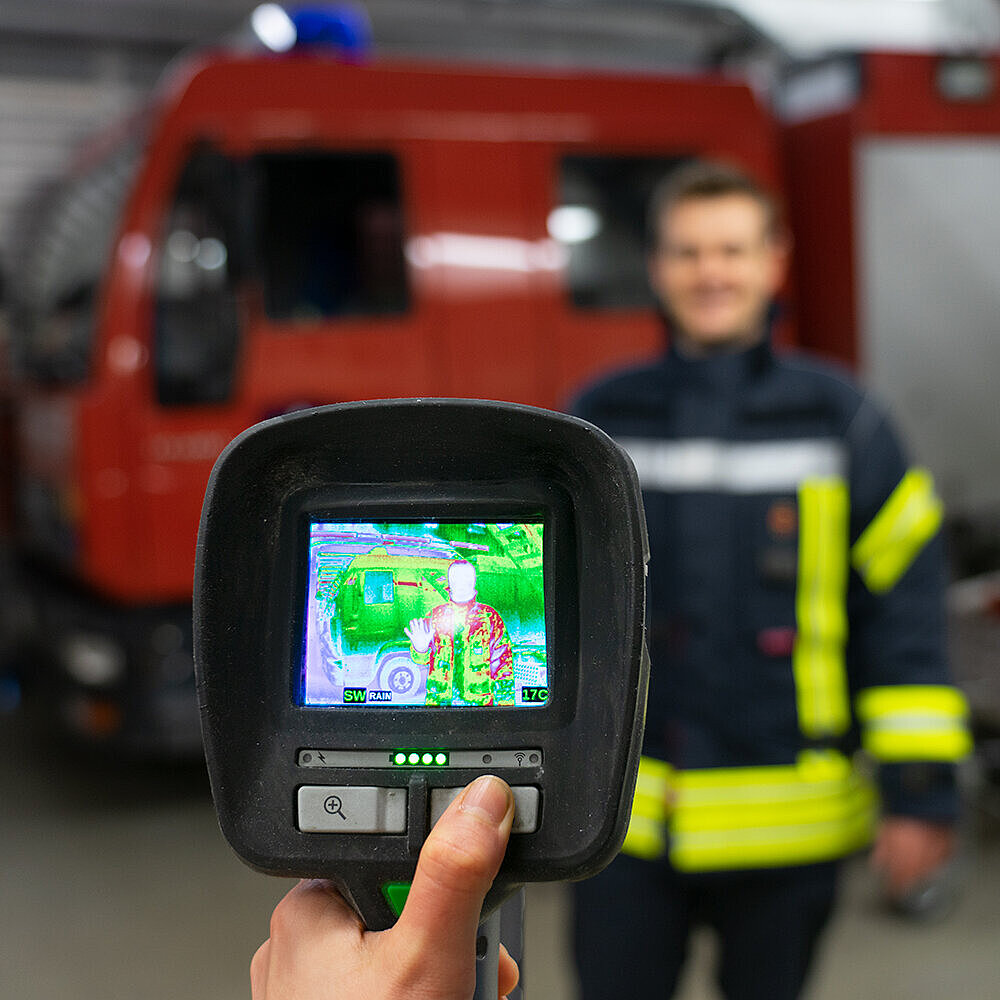
The biggest operation Dirk Clasen has ever experienced: a fire in the power plant, caused by ash that was carelessly poured into the bin. A remaining spark ignited in the paper mill and set fire to the neighbouring piles of material. The alarm reached him shortly before eight in the evening. He could see the billows of smoke above the plant from afar on the country road. "My heart sank and I thought: by golly, every second really counts now," remembers Dirk Clasen. Two comrades from Itzehoe arrived at the same time as him, and together they ran into the equipment room, changed and ran to the scene. The Glückstadt fire brigade was already in action with two vehicles, alongside the plant fire brigade with three emergency vehicles and 90 firefighters and five extinguishing cannons in between. "We then went in with breathing apparatus. I really learnt to appreciate the thermal imaging camera in particular - you can't see anything without it." The operation lasted around two hours. The power plant was able to resume operations the very next day. "The feeling that we worked together to make this happen was incredibly fulfilling."
Even if it's mostly smaller calls that get Dirk Clasen's attention - for example, a spider crawling over the smoke detector - if one of the 2,000 detectors in the building goes off, he jumps out to see what has triggered the alarm. Every alarm is taken seriously. "You never know when the next call will come and what will happen. That's what makes it so exciting and varied."
Photos: Valerie Bachert
Author
Valerie Bachert is a journalist, chief of staff and sustainability officer. She is interested in the areas of organic farming, conscious consumption, species extinction, social injustice and sustainable nutrition.