Eco-labelling facilitates sustainable procurement

06.08.2019 - The public sector is still the largest purchaser in Germany. The procurement criteria that those responsible are guided by also include ecological aspects. The easiest way to verify these is by means of certified environmental labels.
Public sector tenders
Public sector purchases in Germany account for over 350 billion euros a year and are therefore responsible for around 17% of gross domestic product. This makes the public sector the largest consumer in Germany. But if you want to count the state among your customers, you have to face up to the tendering process - procurement for the public sector is a complex procedure. Those responsible have to take into account the legal framework, the principles of public procurement law, EU directives and, of course, economic factors. In turn, suppliers must demonstrate compliance with all requirements for their company and for their products or services.
Sustainability aspects in tenders and awarding contracts
The inclusion of environmental aspects in tenders does not make the process any easier for anyone. The main obstacle to taking environmental requirements into account is often cited by public authority purchasers as a lack of easily accessible, reliable, up-to-date and marketable product requirements or environmental criteria that can be used for awarding contracts. Procurers in public administration are unable to familiarise themselves with complex environmental science issues and derive environmental protection requirements for their tenders themselves. Nor are suppliers in a position to respond to constantly changing criteria with individual proofs. The solution for both sides is the inclusion of standardised and certified environmental labels or the criteria applied in the context of their award. According to the Federal Environment Agency, such an approach is "explicitly possible under public procurement law. Ecolabels are therefore of considerable importance in environmentally friendly public procurement."
Recognised eco-labels and their significance
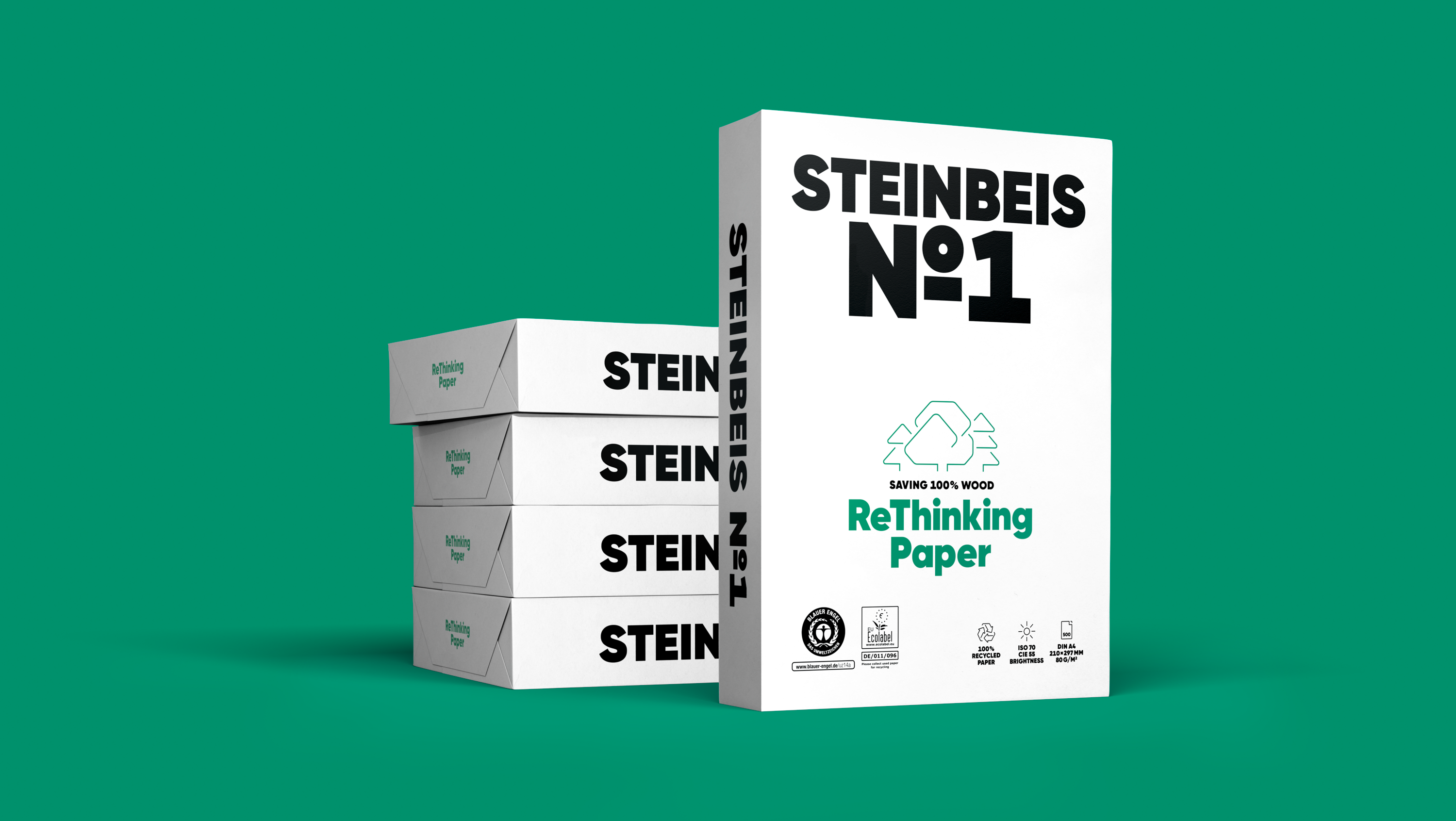
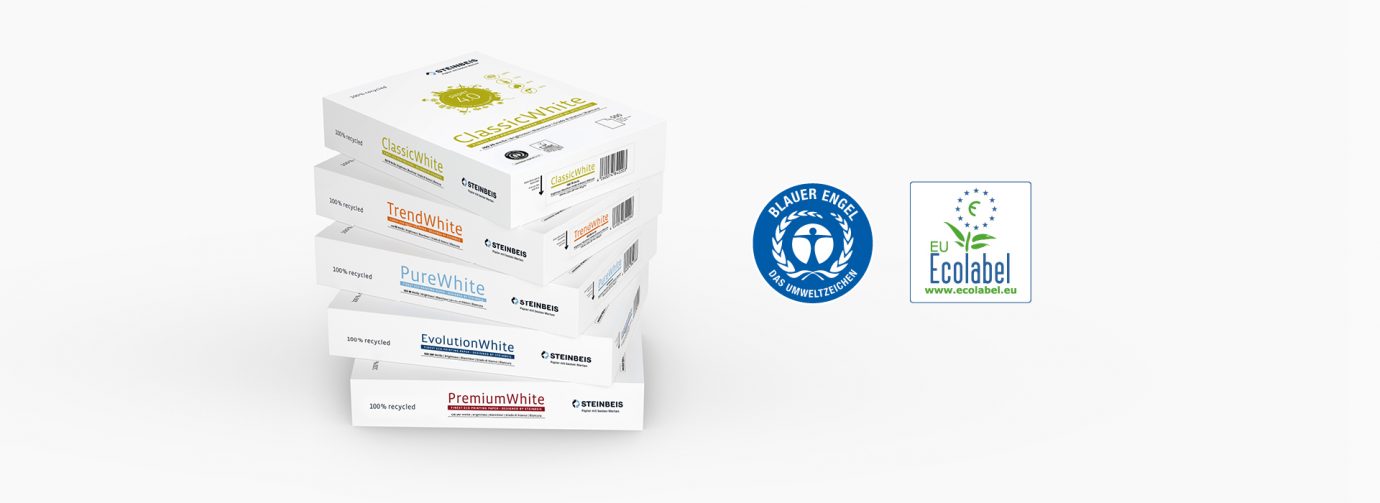
Steinbeis papers have been awarded two of the most important environmental labels, which are also particularly emphasised by the German Federal Environment Agency in training scripts and guides for sustainable procurement: The Blue Angel and the EU Ecolabel are declared as Type I ecolabels in accordance with ISO standard 14024. These labels are used to recognise particularly environmentally friendly products and services within a product group. They are aimed equally at private, commercial and public end users - i.e. also at procurement organisations. Type I ecolabels are based on a multi-criteria assessment and are awarded by independent certification and testing bodies - i.e. not by industry or trade associations. According to the Federal Environment Agency, the underlying criteria are "generally very well suited as a basis for tenders, among other things because they usually address environmental effects along the entire life cycle and strict/ambitious requirements are formulated. This guarantees a high level of environmental relief or protection." In addition to the Blue Angel and the EU Ecolabel, other Type I ecolabels include the Austrian Ecolabel, the Nordic Swan Ecolabel, the organic logo of the European Union and the organic seal of the Federal Ministry of Food and Agriculture.
In summary, it can be said that ecolabels such as the Blue Angel and the EU Ecolabel can show those responsible for procurement in the public sector "at first glance" that the products on offer fulfil the environmental criteria required of them. However, commercial purchasers are now also happy to incorporate environmental labels into their procurement processes in order to purchase products that have a lower environmental impact than comparable conventional products. Companies in particular (and therefore their purchasing departments), which have had to account for their social and environmental behaviour since 2017 in accordance with the CSR Directive Implementation Act, are paying more attention to these aspects. However, companies that want to demonstrate their consistent focus on sustainability in public procurement - and this is where the circle closes - are also on the safe side when purchasing products with the eco-labels.
The eco-labels make it easier for everyone - from the state and SMEs to private households - to buy with confidence.
Blue Angel profile
- Origin: Germany
- Publisher: Federal Ministry for the Environment, Nature Conservation and Nuclear Safety (BMU), Federal Environment Agency (UBA), Environmental Label Jury, RAL gGmbH.
- Year of foundation: 1978
- URL: www.blauer-engel.de
- Certified products and services: Currently a total of approx. 12,000 products and services in 113 product groups
- Product and service categories: "Everyday life and living", "Paper and printing", "Electrical appliances", "Building and heating", "Trade and municipality".
- Explanations on the issuer: The label owner is the Federal Ministry for the Environment, the criteria are developed by the Federal Environment Agency. The independent decision-making body, the Environmental Label Jury, is made up of representatives from associations, trade unions, industry and trade, science, churches and youth organisations.
EU Ecolabel profile
- Origin: European Union (Regulation EEC 880/92), today: REGULATION (EC) No. 66/2010
- Publisher: European Commission, European Union Ecolabelling Board (EUEB)
- Year of foundation: 1992
- URL: www.eu-ecolabel.de
- Certified products and services: Currently more than 37,000 products in 28 product groups, from electrical appliances to textiles, paints and varnishes to camping sites.
- No allocation to superordinate product categories.
- Explanatory notes on the publisher: The EUEB is the supreme body made up of representatives of the Member States, environmental and consumer organisations, industry, trade unions, retailers, manufacturers and service providers. It is awarded by the responsible national competence centre, Germany: RAL gGmbH and UBA, and is valid for the entire EU area.
Cover picture: Steinbeis Papier GmbH
Author
Responsible for marketing, social media and e-business at Steinbeis Papier. Circular economy, recycling and biodiversity are the topics close to the heart of the graduate business economist. Enthusiastic blogger for the Steinbeis editorial team.