Eco Christmas - five themes for a sustainable Christmas

22.11.2022 - Around Christmas and the Advent season, we cultivate customs and traditions in which sustainability aspects have long been disregarded or considered secondary. We show tricks and give suggestions on how you can approach the major Christmas themes with a clear (environmental) conscience.
At the beginning of October, even before the first gingerbread biscuits appeared on the shop shelves, the topic of "sustainable Christmas" was already on everyone's lips. Environmental organisation Deutsche Umwelthilfe had initiated a discussion about the high energy consumption of Christmas lights in times of energy crisis and triggered a wide range of reactions. From indignant statements such as "at Christmas you can let your sustainability resolutions slide" to radical "lights out" plans, there were many opinions and measures on the table. As is so often the case, however, a few simple changes that barely alter the usual Christmas experience can have an impact on a resource-saving and climate-friendly festive season.
1. The lighting
The almost 20 billion lights that shine in German households during the festive season actually have a significant impact on electricity consumption. According to a survey conducted by the opinion research institute YouGov on behalf of the green energy provider Lichtblick, around 233 million fairy lights consume around 614 million kilowatt hours, which corresponds to the annual consumption of a medium-sized town with 205,000 households. Based on the electricity mix in German households, illumination therefore causes a total of 215,000 tonnes ofCO2.
An important contribution to reducing this consumption can be made by using a chain of LEDs as light sources (if this has not already been done). These use up to 80 per cent less electricity than products with classic light bulbs. Ideally, the fairy lights should be disconnected from the power supply when nobody is enjoying them, or a timer should be used to deactivate them during the day and at night.
In outdoor areas, the best choice is a solar-powered LED light chain. If the fairy lights are supplied with electricity from the socket (batteries are a no-go in terms of sustainability in this case), thenCO2 emissions are also reduced if you switch to an electricity provider that uses renewable sources. But of course this doesn't just apply to the Christmas period.
2. The tree
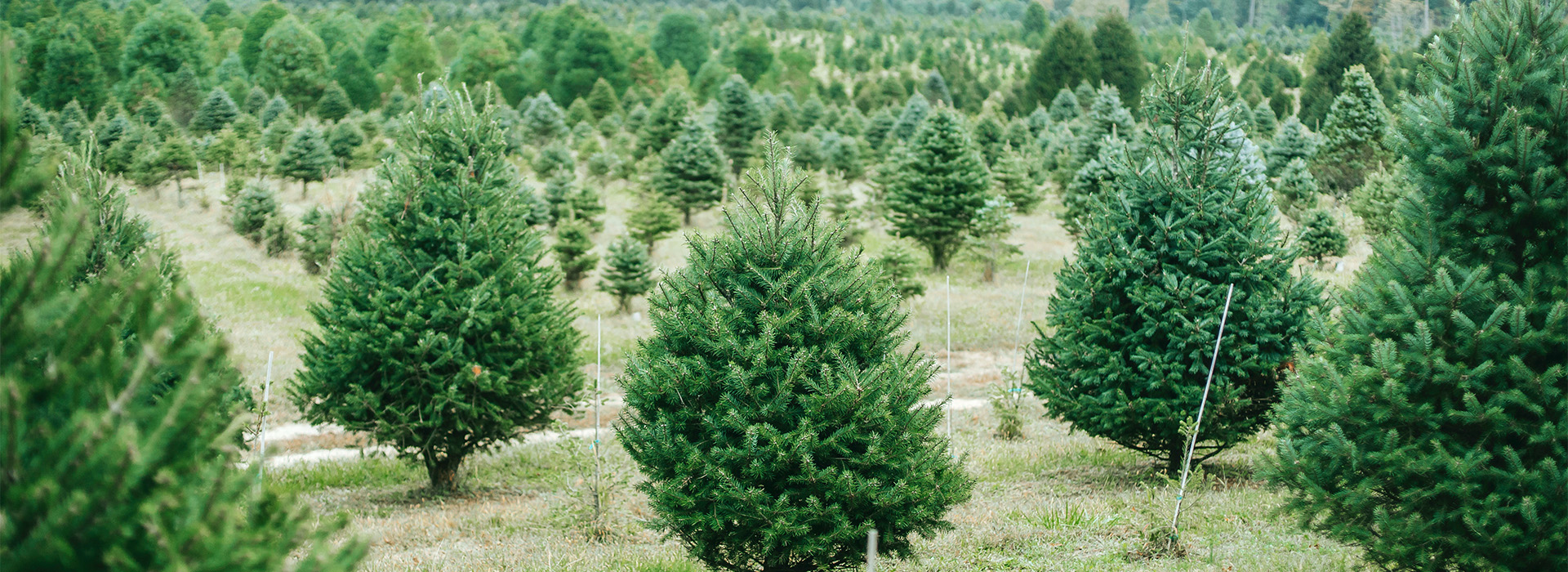
According to Statista, almost 30 million Christmas trees arrived in Germany for the 2019 Advent season. Many of these masses of trees come from plantations where pesticides and fertilisers are used that can pollute our environment and groundwater. We also carry these substances into our homes. The high water consumption during the long growing period and the interpretation of a Christmas tree as a disposable item raise the question of whether our customary way of using it is still justifiable in times of climate change. One alternative, for example, is a tree in a pot "for rent". However, this service is not offered everywhere in Germany. On the other hand, it is more common to find Christmas trees from fair, regional, organic cultivation, which is now even offered by some DIY stores. Bioland, Naturland, Demeter, the EU organic seal and the FSC certificate should be noted here. Another environmentally friendly solution may be found at the local forester. Many forestry companies offer trees at Christmas time that had to be felled anyway as part of general forest maintenance. They have grown in a natural environment without chemicals and did not have to be transported far to their point of sale.
When it comes to tree decorations, it can be said that the current trend with straw stars, wooden pendants or dried orange slices is much more tasteful and environmentally friendly than, for example, the well-known tinsel.
3. The packaging
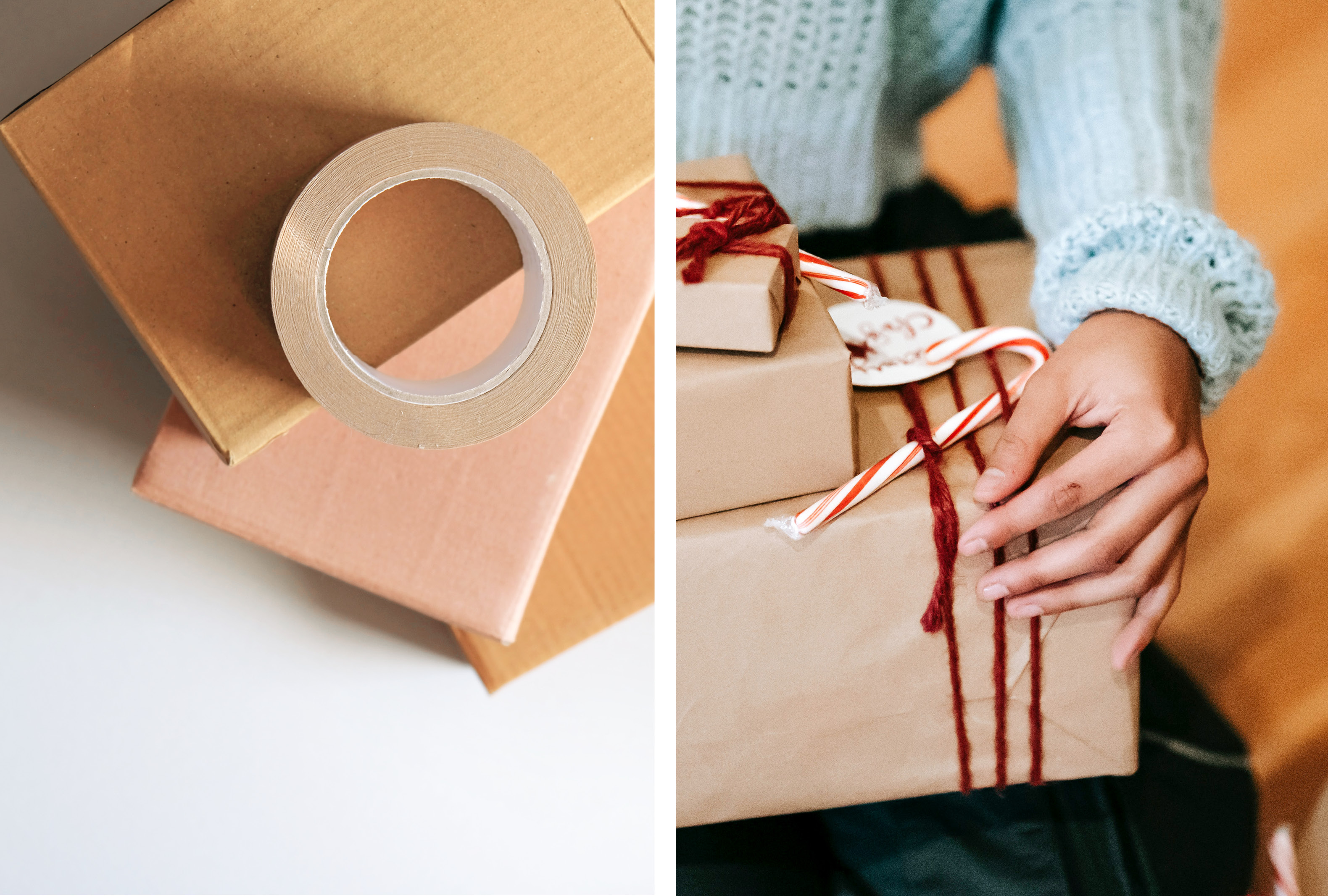
Paper printed with thick layers of ink, aluminium-coated glossy foils and plastic bows - gift packaging, which often receives little attention, is associated with high resource consumption and numerous environmental impacts. However, there is also some very attractive recycled gift wrapping paper on the market. If you want to be a little more creative, use plain wrapping paper and decorate it with your own look, personalised for the recipient. You can also involve the children and their artistic energy. In addition to plain wrapping paper, old magazines or newspapers can also be used to transform the gift into a kind of collage. Scraps of fabric or wallpaper also fulfil this purpose, and instead of using bought polyester bows, it is possible to use old lace from your own textile remnants.

4. The Christmas market
We do a lot of travelling around the festive season: to the shops, to relatives, to church, etc. Unless you use an electric vehicle powered by electricity from renewable sources, every journey generatesCO2. Most Christmas markets are centrally located and easily accessible by public transport. In the big cities, there are now also environmentally conscious Christmas markets or Advent eco-markets that also use organic products for the food and drink on offer.
5. The festive meal
For most people, festive roasts, Christmas goose or carp are as much a part of the festive season as the Christmas tree and St Nicholas. If you opt for organic quality rather than discount products from factory farming, you are doing something for the animals, the environment and your own conscience. And an organic goose should also taste better if it has been fed with organically grown grain, has had sufficient exercise and has not been given antibiotics. Ideally, the animal should come from the region so that it doesn't have a large carbon footprint due to transport. Of course, this also applies if the choice falls on a fish. A regional carp from organic ponds, for example, is a sustainable solution. Herring from the Baltic or Atlantic and European trout are also possible options. If you buy your fish in the supermarket, you should look for the MSC (Marine Stewardship Council) seal or the organic seal. The World Wide Fund for Nature (WWF) also publishes a good buying guide on the subject of fish farming and fishing.
Of course, responsible food shopping doesn't just start with the festive meal. Snacks such as nuts, oranges or almonds may also come from fair, organic cultivation or, in the case of chocolate or crisps, be labelled as organic fair trade products.
Not just a good idea for Christmas: digital detox
Take care of your nerves, wind down and protect the environment at the same time. The time off work around Christmas is ideal for a few days of digital detox. Simply put your mobile phone and other digital devices in a drawer, write your Christmas correspondence as a traditional letter or on a postcard and spend the quiet days taking long walks together. Evenings spent playing games or doing handicrafts can also help everyone to relax. In this way, you also save electricity for your mobile phone, and every email or chat message that is not sent and does not take up storage space on a server somewhere in the world has a positive impact on yourcarbon footprint.
With this in mind, have a happy and sustainable Christmas 2022.
Cover picture: Any Lane/Pexels
Author

Since his editorial traineeship in Hamburg, Jan Strahl has worked as a journalist, editor or author for almost every large and small publishing house in the city. He writes for consumer media and corporate publishing publications on art, fashion, lifestyle and knowledge topics.