How children learn about environmental protection through play

How can the complex interrelationships of environmental protection be explained to children without moralising? How can enthusiasm for nature, which is right on our own doorstep, be awakened? Quite simply: through play. An outstanding example of this is NABU Hamburg's "Die ElbForscher" project, which invites school classes to the banks of the Elbe to dive straight from the classroom into adventure.
Research, discover, understand - directly on the Elbe
When NABU's "FuchsMobil" pulls up on the banks of the Elbe, it is more than just a vehicle - it is a mobile research laboratory. Loaded with research equipment such as landing nets, beaker magnifiers and identification boards, it enables schoolchildren to experience the unique world of the tidal Elbe up close. The programmes are tailored precisely to the age groups: children in Years 5 and 6 experience the interplay of high and low tide during a beach rally. Years 7 to 9 explore the path of waste into the oceans, while older pupils from year 10 onwards carry out water ecology studies.
The focus is on active experience. Instead of dry theory, the aim is to observe, collect and scrutinise. What makes the Tidal Elbe habitat so special? Which animals live here and how have they adapted? And what impact does our consumption have on this habitat? The project, sponsored by the Elbe Habitat Foundation, conveys ecological relationships in an impressive way and promotes the ability to help shape our environment.

From the Elbe beach to the circular economy
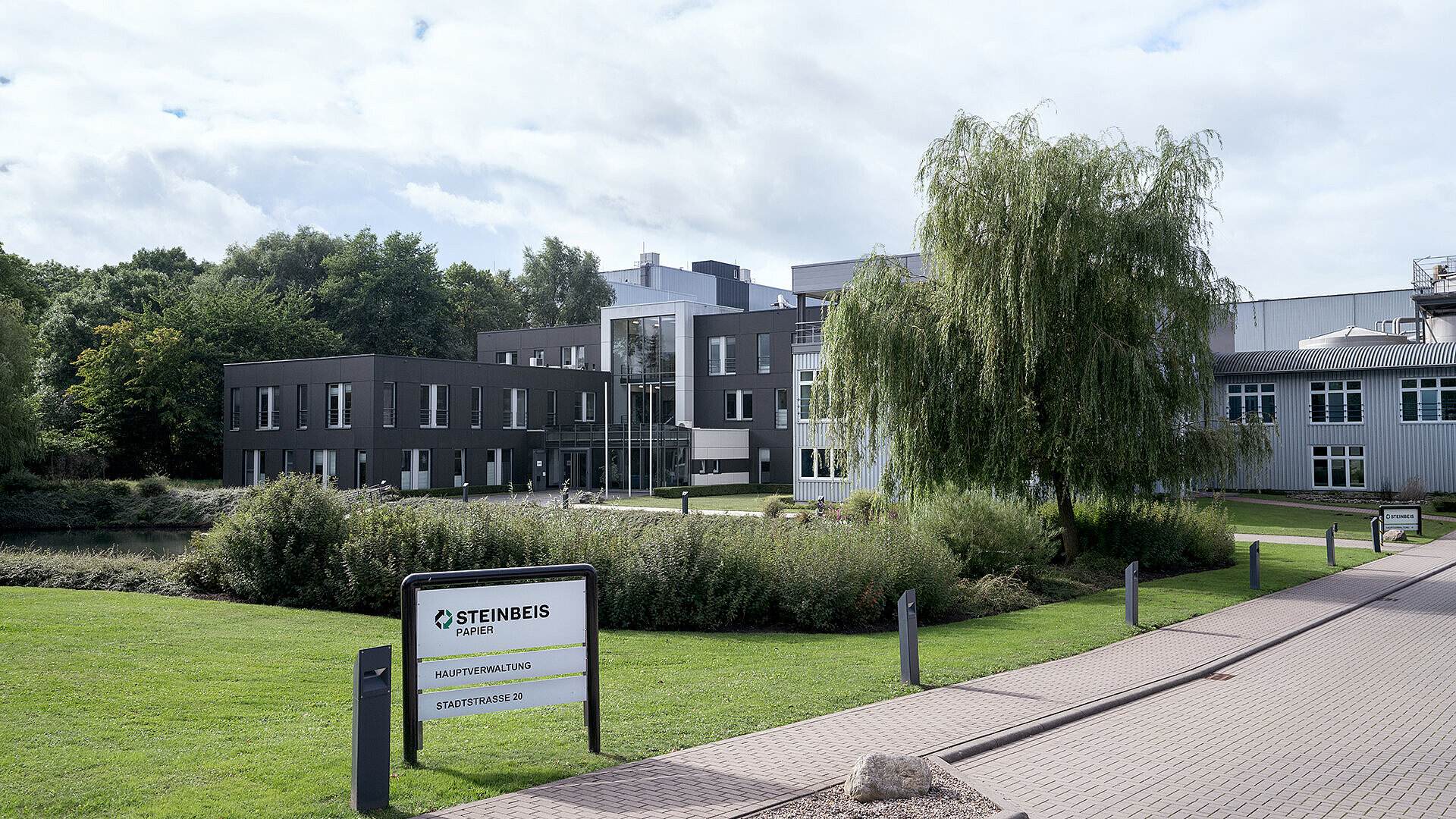
The central idea of the Elbe researchers is to take a close look and understand the connections. The Elbe is more than just a research area; it is a lifeline. Glückstadt, the headquarters of Steinbeis Papier, is also located on its banks. Protecting this shared habitat is therefore a special responsibility. This approach of scrutinising materials and their cycles is also at the heart of the recycling philosophy.
Where the children on the Elbe beach learn that waste is a disruptive factor, elsewhere waste paper is deliberately not seen as waste but as a valuable raw material for new paper. Both perspectives are united by the idea that a conscious use of resources is crucial for the protection of our environment.
Nationwide initiatives: Playful learning as a model for success
The ElbForscher are not an isolated case. There are outstanding projects throughout Germany that bring children and young people closer to nature. In keeping with the theme of water, for example, the "Aqua Agents" take primary school children on a secret mission. The nationwide educational initiative was launched back in 2009 by the Michael Otto Environmental Foundation. Equipped with an agent case full of experiments, children unlock the secrets of the water cycle and become real experts on this precious resource. But learning is also fun away from the water: in the "Forest Youth Games", organised by the German Forest Protection Association (SDW), school classes solve tricky tasks on a course in the forest. Another example is Europarc Germany's "Junior Ranger Programme", in which children in national parks are trained as young conservationists who actively help with conservation projects.
Sustainability starts on a small scale
The same principle also works at home: making toys out of old cardboard or making waste sorting a competition is a fun way of introducing sustainability into everyday family life. Whether outdoors in nature or indoors with glue and waste paper - those who learn early on how much joy there is in the conscious use of resources will find it easier to take responsibility later on. In this way, young researchers become real shapers of the future who have learnt that each individual can make a contribution to protecting our common foundations of life.
Cover picture: Guido Rottmann / NABU
Author

Since his editorial traineeship in Hamburg, Jan Strahl has worked as a journalist, editor or author for almost every large and small publishing house in the city. He writes for consumer media and corporate publishing publications on art, fashion, lifestyle and knowledge topics.