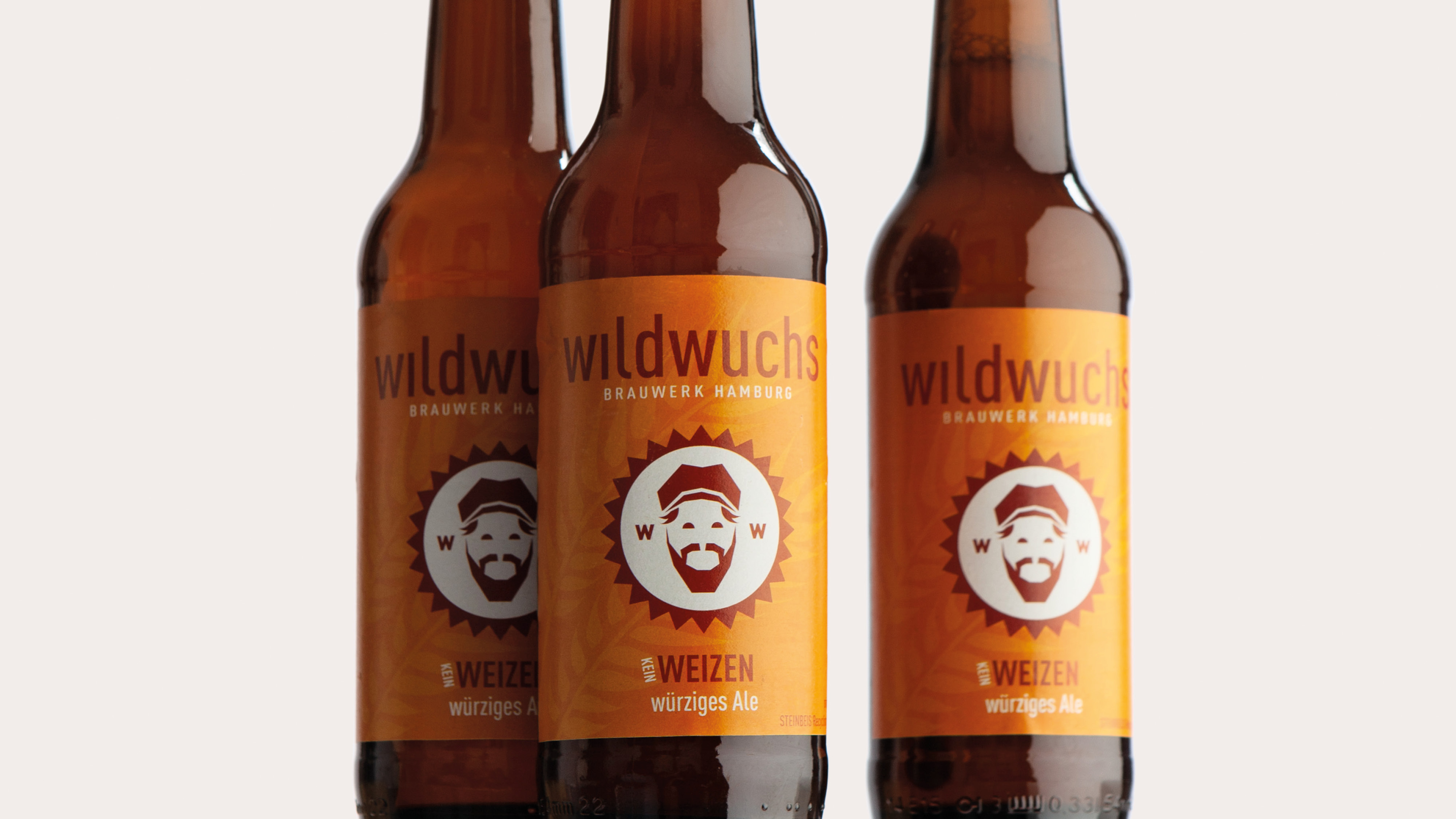
Cheers to sustainability!
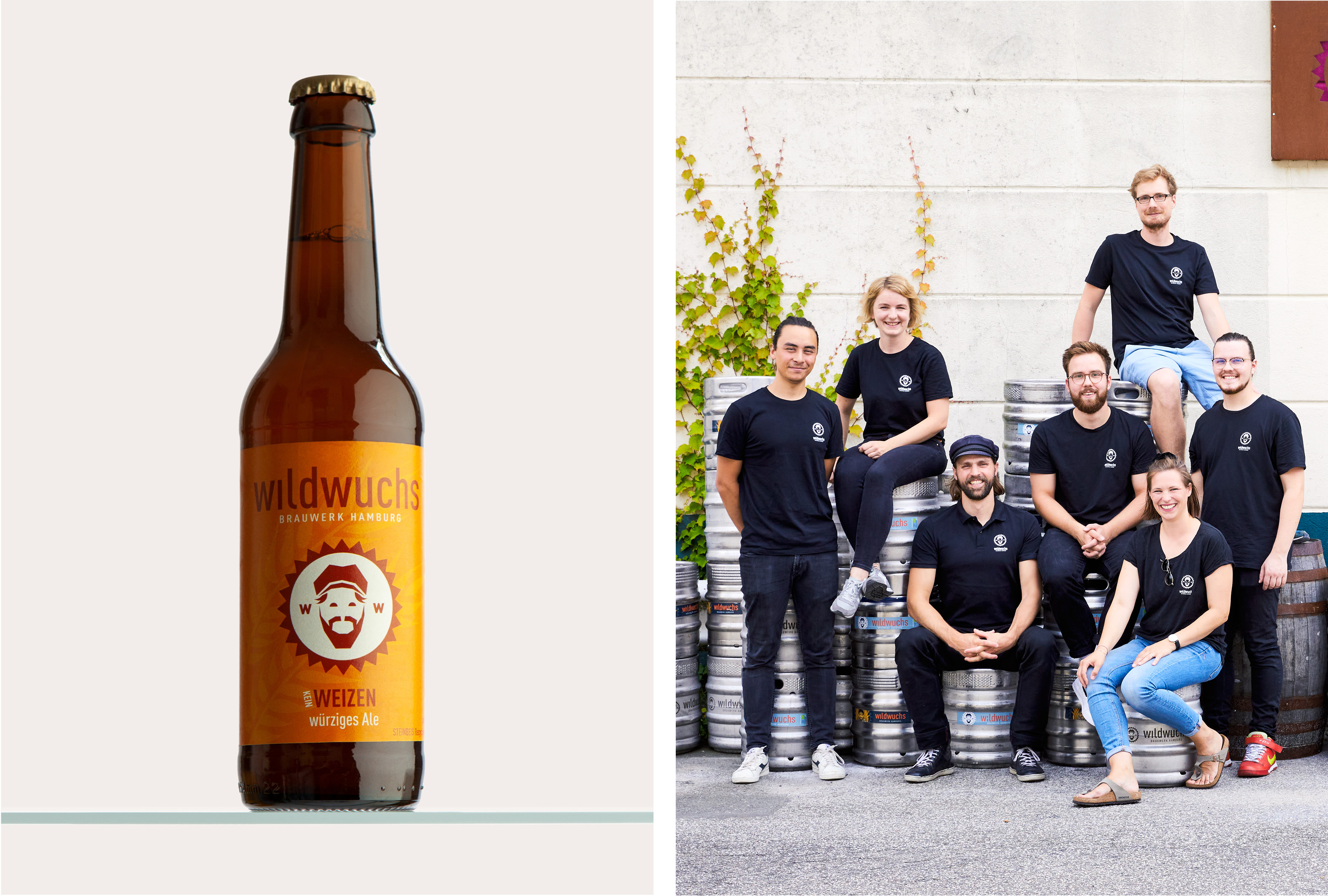
08.11.2022 - Brauwerk Wildwuchs is Hamburg's first and only organic brewery. Locally sourced ingredients and a wide range of varieties, from Körbs Pumpkin Ale to Broid New England IPA, characterise the beers brewed in an inconspicuous factory building in Hamburg-Wilhelmsburg. Master brewer Fiete Matthies - himself from Finkenwerder - came up with the idea and founded a unique gourmet start-up with a commitment to sustainability. In this interview, the 36-year-old family man explains why cooperation is essential for running an organic brewery and why labels made from 100 per cent recycled paper are so important for his product.
How did the name Wildwuchs come about?
I owe the name to my brothers. They initially wanted to make cucumber lemonade. However, I quickly realised that I had trained as a brewer and maltster. I was able to convince them to brew beer. But not just any beer, but organic beer - unfiltered and unpasteurised. Beers that don't necessarily comply with the German Purity Law. They may even contain a bit of coffee or bread. My older brother then commented on our concept: "That sounds a lot like wild growth. The name was born. And it's an excellent way of conveying the naturalness of our products.
Can you give us a little insight into your career as a master brewer?
When I was 15, I didn't know what I wanted to be. A school internship at the Holsten Brewery opened my eyes to my future. When I finished school, the newspapers were full of job offers and reports about excellent career opportunities for future master brewers. That reaffirmed my decision to take this path. Applications went out to 25 breweries and I was soon able to start an apprenticeship as a brewer and maltster at a medium-sized brewery in northern Germany. After two and a half years of training, I went on to the TU Berlin, where I graduated as a master brewer. After graduating, I initially helped plan and set up breweries in France and Spain. That was an exciting experience, but I was always more interested in production. A job offer as a master brewer on Menorca came at just the right time, even though I could only speak moderate Spanish.
How did these experiences abroad influence your project with Wildwuchs?
The portfolio is simply different to that of a standard home brewery. In Spain, for example, they have completely different expectations of a beer. It was there that I brewed a beer with coriander and orange peel for the first time. That inspired me to take a look at other regions of the world and recognise how beer is brewed in other cultures beyond the German Purity Law and the variety of beer that can be produced.
What distinguishes an organic brewery from a conventional brewery?
Our raw materials are all certified organic, which is our own minimum standard. But if we want to call ourselves an organic brewery, everything around it has to be right. This starts with the materials - for example, the cartons for our filled bottles are made from recycled cardboard without virgin fibre wherever possible. Purchasing energy is an important issue: we have been working with Green Planet Energy from the very beginning. This means that our electricity is 100 per cent renewable. The gas that we need to generate steam is offset proportionately per kilowatt hour with hydrogen produced from renewable sources and the expansion of renewable energies is promoted.
What role does regionality play?
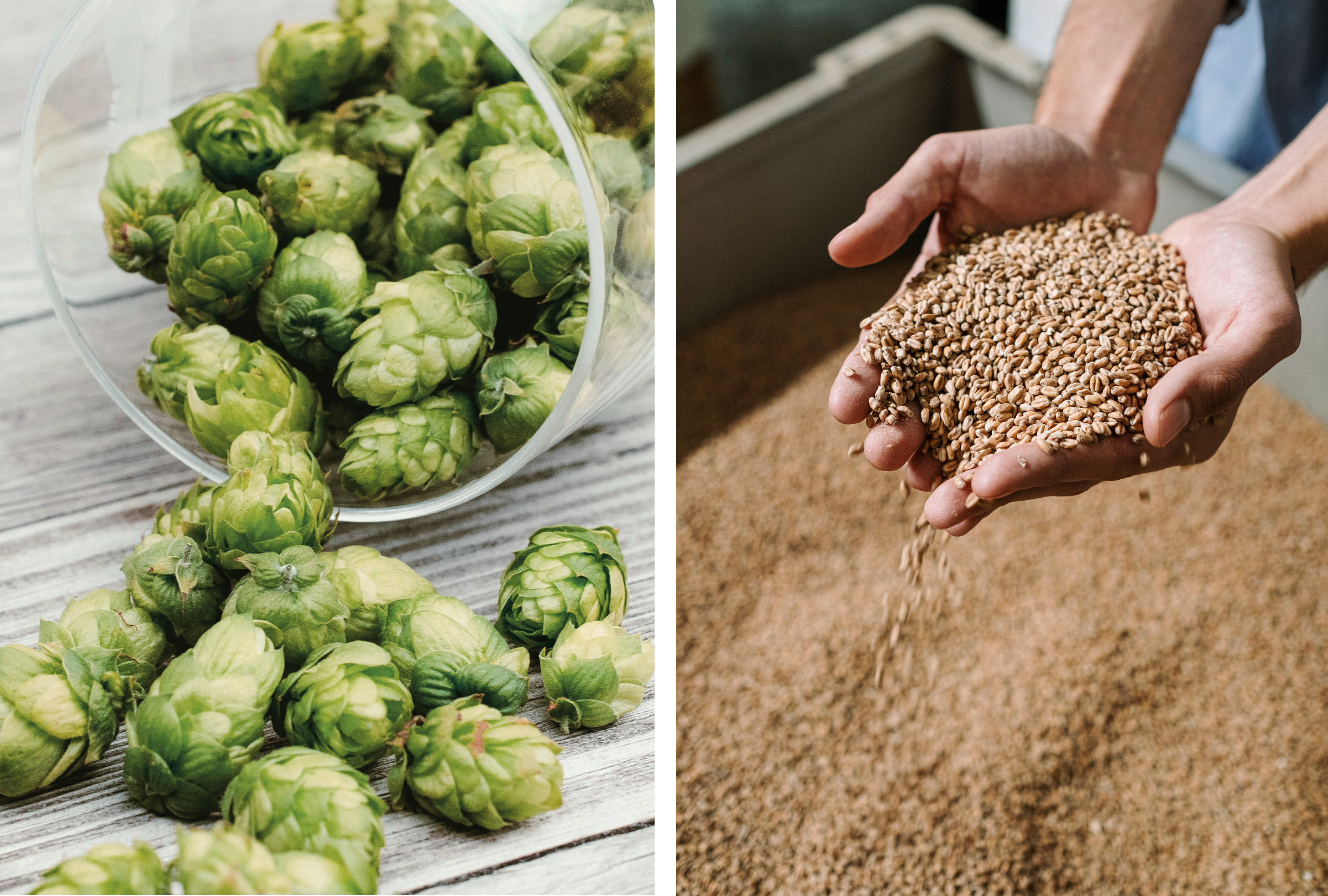
We sell 96 per cent of our beer in Hamburg and marginally in the surrounding area. When purchasing raw materials, we have focussed on Germany. However, we want to tighten this radius more and more so that we can ultimately say that 100 per cent of our products come from the Hamburg metropolitan region. For our limited-edition "Grüne Hans" beer, for example, we need freshly harvested hops. And for this we were able to win over farmer Frank Gadow from Schönmoorer Hof in Wakendorf, who grows hop plants for us in a small corner of his field - unusual for northern Germany. And friends are helping with the time-consuming harvest.
Does the principle of the circular economy also work with wild growth?
At De Öko Melkburen, which runs a mother-based calf rearing farm in Lentföhrden in Schleswig-Holstein, we grow 20 tonnes of barley, which is later used to make our malt. De Öko Melkburen feed their cattle with the spent grains, i.e. what is left over from the grain. They in turn produce fertiliser, which is then spread on the fields where our barley grows. For our Broid New England IPA, we use high-quality bread from the day before from the Bahde organic bakery. Bahde uses the spent grains that we produce during brewing to bake bread. This creates another cycle.
Brauwerk Wildwuchs is not just a production facility, but also a meeting place. What can visitors experience here?
Our gate to the brewery is actually always open. Anyone who wants to drink or buy beer from us is always welcome. We have our pub here, which is open on Fridays and Saturdays, and also on Sundays in summer. We will soon be organising a flea market and even a Christmas market right outside the gates. Or food-beer pairing - a chef creates dishes to go with our beers. We also organise weekly brewery tours, where you can accompany us through the production process, followed by a beer tasting.
What does your product portfolio look like?
Depending on the season, we usually have 12 to 16 different beers for tasting. Not everything is always available when you focus on regional products. For example, we can only make our "Inge", the ginger beer, when we can get ginger. Sourcing it from China or Chile is not in line with our philosophy. We then got talking to Hof Wurzelreich in Stelle, Lower Saxony, and they actually grow ginger in northern Germany. A stroke of luck for us, as we had always wanted to make ginger beer.
Networking seems to be essential for your business - how did the cooperation with Steinbeis Papier come about?
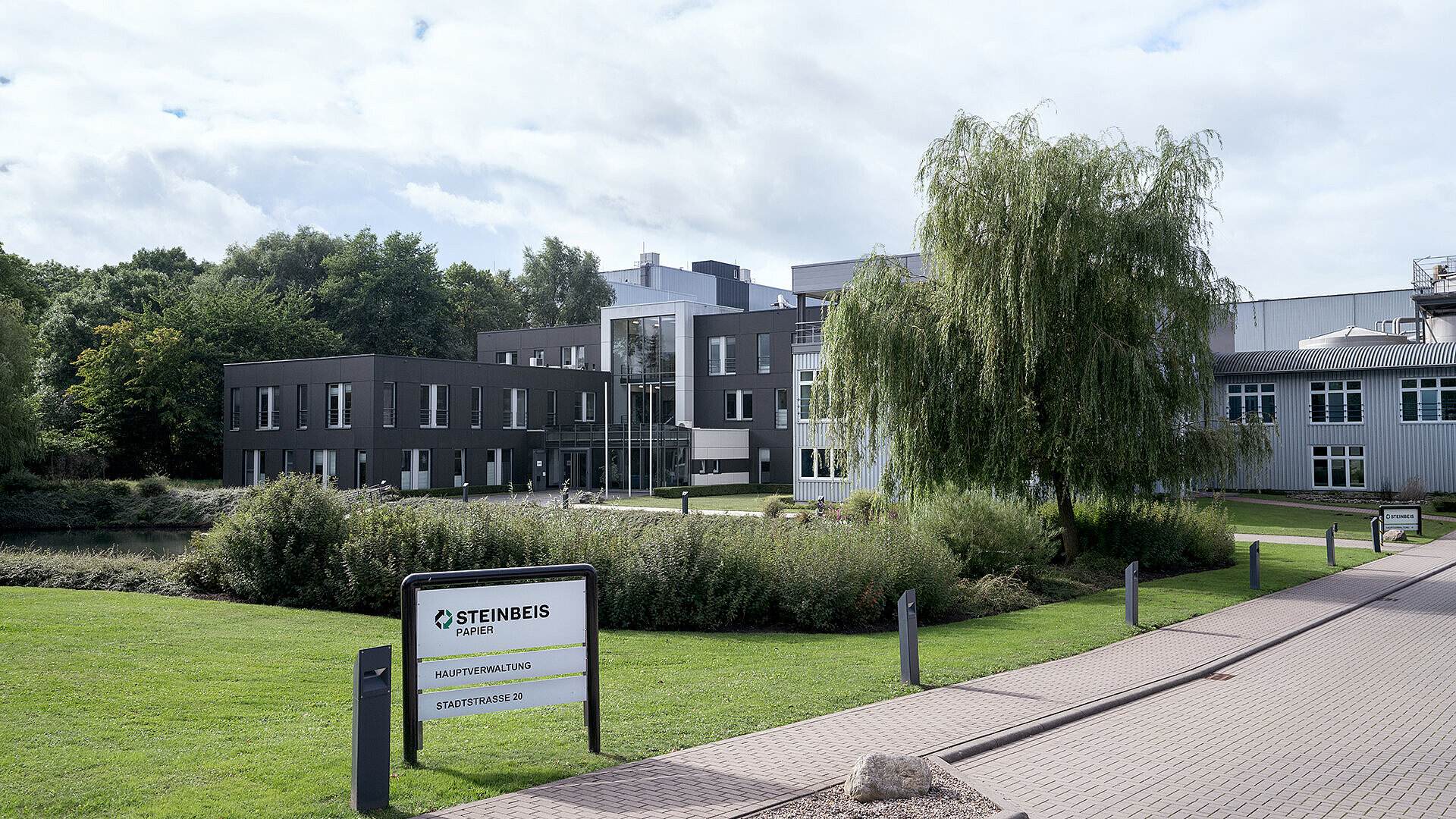
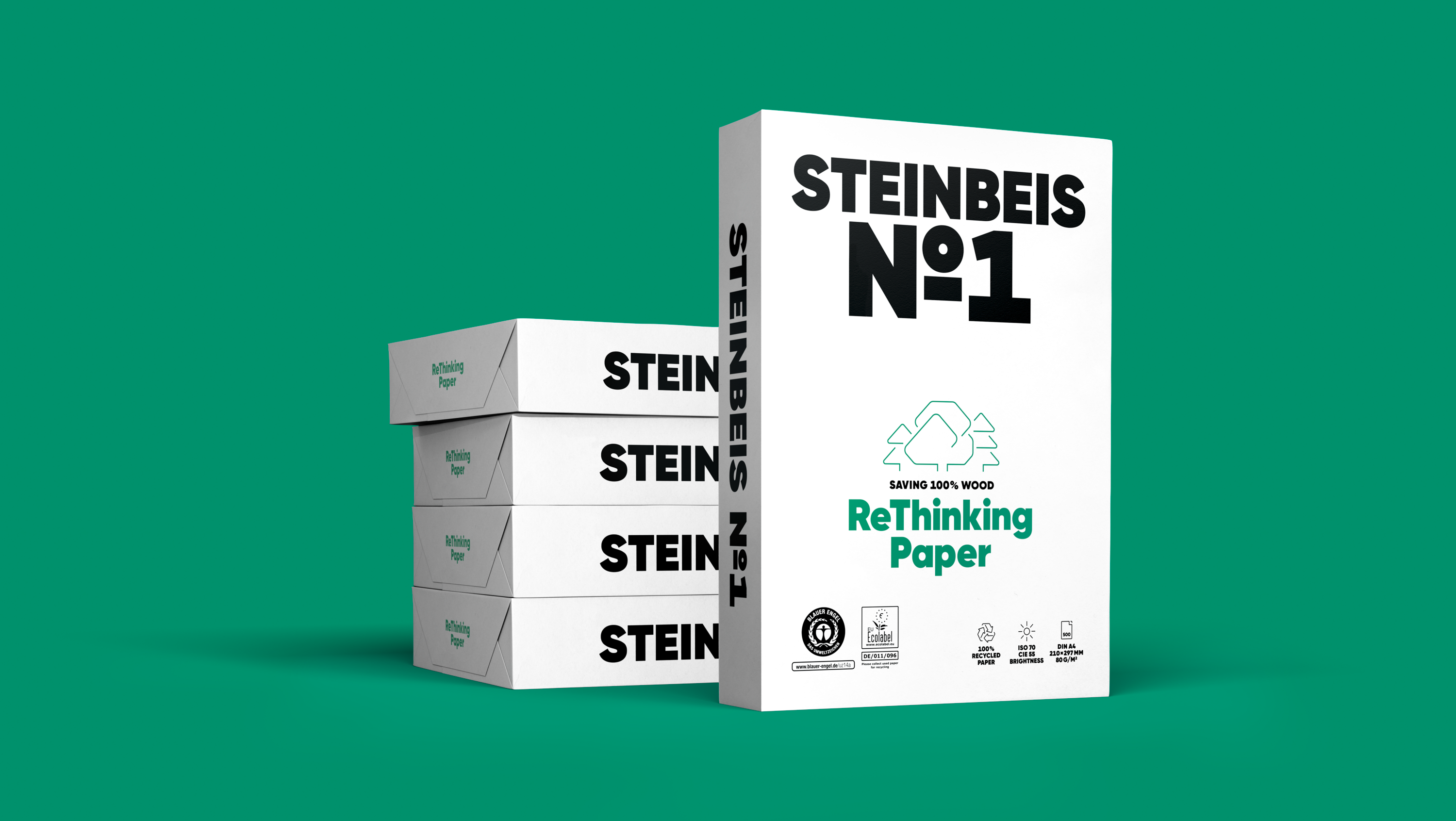
We've actually been working on the issue of where to get labels made from recycled paper for some time. In this case, the man responsible for new products at Steinbeis Papier, Jan Bergmann, contacted us and offered us the wet-strength and alkali-resistant label paper made from 100 per cent recycled paper. We were incredibly pleased to learn that we could also obtain this from Glückstadt, i.e. from the immediate vicinity. And then everything happened very quickly and we switched to Steinbeis paper virtually overnight.
How important is label paper made from 100 per cent recycled paper for your product?
There aren't that many breweries and other beverage producers that have addressed the issue of sustainable labelling so far. We immediately advertised it and developed a flyer with all the measures we take for our sustainable products. This is the only way for customers to realise what is behind our philosophy and our products. And labels made from 100 per cent recycled paper are clearly part of this.
Where do you still see potential for sustainable action at Brauwerk Wildwuchs?
We will soon be installing a solar system on the roof of our brewery. This will enable us to cover up to 30 per cent of our electricity requirements. We then want to change the firing method and switch to electrically generated steam. In addition to our energy issues, we are also concerned with packaging. We currently fill everything in returnable bottles and then pack them in recycled cartons, as I said. However, we want to change this in the medium term and establish a Hamburg reusable crate in a pool with other small breweries from the region, which will ultimately come back to us for refilling.
What about expansion plans?
It is important to us to be and remain Hamburg's organic brewery. We can currently fill just over 600,000 bottles of beer a year. If every one of Hamburg's 1.8 million people drinks three bottles of Wildwuchs beer, we can talk about an enormous expansion.
More information about Brauwerk Wildwuchs can be found here.
Cover picture: Steinbeis Papier
Author

As a senior editor, Benjamin Seibring specialises in developing content on sustainability, mobility, technology and lifestyle. An editorial traineeship at a German media group and his many years of experience in corporate publishing form the basis. With a high affinity for trend topics and innovative AI tools, he implements cross-media storytelling.