Back to the roots with Ackerhelden
21.06.2022 - When the hustle and bustle of the city becomes too much, we increasingly find ourselves looking for a patch of earth all to ourselves - to breathe, play or even grow our own vegetables. But neither current property prices nor the waiting list at the neighbouring allotment garden association give us too much hope. Especially in urban centres, anyone who can at least grow a few tomatoes on their terrace or balcony will be happy. This is exactly where founders Tobias Paulert and Birger Brock from Ackerhelden come in: They want to make it possible for everyone to grow their own organic vegetables - regardless of where they live. In this interview, Managing Director Tobias Paulert explains how this is possible.
What makes the Ackerhelden organic rental garden concept so special?
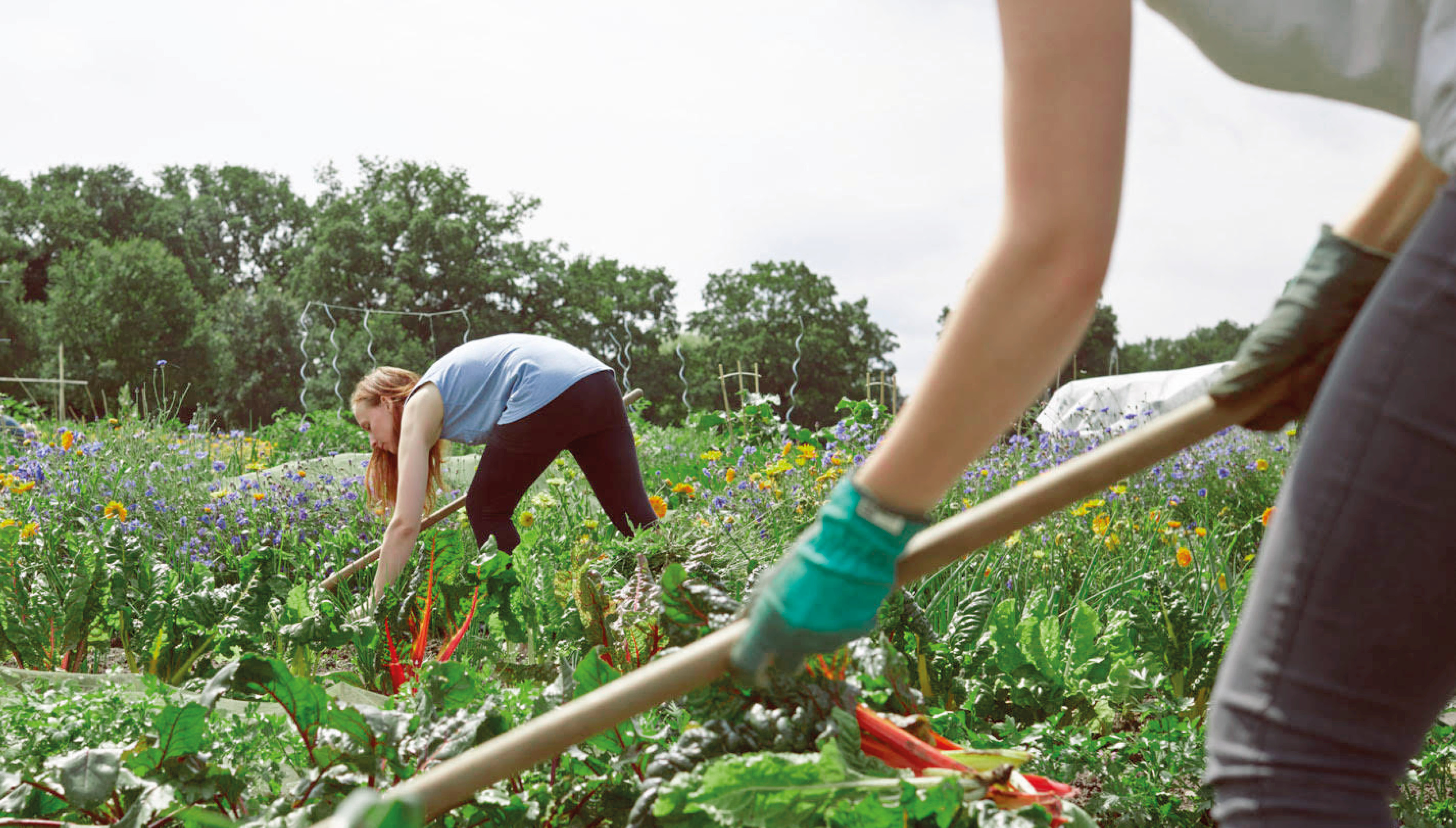
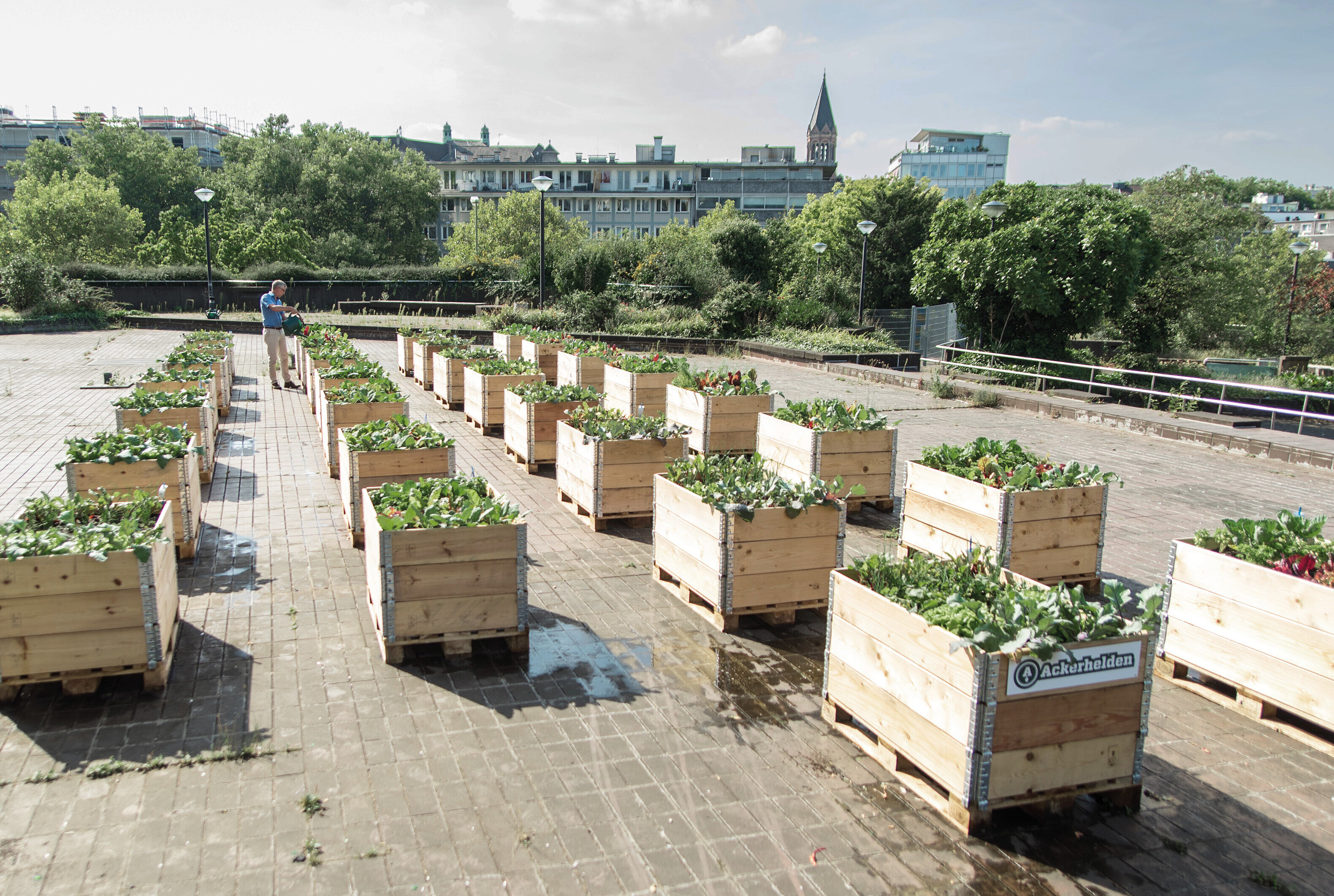
Our concept is customised to modern living conditions. On average, we spend two to three hours a week in the supermarket - the same amount of time it takes to cultivate 40 square metres of organic land. Of course, you can't be self-sufficient - but that's not our aim. We want to communicate where our food comes from and how it grows. To make it easier to get started, the 40 square metres are therefore planted with 20 vigorous organic young plants, and we provide the gardening tools on site. This means that everyone can get started straight away, even without any previous gardening experience. A small part of the garden remains unplanted. This is where the Ackerheldinnen and Ackerhelden can plant and sow their own organic vegetables. During the season, we will then provide advice, help with questions and provide the heroes with tips and recipes on an ongoing basis. The resulting community is incredibly valuable and motivates us to keep going.
How do you decide where to build new rental gardens?
Of course, federal states such as Mecklenburg-Western Pomerania or Brandenburg offer a lot of space, but we want to stay in the suburbs of urban centres in order to keep distances as short as possible. Apart from that, we base our choice of location on where interested parties are. In the meantime, rental gardens have been created at 25 locations in Germany and Austria.
We want to bring the production of food back to life, because there is a great deal of alienation among the population.
How do you explain the fact that many people have lost touch with food?
My grandparents' generation still knew exactly how to grow and pickle cucumbers because they all had a self-sufficient garden behind the house. Back then, knowledge was passed down from generation to generation or learnt at school. But with the advent of the economic miracle in the 1950s, food was readily available, especially in West Germany. In my grandmother's street, it was no longer considered chic to be self-sufficient. Anyone who did was generally suspected of not being able to afford to shop in the supermarket. As a result, a lot of knowledge was lost among the general population. Thanks to our community, we can change that. Because here, all generations garden side by side and can pass on this unimaginably valuable knowledge.
The option of renting a field is becoming increasingly common. The difference: you have real organic produce. What does that mean?
There are various standards for organic quality. EU organic can be recognised by the stylised leaf on a green background. According to the EU organic guidelines, a farm can grow organic vegetables but at the same time practise conventional livestock farming. In addition, up to five per cent genetically modified seeds and pesticides can be used. In short: EU organic is a compromise. A compromise that is becoming ever stricter, from new editions of EU directives to new versions. In this way, all EU countries are brought on board and a uniform standard can be guaranteed. But that in itself is already genuine organic.
And real organic?
Genuine organic is holistic. To date, we are the only provider in Germany and Austria to offer exclusively rental gardens in organic cultivation associations. You can be sure that the entire farm has been converted 100 per cent according to the guidelines of the respective association. This starts with the preparation of the soil. In conventional agriculture, the soil is fertilised with synthetic mineral fertilisers and pesticides are used to keep pests away and achieve maximum yields. It has been proven that these active ingredients are not healthy for humans, but they enter our bodies via the soil-fruit-human chain of action. Such synthetic substances and chemicals are prohibited in the production of organic food.
People often question whether what is labelled organic is really organic.
That is absurd. There are black sheep everywhere, including in agriculture. But it makes no sense to draw conclusions from individual cases to all of them. There are legal regulations for certifications.
How is it ensured during the season that the guidelines of the cultivation associations are adhered to?
All members of the growers' associations are tested several times a year - both announced and unannounced. The latter can be thought of as a doping test. It can happen that an inspector stands in the field in the morning and looks at the vegetable crops on plot 24, for example beetroot, and wants to know where the seeds or young plants come from. I then have to show him the invoice or proof of delivery and the organic certificate from the producer/processor. To make this possible, we are constantly updating the relevant data and documents digitally. Of course, this also means that field heroes who plant or sow new crops must submit the relevant proof to us. In this way, everyone can be sure that we maintain the high organic standard.

When should I contact you to get hold of a plot for the current season?
We try to make everything possible. We guarantee current Ackerheldinnen and Ackerhelden that they will also get a plot at the same location next year - even if not exactly the same one, as plots are always laid out differently from time to time. Otherwise, the gardens start in mid-May and run until November. This means that the train for the current season leaves in June. However, interested parties can already register for next year. We then start negotiations with the owners of neighbouring plots. In this way, we can efficiently utilise the small amount of land we still have available for agriculture in Germany. What hardly anyone knows is that we are losing several football pitches every day to sealed surfaces such as roads, car parks, housing estates and ground-level supermarkets. That's crazy! Unsealed surfaces and soils are not valued enough. Yet they are the most valuable asset we have.
Soil is our most valuable asset.
To what extent are you feeling the effects of climate change?
Immediately! The soil is dry, there is a lack of deep moisture and the weather is becoming increasingly unpredictable. We have to rethink the varieties in our cultivation plan accordingly. The same applies to advice, because other varieties naturally require different care. All of a sudden, classic Mediterranean crops are also working in Germany - and not just in Freiburg, but as far north as Freiburg. When we founded Ackerhelden ten years ago, a customer wanted to plant melons. I was there at the time and advised her against it. in 2019 and 2020, she sent me photos of her harvested fruit.
2022 looks set to be another very dry year. Just 42 per cent of the usual amount of rain fell on average across Germany in spring. How are you and your farming heroes preparing?
Using water ecologically in these temperatures and weather conditions means using water more and more economically. But in Germany we are not at all used to using water in an appreciative way. Many people today can analyse poems in several languages, but it is precisely this know-how that is lacking. None of this is complicated or difficult, the motto is simply: know how! We show what is possible.
What do you think of the fact that most farms still practise conventional agriculture?
Of course, testing and documentation for organic farming is time-consuming. Nevertheless, we can manage this with our limited resources. That's why I can't accept it when conventional farmers tell me that they can't do it. I also have no sympathy when it comes to the additional fees for testing. If they can't even afford them, something is going wrong in the company. Of course, the situation with animal husbandry is more complex. For example, when animals have to be given more space to roam according to the farming association and structural changes have to be made to achieve this. But other sectors also have to spend money on operational changes from time to time - why should it be any different in agriculture? In my opinion, it's quite simple: if you want to, you can and you should - especially when it comes to the climate, our health and freedom from pollutants.
Vegetable growing can be learnt. The motto is: know how!
What plans do you have for the future of Ackerhelden?
It is important to us to extend our period of activity because we want to make it tangible that it is possible to grow vegetables all year round. Many people no longer realise this. For decades, retailers have publicised when strawberries and asparagus are available. But very few people know when the local cucumber season starts, as they are available in supermarkets all year round. We want to show people that it is possible to grow vegetables regionally and seasonally, even in winter, and increasingly bring old vegetable varieties back to the table. In addition, neighbourhoods are currently a major topic, where we are committed to sustainability and environmental protection measures.
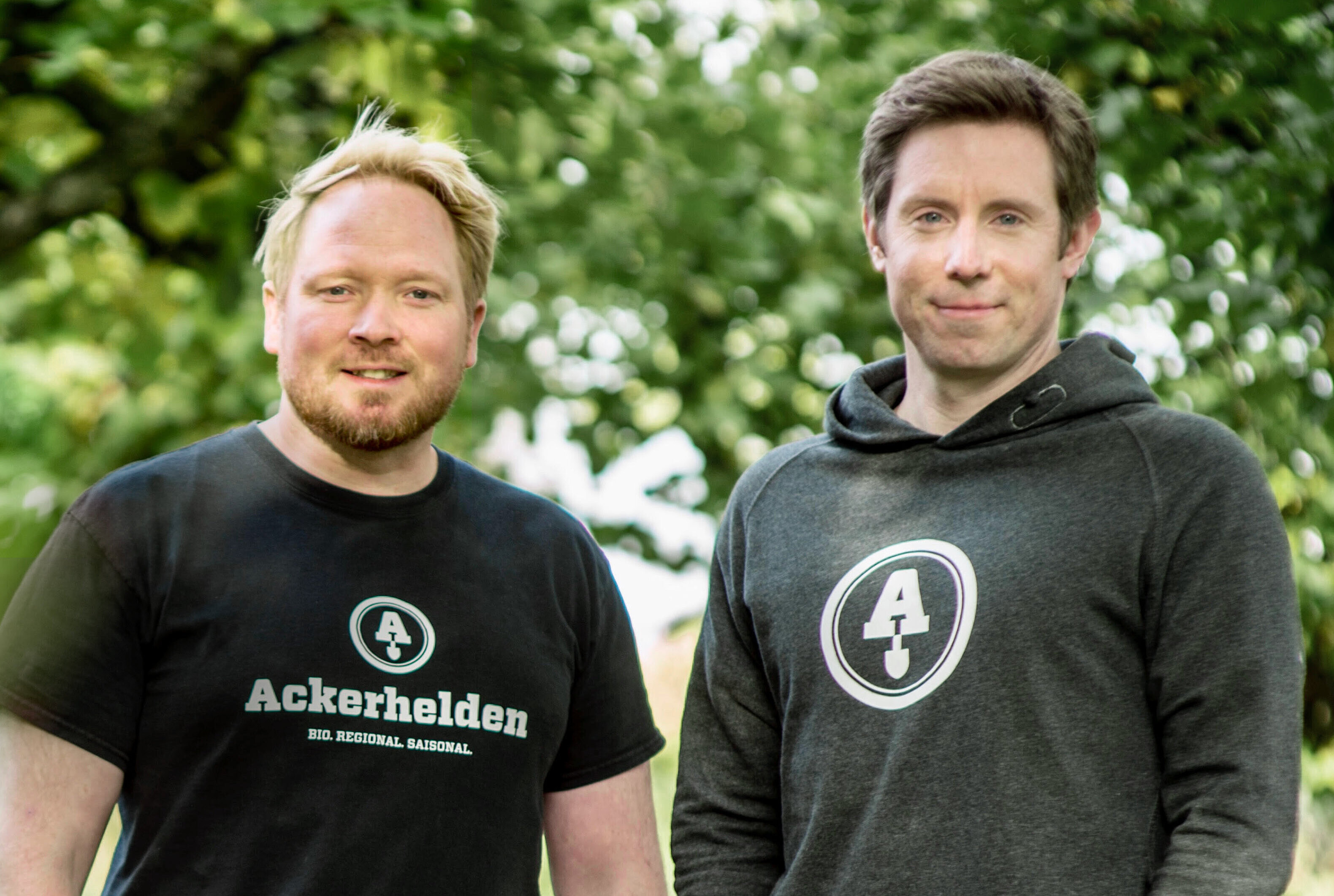
Cover picture: Ackerhelden
Author
Valerie Bachert is a journalist, chief of staff and sustainability officer. She is interested in the areas of organic farming, conscious consumption, species extinction, social injustice and sustainable nutrition.