Anniversary for a sustainable relationship (Part 2)

06.06.2023 - Stiftung Warentest is one of Steinbeis Papier's flagship projects. The publications "test" and "Finanztest ", which have a circulation of millions, have been printed on recycled paper from the Glückstadt-based manufacturer for ten years. That alone would be a success story. But the Stark Druck print shop plays an equally important role in the realisation of this sustainable print product. The company's long-standing trust has been confirmed time and again by Stiftung Warentest. In this interview, Manuela Jurack and Jürgen Steib from Stark Druck explain the secret of success behind this three-way constellation and how a sustainable print shop deals with challenges such as digitalisation.
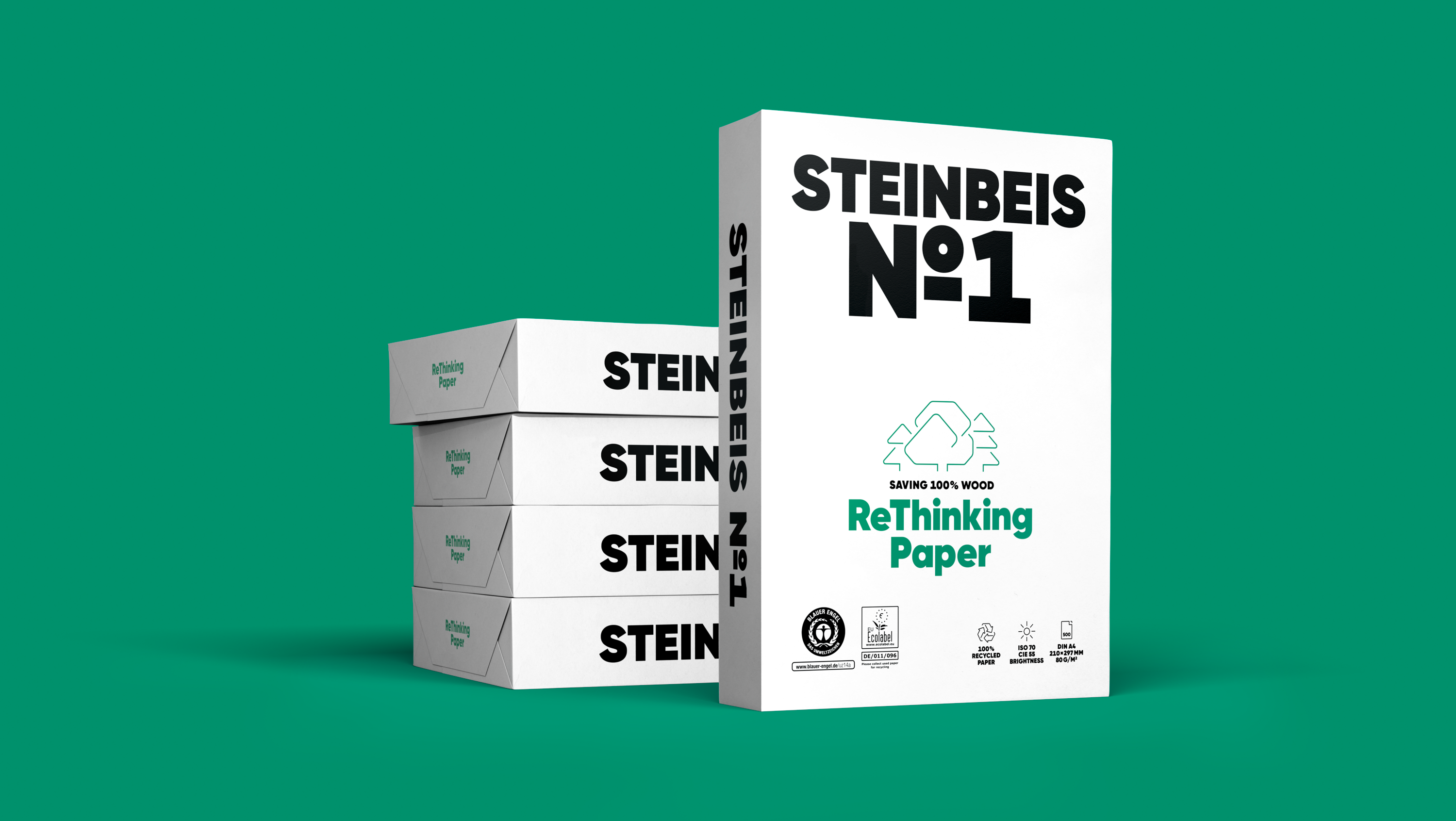
The delivery of a successful sustainable product for Stiftung Warentest - and this for ten years - can be attributed above all to the perfect interplay between the Stark Druck print shop and Steinbeis Papier. The two companies have been working together for almost 20 years. "There is a special relationship of trust here. We recognise the qualities of Stark Druck and they recognise ours. We recommend Stark Druck to customers and vice versa," explains Stephanie Kraust, Sales Manager for Southern Germany at Steinbeis Papier and direct contact for Stark Druck. Time and again, both companies present a joint customer strategy. Stephanie Kraust also sees this as the key to success: "Customers should feel that they are receiving the best possible service. We then offer not only concentrated printing and recycled paper expertise, but also a complete package of products certified with the Blue Angel. They account for 90 per cent of orders."
Stark Druck also sees this team spirit as a driver for developing new business, but also for sustainably strengthening cooperation with existing customers such as Stiftung Warentest. Purchasing Manager Manuela Jurack and Sales Manager Jürgen Steib - both direct contacts for Steinbeis Papier - provide insights into a sustainable print shop and explain how important cooperation with reliable and trustworthy partners is in the tough business of print products:
What characterises a sustainable print shop?
Jürgen Steib: When it comes to sustainability, many people initially only think of environmental aspects such asCO2 savings, the use of recycled paper and waste avoidance. Of course, this is also key for us. With the "WWF Magazine", for example, which is printed by us, the topic is omnipresent. But the concept of a sustainable print shop goes beyond this. Social sustainability primarily concerns our employees. Managing Director Günter Pecher has established a modern working atmosphere and a safe working environment at Stark Druck in recent years. Employees are much more involved in communication and decision-making and are therefore committed to the further development of Stark Druck. And finally, an open and intensive dialogue with our customers is a key element of this.
Stark Druck has been climate-neutral since 2021 - what measures have been taken here?
Jürgen Steib : We decided some time ago to use electricity from hydropower and thus significantly optimise ourcarbon footprint. As an energy-intensive company, electricity accounts for the largest share. Further developments have been added since 2021: we have been able to significantly reduce the amount of energy used in the compressed air supply and dryers. And we have completely switched to LED technology lighting - which symbolises the fact that we have converted all installations so that our plant runs much more efficiently. The decision to become a climate-neutral company in July 2021 was therefore only the logical consequence - we also wanted to make a statement. This was preceded by the certification of Stark Druck with the Blue Angel and other relevant certifications, as well as the offer to our customers to produce ordersCO2-neutrally.
We want to offer holistically sustainable products that are certified with the Blue Angel from the raw material recycled paper to the printed magazine.

How great is the demand for holistically sustainable products?
Jürgen Steib : There are significantly more enquiries requesting information about Stark Druck's sustainability. Here we provide detailed information on ourCO2 footprint and provide information on what other sustainability issues Stark Druck is tackling. In addition, there are enquiries regarding a completely sustainable product, which is made up of recycled material, climate-neutral production and the aforementionedCO2 offsetting.
How does your print shop promote sustainability in the supply chain?
Manuela Jurack: The process inks we buy are all certified with the Blue Angel. Furthermore, we have not used isopropyl alcohol in production for five years. We also communicate our diverse environmental certification and environmental standards to our suppliers and demand that they fulfil them. And this does not just apply to offsetting; our suppliers are also required to fully utilise their savings potential. Ultimately, sustainability is now a survival criterion for energy-intensive companies.
Where does Stark Druck exemplify sustainability?
Manuela Jurack: In addition to our green electricity cover, Stark Druck has a solar system that supplies twelve electric charging stations with electricity. We are setting an example here - Stark Druck is endeavouring to make as many areas as possible self-sufficient. We are also in the process of switching to process-free printing plates. This means major savings in the use of chemicals, water and energy and thus makes a major contribution to the climate neutrality of our production. In general, we make sure that our investments are designed for efficiency. Digitalisation also plays a role in this concept when it comes to organising efficient logistics for the supply of materials and product deliveries.
How is waste handled and recycled in your print shop?
Manuela Jurack : A large proportion of the industrial waste paper that we produce is prepared to such an extent that we can make it available again directly in local paper mills wherever possible. We are currently establishing special recycling processes for our developer fluids and washing agents. They are to be fed back into the process according to the closed-loop principle.
How do you view the triad of Steinbeis Papier, Stiftung Warentest and Stark Druck?
Jürgen Steib : For us at Stark Druck, the collaboration with Stiftung Warentest was an initial spark for co-operation with other major magazine titles. In this respect, this collaboration is a very special one for us. We printed the first issue of "test" in 2013. Steinbeis Papier was already chosen as the paper supplier, as they already stood out in the ranking of recycled paper manufacturers at the time. Ultimately, we can say that today we can look back on a truly trusting partnership.
Manuela Jurack: And the interplay of reliability, objectivity and clear communication is what makes this three-way constellation so successful. So far, all jointly produced issues have been published on time.
What are the major challenges of this cooperation?
Jürgen Steib : The digital media shift, crisis-induced inflation and the associated reluctance to buy are currently presenting us all with major challenges. Added to this is the increase in costs in the paper segment and also at our print shop. Nevertheless, we have a different situation with the magazine titles from Stiftung Warentest - credibility, trust and neutrality are bucking the trend and ensuring a consistently high circulation, which is also important for Steinbeis Papier and us.
Manuela Jurack: It is also astonishing how little is said about the energy intensity of using digital media and how print continues to be accused of being an unsustainable medium - despite massive innovations by paper manufacturers and in the printing sector.
Steinbeis Papier acts as a secure and reliable partner in times of strong market consolidation effects.

What role does Steinbeis Papier play in Stark Druck's sustainability strategy?
Jürgen Steib: Steinbeis Papier is the partner of choice when it comes to sustainable products. And because we at Stark Druck know that Steinbeis Papier can handle the quotas, especially in the high-circulation magazine segment, and that the printing technology fits on our machines, we go many ways together with a holistically sustainable product.
Manuela Jurack: The ability to plan is an important point for us from a purchasing perspective. With Steinbeis Papier, we experience exceptional security of supply, as the supplier market is currently very volatile and many are exiting the market. At the same time, we appreciate the flexibility of a medium-sized company that can also make decisions independently in an uncomplicated way without having to take large corporate structures into account.
Which publication do you share with Steinbeis Papier beyond Stiftung Warentest?
Jürgen Steib : The Medizini poster, which belongs to "Apotheken Umschau", is the last major project that we were able to realise together with the Blue Angel certification. We have been working on the magazines of Globus supermarkets, the "WWF Magazin" and the magazine of the German Alpine Association, to name just a few examples.
What developments do you see with regard to sustainable print products?
Manuela Jurack: We will expand our market for magazines in the future because the raison d'être will remain in different sectors. The reception of content on paper is completely different, it appeals to completely different regions of the brain. And because we believe in this, it will also lead to a deepening of our collaboration with Steinbeis Papier.
Author

As a senior editor, Benjamin Seibring specialises in developing content on sustainability, mobility, technology and lifestyle. An editorial traineeship at a German media group and his many years of experience in corporate publishing form the basis. With a high affinity for trend topics and innovative AI tools, he implements cross-media storytelling.