Anniversary for a sustainable relationship (Part 1)
09.05.2023 - Millions of readers rely on the independent comparison tests conducted by Stiftung Warentest. The print versions of the magazines "test" and "Finanztest" continue to be the primary medium. In addition to neutrality, sustainability is a high priority at Stiftung Warentest. This is why the publisher has been using offset recycled paper from Steinbeis Papier for its periodical magazines for ten years now, with Stark Druck taking care of the realisation. In the first part, Rita Brosius from Stiftung Warentest explains which parameters are decisive for such a sustainable partnership.
Sustainable and climate-friendly management is a top priority at Stiftung Warentest. The test organisation consistently takes sustainability aspects into account both in the selection of topics and products and in the test criteria of its tests and, last but not least, in its own actions, in particular through the sustainable production of high-circulation publications.
For ten years now, this has included successful collaboration with Steinbeis Papier and the Stark Druck printing company. "These collaborations produce magazines with a circulation of millions, whose content paper is labelled with the Blue Angel. The German consumer organisation Stiftung Warentest demands recycled paper made from 100 percent waste paper for its print products. And we supply this in consistent quality," explains Ulrich Wadephul, Market Area Manager for Magazine Papers at Steinbeis. He also sees this as a massive vote of confidence: "If an institution like Stiftung Warentest is constantly looking at the quality control of consumer goods and then calls for recycled paper from a particular manufacturer for many years, that is also an accolade for us as a paper supplier."
Rita Brosius is the one who places this trust in Steinbeis Papier. The Head of Publishing Production at Stiftung Warentest and her team take care of everything to do with print production at the publishing house. She is also responsible for purchasing these print products and looks back on ten years of co-operation with Steinbeis Papier:
More than 6.7 million magazines sold per year - what does the print edition mean for the publishing house?
Printed magazines continue to play an important role in Stiftung Warentest's media offering. Contrary to trends, we have seen a two per cent increase in print subscriptions to the "Finanztest" magazine - a clear sign that there is a high demand for Stiftung Warentest content in printed form. Our readers appreciate the compact information and the layout of the magazine, especially the large comparison tables - this is reflected in the reactions received by the reader service. It is not surprising that the growth rates for our digital offerings, especially the flat rate, i.e. unlimited access to all paid content, are much steeper. But we can also see how stable the demand for printed magazines is. We provide readers with what they need - both in print and digitally.
What was the deciding factor in printing the magazines on recycled paper with the Blue Angel label?
At the time, there was no alternative to the gravure printing process for the large print runs, which required completely different paper qualities (SC-A qualities). The use of waste paper fibres was very low and was even gradually reduced. We have always been aware of the need to act and produce in an environmentally friendly way. We also carry out corporate social responsibility tests at other companies and use our tests to encourage manufacturers to take sustainability aspects into account. We therefore have a certain role model function. Our experience with Steinbeis Papier regarding the production of our yearbooks and special issues encouraged us to expand our collaboration. With the technical development of large-format web offset machines, which could produce large volumes at the same speed as gravure printing and enabled the use of various recycled paper qualities, it was clear to us that we would switch to this sustainable alternative. In a very short space of time, we increased the proportion of recycled paper in our publications "test" and "Finanztest" from seven to 90 per cent.
The papers from Steinbeis Papier were able to fulfil all our sustainability criteria.
What did the first phase of the collaboration with Steinbeis Papier and Stark Druck look like in concrete terms?
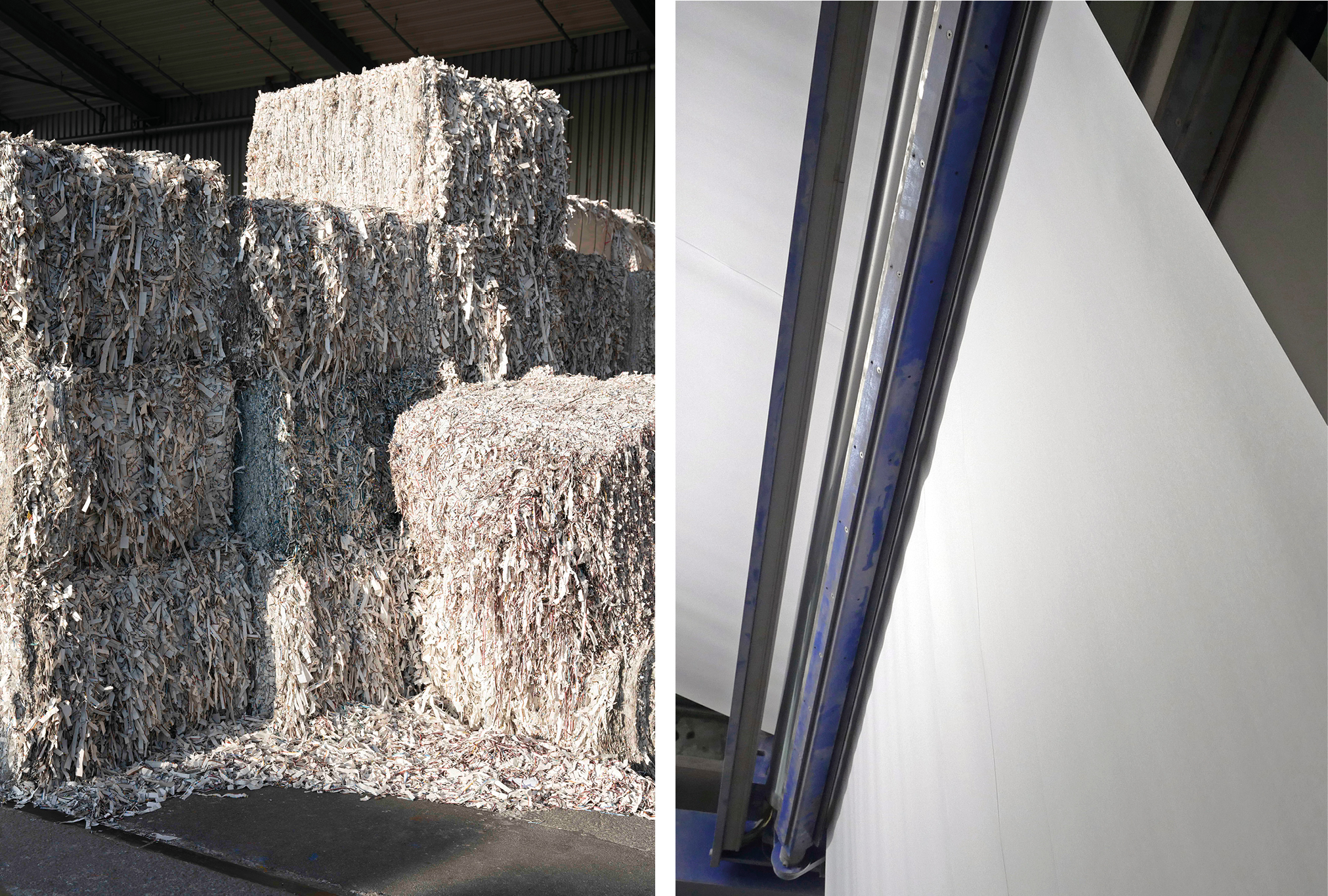
We defined our criteria for paper. The recycled papers had to be made from 100 per cent waste paper, come from regional sources, have short production routes and ultimately guarantee good printability on the corresponding web offset machines for our volume. Stark Druck had the experience that the paper selected according to our criteria was the most suitable for production. There are also synergy effects if the print shop already purchases the paper. It quickly became clear that Steinbeis Papier could fulfil all our criteria.
Is there a constant dialogue with Steinbeis Papier?
Discussions take place every six months to quarterly, depending on developments in the industry. We then discuss topics such as supply capability, new products and qualities that we can use for our publications. Steinbeis Papier is very proactive here and keeps us informed when there are innovations in the product portfolio. We then receive material samples so that we can scrutinise the look and feel more closely. The regular and trusting dialogue was also of great importance in view of the crises affecting society as a whole in the recent past and present.
What does a paper have to bring to the table that Stiftung Warentest considers for its magazines?
There are two perspectives that need to be taken into account here: from the reader's point of view, it is important that the paper has a glare-free surface to prevent irritation caused by reflections in different incidences of light. However, haptic and opacity factors also play an important role. From our perspective, i.e. publishing production in coordination with other departments such as the graphics department, various printability criteria must be met. Among other things, product images in our booklets must be reproduced well in detail and the quality must not fluctuate in volume. Compliance with ISO norms and environmental standards is very important to us, as is Blue Angel certification. For us, the latter is also the most important label for labelling recycled paper.
In addition to quality and continuity, a willingness to innovate is also crucial for a long-term partnership.
Which Steinbeis papers are used?
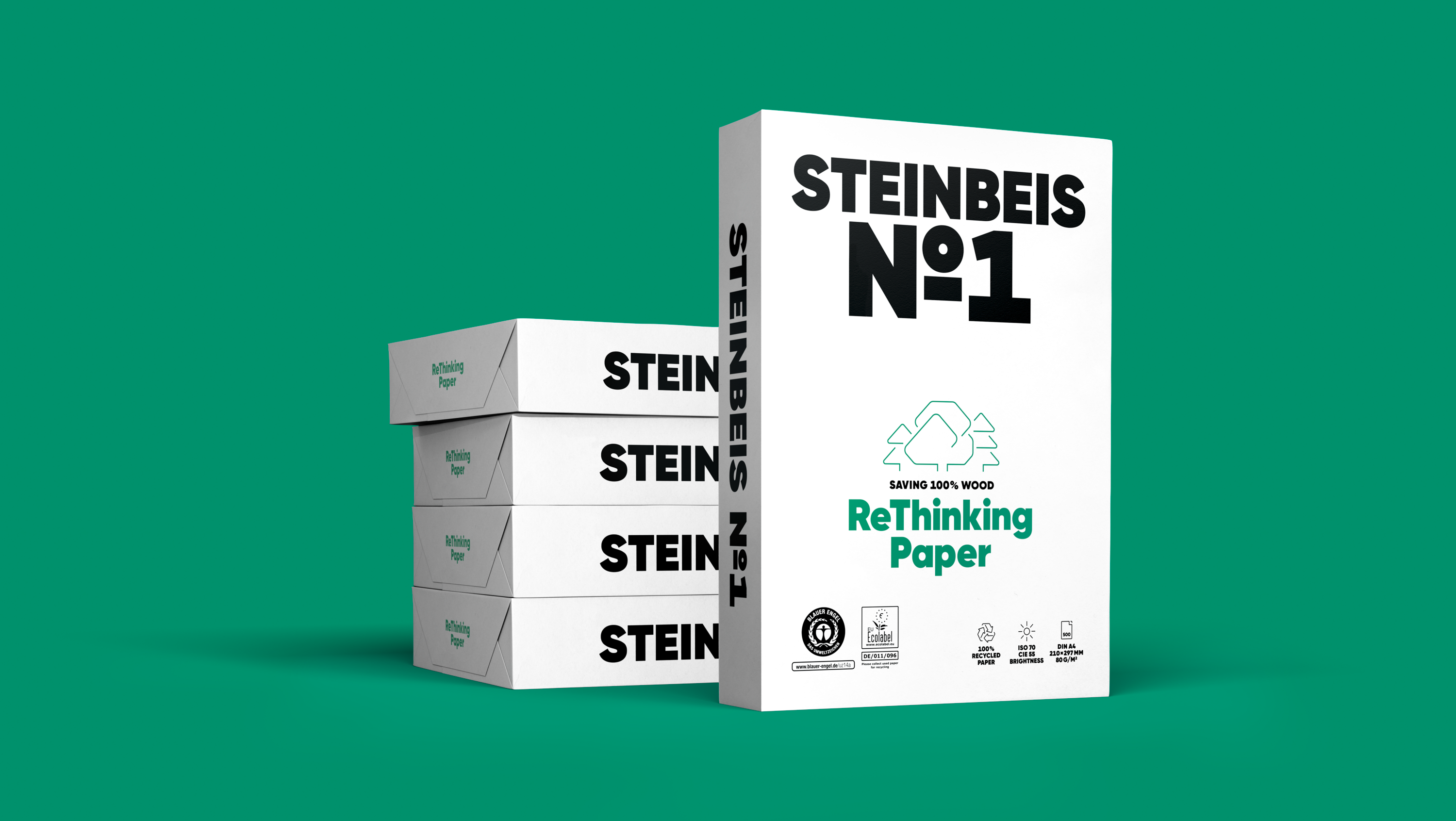
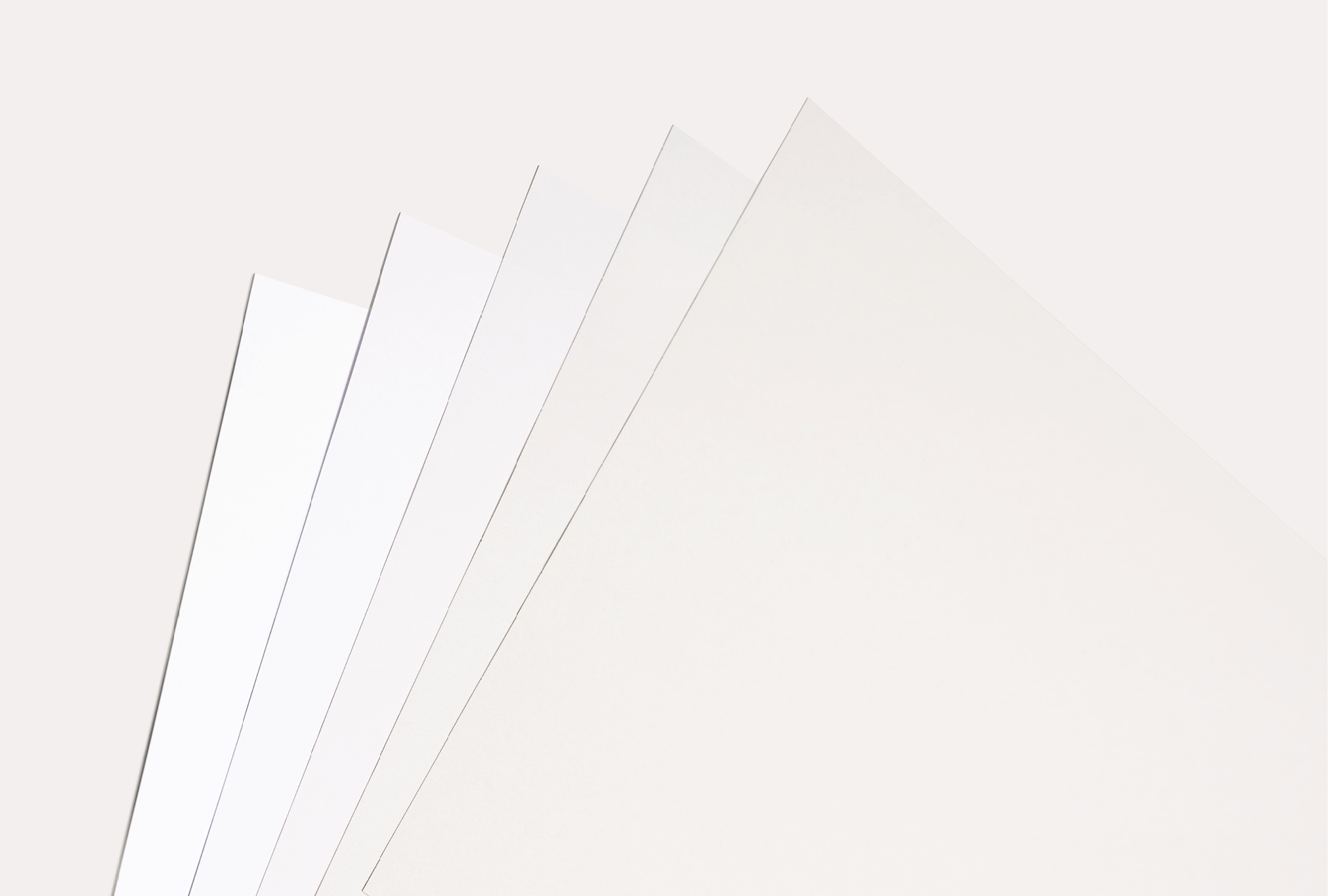
We use Steinbeis Silk for the large productions of "test" and "Finanztest". We use Steinbeis Brilliant for our special issues. Steinbeis Select is used for smaller productions. We are very open to all paper innovations from Steinbeis Papier and check every new recycled quality that comes onto the market to see whether it is suitable for our productions.
How important is it to the readership that recycled paper is used here?
We received a great deal of feedback when we switched from virgin fibre to recycled paper, as a change in quality was noticeable to the readership. At the time, we provided detailed information on the subject of recycled paper. That the content pages are made from 100 per cent recycled paper, thus saving scarce resources such as water and energy compared to virgin fibre production, and that the new quality is certified with the Blue Angel. The feedback from readers was very positive, as the arguments for changing the paper quality were convincing.
How would you measure the long-term trust?
We receive consistently high quality from Steinbeis Papier. In addition, Steinbeis regularly informs us about changes such as new materials, so that our image of an innovative company is even more solidified. Delivery reliability is essential for us. And, of course, the professional co-operation between the print shop and paper manufacturer is crucial for an optimal end product.
How do you see the prospects for Stiftung Warentest and the collaboration with Steinbeis Papier?
Our readers will decide what happens next. Even though we use many channels, the print product is still central. I am optimistic that content on printed paper will remain indispensable in the future. This also means that we will continue to plan with Steinbeis Papier. If we have been working with a company for so long because the quality and the offer are right for us, there is no reason to change anything.
What do you see as the advantage of print - also for the future?
For me, sustainability means being able to use renewable raw materials that can be fed back into a recycling process and turned back into a new product. Paper is an excellent example of this, as paper fibres can be reused more than 25 times. This does not yet work with rare earths, and these are - as we often and very quickly forget - finite.
Any form of climate-friendly economic activity is justified if it is transparent and comprehensible for the end consumer - the paper industry can do more to promote itself and its products and provide information.
To be continued..
In the second part (to be published on 6 June 2023), we will focus on another partner in this successful constellation. The Stark Druck printing company has also played a key role in the realisation of the periodical publications "test" and "Finanztest" for ten years. In this interview, Manuela Jurack and Jürgen Steib from Stark Druck provide insights into a sustainable print shop and illustrate how important cooperation with reliable and trustworthy partners is in the tough business of print products.
Author

As a senior editor, Benjamin Seibring specialises in developing content on sustainability, mobility, technology and lifestyle. An editorial traineeship at a German media group and his many years of experience in corporate publishing form the basis. With a high affinity for trend topics and innovative AI tools, he implements cross-media storytelling.