6 energy-saving tips for more sustainability in the office

22.03.2019 - Resources are becoming scarcer, electricity more expensive and sustainability is playing an increasingly important role. Even in the office. Even small changes can have a big impact and save energy. This is good for the eco-balance and reduces your operating costs.
1. Smart light
In commercial, retail and service companies, lighting takes pole position when it comes to electricity consumption - accounting for around 40 per cent of energy costs. The first step towards making savings is to analyse the current situation: How long does light burn in which part of the office? Does an area need to be permanently lit? Choosing energy-saving light sources reduces electricity consumption. In some cases, higher purchase costs have to be accepted, but in a well thought-out system, these will pay off in the long term. What's more, the lower consumption saves resources. Intelligent lighting systems that are only switched on when required can provide support. Motion detectors in both stairwells and bathrooms (without windows) can ensure that the lighting only switches on when it is needed.
However, the best way to save energy on lighting is to switch the lights off. Admittedly, on some rainy winter days you can't get by without office lighting. But if the sun is shining outside, you can dispense with the often-cited "festive lighting".
2. Bye bye standby
We (almost) all know them: the endless, colourful 3D tangle of tubes or the 3D labyrinth of pixelated bricks. At the beginning of the computer age, these screensavers served a purpose: they were intended to prevent the constantly unchanging monitor image from burning itself into the CRT screen during a long break from work.
That was the early 90s. This danger no longer exists with modern LCD screens. Instead, the images and 3D animations are used for data protection, if at all. However, the graphics card, processor and monitor consume a lot of power during playback - sometimes as much as a feature film. Even though nobody is looking! Therefore, deactivate the screen saver.
Stand-by mode can be used instead for shorter breaks. But it's better not to use it permanently, because only switched-off devices really don't consume any energy. Above all, this means switching off computers, monitors, printers, fax machines etc. at the end of the working day. Clever office planning helps here. A power strip at the desks, for example, ensures that all devices are switched off at the touch of a button. If in doubt, you can also switch off the devices of a colleague who has already finished work. How practical!

3. Clever cooling, ventilation and heating
In open-plan offices in particular, it is not easy to agree on when and how to ventilate, heat or cool. However, a few rules of thumb can serve as a guide and sometimes provide a good basis for argumentation: In summer, it is best to ventilate intermittently in the mornings and evenings when temperatures are not so high. And do this with the windows wide open - this is important for air exchange. If the temperature is too low, air conditioning can become a curse: Employees catch colds and the system consumes enormous amounts of energy. Therefore, make sure that the temperatures are reasonable for centralised control. In the summer months, 24 to 26 degrees - instead of 20 degrees - is usually perfectly adequate.
If the heating is not centrally controlled for the entire office, turn the thermostat valves on the radiators to zero during ventilation and only open the valves again after the windows have been closed. This will prevent the heating from "blowing up" when the windows are open and consuming too much energy. It is most efficient if the heating otherwise runs constantly and the temperature is not constantly adjusted up and down. Like the lighting, the heating should also be turned down at the end of the day.
4. Power guzzlers cloud, e-mail & co.
21 billion is the number of devices and sensors that were connected to the internet worldwide in 2018, according to estimates by Juniper Research. By comparison, the global population at the same time was around 7.6 billion people.
All this media needs to be supplied with energy. What's more, big data, artificial intelligence, Factory 4.0 - transferring and hosting data is playing an increasingly important role in energy consumption. However, the exact consumption for cloud computing is so hidden that it is usually forgotten. Yet internet and telecommunications technology will account for a fifth of total energy consumption in Germany in 2020.
What can you do? In everyday life, conscious use of digital media is particularly advisable. For example, when was the last time you sorted your emails? And not just archived the superfluous ones, but actually deleted them? Or when writing an email, did you think carefully about whether each recipient would really benefit from it? Not every bulk e-mail has to go to the entire company mailing list. You can also unsubscribe from unnecessary newsletters and send fewer photos via WhatsApp. Simply pause for a moment more often and remember that every email, every PDF sent and every social media like is stored somewhere - and therefore consumes resources.
5. Recycling on the rise
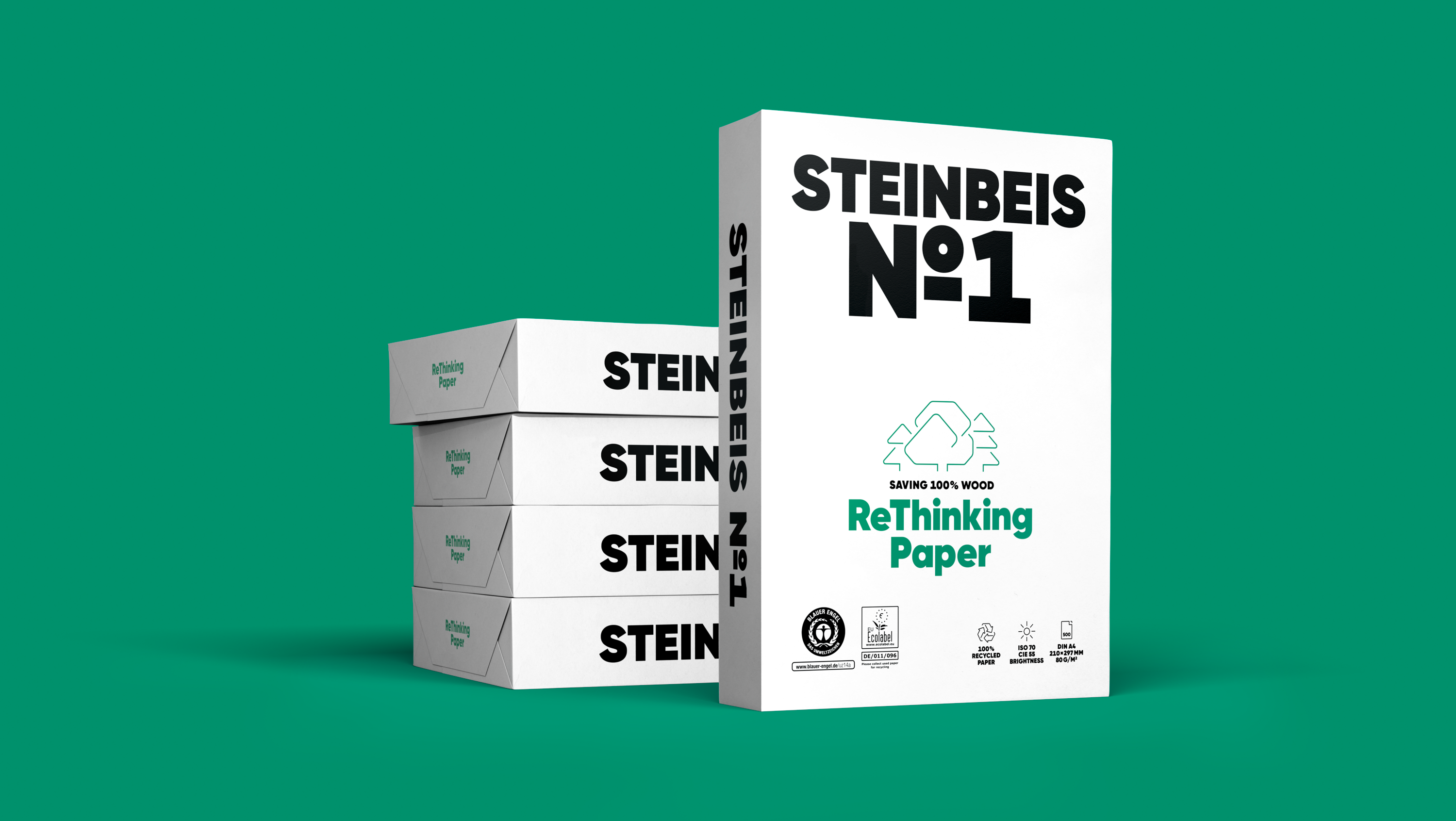
Whether it's a pen, printer paper, notepad or keyboard, products that are recycled and recyclable have already been designed during production to be reused at the end of the product cycle. With the help of innovative technology, the amount of raw materials, waste and ultimately energy consumption can be significantly reduced. Around 26.8 kWh is used to produce 500 pages of standard paper containing fresh fibres. The recycled Steinbeis Office paper, on the other hand, consumes just 7.5 kWh. This means that a full 72 per cent of energy is saved. If you pay attention to the raw materials and manufacturing processes used when purchasing office supplies, you can indirectly reduce your ecological footprint.
6.everything from the beginning: green electricity
Apart from saving energy, switching to a sustainable electricity provider is one of the most important steps towards a sustainable energy transition in the office. But not all green electricity is the same. Although some large providers offer electricity from hydropower, wind power and solar energy, they also continue to sell products that (partly) use coal energy, for example, under sonorous eco-names. However, even green electricity is no guarantee of 100 per cent sustainability. Solar panels, for example, consist of many different individual parts that have to be produced, transported and assembled. All of this in turn costs resources. Large-scale solar plants can only be erected if a suitable piece of land is available. This destroys natural habitats for animals. And finally: It is not yet clear what will happen to the panels after their half-life of around 20 to 25 years. In other words, not everything that is labelled green is sustainable. And not everything that is labelled as sustainable is perfect. In many cases, interim solutions have to be used for the time being. Anyone switching should therefore take a close look and inform themselves thoroughly. And always remember: the most ecological electricity is the one that is not consumed at all.
Cover picture: Christine Donaldson on unsplash
Author

Valerie Bachert is a journalist, chief of staff and sustainability officer. She is interested in the areas of organic farming, conscious consumption, species extinction, social injustice and sustainable nutrition.