World Arbor Day - A tribute to my old friend, the tree
For me, nothing reflects the world and life more than the tree. I would think in front of it every day, in front of it and about it....
25.04.2018 - Today is World Arbor Day and it really is intended to encourage people to think about and in front of trees. First celebrated in Germany on 25 April 1952, this day not only marks the planting of trees, but also raises awareness of the importance of forests for people, animals and the economy. After all, we humans owe a great deal to trees: they filter the air we breathe and provide us with food and raw materials. They provide shade and warmth and offer protection from storms and erosion. They were also the playground of our childhood and form green oases in the heart of our hectic concrete cities. People have always been fascinated by trees.
For primitive peoples, they were sacred, a symbol of the cosmos and the ever-renewing nature. Great poets and thinkers have philosophised and written about them. For thousands of years, man has been rooted in the tolerant giant. But since industrialisation, this close connection has increasingly faded and what was once sacred to us is now a product of the economy. However, we not only owe our existence to trees, but also technological progress - from the slash-and-burn clearing of forests for agriculture to coal-fired power stations and the printing press. It was the tree that gave us mobility, a comfortable life and became part of our culture.
One tree for one person
However, as with all resources that are not used sparingly and sustainably, our world's forests are in danger of disappearing and leaving behind barren deserts, which would have devastating consequences for us. Because where the tree dies, man dies. A forest is quickly cleared, the growing rings of a trunk make it clear how much longer it takes to replace it: it takes a hundred years for a tree north of the Arctic Circle to reach a diameter of 20 centimetres. Every fifth tree is felled for paper and the number continues to rise despite digitalisation. While around 130 million tonnes of paper were produced around the world in 1970, this figure had already risen to 381 million tonnes by 2006. The industrialised nations in particular consume the most.
According to the Federal Environment Agency, Germany consumes as much paper, cardboard and paperboard as the continents of Africa and South America combined: almost 250 kilograms per person per year! Yet only one tree with a crown diameter of around 5 metres provides as much oxygen as a person needs to live. One tree for one person - a nice thought. however, extrapolated to an average life span of 80 years in Germany, 160 trees have to die - 60 more than we are actually entitled to per capita according to the Yale study. We Germans collect a lot of waste paper, but when we buy new paper we pay less and less attention to what it was made from - whether from waste paper or fresh fibres.
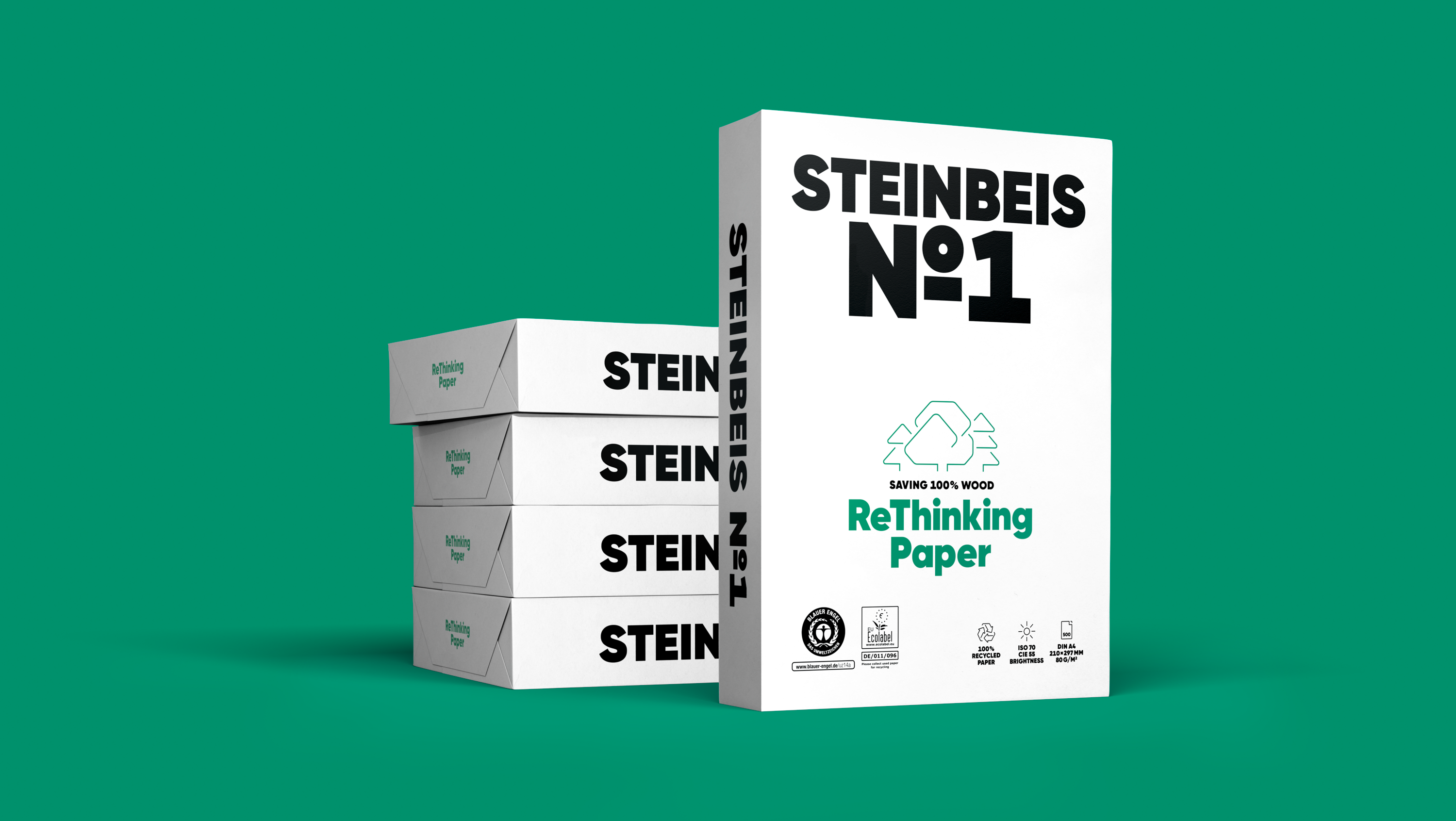
Recycling does not automatically mean that recycled paper is on the shelves everywhere. Every single customer can do their bit by switching to recycled paper. When buying paper, it is therefore important to look out for certified symbols such as the Blue Angel (made from 100 per cent recycled paper). In this way, you are making an active contribution to global environmental protection. Because not only is the tree spared during recycling, water and energy for the production of paper are also saved and the habitat for animals is preserved.
THE TREE AS A ROLE MODEL
The Day of the Tree is therefore an opportunity to slow down for a moment and take our old giant as a role model when it comes to calm and patience. In his guest lecture at Steinbeis Papier, Peter Wohlleben (author of the bestseller "The Secret Life of Trees") talks about the amazing abilities of trees. He believes that trees have something like a soul and pleads for us to see more in them than just a raw material. The success of his book shows that the bond between trees and humans still exists. Today we could go out and listen to the forest, as Hermann Hesse suggests in his poems. Perhaps this will allow us to rediscover the bond we once had, and with it the respect for the wood of the tree that has grown over decades and centuries. It is time to give back. On the tree's day of honour, the greatest gift to our old, faithful friend would probably be: time.
Time to grow, to stay.
Cover picture: Fabrizio Verrecchia
Author: Sandra Staub