Wiki for Sustainability (Part I)
11.01.2022 - It's the buzzword of our time. "Sustainability" covers a wide range of topics that can hardly be summarised in their entirety. Steinbeis Papier nevertheless attempts to describe the most important terms and creates a wiki for real sustainability.
Waste paper
We all use paper. Privately and professionally - we use it to feed the printer at home, the office copier, we like to read magazines or simply make notes on it. Ideally, we use recycled paper. And the most important raw material in the production of recycled paper is waste paper. Firstly, the waste paper undergoes targeted sorting/refinement before being fed into paper production. The different grades of waste paper are defined in the EN 643 standard "List of European standard grades and their qualities" and are used for different products. According to a recent study by TU Darmstadt, paper fibres can be recycled almost indefinitely.
Good to know:
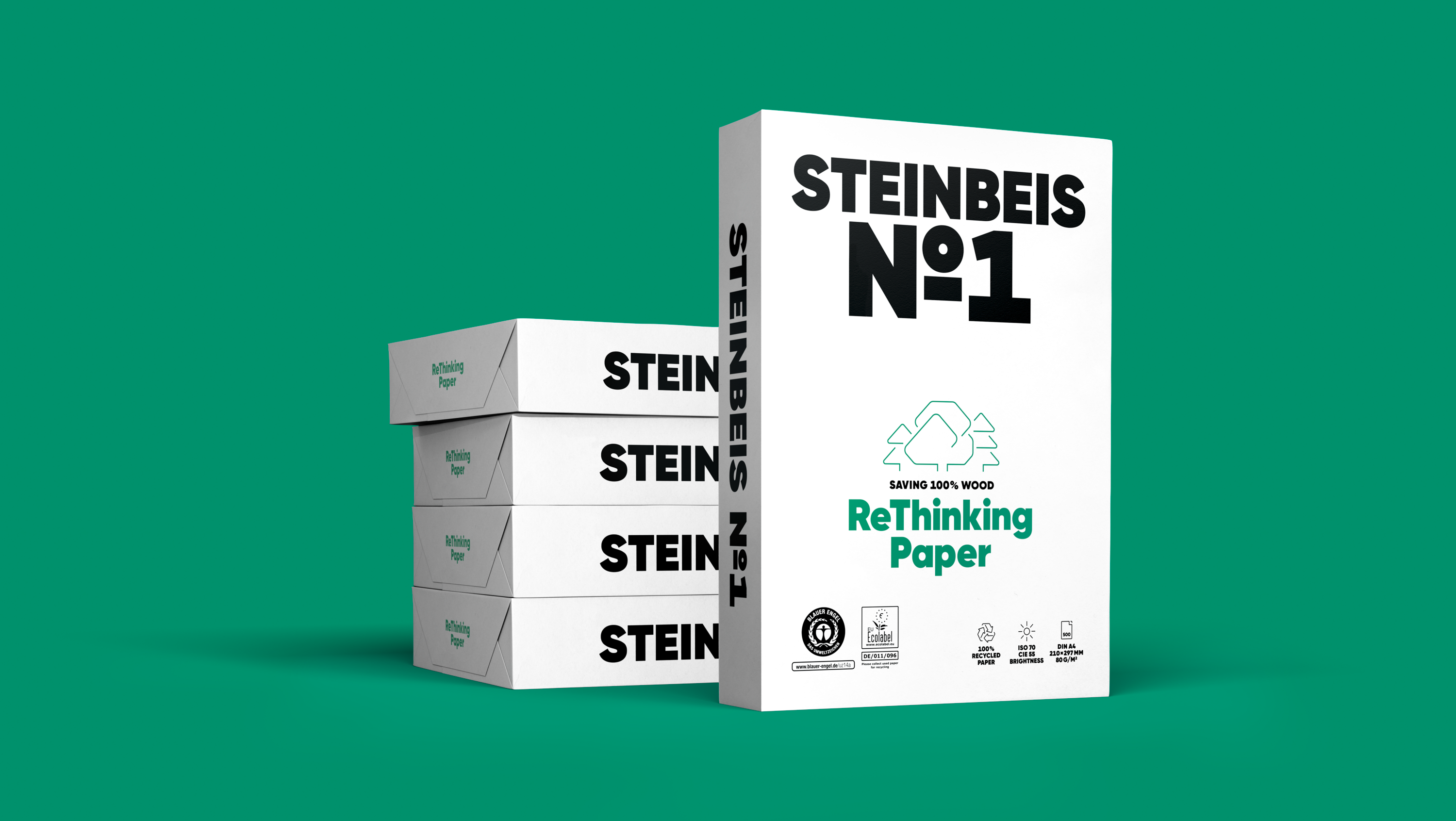
If you buy a packet of recycled paper made from 100 per cent waste paper with 500 sheets and a total weight of around 2.5 kilograms, you save a whole 7.5 kilograms of wood that did not have to be processed.

Species protection/species diversity
Various factors - primarily man-made - cause ecosystems to falter. This leads to imbalances in the animal kingdom, which can result in the extinction of entire species. Those creatures that are particularly endangered end up on the Red List and thus become the subject of species protection. This list has existed since 1966 and is constantly updated and published by the International Union for the Conservation of Nature and Natural Resources (IUCN): https: //www.iucnredlist.org
Good to know:
The report of the World Biodiversity Council (IPBES) states that the rate of species extinction today is up to a hundred times greater than the evolutionary rate over the last ten million years. According to the studies, up to one million species are threatened with extinction. The protection of forests contributes to the preservation of biodiversity - and the decision in favour of recycled paper also means a decision against the deforestation of natural forests.
Reforestation
Nothing is more obvious than planting trees to combat climate change. Basically, this is known as reforestation - planting trees or sowing seeds with the aim of reforesting areas that have disappeared due to deforestation or storm damage.
Good to know:
Reforestation is so important because the resulting forests are the most important carbon sink. Their growth removes around two billion tonnes of carbon dioxide from the atmosphere every year, six percent of globalCO2 emissions. Preventing the deforestation of natural forests is even better than reforestation. Recycled paper is made from 100 per cent waste paper. No tree has to be felled for it.
Education for sustainable development (ESD)
Sustainable thinking and action do not work without education. This is the mission of UNESCO's education programme, which aims to answer all questions relating to sustainable progress. The aim was to promote sustainable development processes both locally and globally. From 2005 to 2014, the member states of the United Nations committed themselves to anchoring the principles of sustainability in their education systems with the UN Decade of Education for Sustainable Development (ESD).
Good to know:
UNESCO used the digital world conference "Learn for our Planet. Act for sustainability" as an opportunity to present the new programme "Education for Sustainable Development: Achieving the Global Sustainable Development Goals (ESD 2030)". More than 90 organisations and companies have joined forces to form a partner network to promote and implement the ESD 2030 agenda.
Biodiversity
The term biodiversity refers to the variety of life on earth. And that at all levels - from genes to ecosystems. Biodiversity encompasses the evolutionary, ecological and cultural processes that comprise life. Moreover, not only species that are considered rare, threatened or endangered, but also all living things - from humans to organisms about which little is known, such as microbes, fungi and invertebrates.
Good to know:
It is estimated that more than 80 per cent of all living organisms on earth have not yet been discovered. You can read more about biodiversity in our blog post "Diversity means life".
Bioeconomy
Bioeconomy can be seen as the knowledge-based production and utilisation of natural or biological resources in combination with biological processes that make it possible to provide economic goods and services in an environmentally friendly way.
Good to know:
The European Bureau for Conservation and Development (EBCD) estimates that the bioeconomy has the potential to save between 1 and 2.5 billion tonnes ofCO2 equivalent per year by 2030.
Blue Angel
The Blue Angel is the German government's environmental label. It guarantees that products labelled with it have far-reaching environmental, health and usage properties. In the case of recycled paper, it must fulfil strict criteria: Guaranteed production from 100 per cent waste paper, no use of chlorine or halogenated bleaching agents, clear limitation and exclusion of certain chemicals in paper production. All auxiliary materials must be authorised in accordance with recommendation XXXVI (Food and Commodities Act of the Federal Institute for Risk Assessment BfR).
Good to know:
Surveys by the Federal Environment Agency have shown that 90 per cent of people can relate to the ecolabel. 23 per cent of consumers even claim that the Blue Angel influences their purchasing decisions. For Steinbeis Papier, the Blue Angel is the strictest eco-label and therefore offers the best consumer protection.
Flower strips
Flower strips are specially planted areas (also known as flowering areas) on which numerous different flowering plants grow, providing an important source of food for bees and contributing to local biodiversity. Farmers have discovered them as a useful agri-environmental measure. However, nature conservation organisations and companies with a commitment to sustainability are also supporting such initiatives - including in urban areas.
Good to know:
Almost 80 per cent of wild plants and many cultivated plants need to be pollinated by insects in order to produce seeds and fruit and thus ensure yields.
Car sharing
Car sharing has become indispensable, especially in large cities. It involves the jointly organised use of vehicles. Many providers offer individual tariff models, primarily e-cars for hire by the minute.
Good to know:
in 2021, there are already 228 car sharing providers making their vehicles available in Germany. 855 locations in Germany have this alternative mobility concept. Almost three million customers have registered with one or more providers in this country.

CO2 footprint
The carbonfootprint is also known as the CO2 balance or greenhouse gas balance. It describes the amount of greenhouse gas emissions caused directly and indirectly by certain actions. This makes it possible to calculate exactly how high the carbon footprint of individuals, companies, products or entire countries is.
Good to know:
Anyone can use the Federal Environment Agency's CO2 calculator to calculate their personal footprint. Parameters such as living situation, mobility, diet and income are queried.
Corporate Social Responsibility
CSR for short, is translated into German as corporate social responsibility. CSR defines the voluntary contribution of business to sustainable development that goes beyond the legal requirements. In this way, companies commit to ecological, economic and social sustainability within their field of activity and towards society.
Good to know:
The largely voluntary reporting on the CSR strategy was replaced by a reporting obligation for DAX companies in 2017. As part of the CSR report, companies primarily provide information on their developments regarding emissions, women in management positions and climate efficiency.
Cradle to Cradle
As the name suggests, the principle of Cradle to Cradle is to think in cycles. The focus should no longer be on the first use, but on what happens to raw materials afterwards. In other words: precious resources are not wasted, but are recycled again and again in cycles. The cradle-to-cradle approach is therefore essential for environmentally friendly production.
Good to know:
The chemist Michael Braungart developed the concept together with the US architect William McDonough in 2002. Steinbeis Papier also works according to the Cradle to Cradle principle at its plant in Glückstadt.
De-inking
What happens when you wash your hands at home also happens on a large scale in the production of recycled paper. When waste paper is recycled, ink and printing ink are separated from the paper fibre in the de-inking process. A conscious effort is made here to ensure that any substances that are harmful to the environment and health are not used in the first place.
Good to know:
De-inking residues are used for road construction or for the production of cement and bricks, among other things.
German Sustainability Code
In order to make sustainability measurable, the German Council for Sustainable Development (RNE) decided in 2011 to create the German Sustainability Code (DNK). The DNK is intended to function internationally and across all sectors in order to make corporate sustainability performance visible and more comparable through standardisation.
Good to know:
Steinbeis was already a winner of the German Sustainability Award in 2009 and continues to act in accordance with the principles of the German Sustainability Code.
Downcycling
In contrast to upcycling, the quality standard of a product decreases after downcycling. However, this is not a bad thing, as downcycling is an important aspect of recycling. Raw materials are reused despite a loss of quality in order to conserve natural resources.
Good to know:
Downcycling counteracts the flood of waste in the oceans. Plastic takes between 400 and 1000 years to completely degrade. The concept of the circular economy can generate multiple benefits without disposal.
Triangle of sustainability
The term sustainability is inevitably associated with environmental protection. This is of course an important and central factor, but it also encompasses two other dimensions. The triangle of sustainability (or: three pillars of sustainability) is a model based on the simultaneous realisation of ecological, economic and social goals.
Good to know:
A discourse is currently taking place to replace the triangular model with a quadrilateral of sustainability. Politics is to be added as a fourth sphere of influence.
Earth Overshoot Day
Every year, Earth Overshoot Day marks the date on which the world's population consumes more natural resources than nature can reproduce within twelve months. The Global Footprint Network organisation bases this day on a specific calculation: the total ecological footprint - i.e. the consumption of humanity in one year - is compared with the biocapacity of the planet, i.e. the capacity of the earth to regenerate the renewable natural resources in that year.
Good to know:
Earth Overshoot Day is earlier every year. in 2021, it was set for 29 July. in 1987, for example, it was still on 19 December. According to the WWF's "Living Planet Report 2020", almost two planets would be needed in 2030 to supply all people with food and raw materials.
Electromobility
Now commonplace in major cities around the world: e-scooters and e-cars that get you from A to B quickly. They are based on new drive technologies. And the major car manufacturers are focussing primarily on electromobility. Development is progressing steadily - the vehicles have ever greater ranges. A nationwide charging infrastructure is the political, economic and social goal for the next few years. In addition, the charged electricity should primarily come from renewable energy sources.
Good to know:
in 2021, electrified vehicles (plug-in hybrids and pure electric cars) overtook diesel vehicles for the first time with 367,906 new registrations (from January to July), with 361,151 new registrations.
Renewable energy
Energy has been sourced from fossil fuels for centuries - primarily oil, natural gas and coal. The problem with this is that these raw materials not only release a lot of pollutants when they are burnt, but also that their reserves on earth are limited. The energy transition shows that natural forces can contribute to energy production on a large scale. Wind, water, biomass and geothermal energy are inexhaustible. The demand for energy is increasing, making renewable energies one of the most important factors in climate protection.
Good to know:
The share of renewable energies in Germany's electricity consumption is growing steadily: Whereas in 2000 it was just 6 per cent, 20 years later it is already at 45 per cent. Steinbeis Papier is making a decisive contribution here and investing in future-proof andCO2-reduced energy solutions. The portfolio includes power plants with combined heat and power generation as well as wind and solar energy.
EU Ecolabel
Anyone who pays attention to the EU Ecolabel when buying products is making a contribution to environmental protection. The label can be found on many different products and services: from cleaning products to electrical appliances, textiles and paints to camping sites. More than 70,000 products and services have already qualified for the environmentally friendly label.
Good to know:
As a sustainable recycled paper manufacturer, Steinbeis Papier products also carry the EU Ecolabel in addition to the Blue Angel. One of the most important criteria for the EU Ecolabel "for printed paper" is deinkability.
Cycling
The bicycle - if not an e-bike - is definitely one of themost CO2-friendly means of transport, powered purely by muscle power. And the "bike" is becoming increasingly popular. Many cities have recognised the trend and are therefore endeavouring to make cycling even more attractive with car-free zones, wider cycle paths or hire stations.
Good to know:
Almost all German citizens - in theory - own a bicycle. 79.1 million bicycles were counted in Germany in 2020. They account for around 12.6 per cent of all journeys made on public transport.

Fairtrade
The Fairtrade label is primarily concerned with the social aspect of sustainability. In developing and newly industrialising countries, farms should receive better prices and workers on plantations should enjoy decent working conditions. The high Fairtrade standards are also intended to ensure more environmentally friendly business practices and provide strong incentives to switch to organic farming.
Good to know:
in 2020, Germany was one of the most important sales markets for fair trade products with around 1.9 billion euros.
Fibres
Fibres are the basis for paper production. Primary fibres, which are obtained from plant material such as wood, are used for conventional virgin fibre paper. Recycled paper, on the other hand, uses secondary fibres such as waste paper. The processing of waste paper extends the useful life of the primary fibre. At the end of its life cycle, it is fed back into a reprocessing process - one of the basic principles of the circular economy.
Good to know:
Primary fibres can also be obtained from sugar cane, flax, hemp, jute or cereals. Development departments are currently testing methods to make these available for paper production.
Sources:
https://www.bmu.de/themen/naturschutz-artenvielfalt/artenschutz/was-bedeutet-artenschutz
www.unesco.de/bildung/bildung-fuer-nachhaltige-entwicklung/unesco-programm-bne-2030
https://www.wissen.de/e-scooter-im-fluss-vom-verkehrsmittel-zum-umweltproblem
www.wissenschaft-x.com/renault-arms-entire-french-town-with-free-electric-cars
https://www.papierundtechnik.de/papiertechnik/faserstoff/
https://de.wikipedia.org/wiki/Fairtrade_Labelling_Organizations_International
https://de.statista.com/themen/6616/fahrradfahrer/
https://c2c.ngo/vision-mission/
https://www.worldvision.de/aktuell/2018/09/fmnr
https://einfachweniger.ch/blog/das-nachhaltigkeitsdreieck-sucht-einen-nachfolger/
https://www.nachhaltigkeitsrat.de/projekte/deutscher-nachhaltigkeitskodex/
www.geo.de/natur/oekologie/4178-rtkl-biodiversitaet-auf-der-erde-leben-87-millionen-arten
Author

Valerie Bachert is a journalist, chief of staff and sustainability officer. She is interested in the areas of organic farming, conscious consumption, species extinction, social injustice and sustainable nutrition.