Waste fasting - a good resolution for the new year and more conscious consumption

The new year often begins with good intentions. Many people use January for a period of fasting to regenerate body and mind and to pay more attention to their diet. But what if we applied this principle of conscious renunciation not only to our food, but also to our consumption? Imagine if we not only took the strain off our bodies, but also our planet. This is exactly where the idea of "waste fasting" comes in - a good resolution that can accompany us throughout the year and lead to a more mindful lifestyle.

The basics: What does zero waste really mean?
Waste fasting is basically the German interpretation of the international "zero waste" movement. The aim is to prevent waste from being created in the first place. Instead of focussing solely on recycling, we take a step back and question our consumption from the ground up. The basis for this is the "5 R's", a simple but effective guide to action:
- Refuse: Say no to things you don't need - be it disposable items, free samples or the paper bag for that single purchase.
- Reduce: Reduce what you consume. Ask yourself before every purchase: Do I really need this? Favour products with little or no packaging.
- Reuse: Use items as often as possible. Sturdy shopping bags, reusable vegetable nets, glass containers and reusable coffee cups are simple examples.
- Recycle: Anything that cannot be avoided, reduced or reused should be professionally recycled to keep raw materials in circulation.
- Rot (compost): Organic waste such as fruit and vegetable scraps do not belong in the residual waste. The term is derived from the English word "rotten". They become valuable soil in the compost or in the organic waste bin.
Waste fasting in practice: concrete steps for everyday life
Implementing this in everyday life is an exciting self-experiment. With a self-assembled "zero-waste-to-go kit" - consisting of a drinking bottle, reusable cutlery and a lunch box - a lot can be achieved when travelling. At home, we can do without cling film in the kitchen and switch to solid shampoo in the bathroom. But fasting from waste goes far beyond avoiding packaging. It affects all areas of our lives:
- Fashion with responsibility: the textile industry is one of the most resource-intensive industries in the world. Instead of constantly buying new clothes, it's worth going to second-hand shops or clothes swap parties. Sustainable fashion labels focus on fair working conditions, organic materials and long-lasting quality. If you consciously buy fewer but higher-quality items of clothing, you not only reduce waste but also support fair production conditions.
- Repair instead of disposal: Broken appliances end up in the bin far too quickly. However, many things can be repaired with a little skill or professional help. Repair cafés offer low-cost support, often combined with an exchange of knowledge and experience. The right to repair, which has been strengthened by the EU since 2024, increasingly obliges manufacturers to provide spare parts and make devices repairable. Repairing instead of buying new saves resources and significantly extends the lifespan of products.
- Upcycling: breathing new life into old things: Old jars are turned into storage containers or lanterns, worn jeans are turned into bags or cushion covers. Upcycling means giving things a new function instead of throwing them away. This creative form of recycling not only conserves resources, but is also fun and results in unique, personalised objects.
- Favour durable products: quality over quantity - this principle not only saves money in the long term, but also reduces waste. High-quality tools, furniture and household appliances often have a much longer lifespan and can be repaired frequently. Investing in durability pays off - for your wallet and the environment.
- Share instead of own: Not everyone necessarily needs their own drill that only gets used twice a year. Sharing platforms, neighbourhood networks and loan shops provide access to tools, sports equipment and household helpers without everyone having to own everything themselves.
But let's be honest: doing without is not always possible. In the supermarket, many foods are packaged to keep them fresh and hygienic. Sometimes we rely on products that are simply not available without packaging. Excessive perfectionism can quickly lead to frustration. The aim is not to lead a completely waste-free life overnight, but to make conscious and better choices wherever possible.
When doing without is not an option: consciously choosing the alternative
And this is where the decisive step begins. If we can't do without something, we still have the power of choice. We can choose sustainable alternatives: Products made from recycled materials instead of new raw materials, goods with less packaging, items from manufacturers who produce transparently and responsibly.
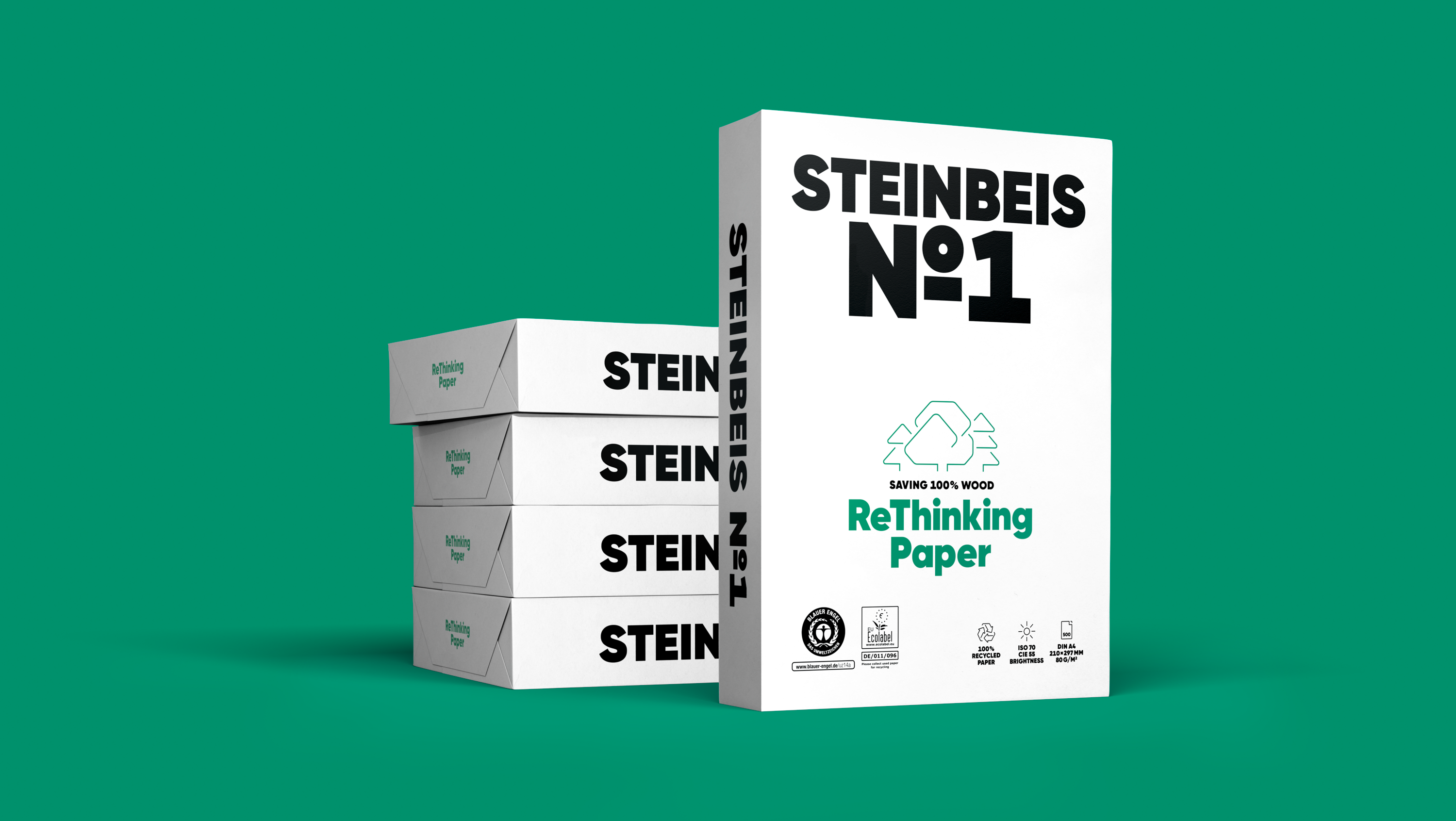
An example: If paper is needed for printing, in the office or as packaging material, reaching for a high-quality recycled paper made from 100% waste paper is the demonstrably more environmentally friendly choice. Compared to the production of virgin fibre paper, valuable resources such as wood, water and energy are saved on a massive scale. This makes recycled paper an important building block for a functioning circular economy and a responsible approach to our environment.
Conclusion: Every conscious consumption is a step in the right direction
Waste fasting is not a competition or an all-or-nothing decision, but a personal journey towards greater mindfulness. It's about questioning habits and establishing new, more sustainable routines. Whether second-hand fashion instead of fast fashion, repair instead of buying new, upcycling instead of disposal or the conscious choice of long-lasting products - every small step, every conscious decision in favour of a reusable or recycled alternative is a win for our planet.
The final message is therefore not one of total renunciation, but of conscious consumption - whether in fashion, everyday products or office supplies such as printer paper. Start the new year with us - with a resolution for less waste, more mindfulness and a lifestyle that conserves resources and creates value.
Cover picture: Nik / Unsplash
Author

Since his editorial traineeship in Hamburg, Jan Strahl has worked as a journalist, editor or author for almost every large and small publishing house in the city. He writes for consumer media and corporate publishing publications on art, fashion, lifestyle and knowledge topics.