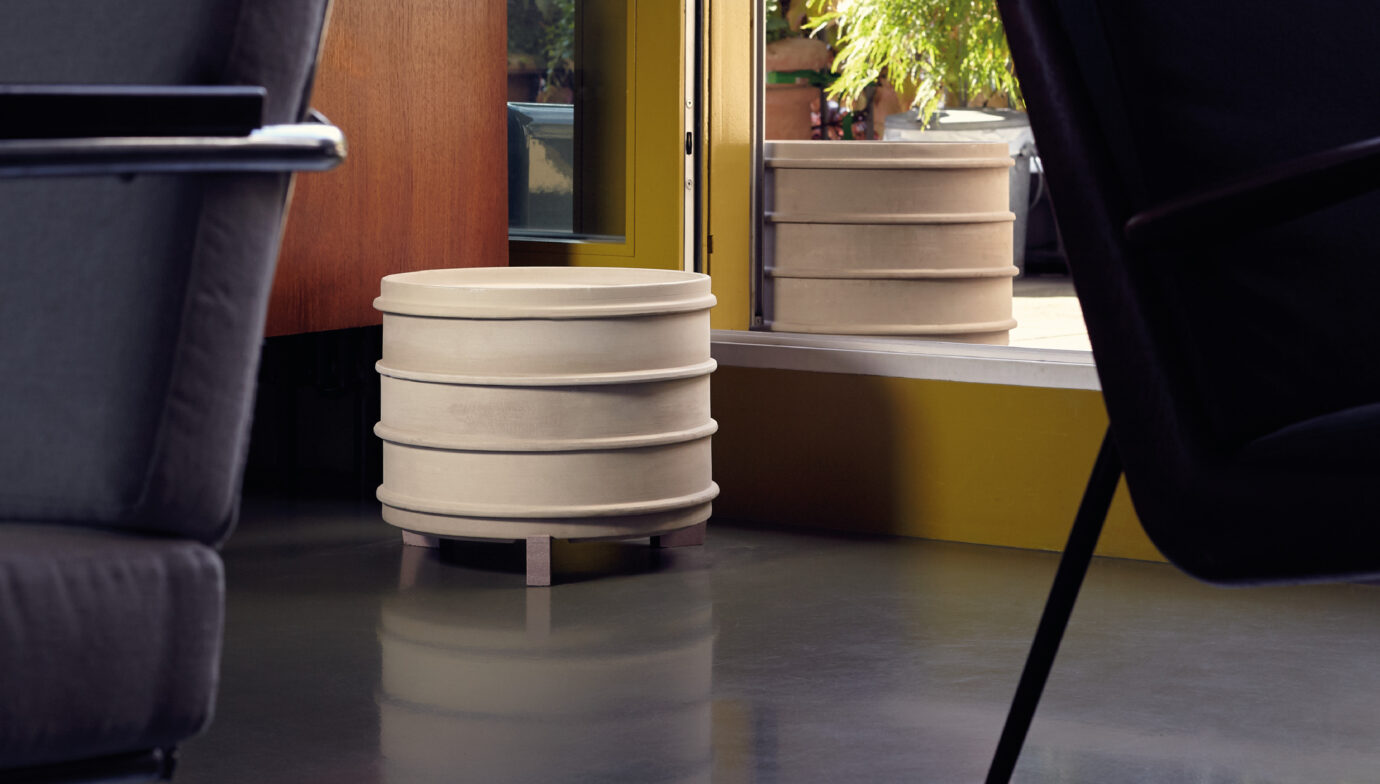
Warm up to WormUp
05.10.2021 - Recycling conserves our resources - whether it's paper or organic waste. That's why the Swiss start-up WormUp has built a sustainable worm tower that turns waste into compost in an odourless way. The highlight: the WormUp Home makes composting possible even in households without a garden or balcony.
Waste is a resource
Most people are familiar with garden composters. This is where organic waste from the garden and home is collected and turned into humus. But not everyone has space for the XXL version. At best, the green waste ends up in the organic waste bin, at worst in the residual waste - 500,000 tonnes a year. Even today, in times of climate strikes, the organic waste bin is far from obligatory. Properties or landlords decide whether or not it should be included. If you don't organise it yourself, you have to throw your organic waste in the normal bin. "The pain of seeing the masses of valuable raw materials being wasted inspired us and still drives us today," explains Sarah Steiner, co-founder and co-CEO of WormUp. All of the founders grew up in the countryside. So the idea of composting was an obvious one. However, conventional composters rarely find space in the cramped urban environment. A practical and sustainable solution was needed - and so the idea for an indoor composter was born, which turns supposed waste into new soil within your own four walls: the WormUp Home.
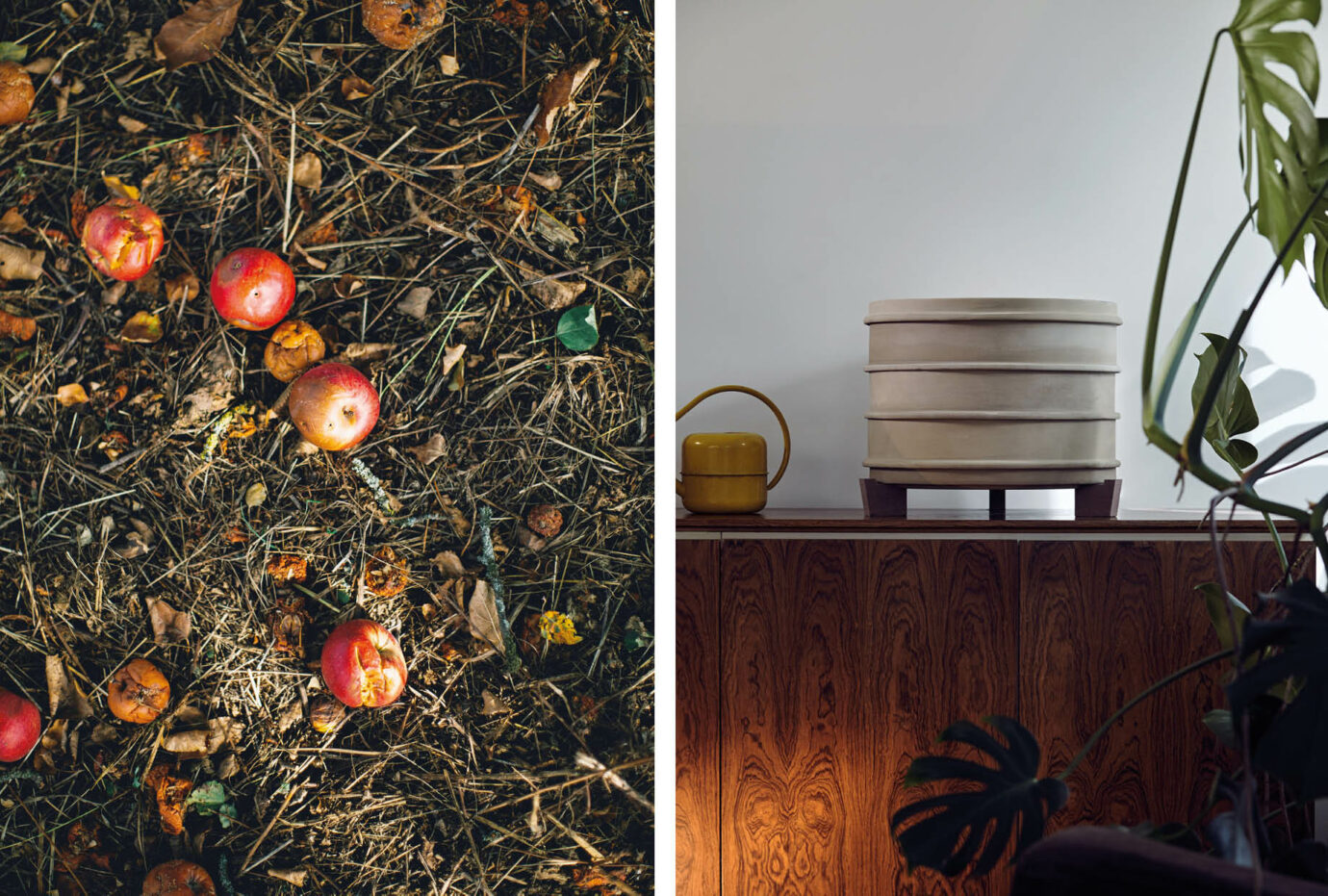
Vitalising cure for soil and plants
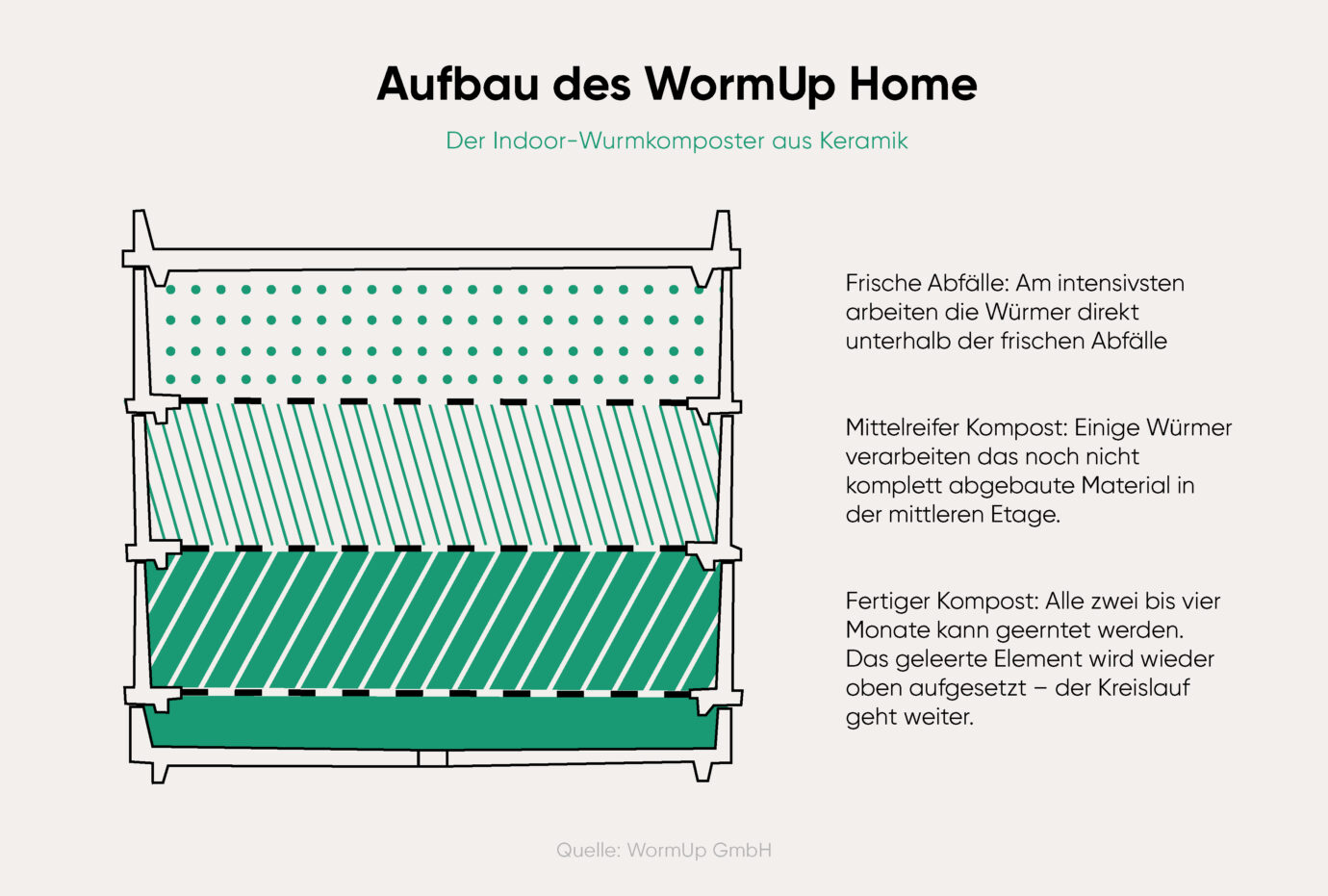
The WormUp Home worm tower has three levels and promises permanent access to nutrient-rich worm humus. To begin with, around 1,000 worms are placed in the soil element in a substrate rich in regular compost microorganisms. The organic waste is deposited on top. Microorganisms decompose the waste, the worms absorb it and process it into worm humus. "It can happen that at the beginning there is not enough mass for the worms to retreat to during a dry period. A simple hack is then to add a few handfuls of soil," Sarah reveals and adds: "It's best to use soil from outside, as grown soil is much more vital than soil from the garden centre. It's also good if this soil is also rather loamy." A thin layer of new organic material is now fed in daily - around 800 to 1,200 grams per week. Whenever the layer of fresh waste reaches the centre of the element above it, new organic material can be placed on top. Thanks to the grid, the worms can move up and down between the levels. Every two to four months, around 7.5 litres of worm humus are ready for harvesting. The harvested element is then placed back on top and the process starts all over again. Compared to a large garden composter, the amount of compost harvested is significantly smaller. However, the composting process is much more controlled and the worm humus is correspondingly rich in nutrients. The microorganisms in the soil are happy about this natural fertiliser, whether for the monstera on the windowsill, the balcony tomatoes or the pumpkins in the garden bed. In addition, depleted potting soil can be revitalised with the worm humus. This means that less soil needs to be bought from the garden centre, which not only saves costs and effort when lugging it around, but also saves resources.
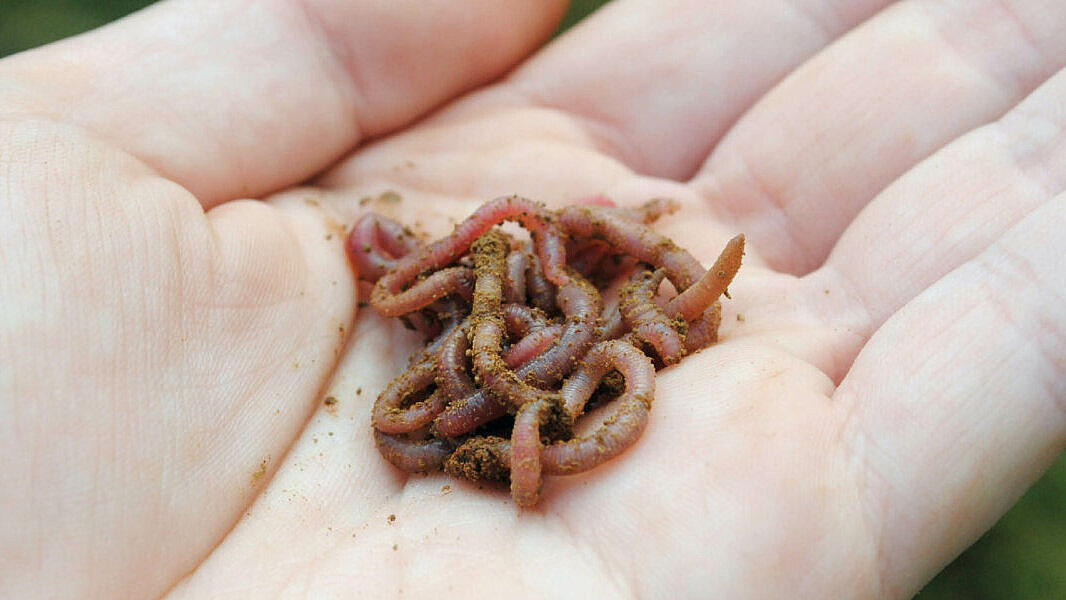
An agile worm is a happy worm
"Worms need more attention than a cactus, but definitely less than a guinea pig," assures Sarah. She often advises worm novices to ask honest questions about how their own houseplants are doing before ordering. This way, everyone can find out how enthusiastic they are likely to be about looking after their new flatmates. Overall, however, worms are comparatively easy to care for as pets. They are just as happy with uncooked - even mouldy - kitchen waste and coffee grounds as they are with animal hair and root balls from houseplants. They do not need to be combed or groomed, and there is no need to visit the vet. However, it is important for the well-being of the worms to avoid extremes when choosing a location: It is too hot for the worms in the blazing sun. If it is too cool, composting slows down and much less organic material can be utilised. Ideally, temperatures should remain between 15 and 25 degrees Celsius. "My preferred location is indoors, in a place where the temperature remains roughly the same in summer and winter. That's why my WormUp Home is currently in the cellar," says Sarah. Basically, if you lift the lid of the worm tower and can't see any worms after just under a minute, you can be sure that the worms are doing well, as they are extremely shy of light and then hide immediately.
Worm turrets for eternity
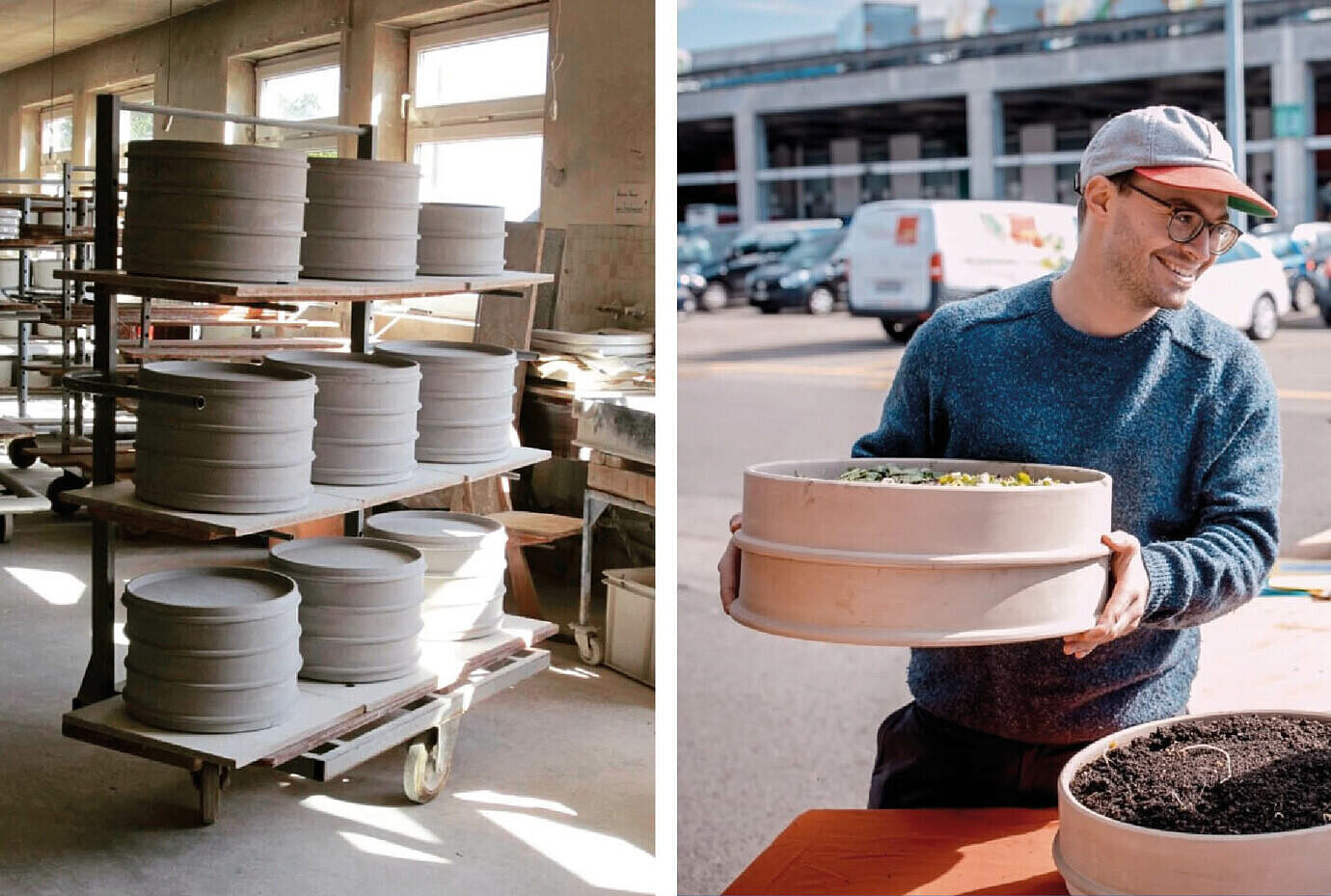
A unique selling point of the WormUp Home is its material: clay. Worm composters can also be made of wood or plastic. But while untreated wood decomposes comparatively quickly, glued wood is no longer recyclable and is not sufficiently porous. Plastic was never an option. "It may have a right to exist in certain places, but not as a composter," emphasises Sarah. Clay, on the other hand, is a natural, recyclable raw material that is durable - just think of the shards of ancient Greek and Roman pottery. Thanks to the chosen firing process, the clay can also breathe. This is important as the structures of the organic materials are broken up during composting, releasing up to 90 per cent water, which then has to go somewhere. With many other worm composters, this water can be drained via a tap and used as fertiliser, but it is better if the nutrients remain in the worm humus. Another disadvantage of the drainage method is that worms can become trapped and die.
On a small ecological footing
With the prototype in hand, the search for a suitable regional producer began in April 2016, as production in Asia was never an option. However, ceramic processing is not exactly one of Switzerland's flourishing industries. In addition, a workshop had to be found that could cope with the production volumes of the WormUp Home. This was no easy task, as the kiln capacities in art factories are too small, whereas brickworks are used to large-scale production. The founders found what they were looking for in the Westerwald region of Germany. The tower elements are produced there by hand using moulds in two traditional ceramic factories. With the same focus on minimising the ecological footprint, the team turned their attention to logistics. "We definitely didn't want to produce any plastic waste," explains Sarah. That's why packaging was developed that is made from 100 per cent cardboard. In addition,CO2 compensation is being considered to offset shipping and production. Sarah is convinced: "If offsetting, then it makes sense!" She finds a current project in the Kaindorf ecoregion in Austria particularly interesting, in which farmers are cooperating with companies to promote humus formation and thus bind the abundantCO2 released. "Compensation like this would remain true to the WormUp vision," she says.
The biotope on the kitchen island
There is no waste in nature - only resources. Everything decays, is part of the natural cycle and is used as a raw material for something new. The WormUp team makes these natural processes tangible - even in the city - and shows young and old that a banana peel can become humus again and what role even the smallest creatures play in the big picture.
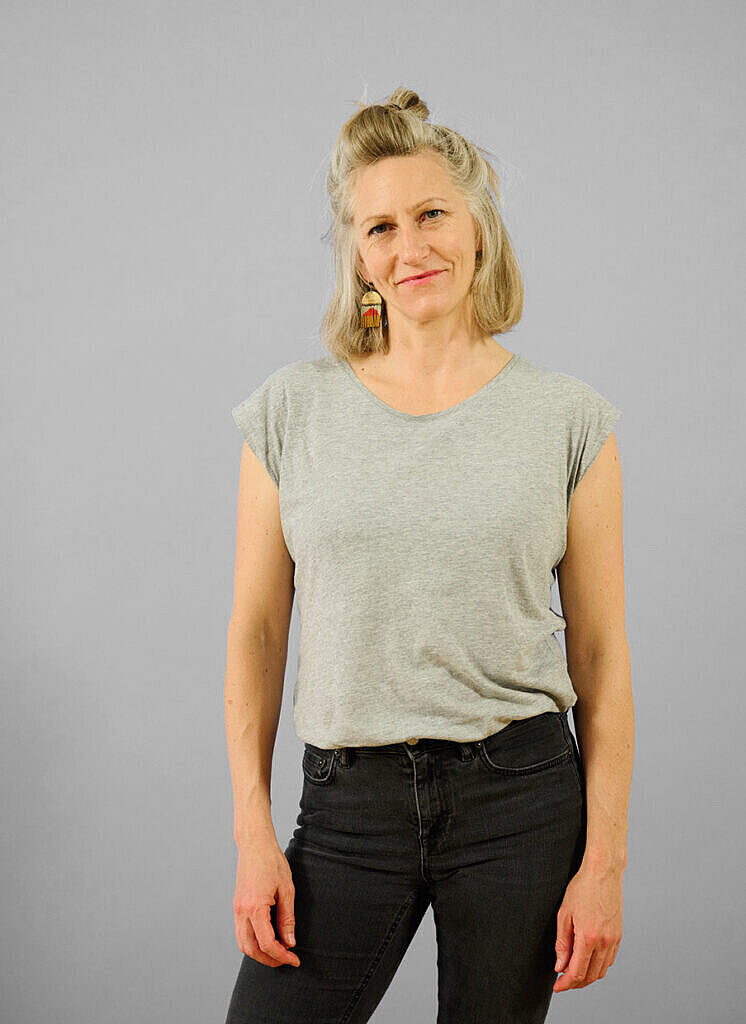
Different skills are often required when founding a company than when it comes to managing the business. Accordingly, the constellation of the team has changed somewhat in the course of the start-up's development. Today, Sarah Steiner (Worm Strategy), Erich Fässler (Worm Pope) and Nikolai Räber (Pitching Captain) share the position of CEO. They were all united by the pain of simply throwing valuable organic raw materials in the bin every day. In return, everyone pitches in wherever support is needed. The effort is worth it: the WormUp Home recently emerged as the winner in the Kassensturz function test, the Swiss equivalent of Stiftung Warentest. The design and choice of materials have also received several awards, including from Wallpaper Magazine UK and most recently the Federal Ecodesign Award of the Federal Republic of Germany in 2019.
Cover picture: Claude Gasser/WormUp GmbH
Author

Valerie Bachert is a journalist, chief of staff and sustainability officer. She is interested in the areas of organic farming, conscious consumption, species extinction, social injustice and sustainable nutrition.