TOWARDS ZERO: Our roadmap to a climate-neutral future

For Steinbeis Papier, sustainability is not a project with a beginning and an end. It is the core of our identity, grown over decades. When we took the bold decision in 1976 to switch our production completely to recycled paper, we embarked on a path that we have consistently pursued to this day. With TOWARDS ZERO, we are now summarising all our efforts under one name, giving our journey a clear goal and making our actions more transparent than ever before: climate-neutral production by 2040.
More than a vision: a commitment that is anchored in our DNA
For us, TOWARDS ZERO is far more than just a distant milestone. It is a promise to take our responsibility for the environment seriously and to make our processes transparent. It is based on three inextricably linked pillars: ecological, economic and social responsibility. Only when these three dimensions are in balance can we create a business model that is fit for the future - for our company, for our partners and for our society."Sustainability is not an add-on, but our aspiration for everything we do," explains Veronika Warmers, Head of Marketing at Steinbeis Papier.
Holistic cycles: at the heart of everything we do
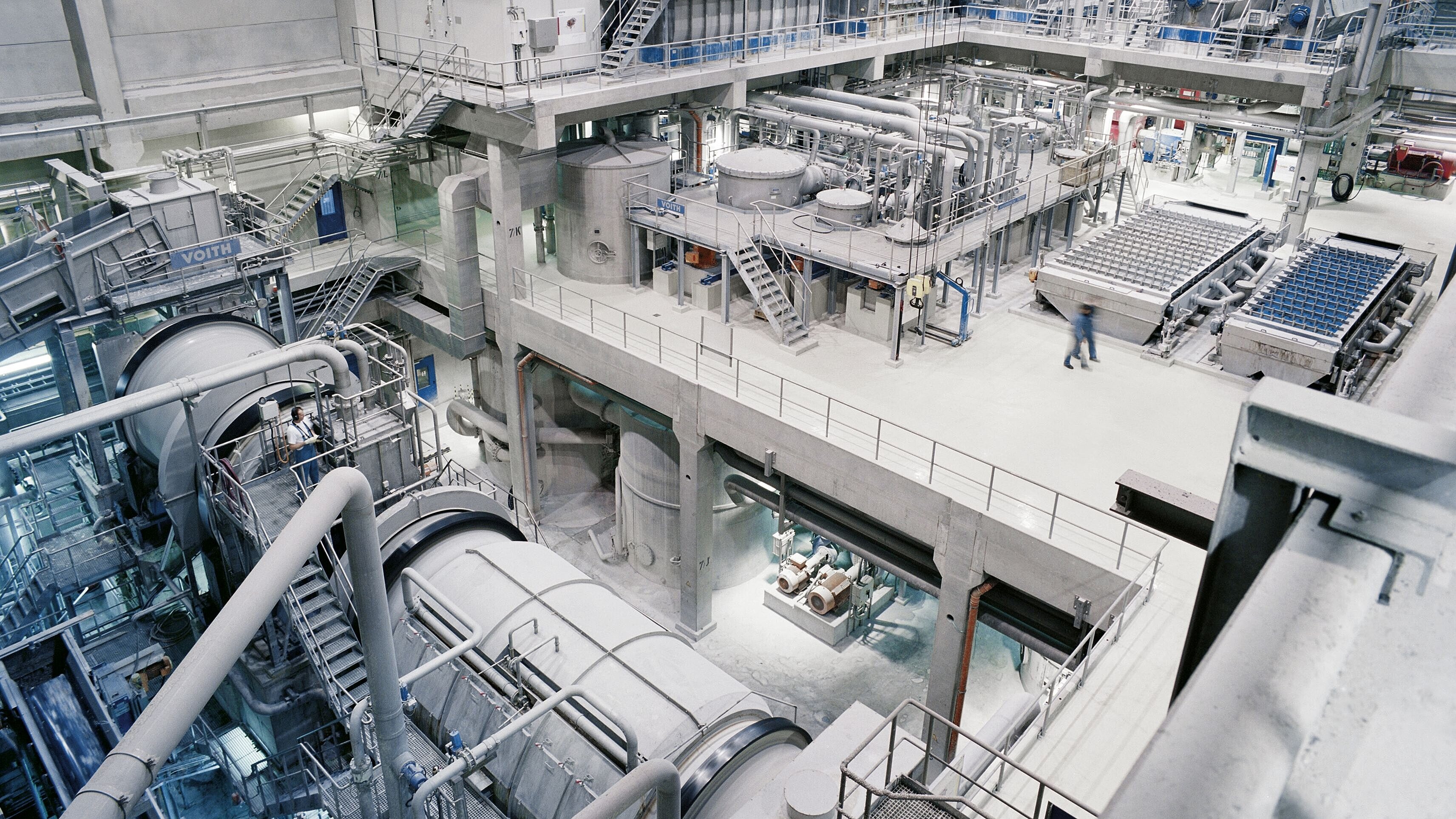
The principle of the circular economy is not a theoretical concept at Steinbeis Papier, but a lived practice. Our production in Glückstadt is based on four interlocking, holistic cycles that maximise our efficiency and have a decisive impact on our environmental footprint:
- The paper cycle: instead of cutting down new trees, we give used paper a new life. It is the basis for our high-quality recycled graphic papers.
- The water cycle: We only use surface water from the River Elbe, which we treat and reuse several times in largely closed cycles. In this way, we conserve valuable groundwater reserves.
- The energy cycle: Our integrated power plant supplies the factory with heat and electricity, using recycled waste materials from production as fuel. This makes us more independent and increases resource efficiency.
- Waste utilisation: What is waste for others is a resource for us. Residual materials from paper production and municipal waste management are converted into energy in our power plant.
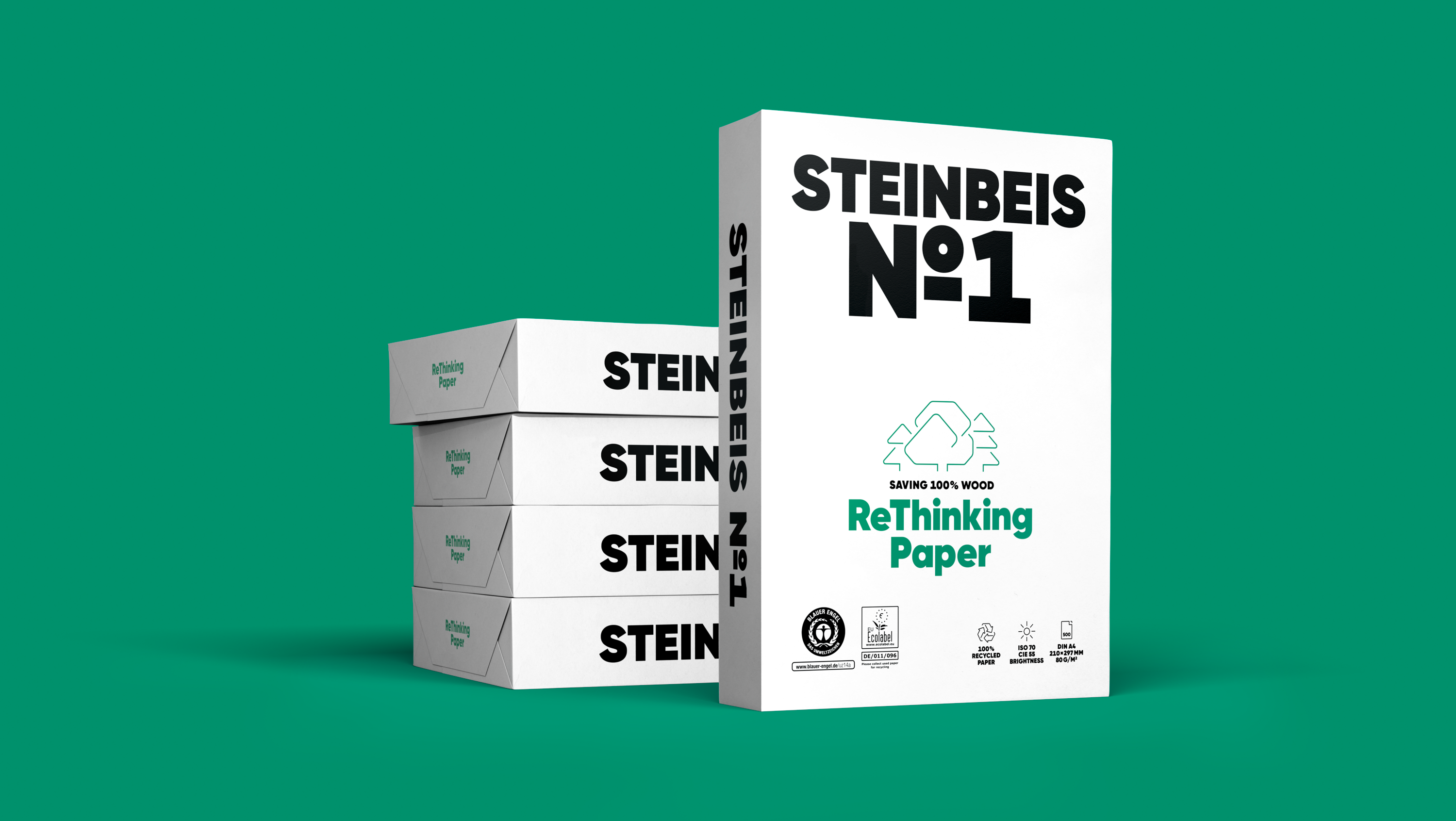
These cycles are the reason why we achieve clear and impressive savings in the most important resources. Compared to the production of virgin fibre paper, we demonstrably save 100% wood, 79% water and 73% energy. These values, documented by life cycle assessments from the Federal Environment Agency, are the core advantage of recycling - directly measurable, easy to understand and unequivocal proof of sustainability in practice.

The compass: transparency through the corporate carbon footprint
At this point, we could communicate a simple CO₂ savings value, as is customary in the industry. But that would only be half the truth. A CO₂ comparison value between different manufacturers is often misleading, as it is heavily dependent on external factors: The national electricity mix, different calculation methods or the question of whether emissions from the supply chain (Scope 3) are recorded at all lead to results that are difficult to compare.
For this reason, Steinbeis Papier chooses the path of absolute transparency. We report in accordance with the internationally leading Greenhouse Gas (GHG) Protocol and systematically record all three relevant emission areas (scopes) in order to provide an honest and complete picture of our emissions:
- Scope 1: Direct emissions generated at our plant.
- Scope 2: Indirect emissions from purchased energy such as electricity.
- Scope 3: All other indirect emissions along our value chain.
The complete recording of Scope 3 emissions in particular is a sign of maximum transparency and is essential for us to identify the greatest levers for climate protection. This approach is our actual compass on the way to TOWARDS ZERO. "The Corporate Carbon Footprint is our compass on the way to TOWARDS ZERO. It shows us precisely where we stand and where we can improve," emphasises Andreas Steenbock, Sustainability Manager at Steinbeis Papier. "We communicate it transparently, as this is the only way we can create trust and identify the greatest levers for climate protection together with our partners."
The roadmap to net-zero production by 2040
Our vision is not an abstract goal, but is based on a concrete roadmap with measurable steps that we are already implementing today:
- The green electricity offensive: the decisive lever is the complete switch to green electricity. We are gradually increasing the proportion of green electricity from our own group of companies to 80% by 2026, until we reach 100% by 2030.
- Efficiency as an ongoing task: We will increase our energy efficiency by a further 1.5% by 2040. Every kilowatt hour saved is a direct benefit for our carbon footprint.
- Investments in future technologies: In order to eliminate emissions that are difficult to avoid, we intend to make targeted investments in technologies such as carbon capture and storage (CCS) from 2040 and are evaluating the use of green hydrogen.
- Integration of the supply chain (Scope 3): Climate protection does not end at the factory gate. We actively involve our partners in order to jointly identify and reduce emissions within our sphere of influence.
"We are convinced that we can achieve climate-neutral production by 2040. This requires courage, investment and belief in our innovative strength. But it is the only way forward for a sustainable industry," says Managing Director Marc Gebauer.
Together into the future
TOWARDS ZERO is not a solo endeavour, but an invitation to our customers, suppliers and partners. A profound change towards a truly sustainable industry can only be achieved together.
"The pioneering spirit of 1976 is more relevant today than ever. As a group of companies, we don't just think in quarters, but in generations," adds Stephanie Ecker, partner. "Our investments in our own sustainable energy and raw materials supply are the foundation on which Steinbeis Papier's success rests today and in the future."
Let's shape a future in which sustainability is the new standard.
Cover picture: Volia Bigel / Stocksy
Author

Since his editorial traineeship in Hamburg, Jan Strahl has worked as a journalist, editor or author for almost every large and small publishing house in the city. He writes for consumer media and corporate publishing publications on art, fashion, lifestyle and knowledge topics.