The sustainable consumption pyramid: a guide to environmentally conscious consumption

08.08.2023 - In times of growing environmental problems and climate change, the call for sustainable consumption is getting louder. More and more people want to make conscious choices and minimise their ecological footprint. The sustainable consumption pyramid is a helpful model that helps us to rethink our consumption habits and strive for a sustainable lifestyle. A closer look at the sustainable consumption pyramid can help us to make more responsible choices.
The sustainable consumption pyramid is a useful tool to help people organise their consumption in a more sustainable way. It provides a clear structure and guidance for the transition to a more sustainable lifestyle:
Stage 1: Use what's there
The first stage of the sustainable consumption pyramid is to aim for avoidance and reduction. This means consciously questioning whether we really need new products or services. By avoiding unnecessary purchases, we save resources and reduce the pressure on the environment. One example of avoidance and reduction is the conscious handling of food in order to avoid waste. We can minimise food waste by planning meals, buying exactly the amount we need and storing it correctly. Another example is to avoid buying disposable products such as plastic bottles or cutlery in favour of reusable alternatives. By using reusable drinking bottles and food containers, we help to reduce single-use plastic. In addition, we can reduce our energy consumption by using energy-efficient household appliances and practising conscious behaviour, for example by switching off lights or electronic devices when we don't need them.
Step 2: Repair instead of replace
The second stage of the consumption pyramid involves reusing and repairing items. Instead of throwing something away, we should ask ourselves whether it can be repaired or reused in another way. By doing so, we extend the life of items and reduce the amount of waste. By supporting repair services and learning basic repair skills, we can restore things like electronics, clothing or furniture to a usable state.
Stage 3: Act and do it yourself
The third stage involves recycling and upcycling materials. If we cannot reuse or repair products, it is important to recycle them correctly. By recycling materials such as paper, glass, metal or plastic, valuable resources can be recovered and reused instead of ending up in landfill or being incinerated. One example of upcycling is the creative redesign of waste materials. By transforming old T-shirts into shopping bags or discarded glasses into candle holders, for example, we give them a new use and avoid the consumption of new resources.

Level 4: Lending and sharing
The fourth level of the sustainable consumption pyramid symbolises sharing and collaborative consumption. Instead of owning every single product, we can share resources. Car sharing, lending libraries, open workshops or gardens are examples of how we can use something collectively. By building social groups based on sharing and co-operation, we can reduce resource consumption and strengthen social ties.
Step 5: Swapping instead of buying
The point of swapping in the sustainable consumption pyramid promotes the exchange of products instead of constantly buying new ones. This can be done by direct exchange between consumers or by renting products. Swapping saves resources and avoids waste. It also enables access to new products or experiences without having to buy new ones.
Step 6: Buying second-hand
Buying second-hand products means extending the product life cycle and recycling them sensibly. This enables financial savings and minimises the consumption of resources. Second-hand shops, flea markets and online platforms offer a wide range of used items. Buying second-hand promotes conscious consumption and contributes to a more sustainable society.
Level 7: Buying sustainably
The top of the consumption pyramid refers to the actual purchase of new products. Here we should favour sustainable alternatives. This means opting for products that have been manufactured in a more environmentally friendly way, are durable and are made from sustainable materials. Examples of sustainable consumption include buying organically grown food, using environmentally friendly cleaning products or choosing clothing made from sustainable and fair trade materials. It is also about supporting products that have been manufactured under fair working conditions and have transparent supply chains.
Inspiration to rethink
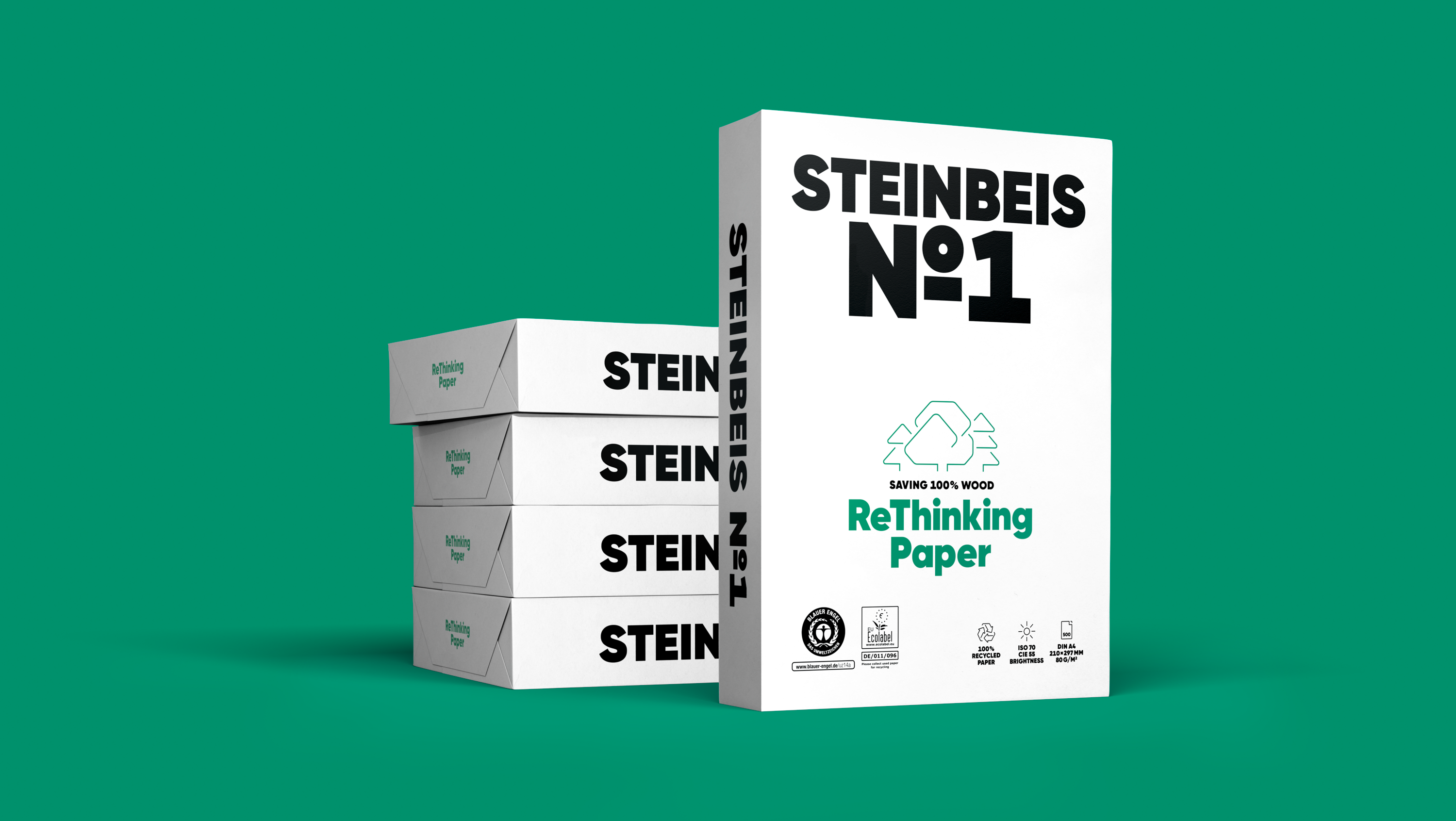
The pyramid shows that each and every one of us can contribute to more sustainable consumption. By making conscious purchasing decisions, avoiding overconsumption, reusing and repairing products, recycling and supporting companies with sustainable practices, we can reduce our ecological footprint and bring about positive change. That's why Steinbeis Papier inspires people to switch to recycled paper. ReThinking, taking this small step, has a big impact on minimising environmental impact. By switching to ReThinkingPaper, customers save 100 per cent wood, 73 per cent energy, 79 per cent water and 42 per cent CO₂-equ. emissions compared to conventional paper.
Ultimately, it is up to each individual to put the principles of the sustainable consumption pyramid into practice and make conscious decisions in everyday life. By making small but consistent changes to our consumption habits, we can have a positive impact on the environment, society and future generations.
Cover picture: Martin/Pexels
Author

As a senior editor, Benjamin Seibring specialises in developing content on sustainability, mobility, technology and lifestyle. An editorial traineeship at a German media group and his many years of experience in corporate publishing form the basis. With a high affinity for trend topics and innovative AI tools, he implements cross-media storytelling.