The material from which Steinbeis paper is made

09.02.2021 - From production technology to the finished recycled paper made from 100 per cent recovered paper - everything at Steinbeis Papier is driven by innovation. Process and recovered paper technologist Tamas Kordsachia is constantly looking for new ways to optimise the high-quality recycled paper, tap into new application potential and, above all, find new ways of using the raw material. In this interview, the 34-year-old from the Research and Development department reveals that not all waste paper is the same and that it could also become a finite raw material at some point.
Mr Kordsachia, what is your job at Steinbeis Papier?
I mainly deal with waste paper processing. My tasks include the coordination of laboratory tests, the planning and realisation of operational tests and the preparation and coordination of research projects. Troubleshooting is also part of my daily routine - if problems occur, we in the laboratory are on hand to provide support.
What does a working day look like for you?
A normal working day starts with me taking a look at the current production. If I notice any irregularities, I hold initial discussions with my colleagues from production and offer to provide support from the laboratory. Then we start our morning meetings about who is doing what task in the labs. First and foremost, I coordinate the wet lab.
What is this laboratory and the work there like?
We have two types of laboratory. In one laboratory, we examine the fibres and fibre slurries in the production process for charge, concentration and purity. In our wet lab, we have equipment with which we can simulate the process of extracting our raw material on a small scale. This is more like a technical centre. We mainly analyse samples of the waste paper delivered to us. Behind each of our samples are 25 tonnes of waste paper of the appropriate quality. We simulate the so-called deinking process in the laboratory. We dissolve the waste paper using a commercially available food processor - this has proven to be successful. Flotation, the removal of the printing ink, is essentially our core process. After we have tested the samples, the loads are released for production. This enables us to ensure that we do not produce too many rejects.

What are the particular challenges in your day-to-day work?
When anomalies occur in the production process, we are particularly in demand. We then take samples and carry out analyses outside of the routine.
For example, we received a paper sample from the technical marketing department. Our recycled paper was used for labelling. The reverse side of the paper had a silicone backing. The question we were asked was whether this coating could be dissolved and recycled at all.
In another situation, we were asked whether we would be able to recycle shredded banknotes. We are actually working on a special sorting line that can be used to dissolve wet paper or double-sided coated paper. The use of banknotes would also be conceivable here.

How digital is your work?
I coordinate and analyse the data, so I spend a lot of time on the computer. If anomalies occur in waste paper processing, I first check the online data from production. I use the computer to see whether something is running differently than usual in the cleaning stages, whether different levels are not correct in the flotation and whether the additives are being dosed in the right quantities.
Recycled paper used to feel grey and coarse-grained. Can you give us an overview of the development steps that were necessary to turn it into the high-tech product it is today?
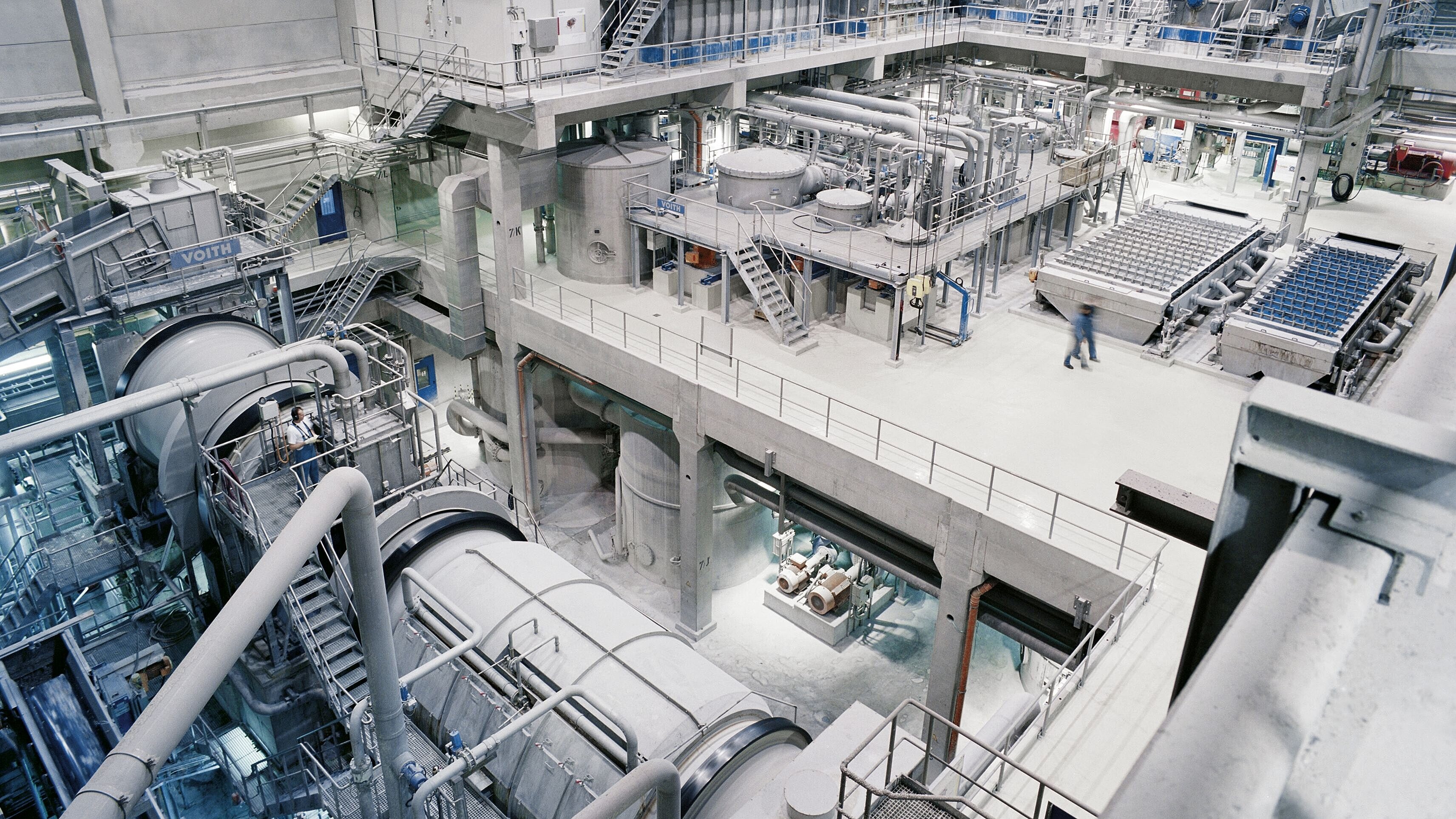
I was still very young when the decisive development steps were taken. However, I learnt from older colleagues: In the past, waste paper collection was still very unsorted. Today, there are many different types of waste paper of varying quality. And finally, the technology was not yet so advanced. In the past, there was a so-called one-loop process with sorting, pulping and flotation. The latter still took place in huge wooden containers. The foam that accumulated on the surface was then simply blown away and flew through the room. This resulted in a degree of whiteness of around 60. In 2005, the most modern processing plant in Europe was put into operation at Steinbeis Papier. We use it to carry out several flotation and bleaching stages in order to achieve a significantly higher degree of whiteness.
Steinbeis Papier produces high-quality recycled paper in various degrees of whiteness from 100 per cent waste paper. Where is there potential for even better products?
For our papers with the highest degrees of whiteness, it depends above all on the quality of the waste paper that we feed into the process. For our even whiter recycled paper with a degree of whiteness of CIE 147, we had to select correspondingly whiter types of waste paper. When we develop completely new products, the effort involved is considerably higher.

What innovations are you currently working on?
Our magazine paper is under pressure in the market. That's why we want to open up new product segments. In a brainstorming session, we first looked at which products we could create with the existing technologies. One innovation that we are currently developing is wet-strength labels - for drinks bottles. Of course, this product has completely different requirements to anything we have done before. Different auxiliary materials are used, which have a major influence on what is produced on the paper machine. We have to be able to handle the wet-strength waste. The paper is then characterised by two different surfaces. One side has a white colour layer so that it can be printed with attractive label logos. The other side controls the labelling behaviour. This was the first time we had the challenge of applying "two different strokes" to the paper at the same time - in other words, producing a paper with different surface properties.
When can we expect series production of this label paper?
In November 2020, we produced a paper that fulfils the requirements for the first time. We had to improvise at one point or another in the manufacturing process. In the end, we had a product that performed very well in our in-house laboratory tests. Now the first printing companies are testing whether our paper innovation is already ideal for the relevant areas of application.
How long did it take from the initial idea to the finished product?
In the case of the labels, the development process took a good year. The time and effort involved is due to the fact that the reorientation of the technology, as well as the commercial side, must be taken into consideration when developing new products: Is there a market for the product in question? What are the requirements for a new paper? And can Steinbeis Papier's technology even fulfil these requirements? The co-operation between our department and the sales department is essential, especially in this initial phase.
Where is the development of recycled paper heading?
My job is also to see where there are still alternatives for the raw material of our papers. The particular challenge today lies in the processing of waste paper and the procurement of resources for certain qualities of waste paper. Waste paper will be more difficult to obtain for various reasons.
In a research project with the University of Hamburg, we are investigating the use of agricultural by-products for fibre production. If we are no longer able to procure enough waste paper in the quality we require in the medium term, we will need alternatives.
What sustainability strategy are you personally pursuing?
As a new dad, I want my daughter to grow up in a world worth living in. What's more, my work at Steinbeis has further sensitised me to the issue of sustainability. This also carries over into my private life: I sort the waste paper at home, of course - if I didn't do it, I wouldn't expect anyone else to. We don't waste food either. And we get our electricity from renewable sources. What we don't have yet is an electric car. But they will probably become more affordable in the next few years.
Cover photo: Steinbeis Papier
Author

As a senior editor, Benjamin Seibring specialises in developing content on sustainability, mobility, technology and lifestyle. An editorial traineeship at a German media group and his many years of experience in corporate publishing form the basis. With a high affinity for trend topics and innovative AI tools, he implements cross-media storytelling.