The future of mobility: always on the move
09.06.2020 - Ecologically sustainable lifestyles are the order of the day and of the future. This ranges from resource-conserving production - as at Steinbeis Papier - to environmentally friendly mobility. Steinbeis takes a look at this trending topic and attempts to explain how we could get around in the future.
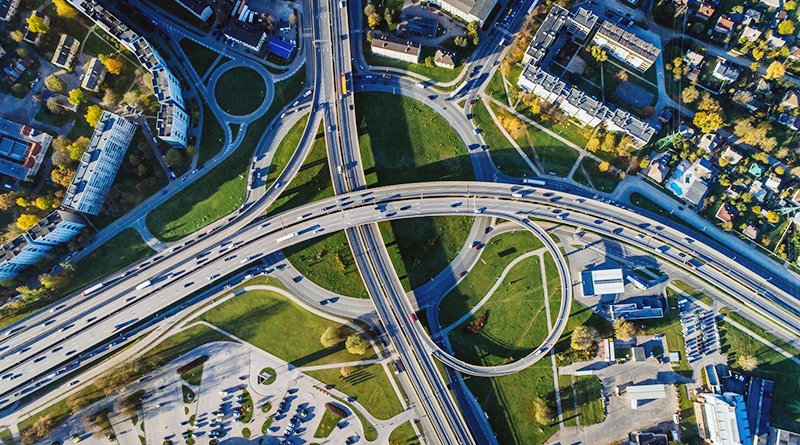
A flood of traffic is pushing its way along roads, parking spaces have become a scarce commodity and particulate pollution is reaching ever new levels - traffic in cities in particular is now becoming an organisational as well as an ecological challenge. In addition to making mobility more flexible, it is above all important to create clean, liveable and climate-friendly environments with holistic transport infrastructures. The transport revolution is already in full swing: new mobility solutions are being designed and implemented, innovative sustainable drive systems are being trialled and are already being offered on a mass scale.
Ridepooling: shared taxis on trend
App-based ridepooling services are on the rise. Shared taxis play a central role in this. Thousands of specialised vehicles for ride-sharing services are already in use in Europe, Asia and the USA. In most cases, they are powered by an electric motor and driven by a driver. From 2025, several million of them are expected to characterise the urban traffic landscape. To get a ride, all you have to do is enter the address of your location into a corresponding app and a few minutes later a van will pull up at the side of the road. Comfortable seats, USB charging facilities and free Wi-Fi await the passenger inside. The driver navigates to other virtual stops to pick up more people. An algorithm provides an ideal route to transport passengers with similar destinations.
Ridehailing: private rides for a fee
In the past, people used to hail a taxi. In times of digitalisation, ridehailing has changed fundamentally. Today, ridehailing is a far more innovative approach to passenger transport. A platform provider provides the virtual infrastructure. This means that the taxi can also be hailed virtually via an app. Private individuals offer their driving services in their own cars. In Germany, there is a critical debate about this service in terms of safety, licensing and possible distortion of competition.
Ridesharing - carpooling in digital times
Apps that call for carpooling are also being trialled. For example, parents, grandparents and other trustworthy people can use these platforms to organise their own networks. With just one tap, a wide range of carpooling opportunities can be found and offered for the journey to school, shopping and other activities.
Car sharing and the "last mile"
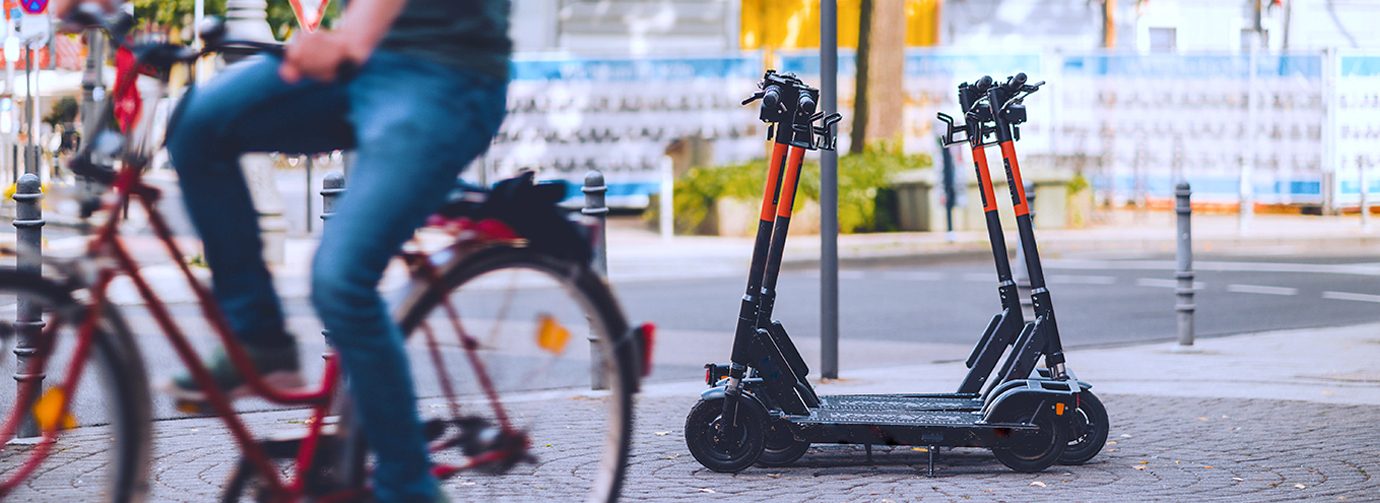
The car as a status symbol has had its day. Sharing is the big sustainability trend. Various sharing options have already become established in urban centres. Here too, an app helps to locate nearby vehicles and then open them with a virtual key. Various providers of these vehicles are increasingly joining forces to form networks in order to make access easier for the end user. Experts agree that there is still huge potential for growth in this area. In future, local public transport and the various sharing options will also become even more interlinked. And bicycles and e-scooters are already available for the last mile to the destination.
In the future without a steering wheel
However, experts hope that autonomous driving will be the big breakthrough. Vehicles will then be used even more efficiently and traffic will be made even safer. Five levels describe the development towards autonomous driving. Driver assistance systems already offer the possibility of a certain degree of vehicle autonomy. Radar and ultrasonic sensors as well as cameras on the car provide a comprehensive overview of the current traffic situation. In the first three levels, the vehicle already takes on partial tasks, but the driver retains primary control and responsibility. From level 4, things start to look different. In closed systems such as a motorway or defined areas in a metropolis, vehicles move completely autonomously. The driver can devote himself to other tasks and use the journey time effectively.
Level 5 describes a future vision of the car that is designed without a steering wheel. The cockpit in the classic sense has had its day and the vehicle interior is being redefined. It will then be used for leisure activities or various business solutions with digital features. Thanks to environment detection, constant networking and intelligent vehicle-to-vehicle communication, any destination can be reached without a driver.
All electric
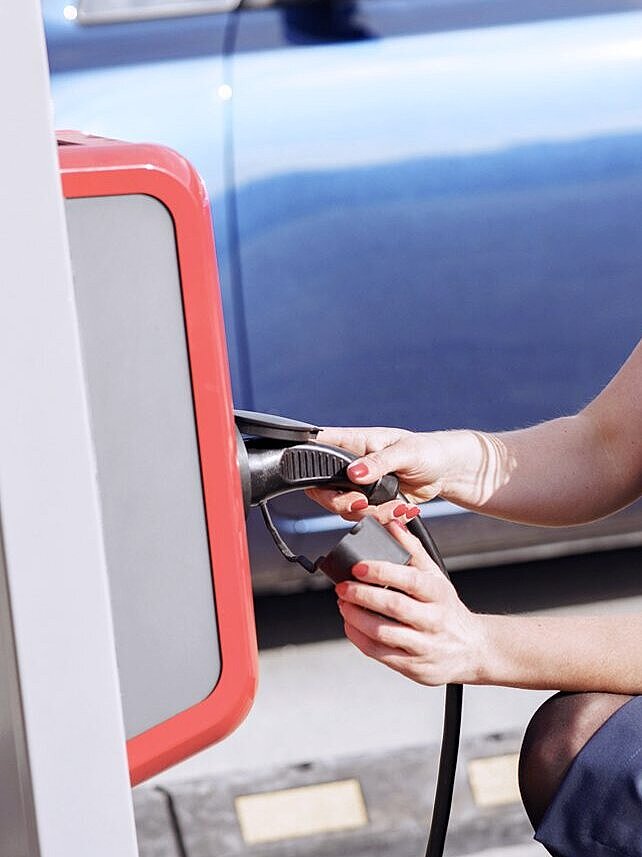
These smart vehicles are also based on new drive technologies. The major car manufacturers are currently focussing primarily on electromobility. And development is progressing steadily - vehicle innovations are achieving ever greater ranges. A nationwide charging infrastructure is the political, economic and social goal for the coming years. In addition, the charged electricity should primarily come from renewable energy sources. The vehicle itself will also play a decisive role as a storage system, so that energy can also be supplied to the system as required.
Cover picture: Aleksejs Bergmanis/Pexels
Author

As a senior editor, Benjamin Seibring specialises in developing content on sustainability, mobility, technology and lifestyle. An editorial traineeship at a German media group and his many years of experience in corporate publishing form the basis. With a high affinity for trend topics and innovative AI tools, he implements cross-media storytelling.