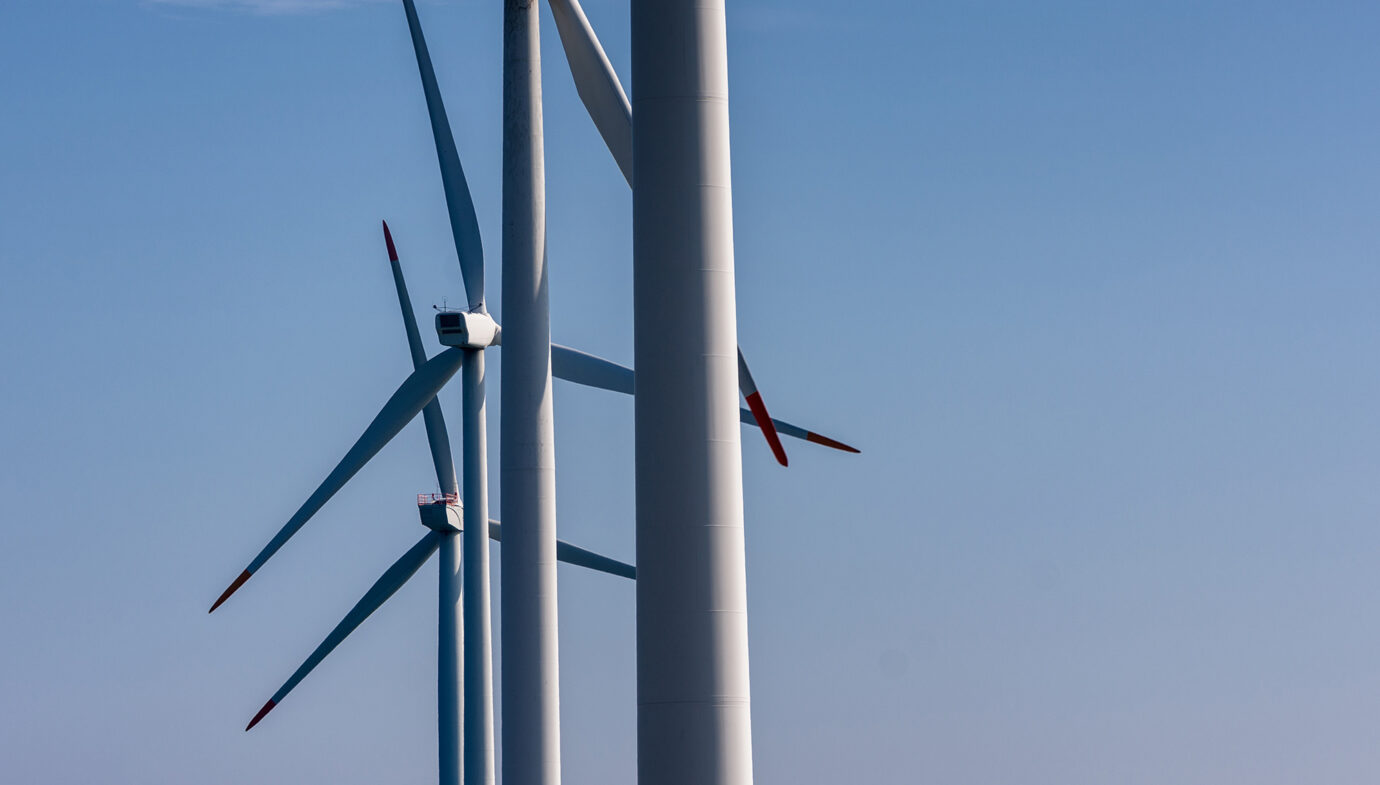
Sustainability moves in circles - like a wind turbine
22.06.2021 - They are a little better known in the north of Germany than in the south: wind turbines or wind power plants. These space-saving giants make optimum use of their space to generate clean electricity extremely efficiently. We spoke to Broder Heepmann, Head of Renewable Energy and Project Management at Steinbeis Energie GmbH, about their important role in the energy transition and any need for optimisation when it comes to wind turbine recycling.
Mr Heepmann, Steinbeis currently has a 100 per cent stake in two wind farms and seven wind turbines. How did this come about and what future plans does Steinbeis Energie have for this sector?
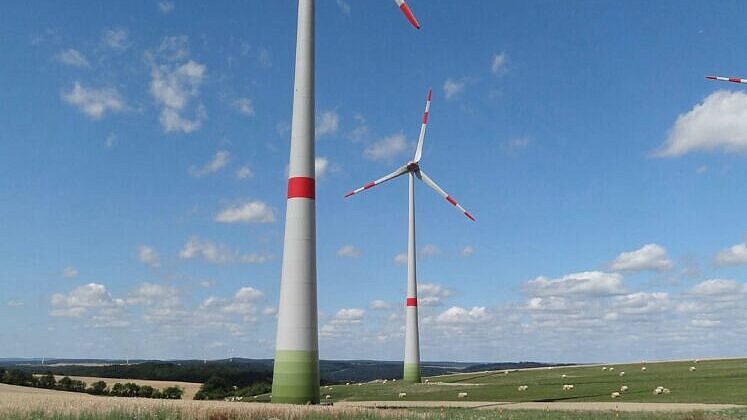
We operate a wind farm in Dischingen, Baden-Württemberg, and one in Trierweiler, Rhineland-Palatinate. Different turbine technologies are used in both. The choice of turbine technology depends primarily on the location: measurements and analyses are carried out at the site for one or two years before construction. Then we know exactly what happens in which wind layers and how much energy can be generated. The turbine that is most efficient for the location is then selected.
How we came up with our wind farms is a nice story and typical of Steinbeis: a few years ago, we decided to become CO₂-neutral as a company and across the entire Steinbeis Group. Around 70 million euros were invested in renewable energies to achieve this goal - including in these wind farms. We are now well above our target and generate much more renewable energy than we consume. That's why we can happily tick the box when it comes to CO₂ neutrality and continue to top our target with further investments.
What role do wind turbines play in the energy transition in Germany and what challenges does this pose?
First of all, it is only important for the environment that we generate clean energy - how we do this plays a subordinate role. Wind energy is particularly attractive because it is very efficient in our country. Wind turbines require little space and can also be installed in rough terrain such as in forests and on hilltops. They have a high output: just one of our turbines generates as much energy as three hectares of solar panels - and there are even more powerful turbines. We also achieve more full-load hours with wind energy than with solar energy in Germany. The bottom line is that wind power is therefore the most favourable choice for generating renewable energy in our country.
In recent years, however, the installation rates for wind turbines have fallen for the following reasons: Sometimes we have to show special consideration for nature and switch off wind turbines at night to protect bats, for example, or to avoid disturbing certain bird species when they are breeding. This is completely legitimate, and of course we don't want to interfere too much with nature - that would contradict our corporate mission of environmental protection. At the same time, however, it complicates the optimal utilisation of a site and, above all, the development of new sites.
However, the most common reason why wind farms are not built is that citizens do not want turbines in their neighbourhood. Some say they destroy the landscape or are too loud. I can also understand this to a certain extent, but at this point we need to realise our priorities as an entire country: We all need electricity and it has to come from somewhere. At the same time, we want green electricity and none from nuclear power or fossil fuels. And if we want both, we cannot afford not to tolerate wind turbines in the landscape. All the more so if we are also increasingly focussing on electrification in the area of mobility in the future. Of course, e-mobility only protects the environment if the electricity comes from renewable energies - otherwise what's the point? In this context, I am very much looking forward to our new government at the end of the year and how it will approach the issue of climate protection, especially with regard to the conflict of objectives described above: environmental protection through wind energy vs. nature conservation of local flora and fauna.
The plants were originally planned to have a service life of 20 years - what role does the Renewable Energy Sources Act (EEG) play in this context?
The EEG has a significant influence on the lifespan of the turbines. A wind turbine quickly costs three to four million euros. This investment can be financed thanks to the EEG, which subsidises the system for 20 years and thus offers both a price guarantee and a certain degree of planning security. The strength of the wind is predicted using the analyses and measurements described above. It is difficult to estimate how much you will receive for the electricity generated after the EEG subsidy expires - which is why the systems are planned for 20 years. According to the TÜV, their structural stability must then be tested, but in most cases they could continue to be operated for years without any problems. Theoretically, of course, it would be good to do exactly that, in the sense of "using something until the end of its service life". In practice, however, potential sites for wind turbines in Germany are very limited and, as I said, the many stakeholders and bureaucracy make it difficult to develop new ones. In practice, it can therefore make sense to dismantle older turbines and erect new ones in their place. After all, technology has also made great leaps in this area - a modern plant today performs as well as around five from 2001 and, according to TÜV, only needs to be checked for stability after 25 years.
So is it even profitable to keep a wind turbine running without the EEG?
That is a question we are also asking ourselves. We can't say much about this at the moment because we hardly have any references - wind energy in Germany is still so young that the first wind farms are only just coming out of EEG subsidisation. For the reasons just mentioned, the current trend in these cases is repowering, i.e. dismantling the turbine and building a new, technically superior turbine in its place.
In the purely hypothetical case that our own Steinbeis Energie plants were to fall out of the EEG tomorrow, it would currently be difficult to continue operating them from an economic point of view. However, as the environmental damage caused by electricity from fossil fuels is increasingly being factored in and prices are therefore rising, the tide may soon turn. How exactly and how quickly this happens depends on politicians and when they turn words into action. But the goal is clear: Germany wants to be CO₂-neutral by 2045.
And now to the important topic of recycling: What actually happens to old wind turbines? What parts are they made of and what materials are they made of?
Wind turbine recycling is only becoming an issue now that the first wind turbines are falling out of the EEG. To be honest, I find this short-sightedness on our part as a highly industrialised nation somewhat disappointing; it is unpleasantly reminiscent of nuclear power plants, where most people only realised very late on that it would cost an enormous amount of money to dismantle them and that they should have planned for these costs.
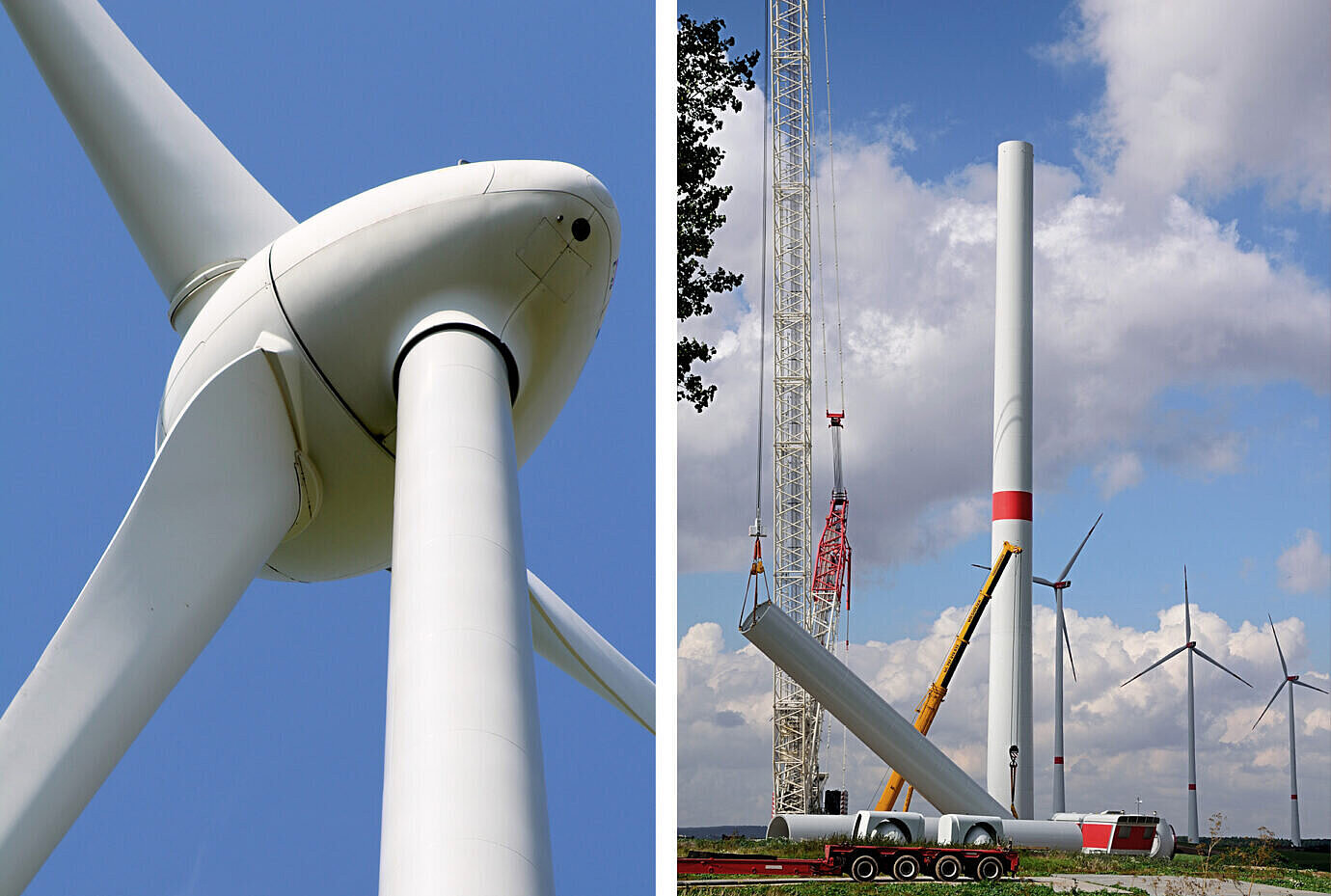
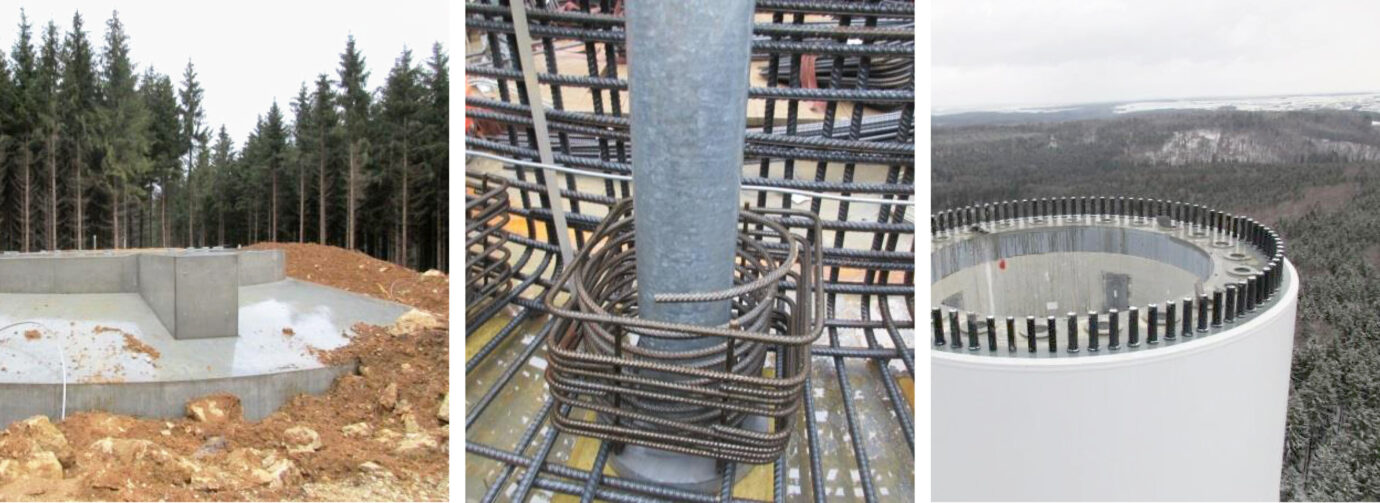
But back to the wind turbines - let's take a look at what they are made of: At some locations, you need a foundation, a kind of concrete base on which to build the wheel. At our wind farm in Rhineland-Palatinate, for example, we can manage without one because the ground is very firm. Then there is the tower; it consists of concrete half-shells that start wide and become narrower towards the top. Some of them are not connected to each other at all, but simply clamped together with steel cables and anchored to the ground. A steel tower is placed on top. This supports the nacelle, which is also made mainly of steel and weighs around 70 tonnes. The three rotor blades are attached to the nacelle. Although they are huge, they only account for around four percent of the weight of the turbine, as they are made of glass fibre composites (GRP), which are also used in aviation.
In addition to recycling, reusing is also a good option if it makes economic sense for everyone involved: this is why entire second-hand wind turbines are sometimes sold abroad, for example to Kazakhstan. Basically, as I said, it's good to keep using things as long as they work. When it comes to recycling wind turbines, the good news is that as most of the turbines are made of concrete, steel and iron and the recycling of these materials is very well established in our country, most of the turbine is already easily recyclable. The challenge lies in the GRP rotor blades. There are currently only approaches for recycling them. This is not an urgent problem at the moment because the total quantity is small and the material is at least thermally utilised, i.e. incinerated with special precautions. Some of the GRP can also be shredded and mixed with other materials for intermediate layers and building materials in road construction - this mixture, by the way, has the cute name "fluff".
Although the first companies are currently being set up to try and close this gap in rotor blade or GRP recycling, the approaches for chemical recycling, for example - in which the materials are dissolved on a molecular basis and made usable again - are mostly still in their infancy.
On the one hand, it would be nice to find a better solution here than thermal utilisation, as, although useful, it is not actually recycling. On the other hand, the reason why such a solution does not yet exist is that this is not an acute problem, as the quantities are currently manageable - although they will grow significantly in the coming years. In addition, the companies that manufacture the wind turbines have also recognised the problem and are working on solutions. Vestas, for example, is working to ensure that its turbines are not only 100 per cent recyclable, but that they can also be produced completely waste-free by 2040. That's still a while away, but the ambition to not only be recyclable but also waste-free is great.
What's more, the topic of plastics recycling in and of itself is not easy, is it?
You could say that - and we know the subject very well at Steinbeis, as we are also active in this area. Companies are developing new plastic applications at a rapid pace, with hundreds of new mixtures of plastic types and additives entering the cycle every year. More emphasis is always placed on their product properties than on their recyclability. Now, however, laws are to be introduced to change this; as with all these issues, it will only work with legal requirements that prioritise environmental protection, as otherwise profit always comes first. However, political pressure and public opinion are already steering companies in the right direction.
As I assume that we will have to further expand wind power in the coming years in order to meet our demand for clean electricity, I think that there will definitely also be requirements for wind turbines, according to which they have to be degradable without harming nature. My guess is that thermal utilisation will continue to be permitted for the time being. But one thing is certain: we will need thousands of new wind turbines. Most consumers don't realise the gigantic amounts of energy that nuclear power plants produce. We will need wind power to manage this phase-out.
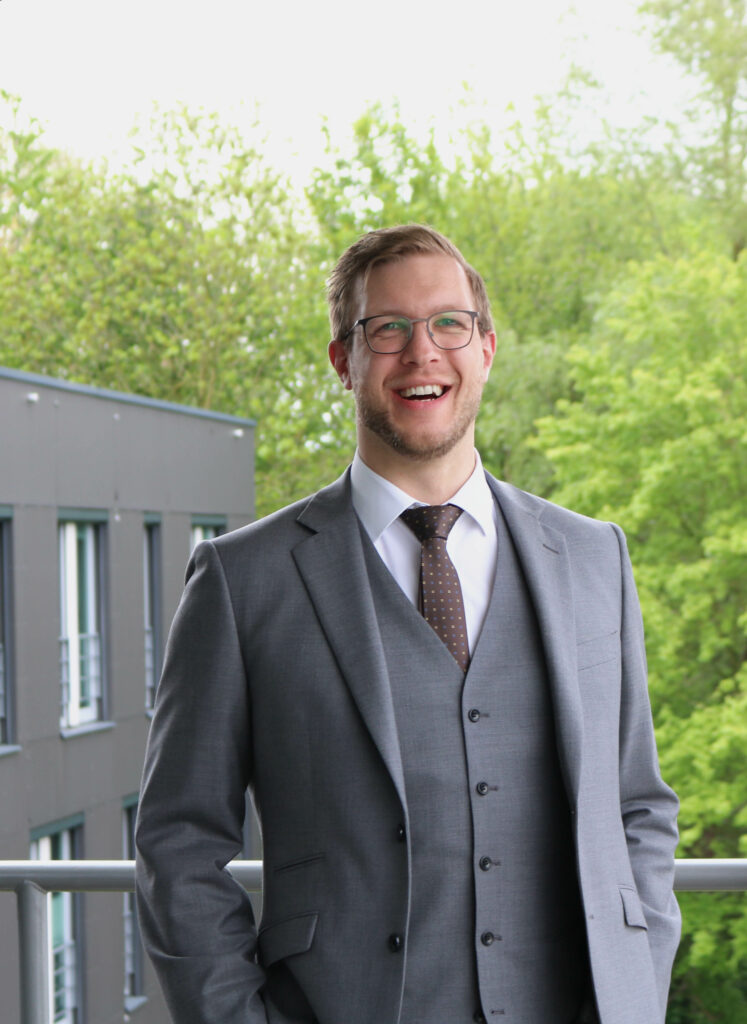
About Broder Heepmann
Broder Heepmann has been with the Steinbeis Group for ten years and is a prime example of what a career there can look like. Starting with a dual study programme (industrial engineering) at Steinbeis Papier, he has more or less travelled around the entire Steinbeis Group: His stations include Steinbeis Holding in Munich, where he earned an MBA at the Technical University of Munich on the side, brief excursions to Austria to work in plastics recycling at Kruschitz and to the UK at sister company AP Concept. Today, Broder Heepmann is Head of Renewable Energy and Project Management at Steinbeis Energie GmbH in Glückstadt and Managing Director of Abel + Steinbeis Regenerative Energien GmbH.
"Recyclable" - what this means and which materials it applies to
Recycling helps us to achieve a more circular economy and conserve important resources. But what does the term "recyclable" actually mean and which materials can be recycled today? We provide an overview and valuable tips.
Cover picture: Willfried Wende/Pixabay
Author

Isabella Bigler is an editor and copywriter. Here she writes about sustainable topics, the past and the future - occasionally with the support of her dedicated interns Lumen Nguyen and Liam Jennings.