Six smart helpers
18.06.2021 - Travel bookings, account management, fitness tracking - anyone who owns a smartphone now carries their entire life in their pocket. Apps make it possible. So it's hardly surprising that a good app can also help to make everyday life more sustainable, avoid waste and conserve resources. We present six little helpers that ensure we make our small contribution to the big picture.
Sharing is caring
Whether restaurants, canteens, supermarkets or bakeries - they all have to calculate demand as well as possible to avoid food surpluses. However, this calculation is not easy and far too much food still ends up in the bin.
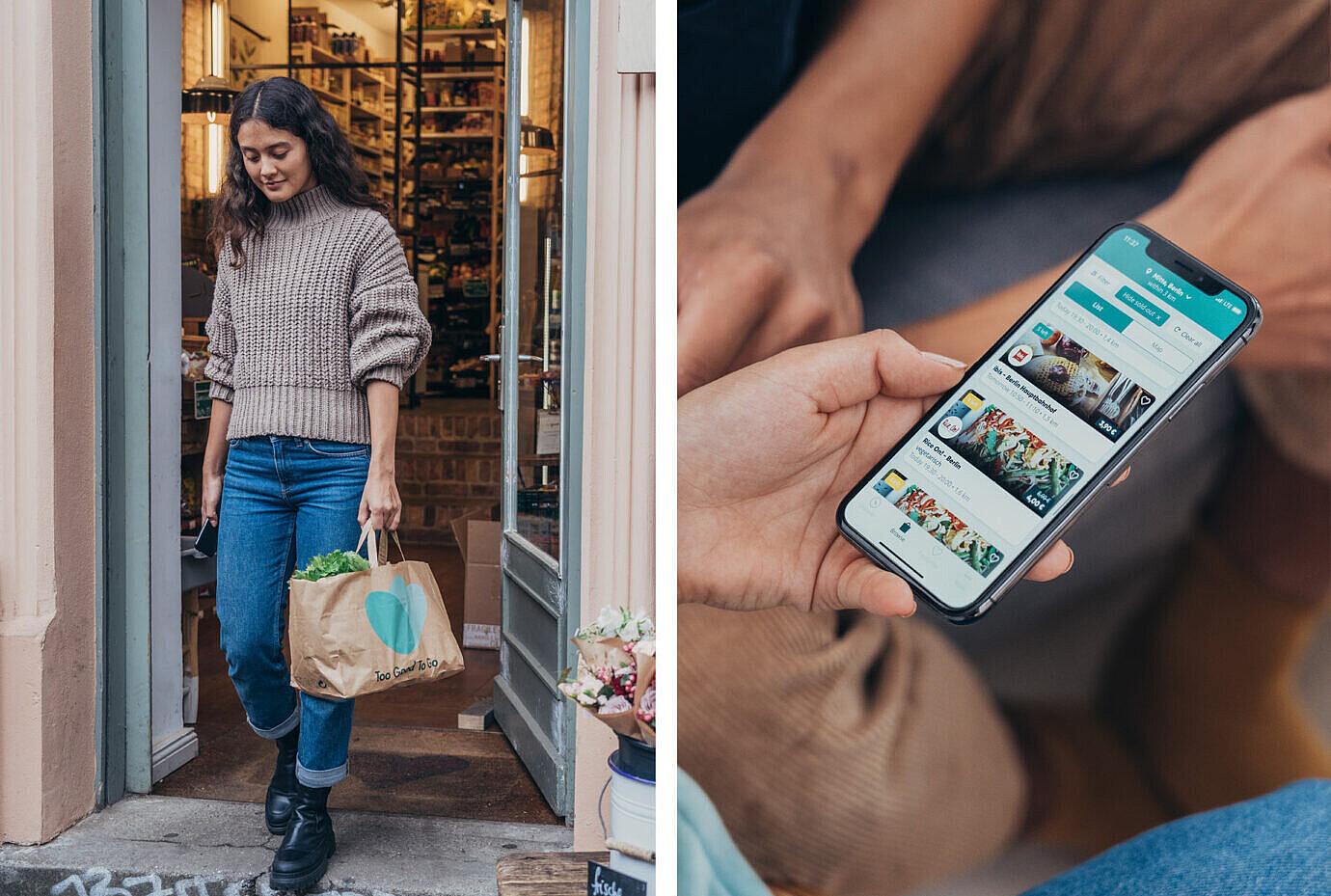
Everyone can make a contribution to putting an end to food waste. One possible way is Too Good To Go - the world's largest B2C marketplace for surplus food. Here, hungry users are connected with businesses that have surplus food so that the food ends up where it belongs: on the plate. The users receive delicious food packages at a price of 3 to 5 euros, the businesses reach new customers, turn their surplus into income and protect the environment at the same time - a win-win-win situation! In this way, 7.6 million portions of food have already been saved that would otherwise have ended up in the bin. More than 7,400 cafés, restaurants, supermarkets, bakeries and hotels are currently involved. Don't feel like cooking after work? As the surprise bags are usually posted on the Too Good To Go platform shortly before closing time, it's worth taking a look at the app.
Energise sustainably
What do desk lamps, televisions, mobile phones, heating systems and ovens have in common? They all need energy. But how much? We usually only think about the energy consumption of our appliances when it comes to costs. Then, when the electricity bill suddenly turns out to be surprisingly high or we have to decide between A and B when buying a new appliance. However, there is a lot of potential for sustainable change in our energy consumption.
According to co2online, users of the EnergieCheck app save more than twice as much energy as the national average. This is made possible by a personal energy savings account. The centrepiece of the app can be set up in just a few seconds. Here, users can record their energy consumption for various areas of life such as electricity, heat, water and mobility. By entering the consumption values from their most recent electricity bills, users can gain an overview of their electricity consumption over the past few years. This is particularly interesting, for example, if new household appliances have been purchased in the meantime. The plus sign can be used to add as many meter readings as required. Nice goodie: iOS users can also do this by scan, voice input or using a dial. This makes saving particularly quick and convenient. If you enter the meter reading every month, you can always keep an eye on your electricity consumption and don't have to worry about the annual bill.
End Fast Fashion
12 or even better 24 collections per year - unthinkable in the 1950s, fast fashion is now a popular strategy for major labels. By picking up on short-lived trends, fashion houses are trying to increase their sales and keep customers happy. This so-called fast fashion is synonymous with cheaply produced goods that end up in the rubbish bin as soon as they are produced. This spiral of consumption in the western world is at the expense of textile workers in developing countries, the environment and animal welfare.
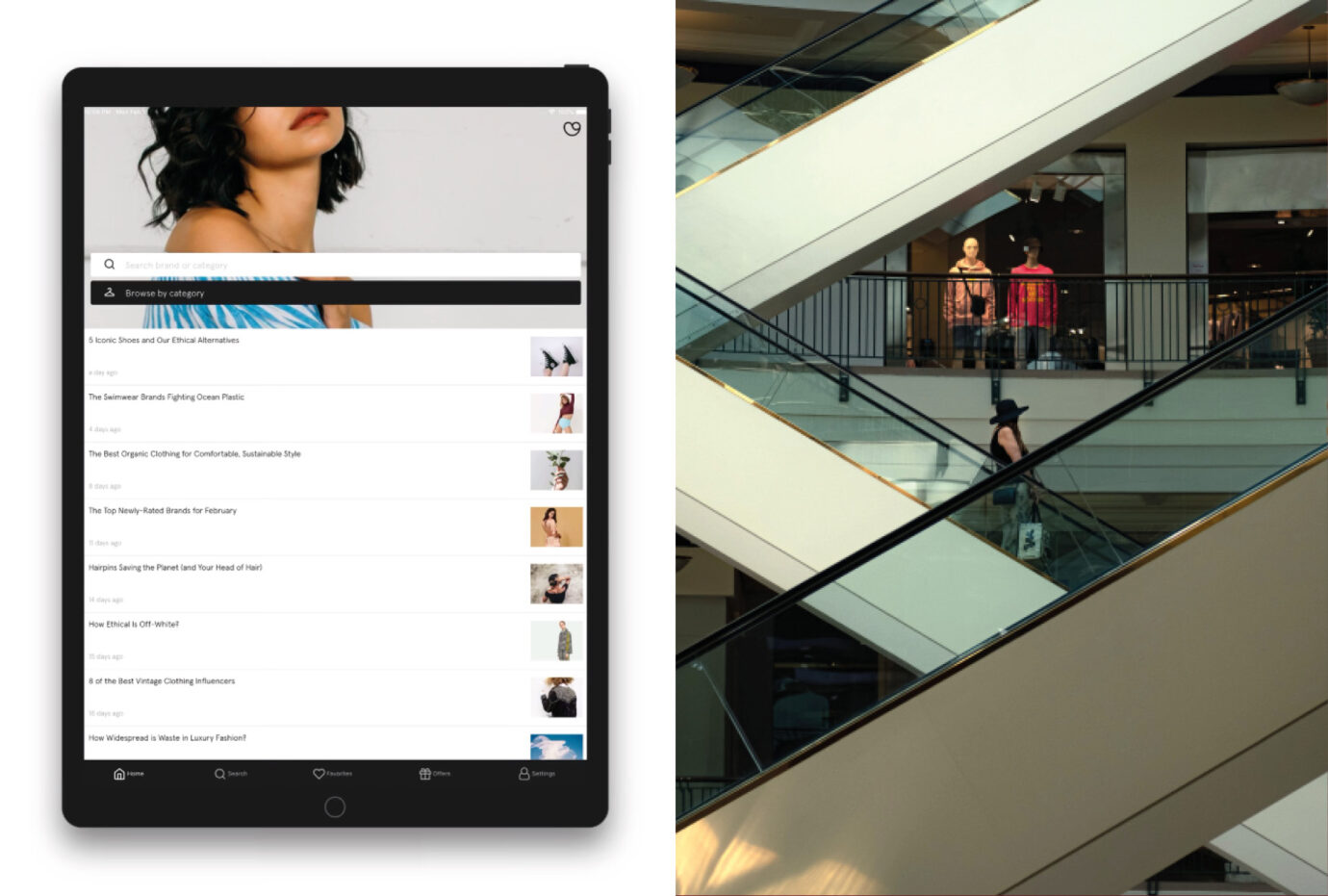
An important step towards avoiding this is more conscious consumption. This means buying less and more specifically what is really needed and has been produced sustainably and fairly - whether it's a business outfit or a bikini. One app that helps with this is good on you, which allows users to take a closer look at fashion labels and discover new brands. Good on you shows how manufacturers can be rated in terms of the environment, working conditions and animal welfare. This allows users to quickly compare whether the brand values match their own ideas and whether they want to support the brand by making a purchase. That doesn't quite add up yet? Good on you suggests labels with better ratings in the right price segment. If you feel like browsing, you can also discover new brands. The development team is clearly endeavouring to ensure transparency: the good on you rating guide can be downloaded online. The homepage provides daily updates on fair fashion topics. In this way, good on you offers an all-round feel-good package on the subject of fair fashion.

Start all over again
Shipping goods requires packaging. However, the production of all packaging has an environmental impact. What's more, despite the ongoing debate about sustainability and environmental protection, many orders still end up in boxes that are far too large and are only used once.
This is precisely where the repacket app from Grüne Projektmanufaktur comes in. The developers want to give cardboard boxes a second chance and don't understand why valuable packaging material is constantly being bought again when the material properties allow it to be used several times. The idea is to connect people who have a lot of cardboard boxes with those who need them. Anyone who has previously disposed of their excess cardboard in the paper waste can use the repacket app to find a nearby retailer and drop off the cardboard on their way to work, for example. The registered retailers are happy about the free second-hand cardboard, and the environment is happy that someone is thinking of them.
Get to know each other
It's not always easy for consumers to separate the wheat from the chaff when shopping. Blue Angel, Demeter, Pro Weideland, Fairtrade - labels like these are supposed to help and provide an overview, but who knows them all? Above all, the differences between them are rarely clear.
That's why NABU has developed an app to help you decipher the small symbols in no time at all: Seal Check. Simply take a photo of the label with your smartphone, wait a moment and the app will display detailed information. Each label is rated according to the traffic light system so that users can quickly recognise how the label compares to others in terms of sustainability. A green thumb stands for a product that is recommendable from an ecological point of view, a yellow thumb indicates a good product that could have better environmental benefits, and a red thumb signals that the product is not environmentally friendly. Labelling that says nothing about the environmental benefits of a product but can still be found in the food sector has a neutral rating. For users who want to know more, the impact of a product with a certain label on the environment, climate and nature is explained in detail. Users can also search for labels themselves in the gallery view or browse product categories for trustworthy logos.
A new way of mobility
From Potsdam to Berlin, from Prague to Istanbul, from Peru to Israel - aeroplanes and cars make individual travel more convenient and easier than ever before, whether for business or pleasure. At the same time, however, transport causes the greatest climate sins worldwide. So if you want to minimise your own ecological footprint, you can switch to sustainable alternatives.
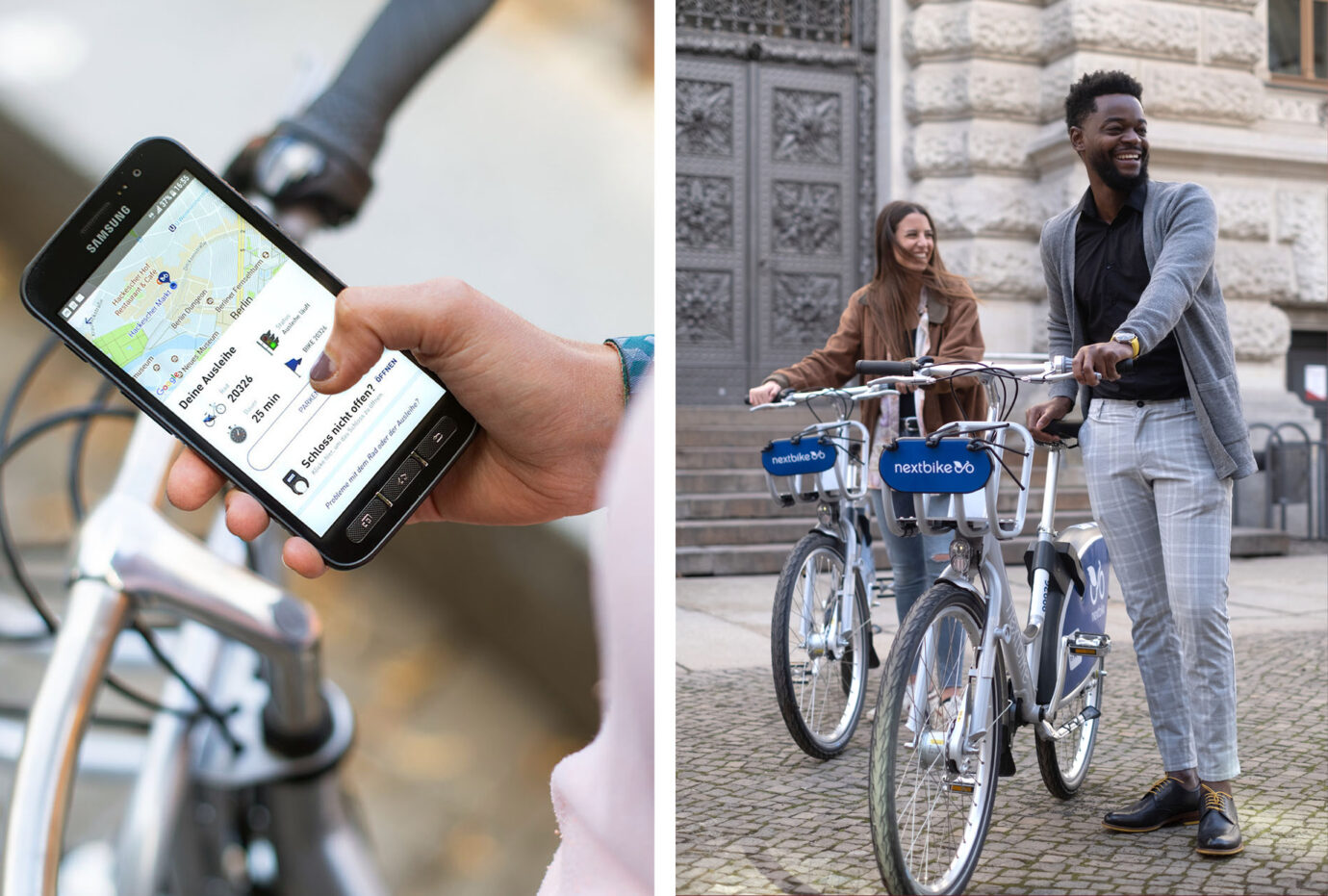
Of course, it's difficult to get to New York by bike, but there are few arguments against cycling, especially for short journeys. However, those who travel a lot in city traffic choose their mode of transport depending on their mood and the weather and don't always have their bike nearby. This is where the many bike-sharing services can help. The European market leader is nextbike, whose bike-sharing app is free to download and register. The nearest bike is then found via the location search. A journey costs 1 euro per half hour or part thereof. Alternatively, you can take out a subscription, which costs 10 euros per month. If you are travelling with friends or colleagues, you can book up to four bikes on the same account. In many cities, e-bikes or e-scooters are also available in addition to bicycles.
There are so many other good apps that can support us on the way to a more sustainable lifestyle. The best way to find out what suits your lifestyle and ideas? Trial and error!
Cover picture: cottonbro/Pexels
Author

Valerie Bachert is a journalist, chief of staff and sustainability officer. She is interested in the areas of organic farming, conscious consumption, species extinction, social injustice and sustainable nutrition.