Quality has a name - insights into technical marketing at Steinbeis Papier
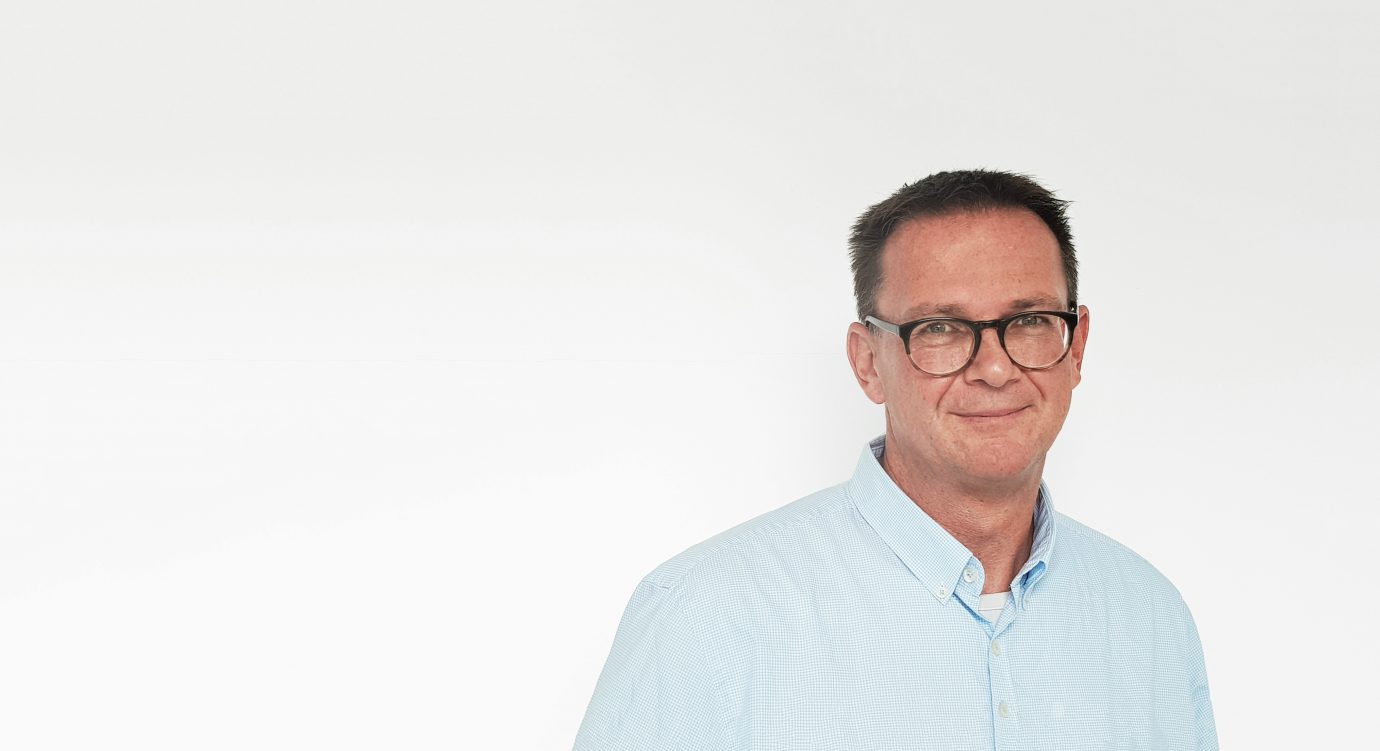
18.08.2020 - Andreas Steenbock has worked for the Steinbeis Group for 37 years. Today, he is responsible for Technical Marketing Office Papers at the recycled paper manufacturer. Hardly anyone knows the company's processes, quality standards and innovative strength as well as the 53-year-old. In this interview, Andreas Steenbock explains his tasks, how quality is ensured at Steinbeis Papier and where recycled paper is heading in the digital age.
What does a working day look like for you?
My topics and tasks are very different every day. As a rule, I look at the production and quality records of paper production from the past 24 hours. If irregularities have occurred during this period, I discuss them with the production and process managers. We then decide on corrective measures and look at how to prevent this from happening in the future. I am supported in this by IT-supported analysis tools that recognise deviations in the process and quality data.
How does this work in practice?
Graphics and second-by-second analysis data help me to compare the quality parameters with specific machine settings, for example. This makes it possible to recognise what has happened on and in the paper machine. These results can then be assigned exactly to the paper produced at that time. And this allows me to compare whether a possible technical deviation has an impact on the paper quality. If this is the case, countermeasures can now be taken to ensure consistently good paper quality.
But my work also has another dimension. I hold many coordination meetings with customers, printing system manufacturers, authorities and umbrella organisations. This provides me with data and information on new technologies and legal regulations at national and international level, enabling me to indicate new framework conditions for Steinbeis Papier if they are relevant. I look at where developments are heading and, in consultation with my colleagues, develop options for adapting our products. These framework conditions provide feedback for the entire production process and, above all, for the development department.
What relevance does environmental sustainability have for your job?
CO2 footprint, air and water emissions play a major role in the discussion and analysis of industry trends. As a pioneer in sustainable papers, we have always set trends. That's why I'm always looking to see if there are new environmentally friendly technologies that we can use.
But environmentally friendly production in closed loops is also very important for our customers. I therefore also have the task of discussing technological and ecological data, such as life cycle assessments, with external institutes and NGOs and looking at how we can optimise our processes and process technologies from an ecological and economic perspective.
Is there a trade-off here?
Quality is the top priority and must be consistently high. However, our guiding principle "expression of genuine sustainability" also means that we do not lose sight of the ecological component. The product is technologically perfect, a real high-tech product, but we must also ensure that we continue to improve our resource consumption.
Thanks to our highly efficient power plant with combined heat and power generation and the use of fuels with a high biogenic content, for example, we have significantly improved ourcarbon footprint and are therefore helping to achieve the climate targets in Germany and Europe. This probably makes us a global leader. Nevertheless, we are also constantly working on improvements in this area.
How does Steinbeis Papier manage to turn waste paper - which always has different characteristics - into a consistently high-quality product?
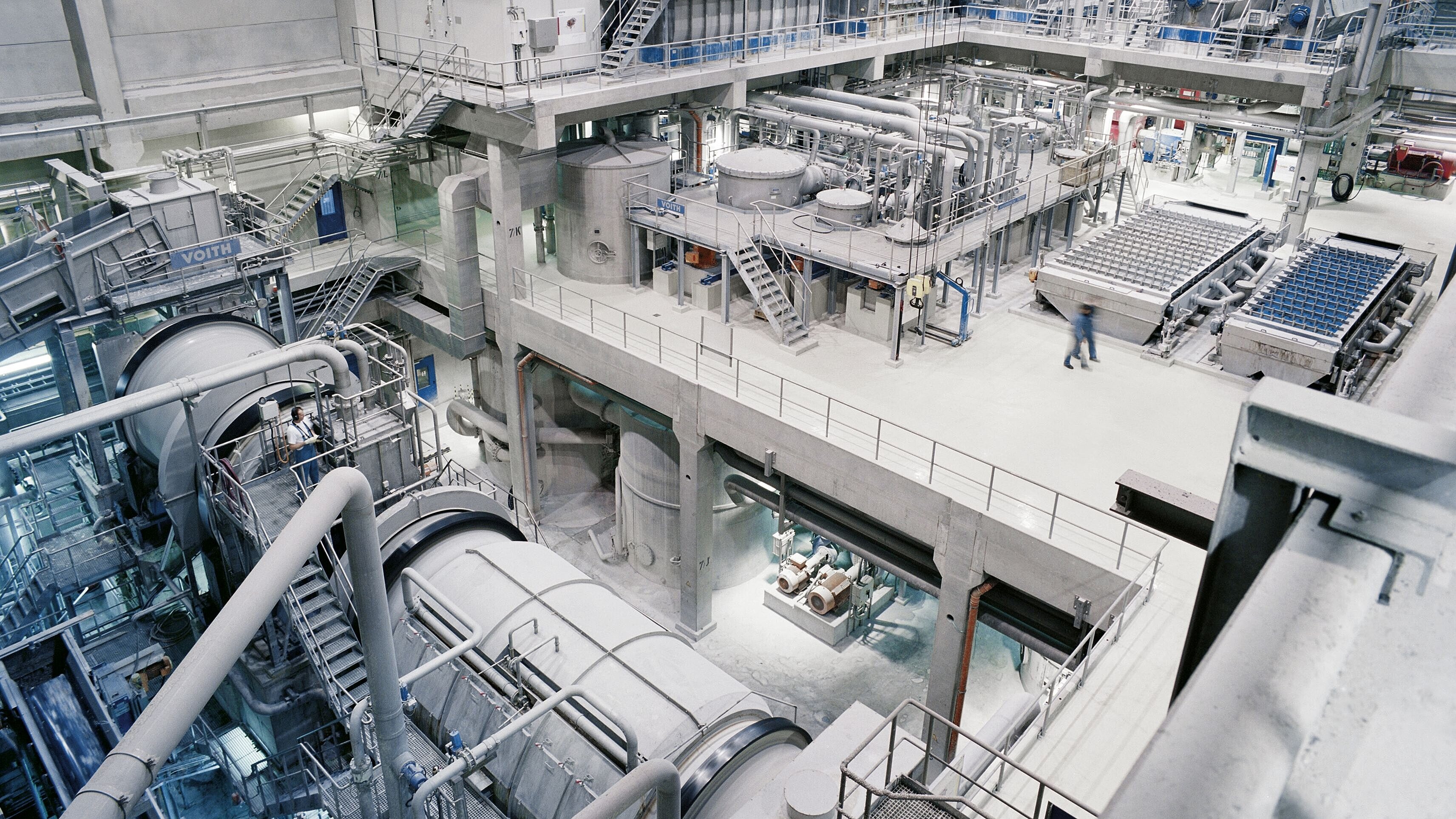
The prerequisite for a consistently high-quality end product is created right at the start of the process. The waste paper that we source is purchased in accordance with the EN 643 standard and then qualitatively assessed by our quality control department through close-meshed incoming inspections. From this, we develop appropriate waste paper recipes that have the most homogeneous qualitative properties possible. During the actual preparation process, certain quality characteristics are continuously monitored. This is largely done by automated, but also by manual measurements.
How do these manual measurements work?
In the laboratory, samples are regularly taken from the ongoing process, which are then compared with the online measured values. For example, we check whether the sensors on pumps and valves are still in order or whether there are any deviations.
How is quality defined at Steinbeis Papier?
As with all technical processes, there are specifications that have grown over the years from industry comparisons, measured values and customer expectations. Whiteness and purity, grammage, moisture, thickness, surface quality - we constantly compare these parameters with the actual values. Quality statistics are then drawn up for tracking purposes in order to be able to recognise long-term trends.
How do you visualise these checks in practice?
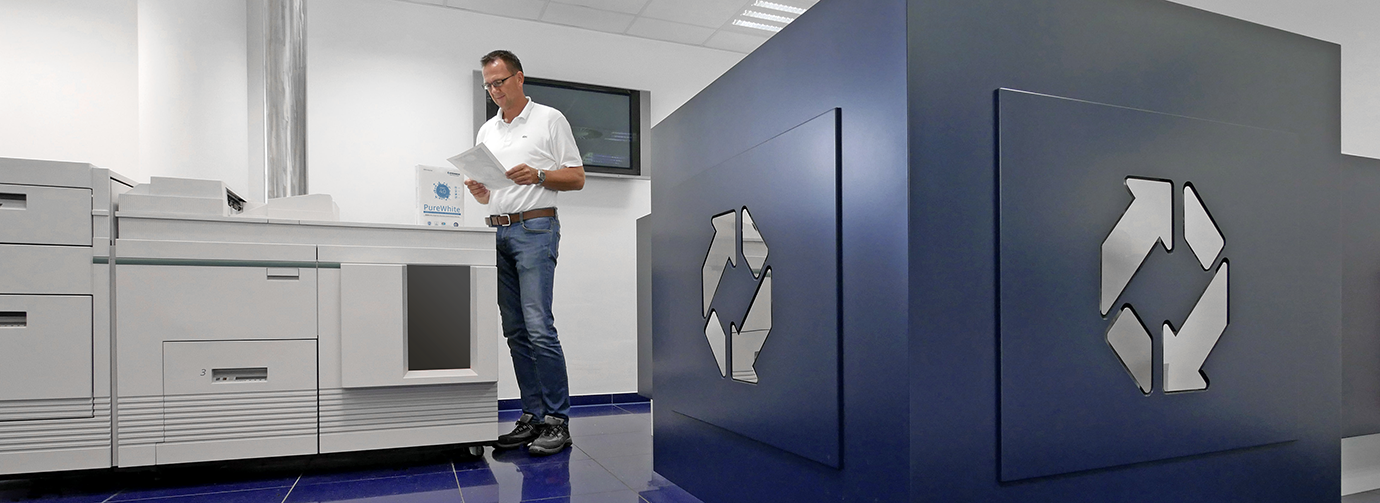
For our copy papers, for which I am responsible, it is extremely important that the functionality and running properties of the product are guaranteed. In our outgoing inspection, the copy papers run through devices and printing systems from various manufacturers.
This takes place in our in-house printing technology centre. Each batch is tested here to ensure that the paper can reliably fulfil the requirements in terms of printability and further processing, such as stacking or stitching and binding into brochures.
What does technical marketing mean to the layman?
Quality assurance collects measurement data, and we in technical marketing then evaluate it to use it for our analyses. We identify changes and trends and prepare the data in such a way that it is understandable for our colleagues in sales and also for customers.
Do you see yourself as an interface between production and customers?
On the one hand, I move between production and development. On the other hand, my work also has an external connection. I take on board feedback from customers and innovations from the legislator in order to communicate these internally. Production and/or Development can then react accordingly.
How do you set a benchmark for recycled paper?
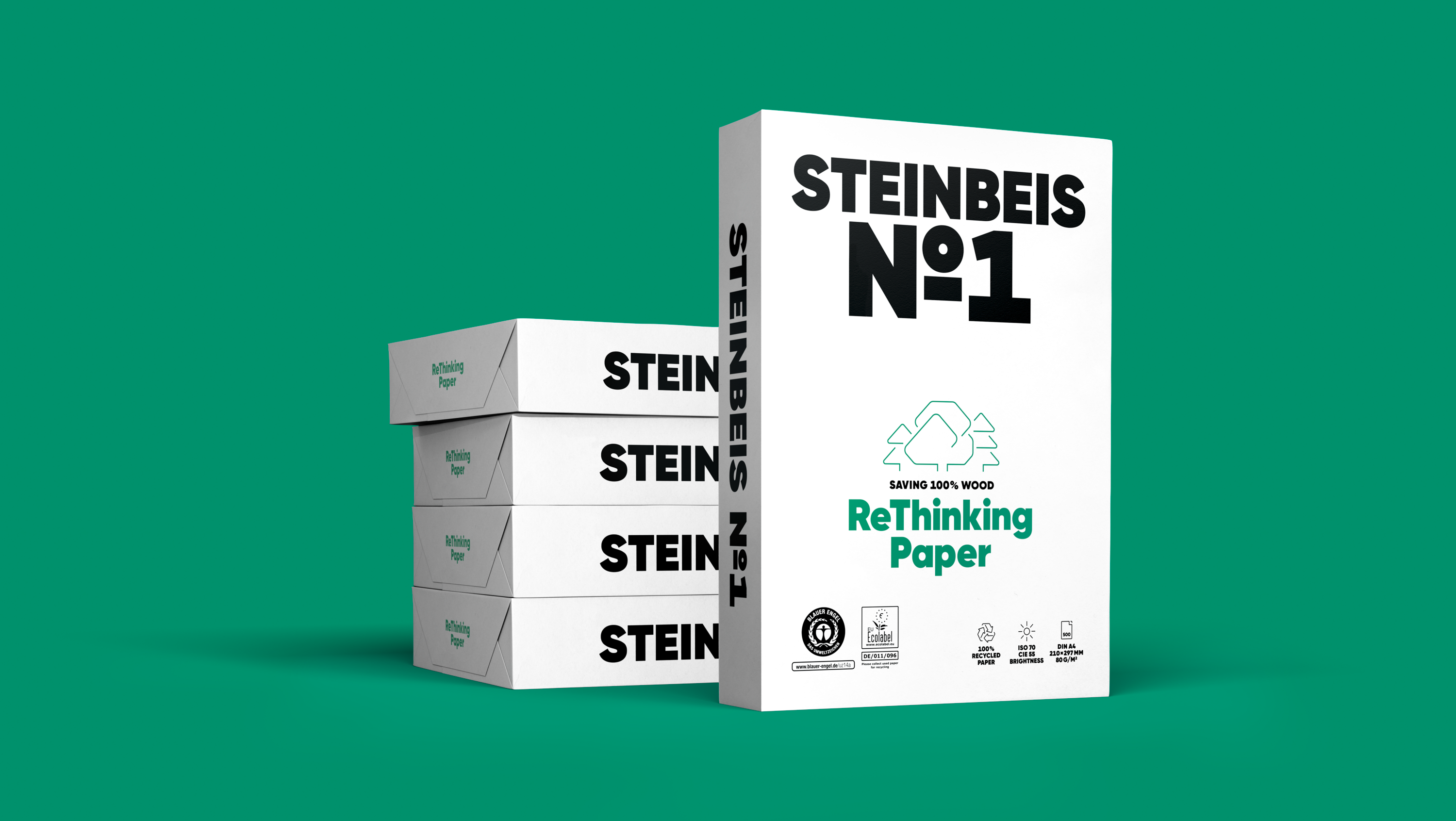
The benchmark is initially a comparison of performance. We compare the performance of our products with that of our market competitors and the expectations of customers and printing system manufacturers. For us, it is essential that our products fulfil the expectations placed on them. We also tackle the challenge of combining the economic with the ecological. Environmental aspects such as our circular economy - that our products can be 100 per cent recycled - are essential for us.
What is Steinbeis Papier's unique selling point compared to other paper manufacturers?
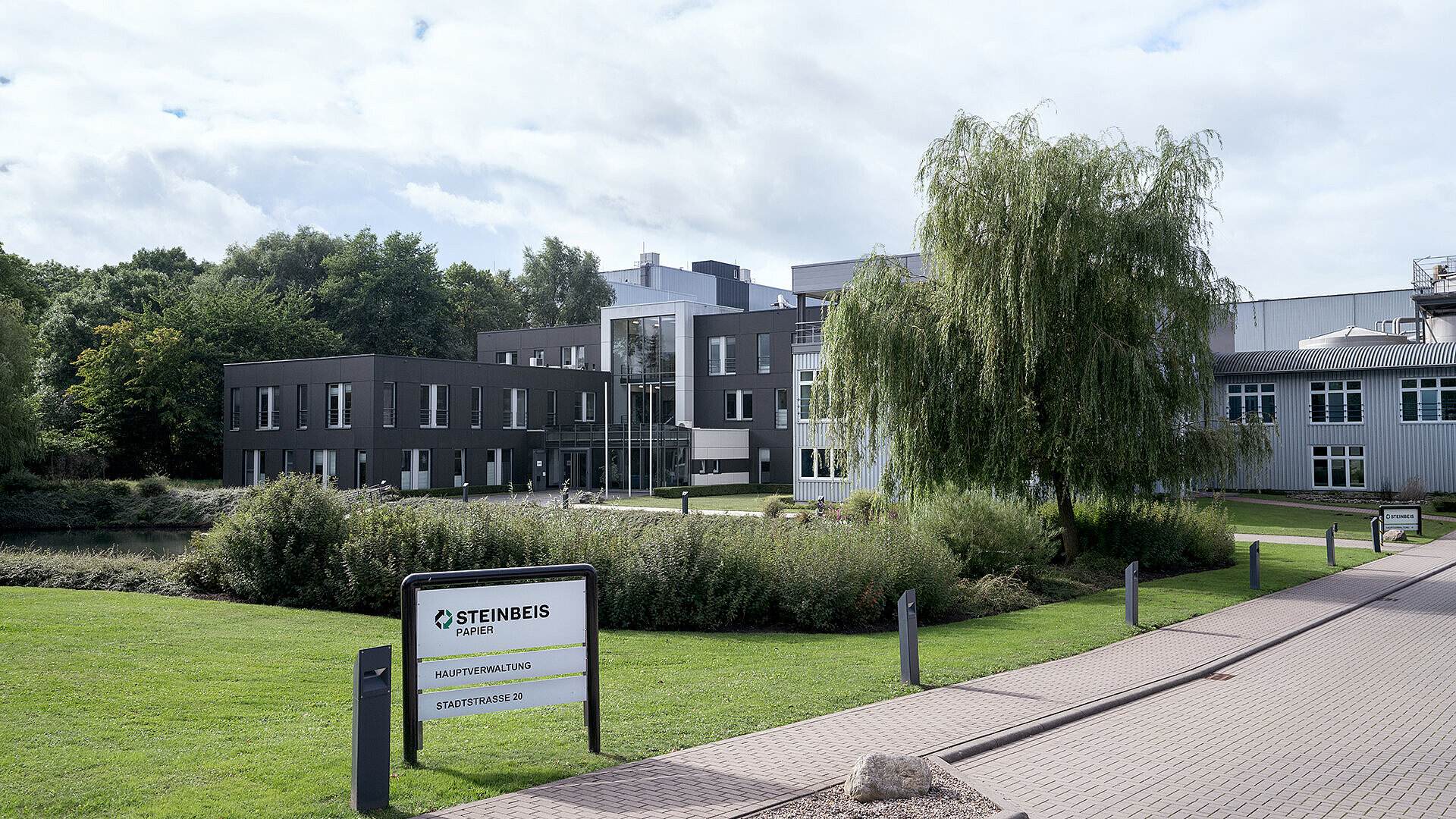
We are an integrated paper mill. We only produce recycled paper that has been awarded the world's strictest environmental label, the Blue Angel.
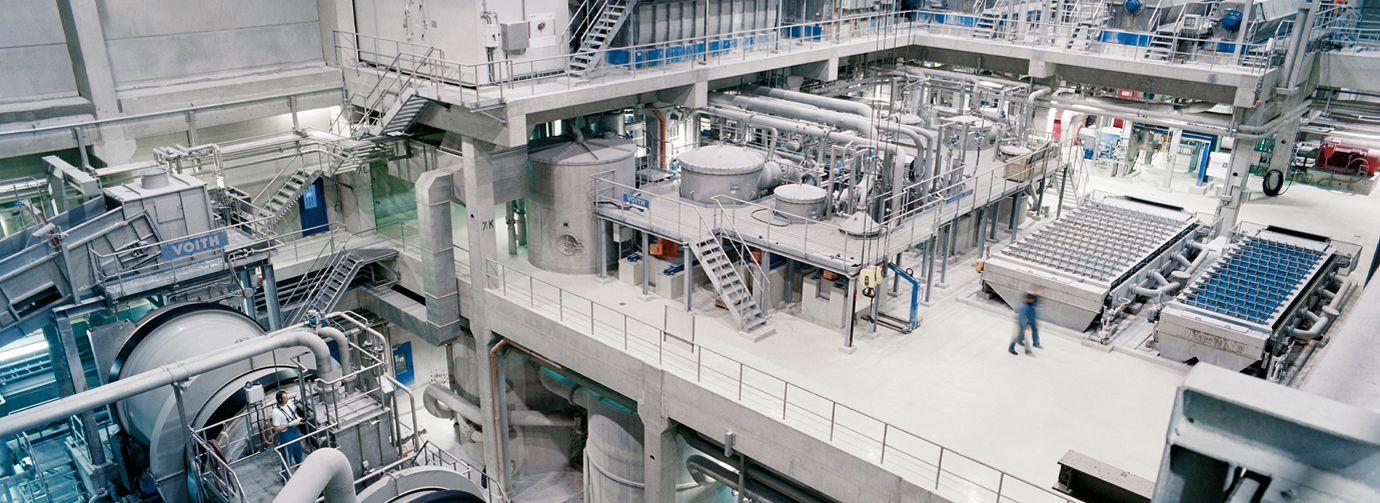
We prepare the raw material for this, which is obtained from waste paper from the local area, in the mill and use it to produce our recycled paper. We have all the processes here on site - in addition to the actual production, for example, the pre-sorting of the waste paper and the energy supply through to waste water treatment. We see this close interlinking of the individual processes as an integrated factory that functions according to the closed-loop principle and thus generates the ecological benefits of our products in a resource-saving manner. This is also our unique selling point in the industry. And as I said, we are a global leader in this area.
Where do you still see potential for optimisation in the production of recycled paper?
Ten years ago, we commissioned a new power plant and switched from pure fossil fuels to largely biogenic fuels. We are pushing ahead with this development. In terms of the product, we are pursuing a continuous adaptation process with small steps in terms of energy efficiency, emissions and an even higher recycling rate. These are the goals we have set ourselves, and they also run like a common thread through product development. But we are already far better than other paper mills in terms of energy and water consumption andCO2 emissions and are setting global standards here.
What are the next steps?
Even in times of digitalisation, there is a high demand for paper. Particularly in the case of graphic papers, which continue to be used as information and advertising messengers. A book or brochure with a haptic dimension cannot be replaced by digital alternatives.
It has been proven that information is better absorbed when it is available on paper in printed form. This realisation has also led to new applications and uses for paper with new printing technologies. In terms of environmental issues, paper is gaining in importance, as digital communication also leaves its own footprint, which is not so small.
Cover picture: Steinbeis Papier
Author

As a senior editor, Benjamin Seibring specialises in developing content on sustainability, mobility, technology and lifestyle. An editorial traineeship at a German media group and his many years of experience in corporate publishing form the basis. With a high affinity for trend topics and innovative AI tools, he implements cross-media storytelling.