Origami: From paper cranes to solar panels in space
A square sheet of paper, a few folds – and there’s a crane standing on the table. However, the principles of the traditional Japanese art of origami now extend far beyond simply folding paper. Engineering is making use of these principles for solar panels in space, robots and new technical structures. What makes folding so interesting?
What do a paper crane, a solar panel in space and certain robots have in common? More than one might think at first glance. The same principle lies behind all three: a flat surface is folded so skilfully that something completely new can be created from it.
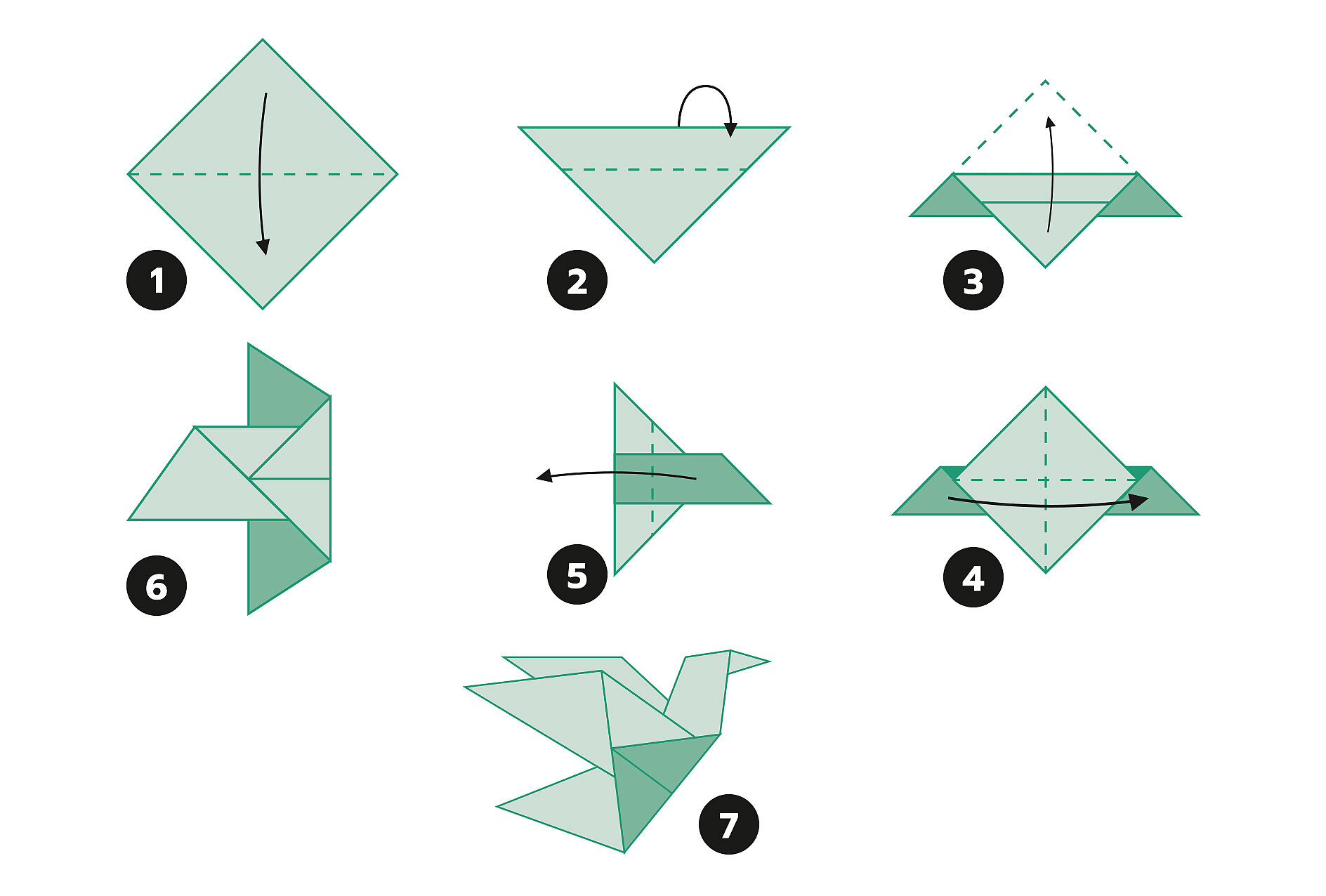
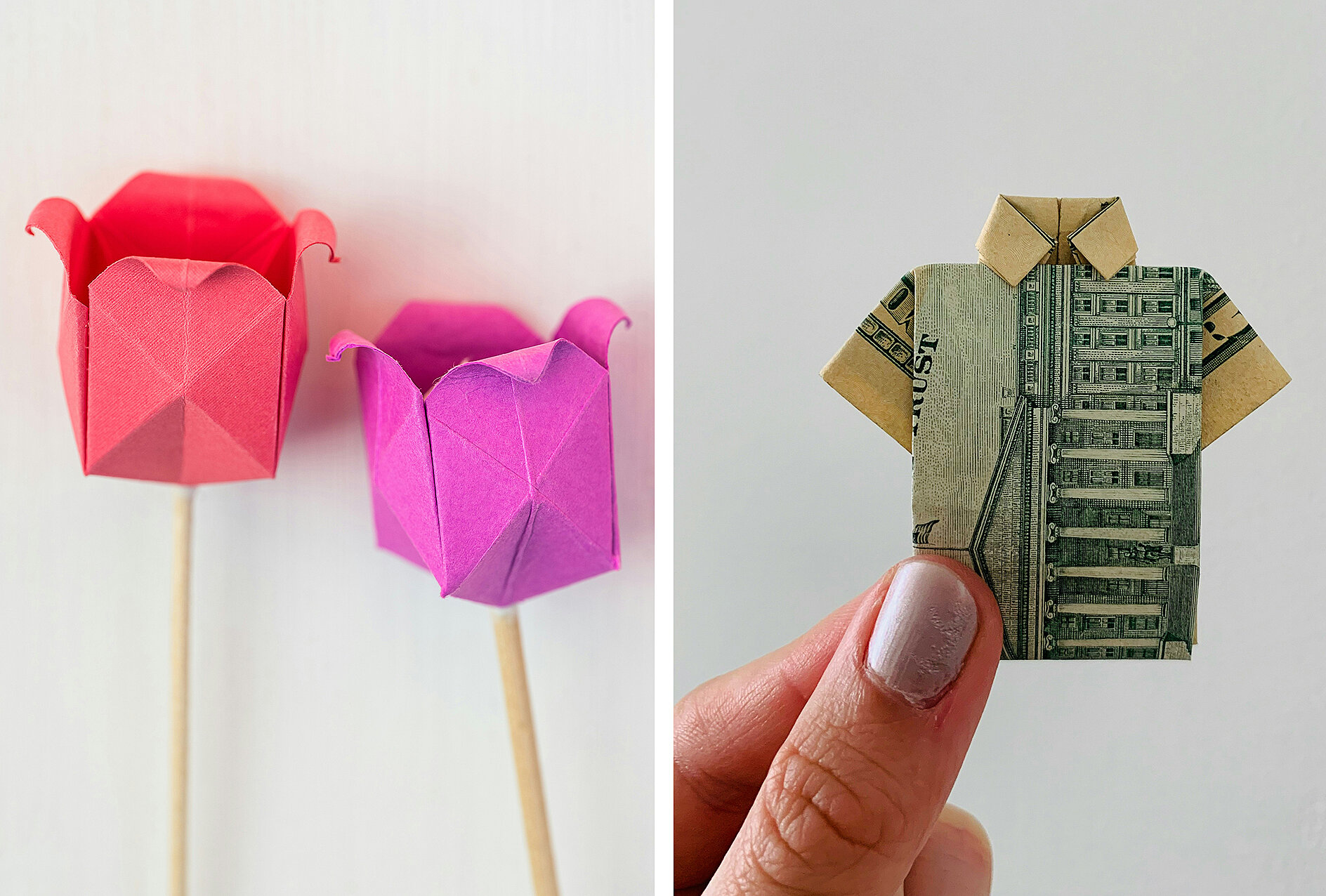
In origami, this has been achieved for centuries using a simple sheet of paper. Without scissors or glue, animals, plants and complex geometric shapes are created. One of the best-known designs is the crane, which is regarded as a symbol of good luck in Japan. According to legend, folding 1,000 cranes is said to make a wish come true – if you’d like to give it a go, you’ll find the instructions here.
But it is no longer just the art of paper-folding that is interested in what skilful folding can achieve. Research and technology also make use of the underlying principles. As a result, we encounter origami in surprising places today: in robotics, in technical structures and even in space.
From a luxury item to an art form
The history of origami is thought to have begun in the 6th century, when the art of papermaking was introduced to Japan from China. As paper was a precious commodity, it was used primarily in religious ceremonies and on formal occasions. Specific rules and folding techniques also applied to the presentation of gifts.
Over time, paper became more affordable and the ceremonial custom gradually evolved into an art form. The early forms of paper folding were known as ‘Orikata’. Later, the term ‘Origami’ became established – a compound of the Japanese words for ‘to fold’ and ‘paper’.
In the 20th century, the Japanese artist Akira Yoshizawa in particular shaped modern origami. He developed new folding techniques, created thousands of models and helped to bring origami to international attention. What has become increasingly complex over the centuries is based on a simple principle: a flat surface changes its shape and properties through precise folds. It is precisely at this point that the art of paper-folding becomes a technical concept.
The mathematics of origami
A simple fan is enough to reveal just how much geometry there is in a folded sheet of paper: when folded up, it takes up hardly any space; when unfolded, it creates a large surface area. The Miura fold demonstrates this particularly impressively. The Japanese astrophysicist Kōryō Miura developed a folding pattern consisting of parallelograms, which allows a large surface area to be opened up and folded back together in a single sequence of movements.
You can try out how this works virtually. The interactive origami simulator[VZ1] visualises the folding pattern in three dimensions and allows you to unfold and refold the surface on screen. In this way, a flat pattern of lines suddenly becomes a movable structure.
What at first glance looks like a geometric gimmick solves a practical problem in engineering: how can the largest possible surface area be packed into the smallest possible space? It is precisely this question that leads us into space.
Large areas in the smallest of spaces
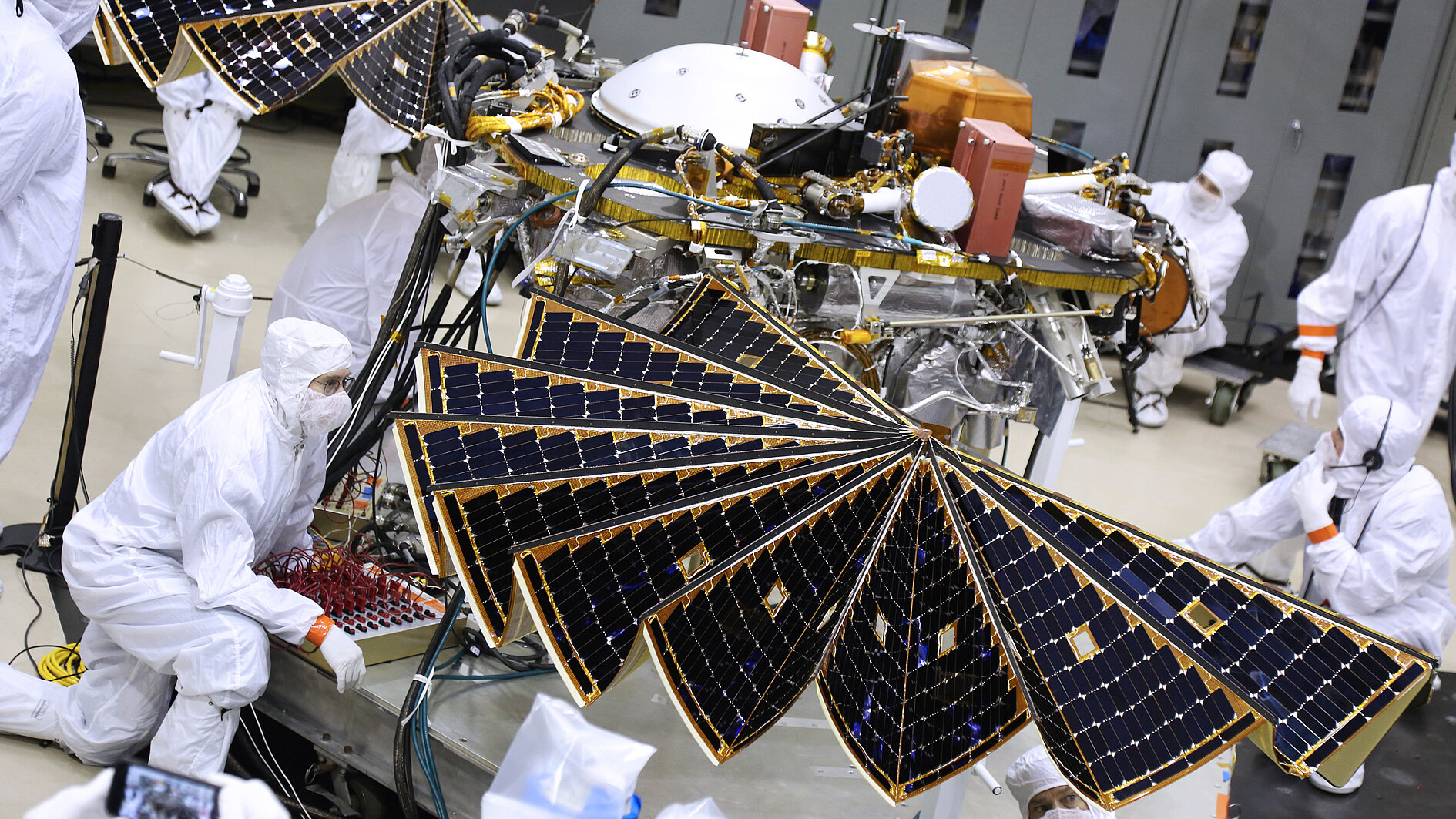
Anything intended to be launched into space by rocket must be packed as compactly as possible at the time of launch. At the same time, large surface areas are often required – for solar panels, for example. Researchers at NASA’s Jet Propulsion Laboratory and Brigham Young University set out to resolve this conflict. In 2014, they developed a prototype for a solar array that can be folded and unfolded using origami principles. The design envisaged a structure 25 metres in diameter that could be folded down to just 2.7 metres.
For the development, the researchers collaborated with origami expert Robert Lang. Instead of a classic Miura fold, they used a combination of different folds: when opened, the circular structure unfolds from the centre outwards.
The idea of folding solar panels for use in space was not entirely new. Simple folds had already been used in space missions. However, origami allows for more complex folding patterns, which can also simplify the mechanical structure and the unfolding process. The centuries-old art of paper folding thus becomes a design principle for space travel.
From the folding principle to the robot
What works with large solar panels can be applied on a completely different scale. In robotics, researchers are investigating whether machines can shape themselves according to a similar principle.
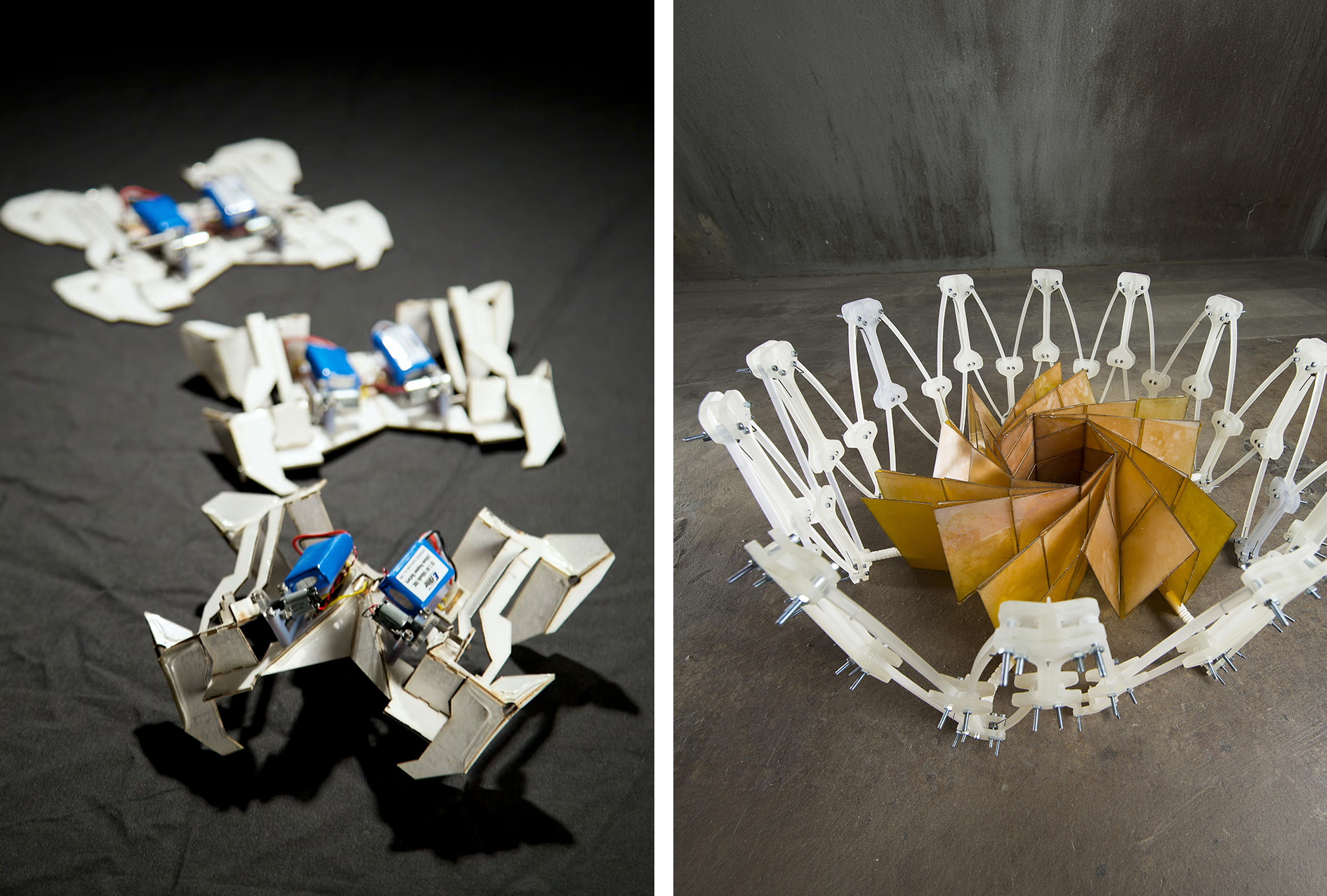
Just how astonishing this can look was demonstrated in 2014 by a research team from the Wyss Institute, the Harvard School of Engineering and Applied Sciences and MIT. They developed an almost flat robot that unfolded autonomously into a three-dimensional shape within around four minutes – and then moved around.
This was made possible by a composite of paper and heat-sensitive plastic, as well as programmed joints. A microcontroller activated small heating elements, thereby triggering the unfolding process. The structure was then able to move with the aid of two motors.
This was not the end of the experiment. A few years later, researchers at the Wyss Institute developed foldable robots that do not require their own battery and can be powered and controlled via an electromagnetic field.
The paper itself no longer plays the leading role in such developments. What is crucial is the principle behind them: a complex three-dimensional structure can also emerge from an initially flat form – provided that its subsequent folds are taken into account from the outset.
More than just paper art
Perhaps that is precisely what makes origami so ingenious: it combines aesthetics and function. Folding creates unique shapes and geometric structures. At the same time, properties such as size, stability and flexibility are altered.
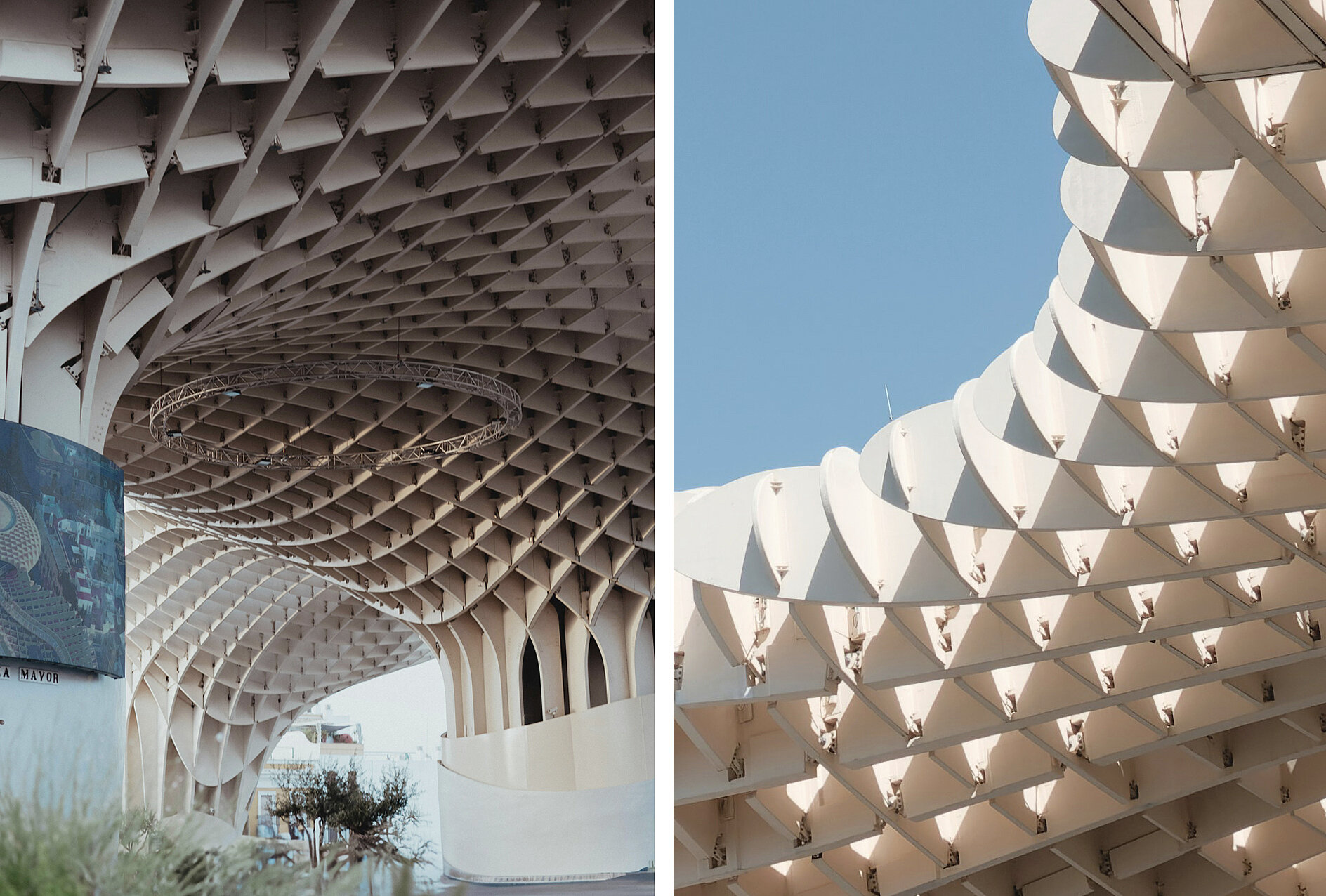
Architecture demonstrates just how impressively this design language can be applied to other materials and scales. At the ‘Caseta del Notari’ near Valencia, the extraordinary, Japanese-inspired roof structure is reminiscent of a walk-in origami made of wood. What would otherwise fit on a table in paper form shapes the design of an entire building here.
As one might expect, material research focuses on function. Researchers are, for example, developing origami-inspired metamaterials whose shape, volume or stiffness can be specifically altered. What research and technology draw from origami is therefore not so much the folding of paper, but rather a principle that allows forms and structures to be reimagined.
And yet paper remains the simplest material for trying out this principle for yourself.
A single sheet and a few precise folds are enough to experience the impact that design can have. After all, the paper crane, the folded wooden roof and the solar panel all begin with the same question: what can a flat surface become if we fold it in the right place?
Cover image: AdobeStock_1970638536
Author

Luisa Häußer has a degree in communication studies and has been working as a freelance copywriter and communications strategist in Hamburg since 2018. Her work focuses on projects relating to social and environmental sustainability, as well as interpersonal communication. Alongside her strategic work, she volunteers to promote equality and address future-oriented digital issues.