Involved in sustainability: Wikkelhouse
23.03.2021 - Corrugated cardboard is a multi-talent. Sophisticated folding techniques give the material special stability, with an ecological footprint that is impressive. From transport crates and small stools to XXL bedscapes - the possibilities are almost endless. But have you ever heard of a house made of corrugated cardboard? Of a real home complete with bathroom, kitchen and fireplace? The creative minds at Fiction Factory translate our childhood memories of our own cardboard home into chic contemporary design - with the Wikkelhouse.
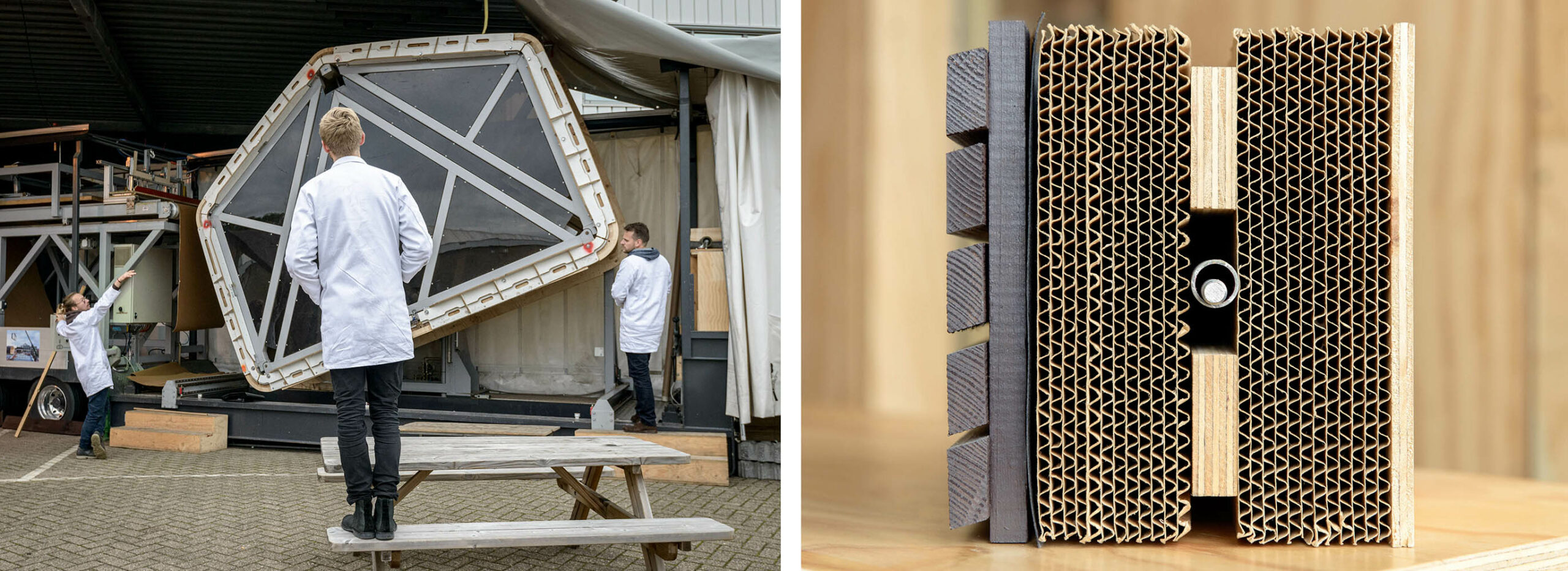
The unusual house is being built in Amsterdam by the Dutch company Fiction Factory. Normally, interior design and furniture for international companies are manufactured in its halls. However, traditional tools such as circular saws, planes and the like are joined by the so-called Wikkel machine. A colossus around which everything literally revolves - especially the 320 metres of corrugated cardboard for a single module. The manufacturing process is as simple as it is ingenious: a thick roll of corrugated cardboard is inserted into the machine and simply wrapped automatically around the basic mould for four hours. The individual layers are glued together with environmentally friendly potato-based glue. Halfway through the process, the Fiction Factory employees insert wooden panels to create a cavity in the cardboard wall, which is later used to install pipes and cables. Then the wrapping continues. Once another twelve layers have been glued together, the shell is finished.
From the tomato crate to the Wikkelhouse
But where did the idea of making houses out of cardboard come from? It all started with the Dutch cardboard manufacturer René Snel. He was looking for an alternative to ordinary tomato cartons. Snel's vision: cardboard boxes that last longer and are more sustainable. Instead of producing a box for transporting fruit and vegetables from individual segments, he developed a special mould that made it possible to produce a box from a long strand of cardboard that is wrapped around each other. This increases the stability of the crates enormously. Based on this, the idea of building a house out of cardboard was born, but the project fell asleep and the machine gathered dust in Snel's factory - until Oep Schilling, founder of the Fiction Factory, saw a model of the Wikkelhouse in Snel's office.
A dream (house) made of cardboard
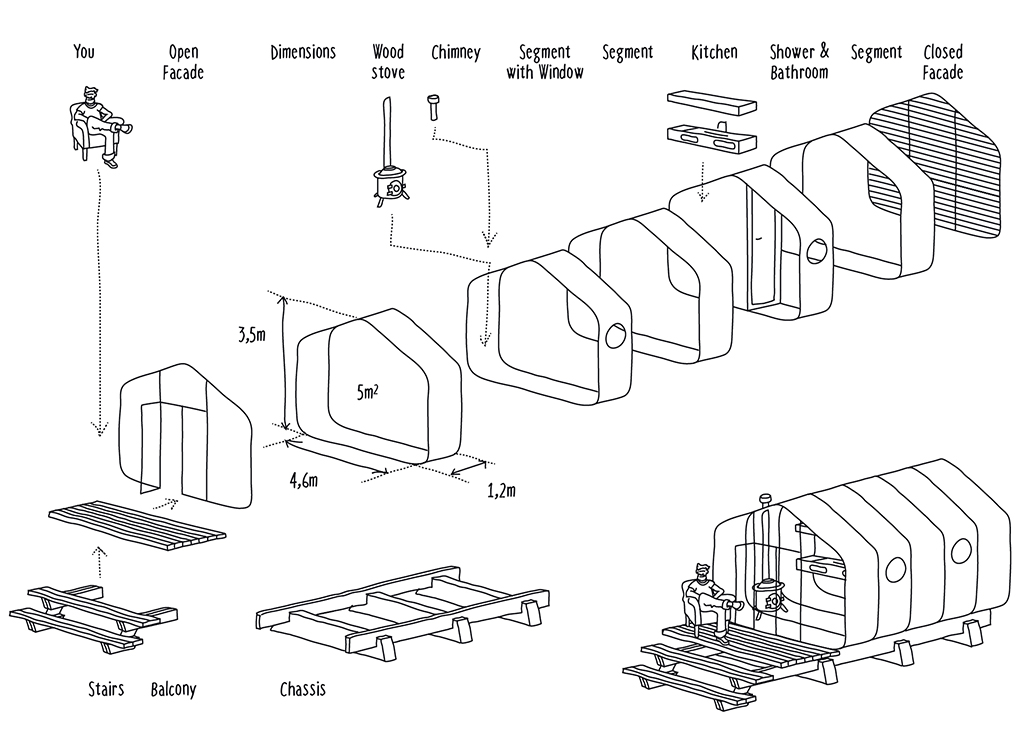
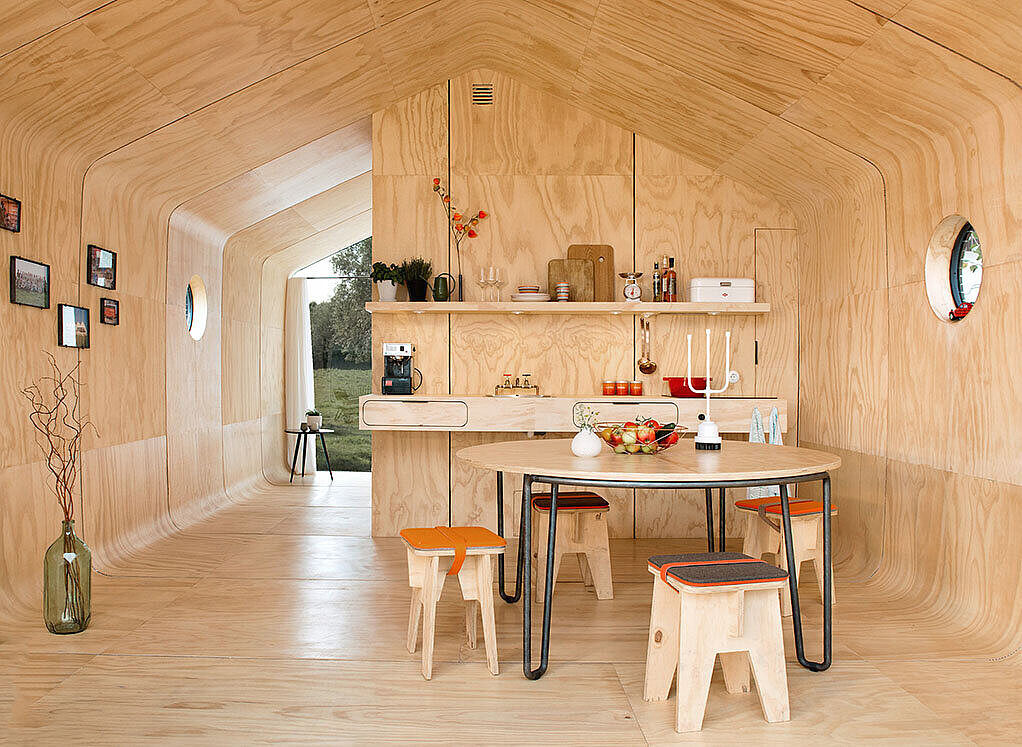
Fiction Factory has developed a fully-fledged modular house concept based on Snel's basic shape. Each Wikkelhouse can be designed entirely according to the individual wishes of its occupants - with one or twenty modules, bathroom or kitchen, single bunk bed or multifunctional bunk bed module, with glass façade or closed front. Customised as required, a cosy home, an eye-catching exhibition stand or a stylish office can be created.
The owners are just as flexible as the design when it comes to the installation location, as the Wikkelhouse is so light that it does not require a deep floor foundation. Instead, two concrete slabs and three wooden beams are sufficient. The modules are not glued together, but connected with steel rods and can therefore be dismantled or rebuilt if necessary. In theory, the entire Wikkelhouse can be easily dismantled and reassembled at another location.
From the Arctic to the tropics
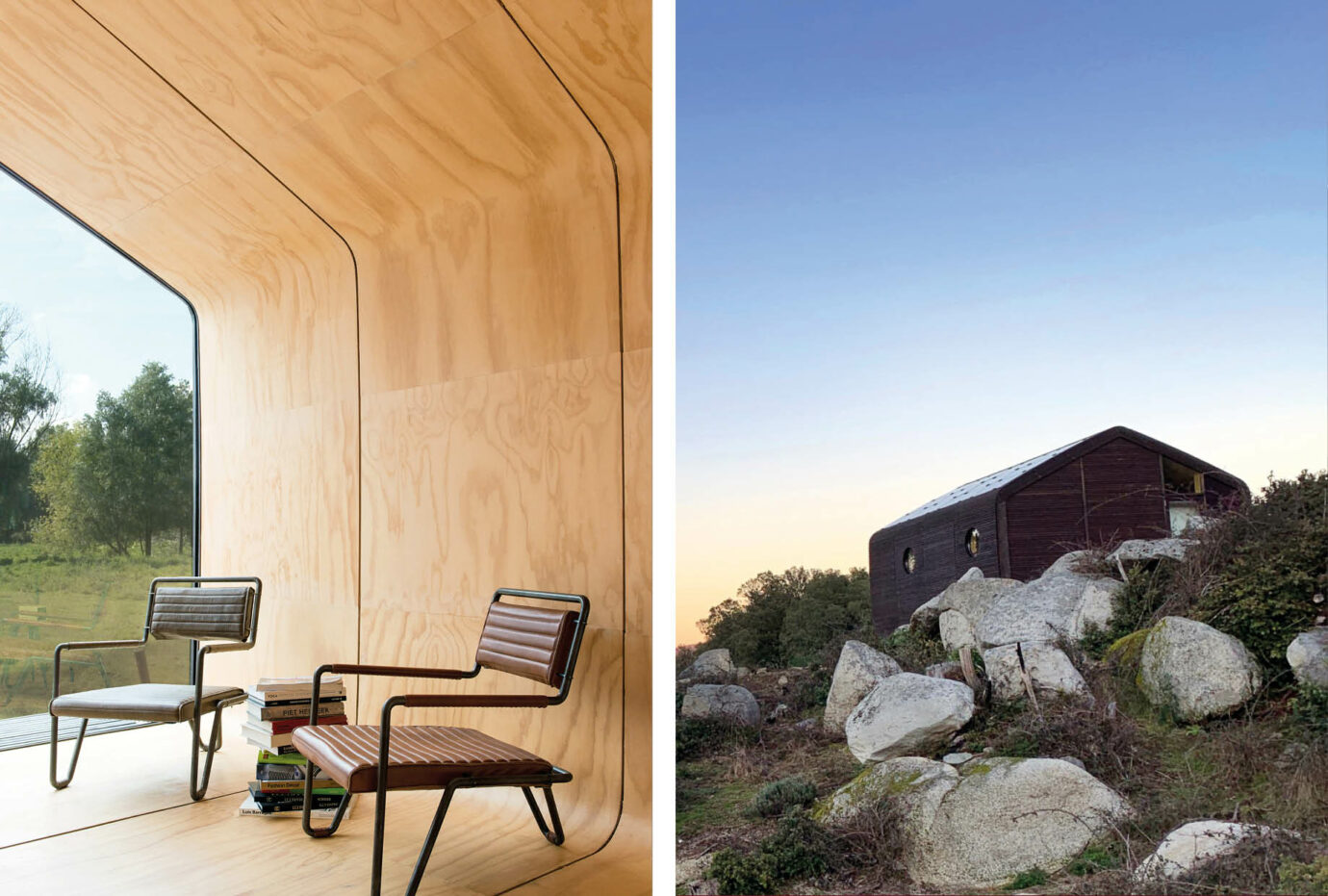
Where exactly that is is (almost) left to the imagination, as the Wikkelhouse can theoretically withstand all climatic conditions. This is ensured by the waterproof and breathable membranes that cover each module. This means that the cardboard does not get wet when it rains, while moisture can escape from the inside. The effect is comparable to that of a breathable rain jacket. This protective skin is also covered with a wooden slat panelling so that UV/sunlight cannot harm it. The Wikkelhouse is now so well known for its resilience that a research institute has already enquired whether it is possible to build it in the Arctic. But despite all the possibilities: For the time being, Fiction Factory is only delivering to the Netherlands, Luxembourg, Belgium, Germany, France, Great Britain, Scandinavia and Chile.
Swish, done!
When customers can expect to receive the finished Wikkelhouse depends, among other things, on the current order situation. If demand is high, it will naturally take a little longer. At the moment, the waiting time between order confirmation and delivery on site is up to six months. But at Fiction Factory, real craftsmanship goes into every step of the process. In addition, equipment and individual customer requests affect the production time, such as the integration of smart home elements or whether a kitchen or bathroom segment is required. On site, things then move incredibly quickly: installation takes no more than one or two days. Then the move can begin.
Music of the future
In the future, the Fiction Factory team would like to supply other countries and conquer the whole world with the Wikkelhouse. At the moment, however, the team is quite happy with how things are going with the Wikkelhouse. Other hopes for the future are of a more global nature: the team hopes that in future everyone will ask themselves three simple questions before buying new goods: Do I really need this? Is this a long-term investment? What is the environmental impact of my purchase?
Living on a small (ecological) footprint
Its creators give the Wikkelhouse a minimum lifetime guarantee of 50 years - if it is well cared for. After all, cardboard is just another way of using wood fibres, and wooden constructions can last for decades. But even when the Wikkelhouse has outlived its useful life - thanks to the recyclable and biodegradable materials, its ecological footprint is much smaller compared to traditional houses. So it's no wonder that the Wikkelhouse was honoured with the German Sustainability Award in the field of design in 2020. With the Wikkelhouse, Ficton Factory proves once again how contemporary design can be used to create habitable and sustainable spaces. And all thanks to "just" a bit of cardboard and the courage to try something new.
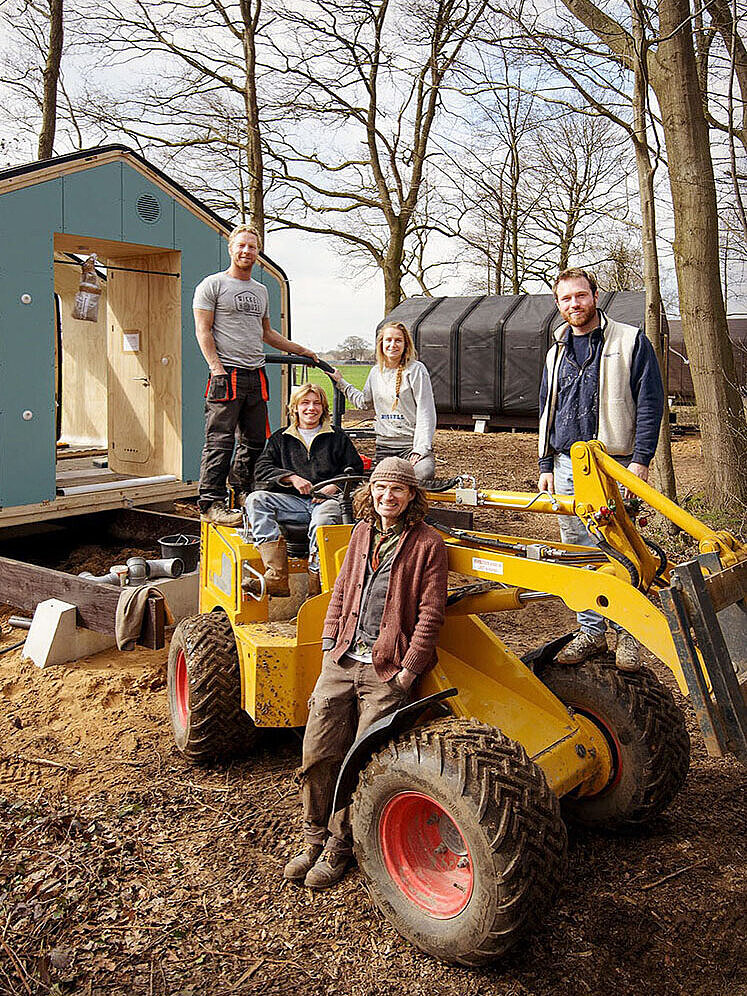
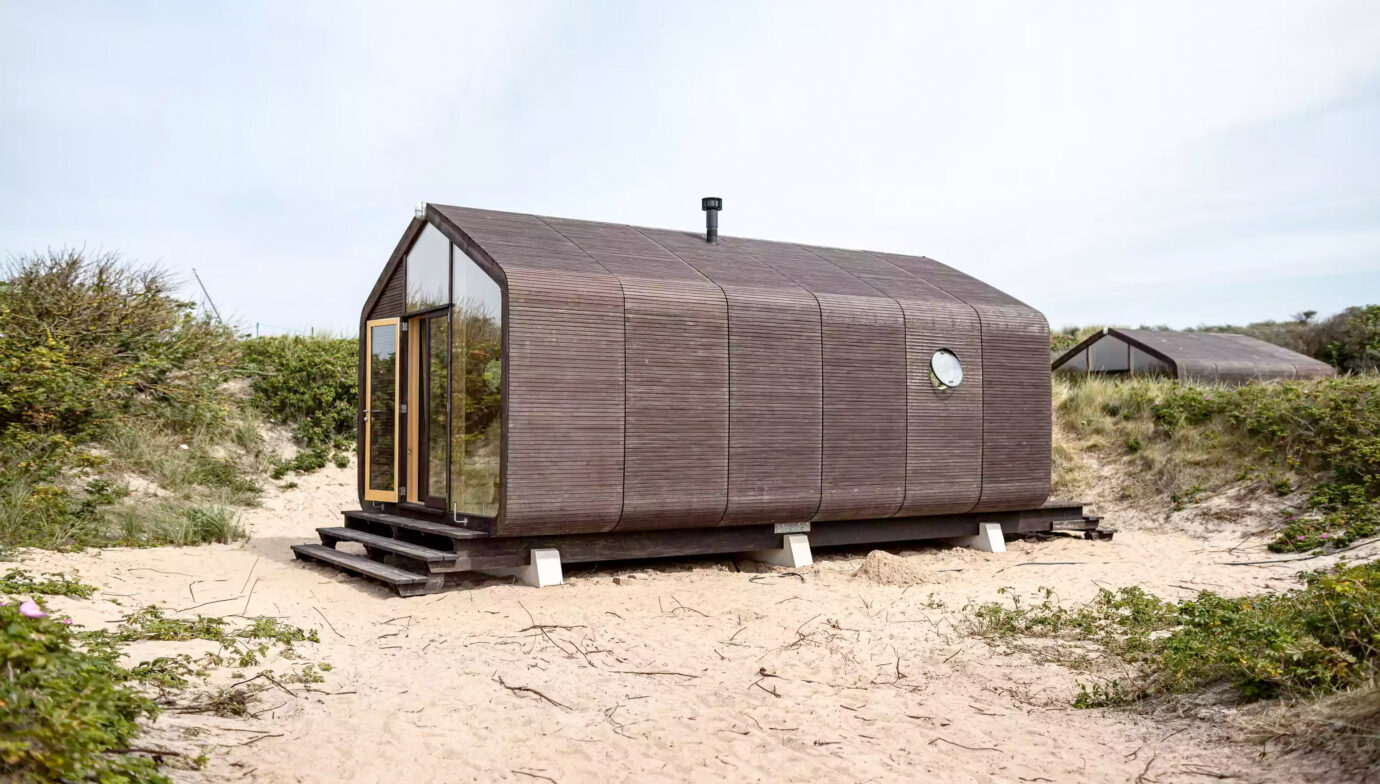
Fiction Factory was founded in 1989 by the trained set designer Oep Schilling. Currently, 60 employees work on the company's creative designs and visions. However, the simple set-up means that only a handful of people have to work on site. If you are curious, you can spend the night in a Wikkelhouse on Heligoland, for example (shown on the cover picture) - perhaps the next holiday destination when the corona regulations allow it again?
Cover picture and all other photos: Wikkelhouse/Yvonne Witte www.wikkelhouse.com
Author

Valerie Bachert is a journalist, chief of staff and sustainability officer. She is interested in the areas of organic farming, conscious consumption, species extinction, social injustice and sustainable nutrition.