"How does it work?" Recycled paper production: NDR films at Steinbeis for 3 days
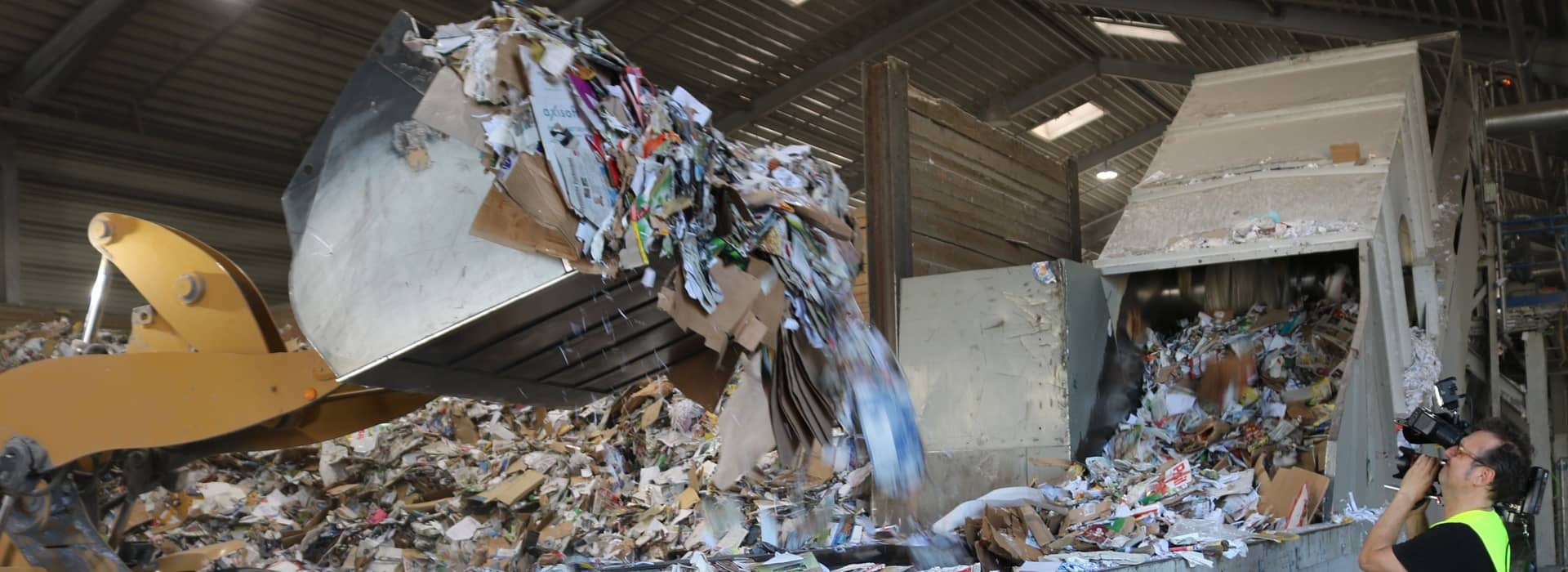
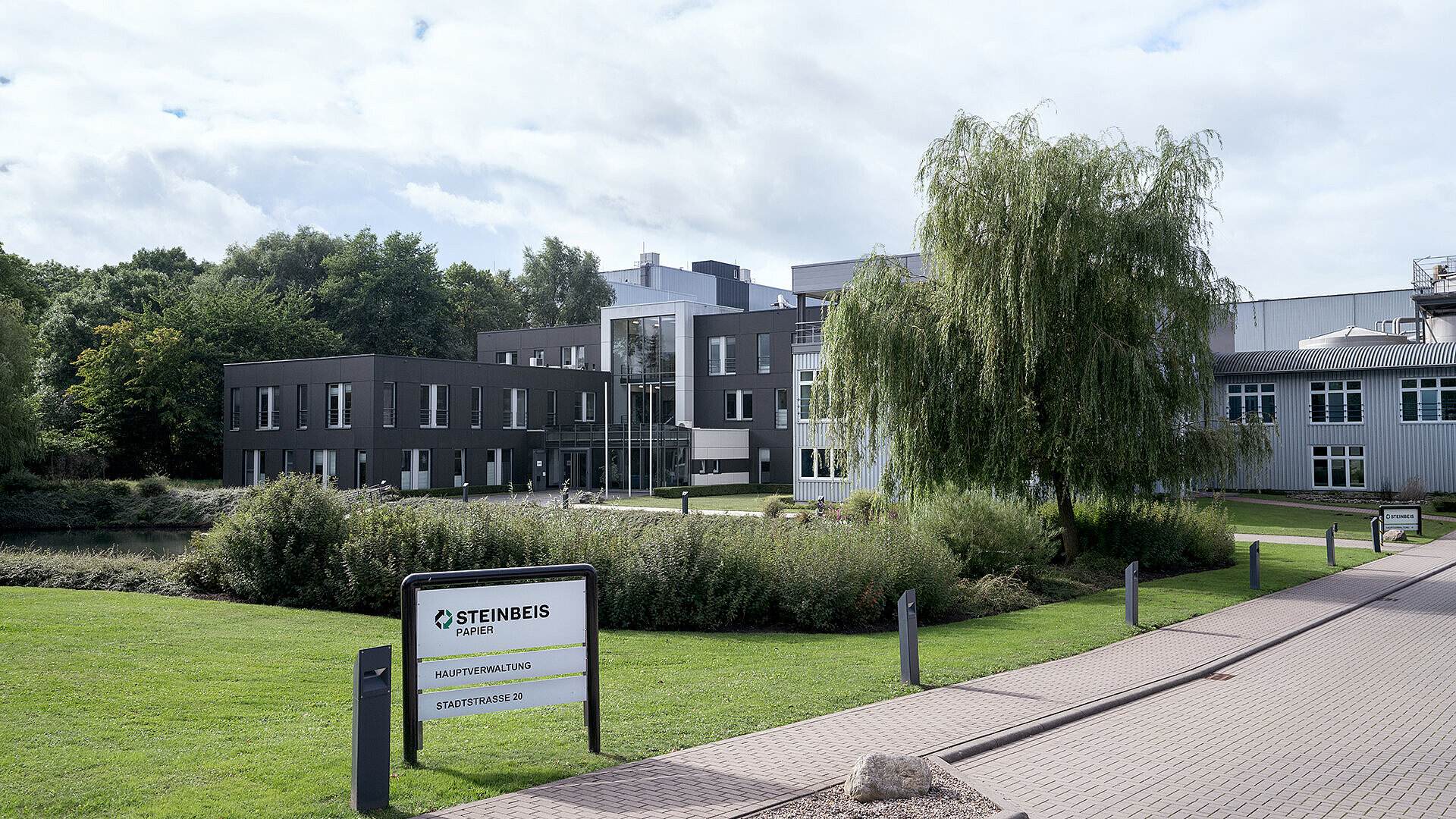
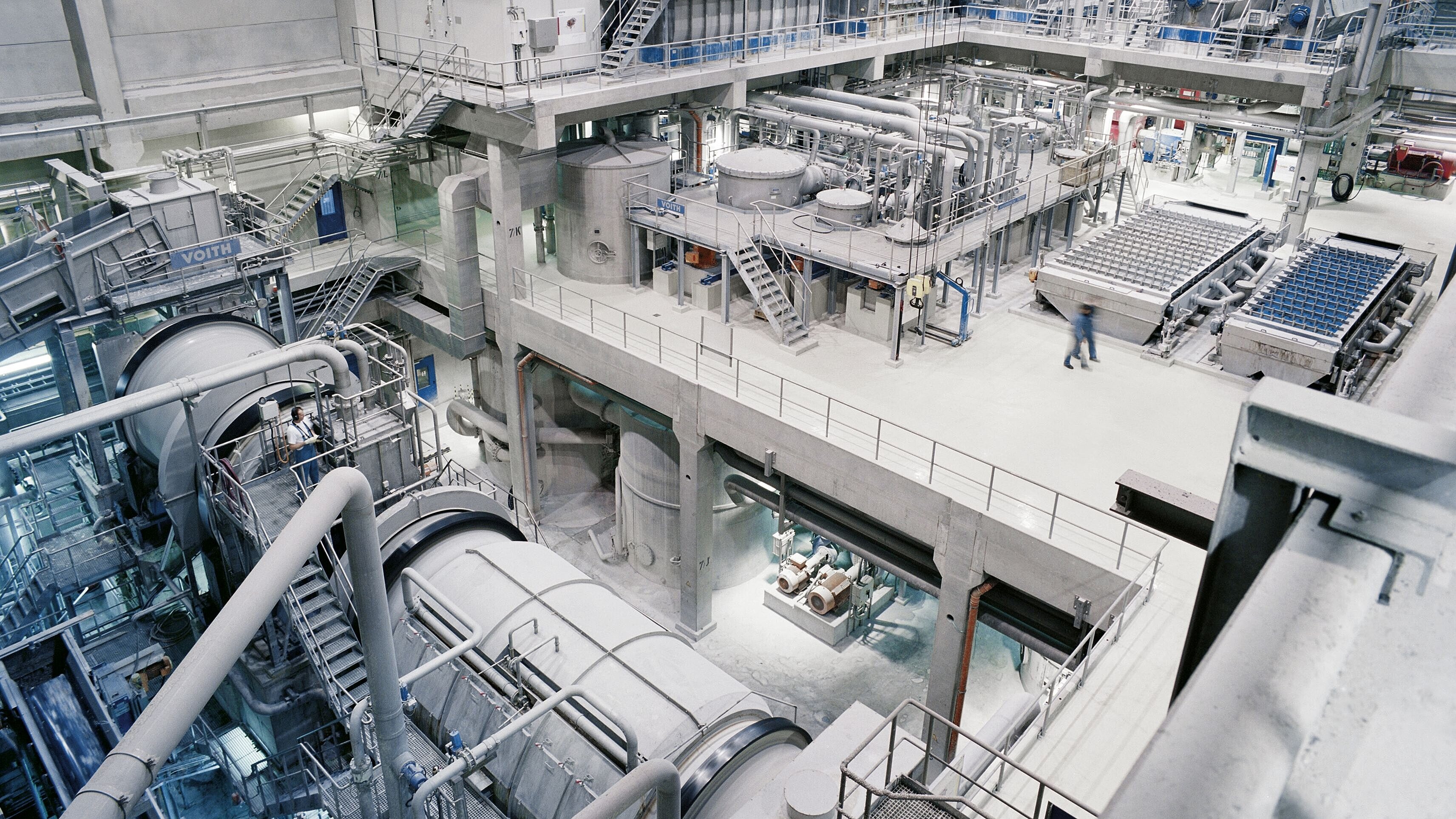
28.08.2018 - Roll film. Camera rolling. And action. NDR is a guest at the Steinbeis site. As part of the NDR series "How does it work?", the film team is producing a report on the topic of recycled paper production. Jon Mendrala, reporter and freelancer for Norddeutscher Rundfunk, cameraman, Christoph Neubert and sound colleague Claas de Buer film mountains of waste paper, the production process and talk to experts and employees. The NDR team wants to know everything: How it works with waste paper refinement and upcycling, what is special about the Steinbeis recycled paper mill and what role the Blue Angel plays at Steinbeis. We at Steinbeis also wanted to know a few things: 5 questions for the film team, 5 answers. How it came about, what the challenges were and what needs to be done before the film is finished.
"Wie geht das?" is an NDR TV format. How would you describe the format - explanatory film, report, guide? What target group is it aimed at?
Jon Mendrala: " Wie geht das ?" is intended to provide viewers with North German knowledge and expertise from the region in an entertaining way. We want to be a bit like the "Sendung mit der Maus" for the grown-ups. In other words, we want to find exciting topics from the north and take viewers where they wouldn't go themselves and meet people they wouldn't meet themselves. And that basically applies to children as well as adults: for example, the Airbus shipyard, the A7 construction site or the logistics of the Port of Hamburg, but also the tree nursery in the Pinneberg district or the marine aquarium on Fehmarn. We want to take a look behind the scenes, which our viewers usually only know from the other side, but which they also encounter in everyday life: be it the tram in Hanover, the tagesschau editorial team, which plans an 8 p.m. edition for more than ten million viewers - or the paper mill in Glückstadt, which supplies many northern Germans with paper at home or at work. The important thing for us within 30 minutes - as banal as it may sound - is always to make the viewer realise: "Wow! So that's how it's done. I didn't know that." If we succeed, we have produced a good programme.
In the last three days, you walked around 28,413 steps across our factory premises for the filming. How did you come up with the topic of "recycled paper production", how do you do your research and what is important in the run-up to filming?
Jon Mendrala: All four NDR regional broadcasting centres are producing our format. On the one hand, this is of course a huge benefit, as it is the only way to properly depict this large broadcasting area between Denmark, the Netherlands, Poland and Hesse. On the other hand, it also means that we have to coordinate well. So it may well be that you think: "That would be a good topic for us!" And then, unfortunately, you realise that your colleagues in Hamburg, Kiel, Schwerin or Hanover have already planned or are already filming a proposal on the same topic. And then you have to think again. In principle, not only topics with a unique selling point are suitable. You can depict many everyday topics such as agriculture, local transport, drinking water supply or even waste utilisation and recycling almost anywhere. Delmenhorst or Oldenburg in Holstein then stand "pars pro toto" for this topic to tell the story. Because here, too, empty bottles are thrown into the bottle bank or potatoes are picked up from the field.
In the end, every good feature, as we call such a "long format", stands and falls with the protagonists, who guide the viewer through the programme with their expertise and personality.
You can't always plan that. Especially as some people who come across as likeable, eloquent and funny in the preliminary discussion suddenly become tense or get bogged down in technical jargon as soon as the red light comes on. But there is also the opposite: there is a supposedly stiff and bony technocrat who suddenly comes down the big show stairs and becomes a first-class emcee. In the end, however, you always have the problem of what does NOT make it into the film. We have now collected around eight hours of material over five days of filming, plus footage from drone flights and GoPro recordings.
How do you plan such shoots, who writes the script and chooses the right location? Is there always a plan B?
Jon Mendrala: Of course, you can't do it without preliminary viewings. This means that you have to make contact months in advance, enquire about companies, obtain filming permits if necessary, speak to protagonists and finally make a time and cost calculation. For our series, we usually have five days of filming, five days of editing and around one to two days for colour correction, sound post-processing and the voice recording of the off-text, the so-called sound mix.
Naturally, anything we produce as a reportage format cannot have a "script", as this is reserved for fictional formats.
Our credo is that we don't stage anything: in other words, we don't ask the CEO to get on the set. But we do initiate. In other words, we occasionally ask our interviewees to make their proverbial "typical hand movements". This can also be the inspection walk - even if the previous one was only ten minutes ago. So we show a typical everyday situation of the harbour pilot, the fruit farmer or the mechanic.
Of course, we always want to show "what is". In this respect, it is even helpful for our purposes if something unplanned happens - as in this case - the paper roll tears. There's then enough action, we don't have to instruct anyone, but rather make sure that we don't disrupt the processes ourselves. Incidentally, we are always the laypeople and our experts usually always take great care to ensure that we depict processes correctly. However, the old journalist rule KISS applies here - keep it short and simple. So I may have to present some processes - which are very relevant for the expert - in such a compact way that the viewer at home on the couch doesn't drop the sausage sandwich out of their mouth from frowning. In these cases, I take the liberty of assuming the role of the spectator and prioritising comprehensibility over everything else.
Over the three days, you were an inseparable unit with your camera. Large machines and units and the conditions are not commonplace in paper production. What are the special challenges for a cameraman?
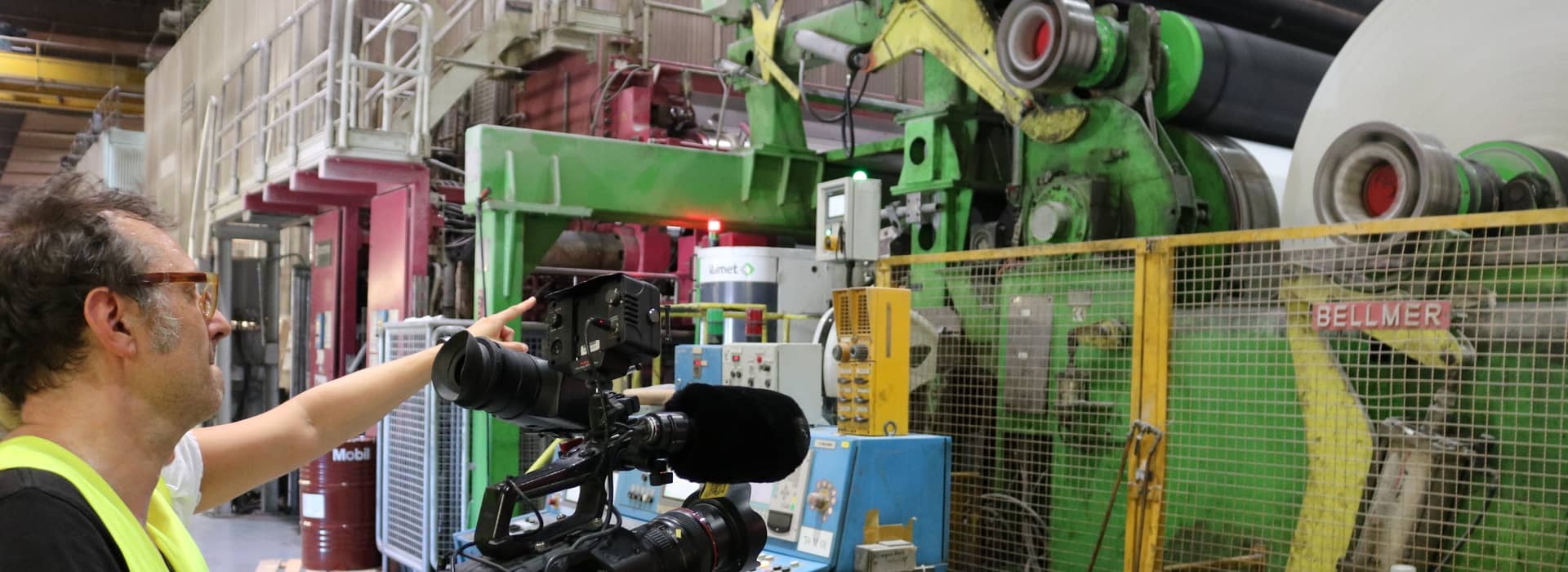
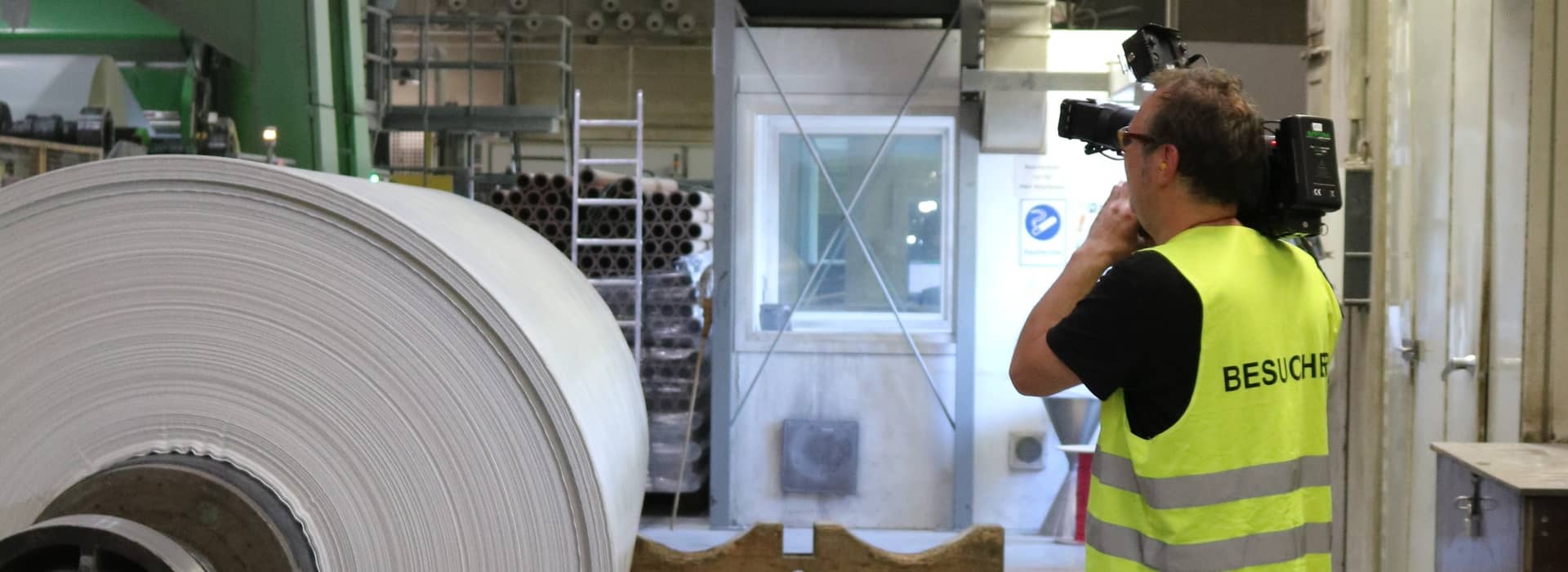
Chistoph Neubert: The special challenge for me in this type of reportage is not only to explain the production process on film and to depict it in an understandable way, but also to accompany the people who make this process possible as closely as possible. I have to try to observe the protagonists and show them in such a way that the viewer realises everything that falls within their area of work. On top of this, the filming placed high demands on man and machine and there were big differences between the locations: extremely high humidity, dust, enormous heat and also dangerous machines meant that I and my sound colleague Claas de Buer as the camera team had to concentrate more, be more athletic and take greater care of the equipment. But it also means constantly thinking about filmable motifs and interesting images, anticipating situations and keeping a watchful eye on colleagues.
The filming is now complete. What happens now with the material? When will the film be finished?
Jon Mendrala: The material will now be viewed in peace and quiet and "shot" on timecode controls so that I can find individual elements more quickly later in the edit with the editor and know the material. In the edit, things that you may not have noticed during filming also come together: Is the original sound even sendable in terms of sound? Are the images of this location really spectacular? Or was it too dark? How blurred are the GoPro images?
We now have five days to edit the film, so around 40 to 50 hours. That may sound like a lot, but the rule of thumb for television is that you need one hour of editing per minute of broadcast time.
So for a current affairs programme with a broadcast length of between 2'30" and 3'00" for "Schleswig-Holstein Magazin" or "Hamburg Journal", you can usually edit in two and a half to three hours. That can be tight on a daily basis if you don't get to the editing room until 4.00 or 5.00 pm.
With long formats, you usually only have a rough version after 30 hours of editing. And you still have to write the text on the side. In the end, you might have 35 or 37 minutes of film that you offer to the editor in charge for initial approval. As the first viewer, he usually has the right questions and comments that you yourself - after many weeks of working on the subject - have sometimes overlooked, almost blindly. Then it's a matter of fine-tuning until the final broadcast length has been reached and everything is dramaturgically coherent. In the end, there is also a solution here: "kill your darlings". As painful as it is for every reporter and author's soul, in the end a passage that you would really have liked to see in the film always dies the editor's death.
We assume that the film will be ready for broadcast to our colleagues in Kiel at the end of August. And then it will be screened in the last quarter of the year. To use the logic of cookery programmes: so far we've only bought the ingredients. Now it's time to cook. The only problem is that you can't buy anything if something is missing.
Thank you very much for the interesting comments.
ADDENDUM FROM 10 JANUARY 2019 ON VIEWING FIGURES
We now have the viewing figures for the article "How does it work? Always in circles - paper recycling", which was broadcast on 5 December 2018. According to NDR Medienforschung / ZARS, the nationwide viewing figures were 380,000 viewers and 280,000 viewers in the NDR broadcasting area.
Cover picture: Jakob Owens on Unsplash
Author
Responsible for marketing, social media and e-business at Steinbeis Papier. Circular economy, recycling and biodiversity are the topics close to the heart of the graduate business economist. Enthusiastic blogger for the Steinbeis editorial team.