From the paper bin to the factory
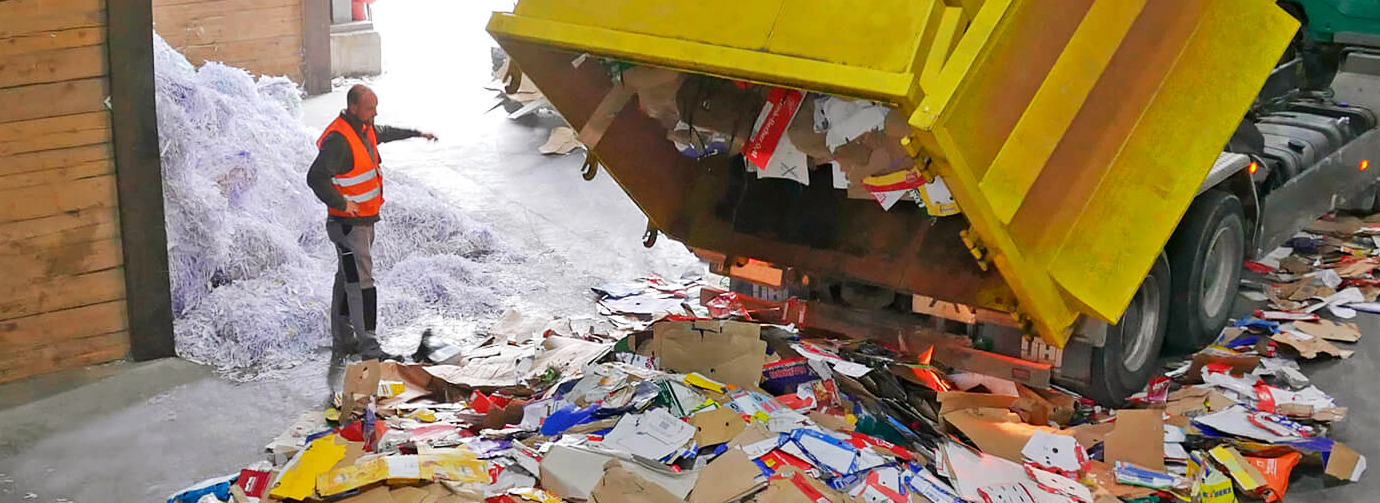
07.07.2020 - Paper recycling works in Germany - if it didn't, Steinbeis Papier would have no foundation. AP Concept, a sister company, prepares waste paper for reprocessing. We talk to Managing Director Heinz Uhlig about his company and the wider context of working with waste paper. Some of what we learn is sobering. However, it gives us food for thought. And also to act more prudently. No matter how critically the topic of paper recycling and its stakeholders are examined, Mr Uhlig is convinced of the work of his teams in Germany and the UK, from the management to the sorters on the conveyor belt.
You buy and sell around 600,000 tonnes of waste paper a year, about half of which you sort yourself. How does this work and where does the waste paper come from?
There is municipal and commercial or industrial waste paper. The former is what is collected in the blue bins in households. This is the responsibility of the local authorities, who either collect it themselves or commission someone else to do so. It must then be recycled via a certified, legally regulated process. Industrial waste paper comes from commercial enterprises, such as print shops. It falls under different regulations. Commercial collection points can also offer this to private disposal companies, whereas local authorities are generally obliged to organise a Europe-wide tender.
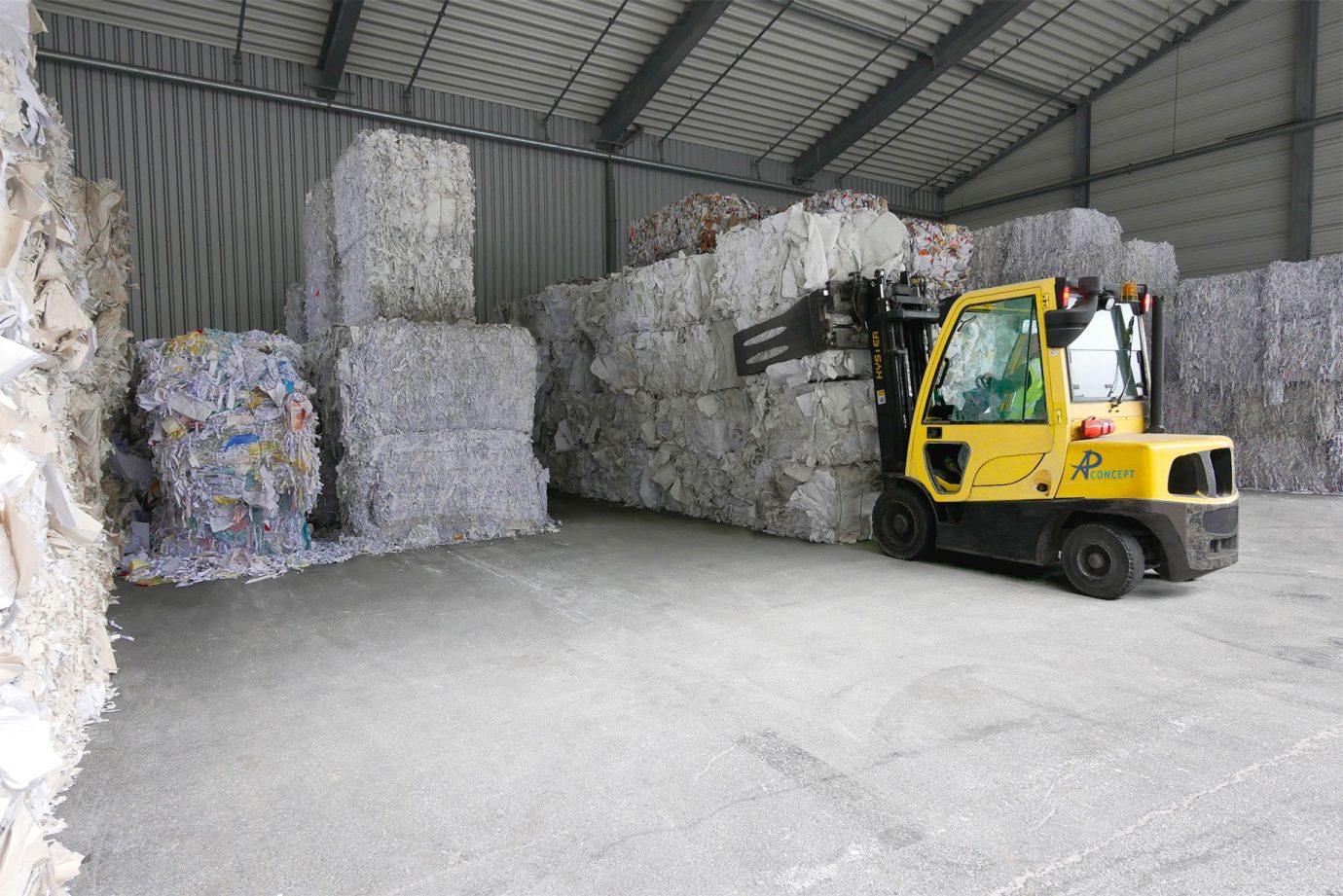
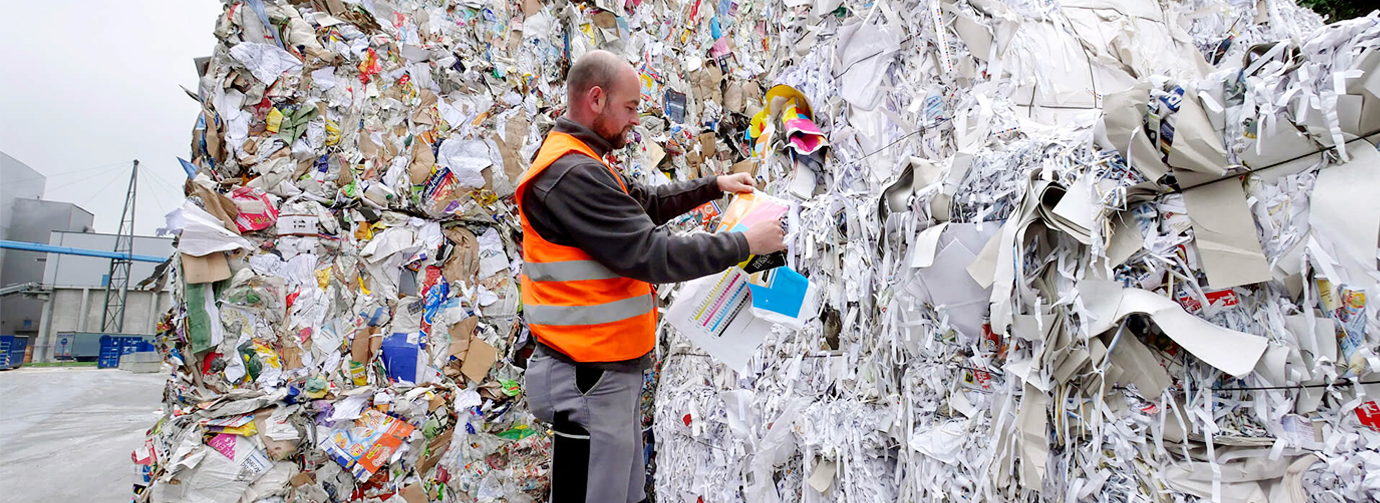
Wherever the waste paper comes from, it must be recycled. This takes place in specialised waste management companies like ours. The sorting plants separate graphic waste paper from packaging material and residual materials. A total of 85 types of waste paper can be sorted from the total volume, which are differentiated in Europe in the EN 643 list of grades. There is currently a price range between a few and several hundred euros per tonne, depending on the quality. The quality depends not only on the source material, but above all on how much labour is invested in reprocessing. This in turn depends on what the global market looks like at any given time - it is constantly changing, at a very fast pace and with increasing volatility.
So it's all about supply and demand, and ultimately about money?
Of course it is. It's always about money. If you have waste paper, you sell it to the highest bidder. What happens is this: The decision-makers in municipal waste management are trying to keep the fees for waste disposal, which every household has to pay, stable. This is despite the fact that transport costs, wages etc. have demonstrably risen steadily over the last ten years. However, this only works because waste paper cross-subsidises the whole thing due to its high value. In other words, in order not to have to pass on the real cost increases, these costs are passed on to the waste disposal and recycling industry. In doing so, we are jeopardising our circular economy. If this collapses, nobody can estimate the extent of the damage.
People need to realise that waste disposal and recycling are existentially important and systemically relevant because we cannot burden this planet indefinitely. The fact that there is little awareness of this is largely due to the fact that most people don't think about what happens to the waste once it is out of sight. We have also created a bureaucratic monster in Germany that puts many obstacles in the way of waste disposal companies. The regulations and documentation requirements that our industry is subject to are enormous. They cascade from EU legislation to federal and state level. Environmental aspects have no economic relevance, which means that their consideration is not honoured.
Does that mean that sustainability does not play an overriding role in this system?
Exactly. If sustainability really was a priority for all of us, both the legal situation and consumer behaviour would be different. Much of what is said at a political level, but also by consumers, is just lip service.
Why are we not really guided by environmental issues, even if everything is clamouring for them these days?
Because environmental protection and recycling cost money. One example: the price of oil is currently at rock bottom. Plastic is therefore cheap. Plastic recycling is on the verge of collapse because there is no demand for recycled plastic, as it is more expensive than "new plastic". If the environment really was everyone's top priority, environmentally harmful behaviour would be sanctioned and environmentally friendly behaviour rewarded, both on a large and small scale. Of course, it is difficult to get all stakeholders around the table and reach a consensus, but if the environmental aspect continues to be viewed in isolation, it will not continue to play a major role. Not acting in a sustainable and environmentally conscious manner will ultimately cost us all more than avoiding damage to our environment and thus to the population through environmental protection and recycling. Together with Steinbeis, we have been trying for many years to develop a completely closed waste paper cycle; we have not yet succeeded because the numerous stakeholders often have conflicting interests and are therefore impossible to unite.
How do you see the role of the consumer in this issue?
Ultimately, of course, everything is in the hands of the consumer. And their discipline is also a big issue. When I'm asked what to look out for when separating waste paper, I always say: nothing at all, it's not rocket science! Only waste paper should end up in waste paper. No residual waste, no organic waste, no disposable syringes, no batteries and no old paint buckets. We work with highly sensitive technology in our plants, so if a half-full bucket of paint falls in and opens, we quickly have damage totalling 20,000 euros, for which nobody wants to bear responsibility.
Unbelievable! What other "contaminants" do you have to contend with?
I don't want to spoil anyone's mood, but some people hide adventurous things in waste paper because disposing of it doesn't involve any additional costs. In addition to the items mentioned above, we have also had inflatable boats, motorbike engines and hoovers in the deliveries. And in times of bird flu, we even had dead geese. The veterinary office and the criminal investigation department had to get involved.
But I have to say: most people do separate properly. The rest either negligently or wilfully fail to do so. The former group can be reached by raising awareness of the issue, the latter group cannot.
But even apart from such extreme examples, the proportion of so-called rejects, i.e. impurities, in new paper production is constantly increasing. This is of course a challenge. I would therefore like to emphasise once again that disposal is just as important as supply. It should have a higher priority in future, also in financial terms. It would be desirable if consumers were prepared to pay the additional costs for recycled products. Because effectively speaking, recycled products are an investment in the future. And this investment helps us to avoid significantly higher "repair" costs for damage caused to the environment in the long term.
What about your employees?
We are a specialised waste management company; we work with waste. Despite this, the people who work here are highly qualified and are wrongly held in low esteem by the public. They do their work for the good of the environment. They deserve to be recognised for this. Our employees are aware that they work in a very important part of the value chain - and the public should be aware of this too.
Where do you think Steinbeis stands on this issue?
Steinbeis was one of the first companies in the world to actively address the issue of sustainability and recycling. Steinbeis' entire business model is based on sustainability. They, and we at AP Concept, have been going to great lengths to really get the idea of sustainability into people's heads since the company was founded. Steinbeis has been a pioneer in this respect, ahead of its time. Today, we share a simple wish: that everything that harms the environment cannot generate profit, and everything that helps the environment is honoured.
Cover picture: AP Concept
Author

Isabella Bigler is an editor and copywriter. Here she writes about sustainable topics, the past and the future - occasionally with the support of her dedicated interns Lumen Nguyen and Liam Jennings.