"For us, the coronavirus crisis is a broad social experiment in radical deceleration"
19.05.2020 - Steinbeis has been producing only recycled paper with the highest environmental seals of approval for decades and is a thoroughly sustainable economic player with its resource-conserving production cycle. The number of such players is on the rise - the topic of sustainability has reached the centre of society in recent years. A few weeks ago, we interviewed business psychologist Prof Dr Irene López about this. She told us about consumers' growing sense of responsibility and also explained: " Sustainable consumption can strengthen our economy " (you can find the full interview here).
Then came corona, and many things we take for granted in our everyday lives had to be questioned in a hurry. But what is the crisis doing to the trend towards greater sustainability? We asked Irene López again for an interview. She had a lot to report: According to studies, a quarter of Germans believe that the corona crisis will change their purchasing behaviour in the long term. In the interview, López assessed for us what impact the pandemic could actually have on sustainable consumption, our economy and our entire future way of life.
Is it already possible to say how the crisis will affect consumer behaviour in general ?
In my opinion, it is still difficult to say what impact the crisis will have on general consumer behaviour, as we are all currently in an absolutely exceptional situation. Whether and to what extent our consumer behaviour will be affected depends on how long the crisis lasts. This applies to both general and sustainable consumption. It is possible that the government's measures and easing of restrictions will quickly lead to a return to normality. Consumers will then return to their usual consumption patterns relatively quickly. However, if this crisis lasts longer, my concern is that this will have a strong impact on the labour market and lead to a temporary return of strongly price-oriented purchasing behaviour. According to a survey by the Boston Consulting Group, more than a quarter of people in Germany expect the coronavirus crisis to have a long-term impact on their consumer behaviour.
Nevertheless, we can already see a global change in consumer behaviour. People are buying more for others, paying more attention to hygiene in the supermarket and buying outside peak shopping hours. Some sectors, such as tourism and catering, are making losses due to lockdown restrictions, while other services and products are benefiting from the coronavirus crisis. Streaming providers such as Netflix and social media companies in particular are benefiting from the change in their users' consumer behaviour. The use of digital services, such as online medical advice, online education and live event broadcasts, is also increasing rapidly. It is therefore becoming clear that coronavirus will leave its mark.
In addition to the purely financial consequences and the resulting weakening of purchasing power, are there also mass psychological effects of the crisis? Has the new experience of standing in front of empty shelves and closed shops triggered a kind of "consumer trauma" in people?
Of course there are mass psychological effects in relation to the crisis. Most of us have never experienced a pandemic before and don't know how to behave "correctly". This triggers great uncertainty and fear. Fear can spur us on to get things moving together, to think clearly and to do what is necessary for the common good. However, the panicked reactions that we sometimes see on social media and in the news are actually exaggerated. The basic trust that scientific medicine has epidemiological events under control is currently not there, as the experts' level of knowledge is still unclear. The media try to convey these facts and speculations transparently, which leads to non-rational decisions. This spreads panic. Panic is highly contagious, it puts us into irrational and catastrophic thinking and drives us into anti-social human behaviours that can exacerbate our crisis. These include hoarding, greed and panicked flight. These reactions show us what dynamics or currents can do. At the same time, they also reveal people's selfish behaviour, because alongside solidarity, the self is the most important thing for people. The consequences of this are hamster purchases, which turn out to be a solution for self-sufficiency and thus give us a sense of security. Especially in these uncertain times, people need security.

The coronavirus crisis has also seen a rapid shift in values. Professions such as cashier took on a completely new value, and some products such as sanitiser were suddenly almost unaffordable. The usual status symbols no longer counted. How do you assess these phenomena, has there been anything comparable in history?
No, there is nothing comparable so far. The reason for this is that we live in a completely networked, highly globalised and media-transparent world. This means that everyone is involved and is meticulously informed about everything; all information is accessible. Isolated phenomena of the current crisis have also occurred in other crises in the past. But a crisis that has such a dynamic impact, and above all with so much information and knowledge about it, has never been seen before.
However, this change in phenomena definitely shows something positive: status symbols that were important before have no real value and become unimportant in times of crisis. It is other things that are becoming more important to us. Those who know how to make things nice at home are the winners of the new era. Those who have a balcony, a garden or even a forest on their doorstep are also generally envied. After all, despite social distancing, social life and therefore competitive thinking are not simply coming to an end, they are simply shifting from the real world to the digital world, from outside to inside. And perhaps we are taking something away from the whole situation that has always been preached to us: That it is always up to us to decide what is really important.
What influence does the new situation have on our interview topic from last time? Will people now be much more aware of sustainable consumption after their experiences? Or will the financial downturn force consumers to step back from sustainable consumption and buy the cheapest products?
As mentioned in the last interview, sustainable consumption is part of a sustainable lifestyle and consumer behaviour that primarily takes environmental and social aspects into account when buying and using products or services. It is primarily about the use and disposal behaviour of resources in everyday life and not necessarily about doing without cheap products. The current situation gives us all plenty of time to think and slow down. People are cooking more, reading more and getting creative. A change in attitude is emerging in which sustainability is gaining in importance and at the same time ensuring that people are trying to consume more consciously and sustainably. According to the Utopia study, three out of four participants are of the opinion that the future will be all about consuming more consciously. This is creating a new awareness among consumers, who are scrutinising more and making more targeted purchases. This does not mean that we will experience a refusal to consume, but rather a very enjoyable but differentiated consumption.

In my opinion, the coronavirus crisis is a broad social experiment in radical deceleration for us. In this respect, we need to distinguish in the future which elements make sense to maintain beyond the crisis, such as the substitution of conferences with virtual meetings, and where we should intensify social life again.
Recently, we have seen headlines and front pages that optimistically assume that the coronavirus crisis could also offer an opportunity for a better world. Apparently, it is also possible to live with less private transport, air travel and luxury consumption. Do you expect a lasting effect, or will everything return to pre-corona levels after the pandemic, true to the motto "back to normality"?
I definitely expect the pandemic to have a lasting effect. The coronavirus crisis can show us where society needs to develop in order to be more resilient and robust in the face of multiple crises in the future. Sustainability can offer a decisive broadening of horizons. However, we need to take a close look at the crisis and how we deal with it so that we can grow from it. It is important that we work now to find a way forward. And the only way we can harness this crisis for the future is if we allow the amazing global mobilisation we are experiencing to bear fruit.

Prof Dr Irene López is Professor and Head of the Department of Business Psychology at CBS International Business School. She studied and completed her doctorate in psychology at the FU Berlin. In her teaching and research, she focuses on communication, communication processes and optimisation, knowledge management, personnel and management development as well as work and organisational psychology. In addition to teaching and research at the CBS, she also works outside the university as a coach and consultant in leadership programmes. She is also working on an application-related project on CSR and "Smart Working".
Cover picture: Anne Shvets/Pexel
Author
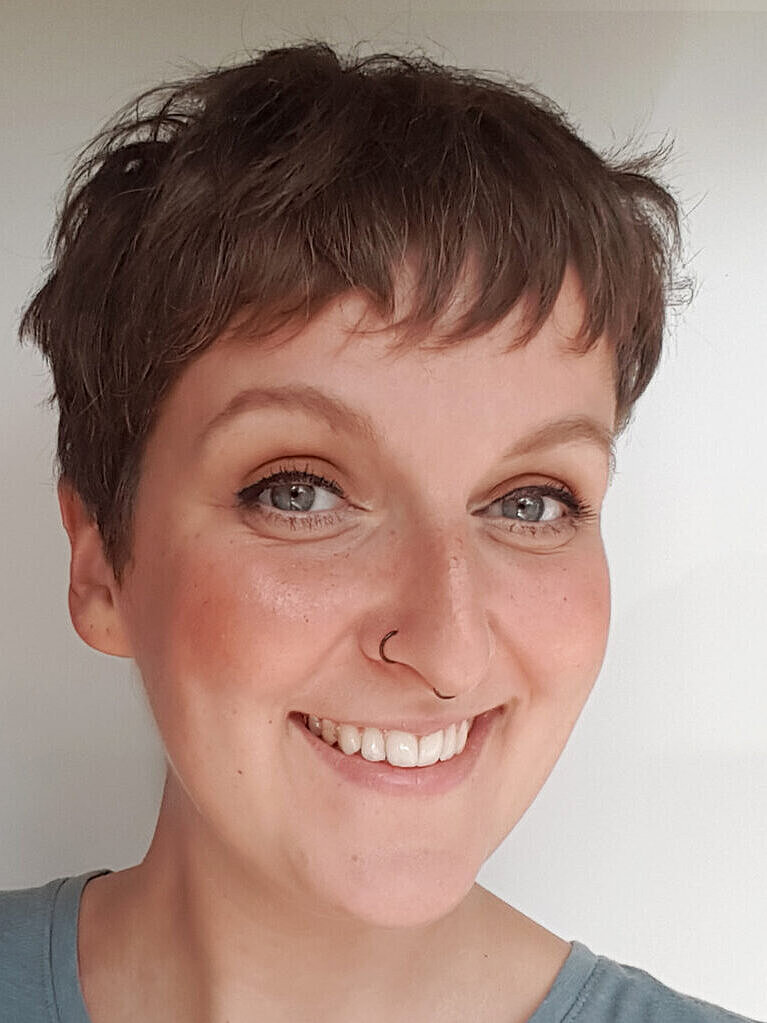
Valerie Bachert is a journalist, chief of staff and sustainability officer. She is interested in the areas of organic farming, conscious consumption, species extinction, social injustice and sustainable nutrition.