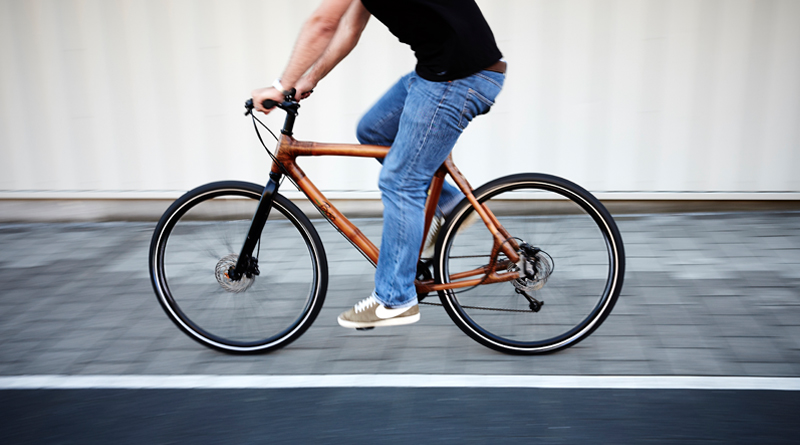
Everybody's darling: bicycles made of bamboo
04.08.2020 - For the longest time, our bikes were made of steel as standard. However, this does not only offer advantages, as it weighs a lot and is susceptible to rust. Other common materials such as aluminium or carbon fibre-reinforced plastic, on the other hand, are not sustainable. Jonas Stolzke and Maximilian Schay have therefore opted for a new material for bicycle production: The bicycles from their Kiel-based company my Boo grow in the bushes, so to speak, because they are made of bamboo. The my Boo team is demonstrating that it is not only in the paper sector that a conscious choice of raw materials can make a sustainable difference. In this interview, PR and Marketing Manager Felix Habke explains how the unusual business idea came about and how a bamboo cane is turned into a two-wheeler.
What is the idea behind my Boo?
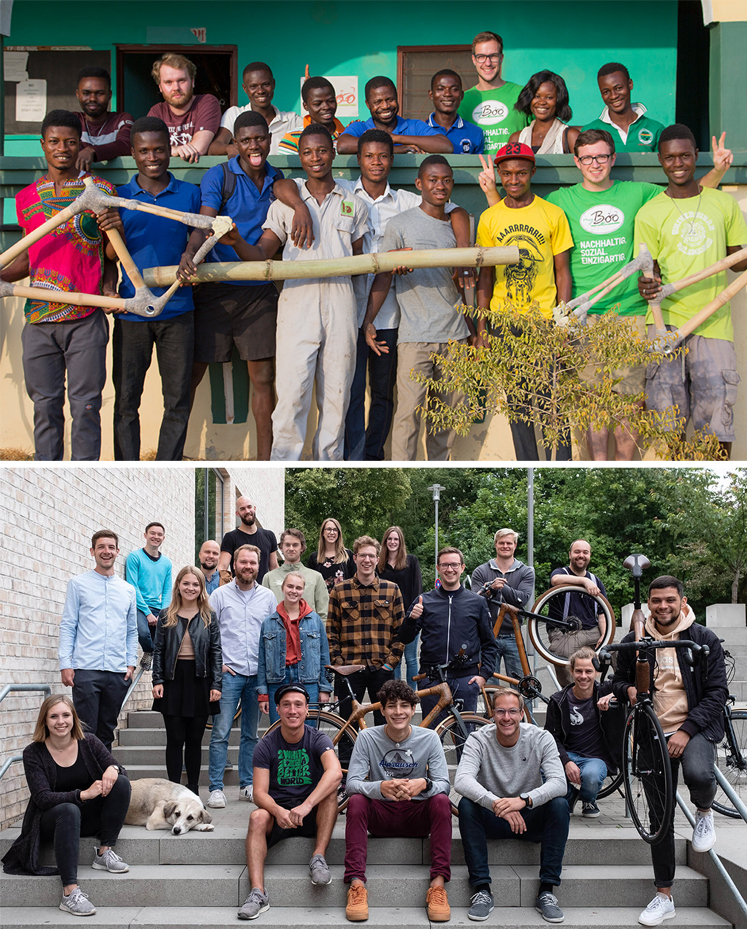
The name already gives it away a little: we build you your personalised dream bike that fits your needs perfectly - made from the sustainable raw material bamboo and produced fairly. It is extremely important to us that every part of the value chain benefits equally. This not only creates fairly paid jobs here in Germany, but also in Ghana.
How did it come about that you manufacture bicycles made of bamboo in Ghana of all places?
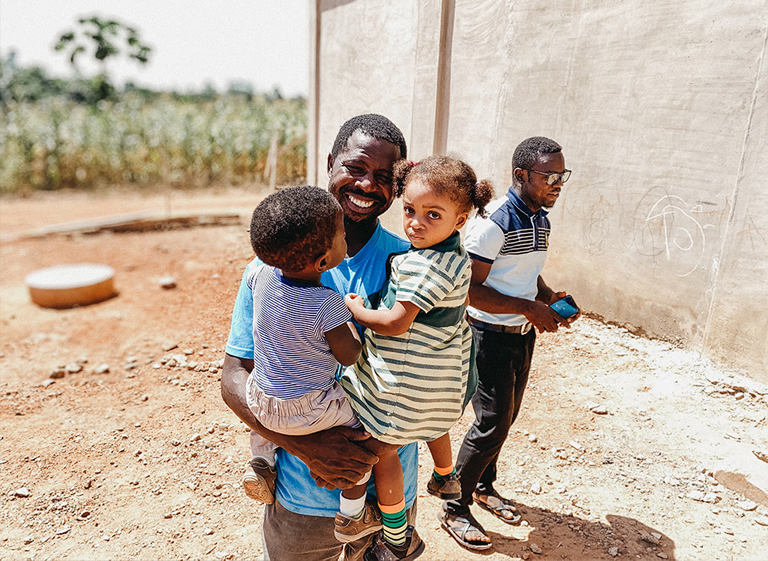
Our bicycles are manufactured in the village of Yonso, in the centre of Ghana. The Yonso Project is based there. The director and founder is Kwabena Danso, who grew up in the village himself. After studying in Accra, the capital of Ghana, he returned with the desire to give others the same educational opportunities. The special thing about the project is that the village community is involved in all steps from planning to implementation. Among other things, scholarships are financed, teachers are recruited and microfinancing is made possible. however, 2012 marked a turning point: while the project had previously been funded by donations, Kwabena now wanted to find a way to be more independent. And it was precisely at this point that Maximilian and Jonas, who eventually became the founders and managing directors of my Boo, came onto the scene.
How did that happen?
By chance, actually. Maximilian and Jonas were in their early twenties at the time and were studying business administration. Both had always wanted to start their own business. But not with a traditional company, but with a company that creates value for society - they just lacked the right idea. A school friend of Maximilian's spent a voluntary social year in Ghana in 2012 and saw a bicycle made of bamboo there. Much simpler than the bicycles we produce today, but it was a bicycle made of bamboo. So one thing led to another, Maximilian told Jonas about the bike, the two of them threw themselves into research and eventually came across Kwabena. As luck would have it, he knows exactly how these bikes are made.
Does that mean that a bamboo bike is a relatively common means of transport in Ghana?
No, not really. The bike that the school friend saw came from a UN project that Craig Calfee started in 2010. Craig is the American guru of bamboo bicycles par excellence, he gives workshops all over the world on how to make bicycle frames from bamboo. The aim of this UN project was to produce bicycle frames for the Ghanaian market using local bamboo. Unfortunately, in the end this did not succeed because the bicycles, although generously subsidised at the time, were still too expensive. But Kwabena learnt how to do it.
How did the idea become a business?
Maximilian and Jonas set off for Ghana in 2012. At that time, the Yonso Project consisted of three employees and a small room in which bamboo products were manufactured. Kwabena told them about his vision of building a school next to the library. Maximilian and Jonas were immediately hooked and wanted to get something off the ground together with Kwabena. Back in Germany, they looked for an investor and finally found Hans-Helmut Schramm, who, in addition to start-up capital, also had a great deal of expertise - thanks to years of successful entrepreneurship. With all the pieces of the puzzle in place, they were ready to get started.
The disadvantage of international production is that components have to be imported. They are often criticised, particularly with regard to emissions, due to the transport routes. What is your view on this?
For us, it all goes together: The Yonso Project is part of the my Boo idea. The giant bamboo that we want to process grows there, so we want to create a link in the value chain there too. We are using an extremely fast-growing raw material. This makes it an ecologically sustainable product to begin with. But when we talk about sustainability, we also mean social sustainability. Many bicycles on German roads today are produced abroad - especially in Cambodia. They are manufactured there under miserable working conditions.
And as far as transport is concerned, the sea route from Ghana is much shorter (16 days) than the sea route from Cambodia to Hamburg (31 days). So this is the better alternative to many other bicycles available here.
Where do you get the bamboo from?
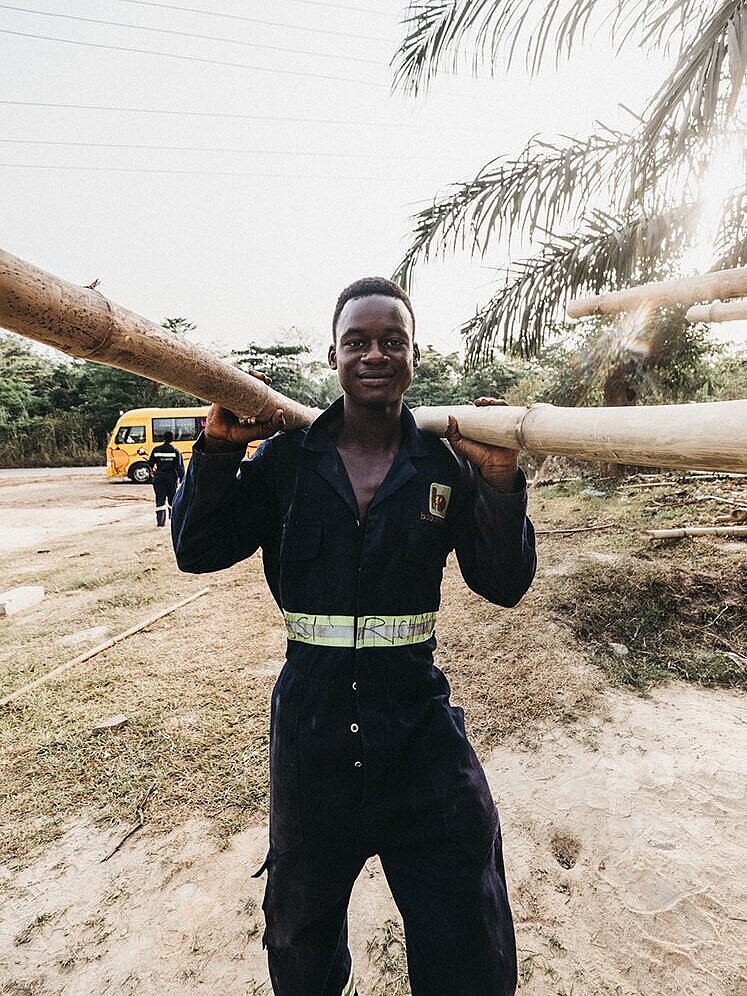
The raw material is harvested in wild bamboo forests around the village. There are no plantations and nothing is artificially irrigated. As soon as the bamboo canes have the right diameter for the frame construction, they are cut by hand with a machete. The plants are then around 20 to 25 metres high. Given their rapid growth, this takes less than two years. The long pipes are sawn on site - this makes them easier to transport. In the village, they are impregnated to protect them from pests and dried for around two to three months. Only then can they be processed.
And how are the bamboo tubes turned into a bicycle?
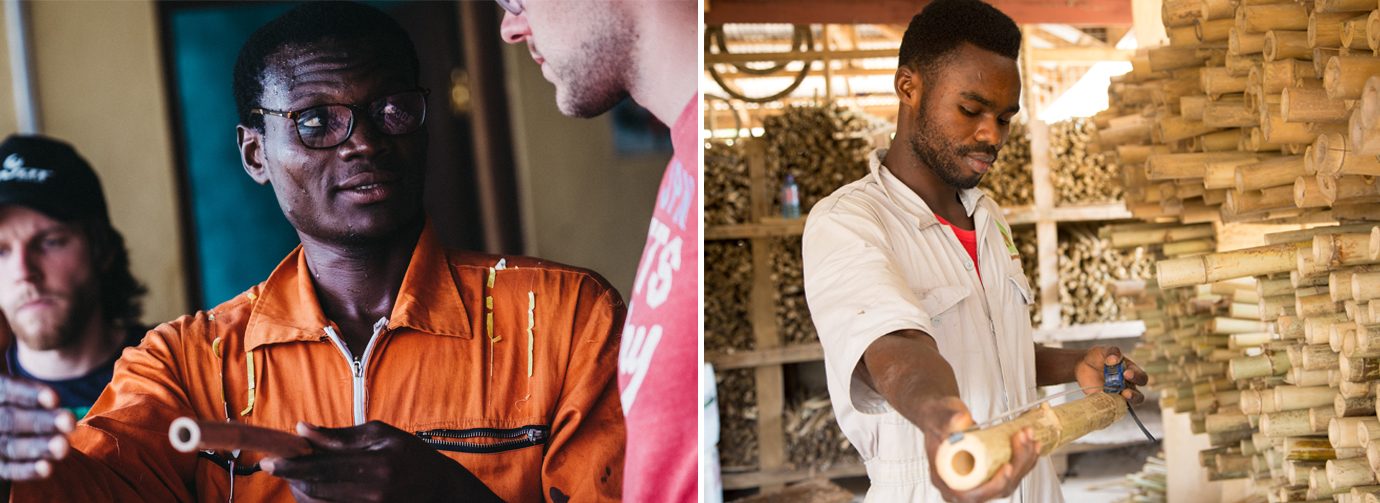
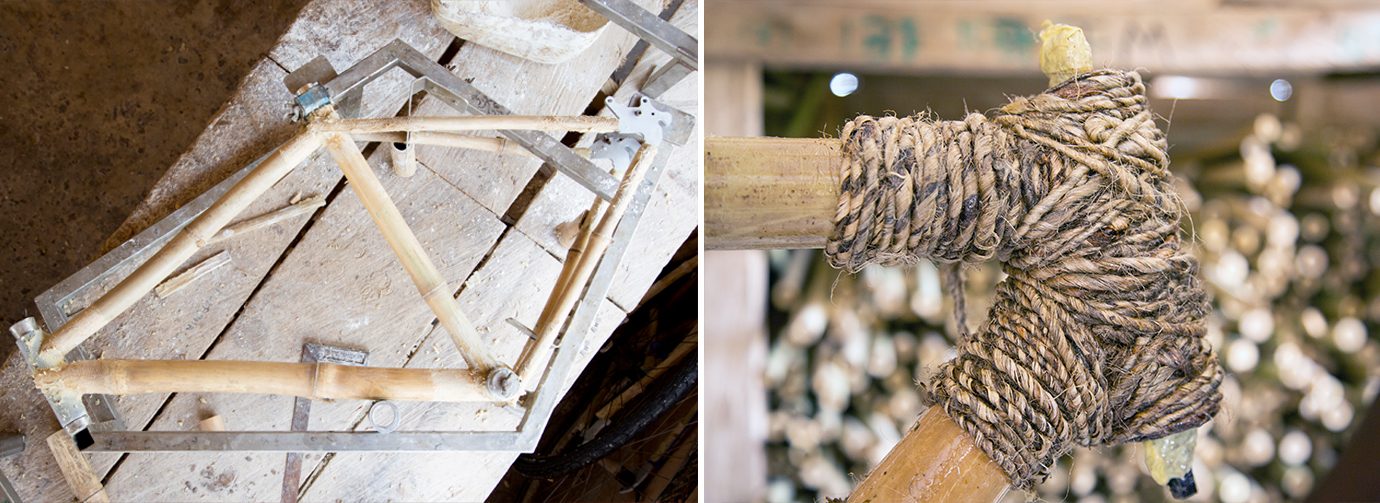
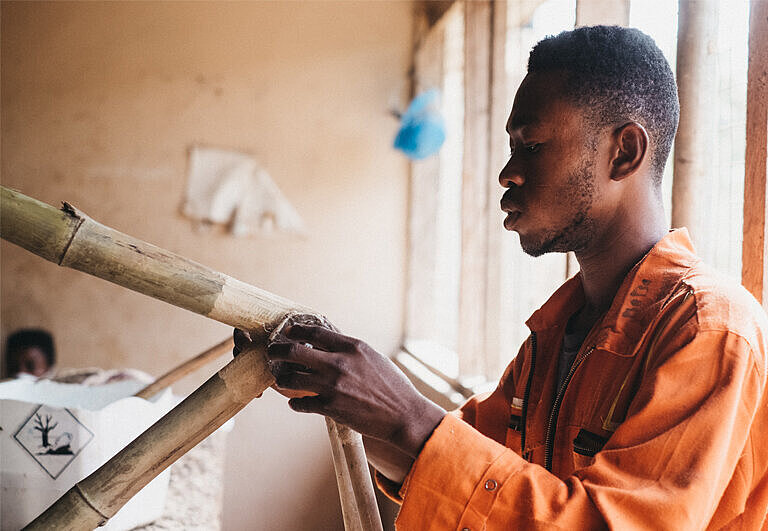
The shape of the frame is determined by the so-called frame jig. This is a metal frame into which the bamboo canes are fitted. The aluminium components are also fixed in place so that the geometry always remains the same. The bamboo canes are fixed to the metal with a little resin. The glue dries overnight so that everything is firmly in place. To fix the joints of the bamboo canes and thus stabilise the frame, we use classic hemp ropes, which are easy to buy on the market in Ghana. Finding a suitable resin to soak the ropes in is much more difficult.
What happens to the frame once the joints have been fixed?
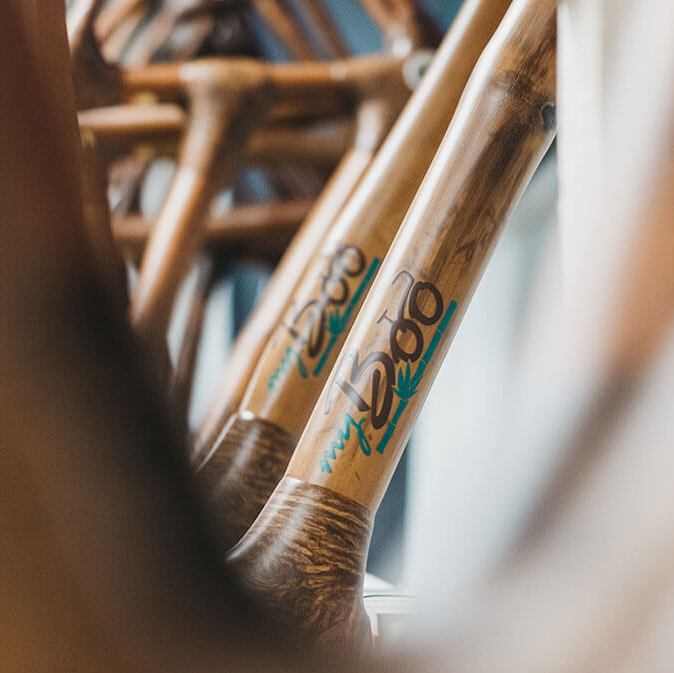
Once the synthetic resin has dried, the frame is finished to perfection. Any unevenness in the bamboo is smoothed out and the joints are sanded - all by hand. We then check that all the dimensions of the frame are correct. This ensures that any traditional two-wheeler mechanic can work on this bike and carry out annual inspections. After all, the aim is to build a serious alternative to a normal bicycle frame. This step also serves as quality control. Finally, the frame is painted to prepare it for the European weather, then packed and shipped. Twice a year we receive a large delivery of a few hundred frames to Kiel.
From beating the bamboo cane to loading it into the container, around 80 hours of manual labour go into the frame. The final components are fitted in our factory in Kiel. This only takes about four to twelve hours - depending on which individual wishes need to be taken into account. Each bike is assembled individually. This means that one mechanic assembles a bike from start to finish. As a master craftsman's business, we also provide training. Five colleagues are currently completing their training as bicycle mechatronics technicians.
Steel and aluminium are 100 percent recyclable. What does that mean for your bikes?
Recycling is actually problematic, as the frame is painted and we have to use synthetic resin. However, the extraction of steel and aluminium has other environmental impacts. These include direct impacts such as topsoil removal and erosion, deforestation and biodiversity loss, water and soil contamination, but also indirect impacts from aluminium refining and steel production. This does not mean that aluminium or steel bicycles are bad, but they are not perfect either. Everything has advantages and disadvantages. That's why it's always important for us to look for the best possible alternative.
What are the advantages of a bamboo bike in terms of riding experience?
Bamboo combines the advantages of steel and aluminium frames. Steel is incredibly stable and comfortable because it is flexible. The disadvantage of steel, however, is that it is heavy and relatively soft. This means that if you ride down a hill too fast, for example, all you have to do is wiggle the handlebars a little and a bike with a steel frame swings open. There are no such problems with aluminium. It is light and stiff. However, aluminium is not comfortable. Because it is so hard, it does not absorb vibrations, and when riding over cobblestones you feel every bump. Bamboo combines the good properties of both materials: it is stable and comfortable like steel, but light and stiff like aluminium. At the same time, bamboo has a natural damping effect. This means that it absorbs vibrations, just like steel bikes do.
How do you think mobility will develop over the next 15 years?
Electromobility will certainly play an increasingly important role, and we now also have e-bikes in our programme. This mechanisation will influence how bicycles are built in the future. Perhaps the bikes of tomorrow will no longer look the way we know them today. Just like the evolution from tube televisions to LED monitors and augmented reality. Car sharing and autonomous driving will also play an increasingly important role. And this will also have an impact on everyday processes in our lives.
How do you rate the current developments in the area of sustainability?
We are of course delighted that sustainability is becoming increasingly important to the public and is seen as an important issue by society. When we started seven years ago, this was not yet the zeitgeist. Now it is much more important for consumers to know where goods come from - whether food, electricity or clothing. Of course, there are still many people who think they can shirk their responsibilities. Often with the argument that a sustainable lifestyle would be too expensive. But it's also about buying one T-shirt rather than ten. Many people forget: Mass-produced goods not only leave an ecological footprint, they also cause suffering and poverty. In my opinion, everyone can do their bit and live more sustainably. Pick a topic and pay attention to it.
What do you wish for the future of my Boo?
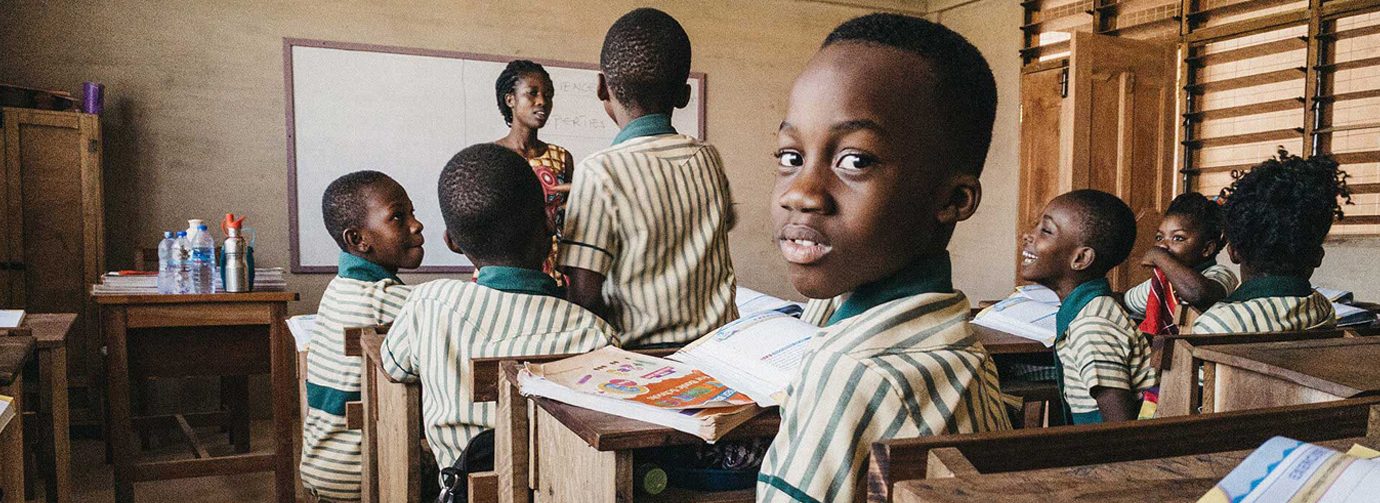
We're actually quite happy with how everything is developing at the moment. We've grown a lot as a team over the past year, which gives us more opportunities to invest in the joint project in Ghana. We spent three years building a new school there, which has just opened. Currently, 200 children can be taught there - but the aim is to teach 1,000. In addition, there are now many bamboo bicycles on the road in the region where the bikes are manufactured. Together with UNICEF, we have already given out 150 bamboo bikes to children so that they can ride them to school. So if I could make a wish, it would probably be that we can do as much good as we have done so far.
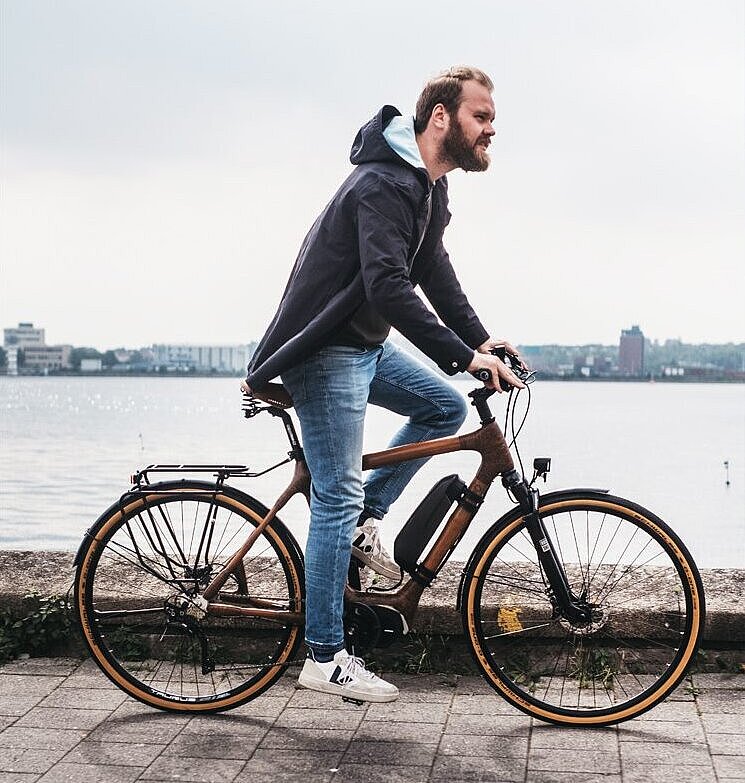
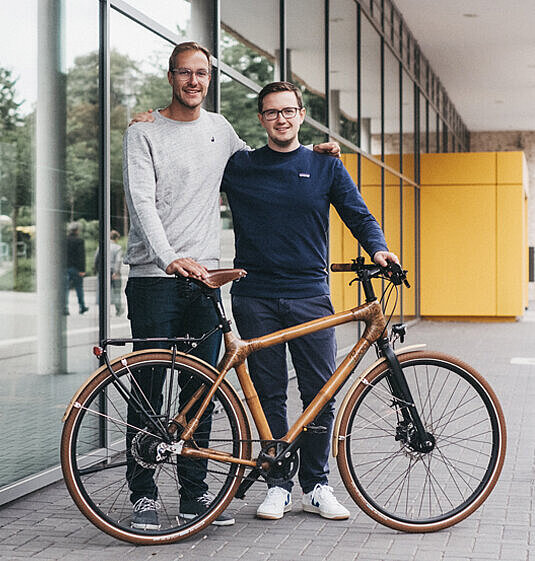
Felix Habke is responsible for PR, marketing, co-operations and events at my Boo. He has been on board since 2013. Selling a unique product that is sustainable and fair is what makes it so special for him. Photo: Robert Strehle
Cover picture: My Boo
Author
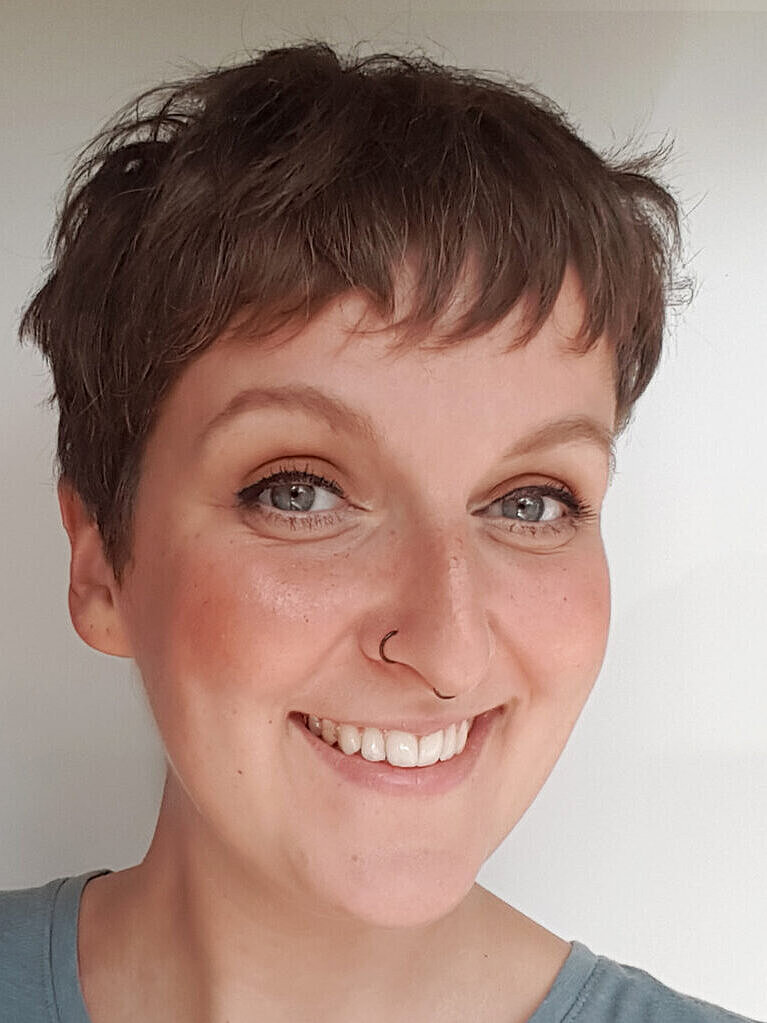
Valerie Bachert is a journalist, chief of staff and sustainability officer. She is interested in the areas of organic farming, conscious consumption, species extinction, social injustice and sustainable nutrition.