"Environmental awareness can strengthen our economy"
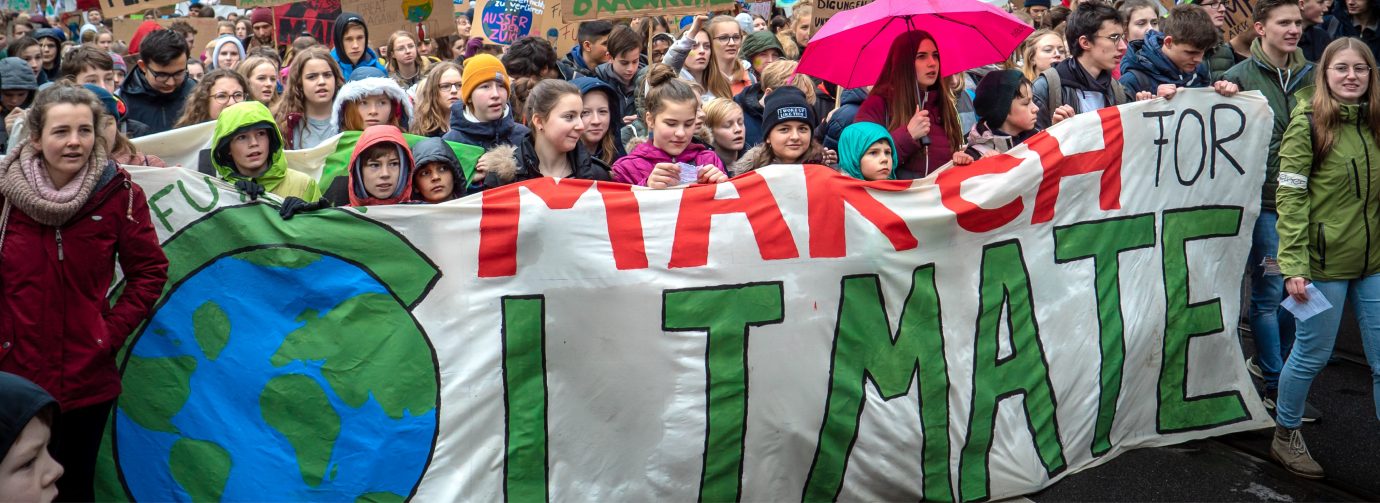
17.03.2020 - Children are demonstrating against climate change, SUVs, plastic items and air travel are becoming taboo for many consumers. We asked business psychologist Prof. Dr Irene López what impact the growing awareness of sustainability could have on our consumer behaviour, status symbols and ultimately our economic system.
The topic of sustainability has long since reached the centre of society and is influencing political developments and election results. Is this awareness also reflected in consumer behaviour?
Awareness is now also evident in consumption. It has taken many years for many consumers in Germany to realise what sustainability actually stands for and how they can incorporate it into their everyday lives. According to statistics from the Allensbach Institute for Public Opinion Research, around 55 per cent can correctly explain the meaning of the term. This shows that there is definitely still room for improvement.
However, sustainability has many facets for the population. It is therefore important to define it as precisely as possible in discussions and scientific studies. Consumers are certainly willing to incorporate sustainability into their consumption decisions. So far, however, sustainability has only been a decision criterion for a significant proportion of the population in the food and automotive sectors. When it comes to clothing, cosmetics and travelling, the idea of sustainability is not yet particularly widespread. On the other hand, the example of organic food has shown how quickly a guiding principle from a relatively small target group can develop relevance for broader sections of the population if the framework conditions are favourable.
Many consumers equate sustainable consumption with sacrifice or restriction. Is this correct, or what is really behind the term?
No, sustainable consumption does not primarily have much to do with restriction or renunciation. Sustainable consumption is part of a sustainable lifestyle and consumer behaviour that primarily takes environmental and social aspects into account when purchasing and using products or services. It also involves the use and disposal behaviour of resources in everyday life.
If we as consumers follow sustainable development, then our own needs should correspond to those of today's generation without jeopardising the ability of future generations to choose their lifestyle. We should bear in mind that our consumption in Germany has an impact on our environment and people abroad due to global supply chains and processes. Above all, sustainable consumption means consuming consciously, taking a closer look and keeping an eye on our own "overall balance".
With Fridays for Future, the desire for environmental and climate protection is now also reaching the youngest consumers. How does this fit in with the youth trends of "shopping as a hobby" or "fast fashion"?
The Fridays for Future climate strikes are normally organised as school strikes. But I asked myself what happens when there's nothing to strike about because it's the school holidays, for example? I then came across other activities. One topic that the organisers of Fridays for Future invited people to take part in was called "Swap yourself happy". A clothes swap was used to set an example against consumerism. The activists are trying to incorporate the youth trends around shopping and fashion and hold the fashion industry accountable to take action against climate change. The idea is to promote the trade in second-hand goods or clothing swaps instead of bringing more and more collections onto the market every year. This way, young people would always have new items in their wardrobes, even without new production.

Are there individual products or product groups for which demand is falling or rising significantly as a result of sustainability awareness?
Yes, there are indeed. Whether it's car sharing, organic food or fair trade products, sustainable and environmentally conscious living is currently more in demand than ever in Germany. The official figures from the German government alone show that the market share of organic food is steadily increasing (e.g. 2010 = 3.74%, 2018 = 5.28%).
Organic food is probably the best-known example of sustainable consumption, with "green products" now developing positively and dynamically in a number of areas, even if they are still a niche product. Sustainable mobility is another example of this: Here we see that a lot of time is being invested in electric vehicles. In addition, the government is trying to create more opportunities for public transport or larger cycle paths in urban centres (e.g. Cologne).
In addition, the sharing economy is becoming increasingly important. The term includes services such as Car2go, Spotify and AirBnB. Demand for these services is rising steadily in Germany: Almost 40 per cent used these offers last year, where renting or sharing replaces buying. In my opinion, this type of consumption is an indispensable part of today's digital lifestyle and helps to conserve resources.
Are status symbols becoming less important, or are they no longer goods but immaterial things?
In my opinion, universally valid status symbols are dying out. Status symbols today are much more differentiated, subtle and compartmentalised than ever before and are no longer universal. Like a smartwatch, for example - it leads to recognition among fans of innovative technological gadgets, but leaves neo-ecologists cold. A status symbol can be described as the luxury that we don't existentially need but still want to have. It is just as numerous as the number of different personalities. However, a distinction can be made between material and immaterial value. Whereas in the 1980s, value was still placed on expressively emphasising one's own status through cars or fashion, we are increasingly defining luxury through immaterial values. This includes, on the one hand, organising one's leisure time through great trips or maintaining health through high-quality food and sporting activities. Nowadays we talk about "hybrid consumer behaviour". Status has become individualised and is based on the positive impact it has on consumers.
Is the whole sustainability awareness phenomenon a trend or a long-term change in consumer behaviour?
A trend is a new opinion or view that was not present in the past or was only held by a few. If a trend arouses the interest of many people, this triggers a social movement. A change is usually associated with a goal that is to be achieved. Accordingly, I would say that sustainability awareness can be categorised as a change, as the aim is not to take more from the environment than is available. In addition, through the use of natural resources, sustainability is also concerned with not polluting the environment in the long term, or not polluting it more than is absolutely necessary.
Are we generally focussing the term sustainability too much on ecological issues?
I wouldn't say that we are focussing too much on ecological issues. I think that's the direction we should take as a society in order to protect our world. We must succeed in transforming ourselves into an ecologically sound society. In my opinion, we have started too late to deal with environmental and climate protection in order to give our generation and all generations to come the chance to fulfil their needs.
Our resource bases are in serious danger of being overexploited or even collapsing. Non-renewable resources in particular, such as oil or individual metals, will become scarce or dry up completely in the foreseeable future. Added to this is the fact that even renewable resources such as soil, forests and water have already been exploited to such an extent that there is a risk that they will no longer be able to fulfil their ecological functions and thus supply the world's population. In my opinion, therefore, concrete targets and objectives for resource utilisation and productivity should be found quickly, both in Europe and around the world.
The German economy is heavily dependent on key sectors such as the automotive industry. It is precisely this industry that is facing a crisis, partly due to the issue of sustainability. Can environmental awareness damage our economic system?
No, I think that environmental awareness, which is not just something we Germans need to develop, can strengthen our economic system. Our awareness of environmental and climate protection is necessary in order to master future tasks, secure prosperity and competitiveness and create jobs.
We should be aware of the direction we want to take in the future and bear in mind that our resources are becoming increasingly scarce. Our economy is constantly changing and must adapt to each generation and development. However, there are still many companies that claim that maximising profits is the only way for a company to function and that it is a prerequisite for the prosperity of a society. We need more visions for a new society that can live environmental awareness. To this end, economists and business economists are also discussing the topic of profit ideology in an increasingly critical manner and asking, for example, about the actual purpose of companies in society. In the long term, corporate responsibility and sustainable corporate management must take precedence over profit maximisation; this is the only way the economic system can function, because without the environment, an economic system becomes superfluous.
Is our system of constant growth not compatible with sustainability goals, is prosperity possible without growth?
Normally, a country's economy can be measured by its gross domestic product (GDP). This records the value of all goods and services produced in the country each year. If this value is higher than that of the previous year, it is referred to as growth; if the opposite is the case, it is a contraction. Only when this value is applied to the number of inhabitants does one have a reasonable basis for assessing the prosperity of a country. Economic growth therefore primarily generates prosperity. There is also the problem that once a certain level of prosperity has been reached, further growth does not make people happier or more satisfied. We are therefore stuck in a vicious circle in which the fulfilment of needs is replaced by the fulfilment of wants.
The economy should actually change radically so that prosperity does not come at the expense of the environment. We should focus first and foremost on the quality of the goods we produce. I think digitalisation in particular shows us that the same output can be produced with less input, thereby increasing productivity.
How can a company benefit from the idea of sustainability? Or does it need to reposition itself in order to improve its own eco-balance and distinguish itself as sustainable?
I'm sure that every company can benefit from the idea of sustainability, and it doesn't have to completely reorganise itself. Sustainability can be incorporated in a wide variety of areas, whereby the environmental concept and the resource-conserving use of materials, energy and products are of course important pillars. And this is precisely where companies have the opportunity to become active themselves. Of course, the changeover will mean effort, expense and costs - but those who act in an energy-efficient manner will save money in the long term.
Machines and systems are one example. Companies should check outdated machines and systems to see whether replacing them with a more efficient model would not make more economic sense. In most cases, new models often consume significantly less energy and work more efficiently with existing resources. The fact is that no company can become completely sustainable overnight. What is certain, however, is that the effort is worth it, as the company is making a contribution to the environment by making the switch and is also gaining a new feature and can consciously emphasise its own sustainability.
What developments can we expect in the future in relation to sustainability and consumption? Will we hardly recognise retail and the products we trade in 20 years' time?
Difficult - ultimately, nobody can predict the future with certainty. However, one development identified on the consumption side is, for example, the pursuit of comprehensive well-being. Consumers are attaching more and more importance to their health and expect companies to offer personalised, holistic products that are tailored to them personally. However, the focus is not only on their own well-being. Consumers are also becoming more environmentally aware and increasingly expect markets to offer sustainable products and use plastic responsibly, for example. We must all play our part in ensuring that this direction of mindful consumer behaviour continues to progress and becomes the norm in the economic system and society.

Prof Dr Irene López is Professor and Head of the Department of Business Psychology at CBS International Business School. She studied and completed her doctorate in psychology at the FU Berlin. In her teaching and research, she focuses on communication, communication processes and optimisation, knowledge management, personnel and management development as well as work and organisational psychology. In addition to teaching and research at the CBS, she also works outside the university as a coach and consultant in leadership programmes. She is also working on an application-related project on CSR and "Smart Working".
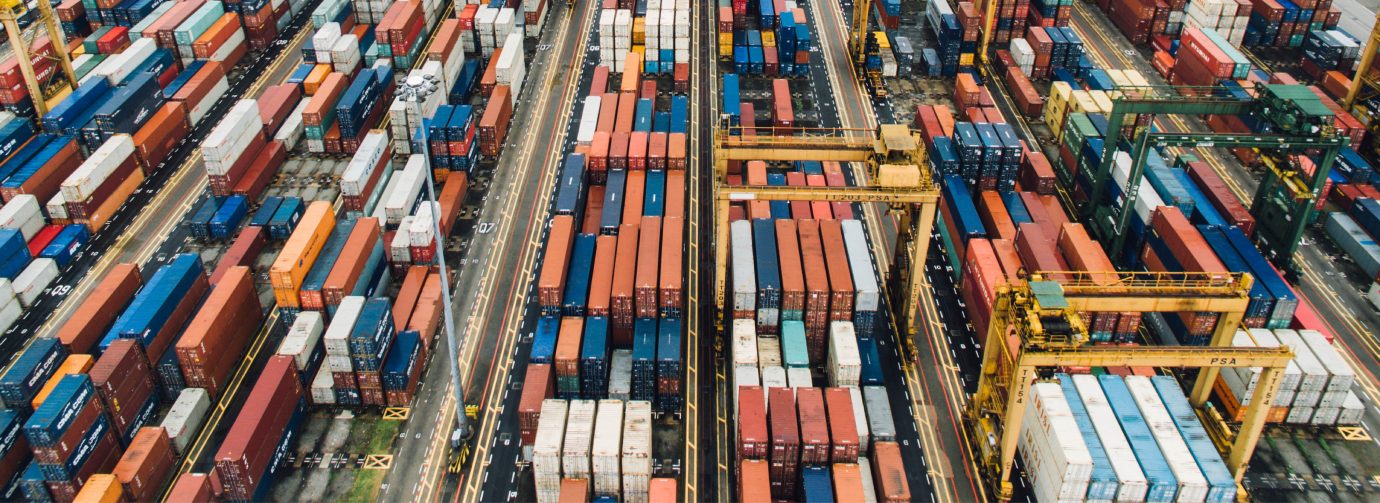
Cover picture: Chuttersnap / unsplash
Author

Valerie Bachert is a journalist, chief of staff and sustainability officer. She is interested in the areas of organic farming, conscious consumption, species extinction, social injustice and sustainable nutrition.