Eco-Boost for everyday school life

06.02.2024 - The second half of the school year is just around the corner. We take an in-depth look at our writing utensils. From pencils made from corn starch to college pads made from recycled paper - the conscious selection of sustainable writing materials makes it possible to actively contribute to environmental protection and improve the quality of the learning environment at the same time.
Who hasn't experienced it - the depths of the school bag harbour a lot of chaos. Now is a good opportunity to tidy up and carry out a check: How sustainable are the writing utensils in the pencil case, and which paper is used for writing, colouring and drawing? This is where the levers for a sustainable and creative school day lie:
Refill instead of buying new
Writing instruments are more than just tools for capturing thoughts - they act as instruments for visualising one's own creativity. The variety of pens, fountain pens and other writing utensils makes it possible to put ideas on paper in different colours and shapes, thus creating a visual manifestation of individual creative expression. Instead of disposable pens that end up in the bin when they are used up, fountain pens and ballpoint pens with replaceable cartridges offer a longer-lasting solution. These cartridges are often made from recyclable materials. Some manufacturers make it possible to refill empty cartridges or use their own ink mixtures, which reduces the need for new cartridges and thus generates less waste.
Pens made from recycled cardboard and other recycled materials
There are now real environmental heroes in the world of writing utensils - pens with casings made from recycled cardboard and other alternative materials such as wheat straw or corn starch. These pens are not only colourful and creative, but also make a sustainable statement. The casing of these pens is made from biodegradable materials that can decompose completely under the right conditions. This means less impact on our environment compared to conventional plastic pens.

Flexible and straight from nature
Erasers made from natural rubber are not only an environmentally friendly choice, they are also true all-rounders when it comes to correcting mistakes. Unlike conventional erasers, which are often based on petroleum, these are made from the sap of the rubber tree. Natural rubber is biodegradable and therefore contributes to a smaller ecological footprint. To recognise a "good" eraser, it is often helpful to look at the labelling. Many conventional erasers do not provide any information about the material used. In contrast, PVC-free erasers are often labelled "Pro Natur", "Natural rubber" or "PVC-free". These labels not only signal environmental friendliness, but also the use of high-quality natural rubber.
The choice falls on metal or heirloom
A sharpener is indispensable for pencils and coloured pencils. The sustainable choice here is the metal model. Metal sharpeners are easy to recycle and generally do not break. There may be an older, but by no means inferior, sharpener in the drawer of your parents' desk.

Measurable sustainability
It's hard to imagine a pencil case without a set square and ruler. Protractors are often made from transparent plastic. Bioplastic, which is made from renewable resources, is an environmentally friendly alternative. Protractors made from recycled plastic can also help to reduce the use of new raw materials. When it comes to rulers, it is worth switching to wood as a sustainable material. Compared to plastic, wood is not only more environmentally friendly, but also more stable. This is particularly relevant as pupils do not always treat their school materials with care - in other words, they are sustainable in two respects.
Recycled paper for a better understanding of the environment
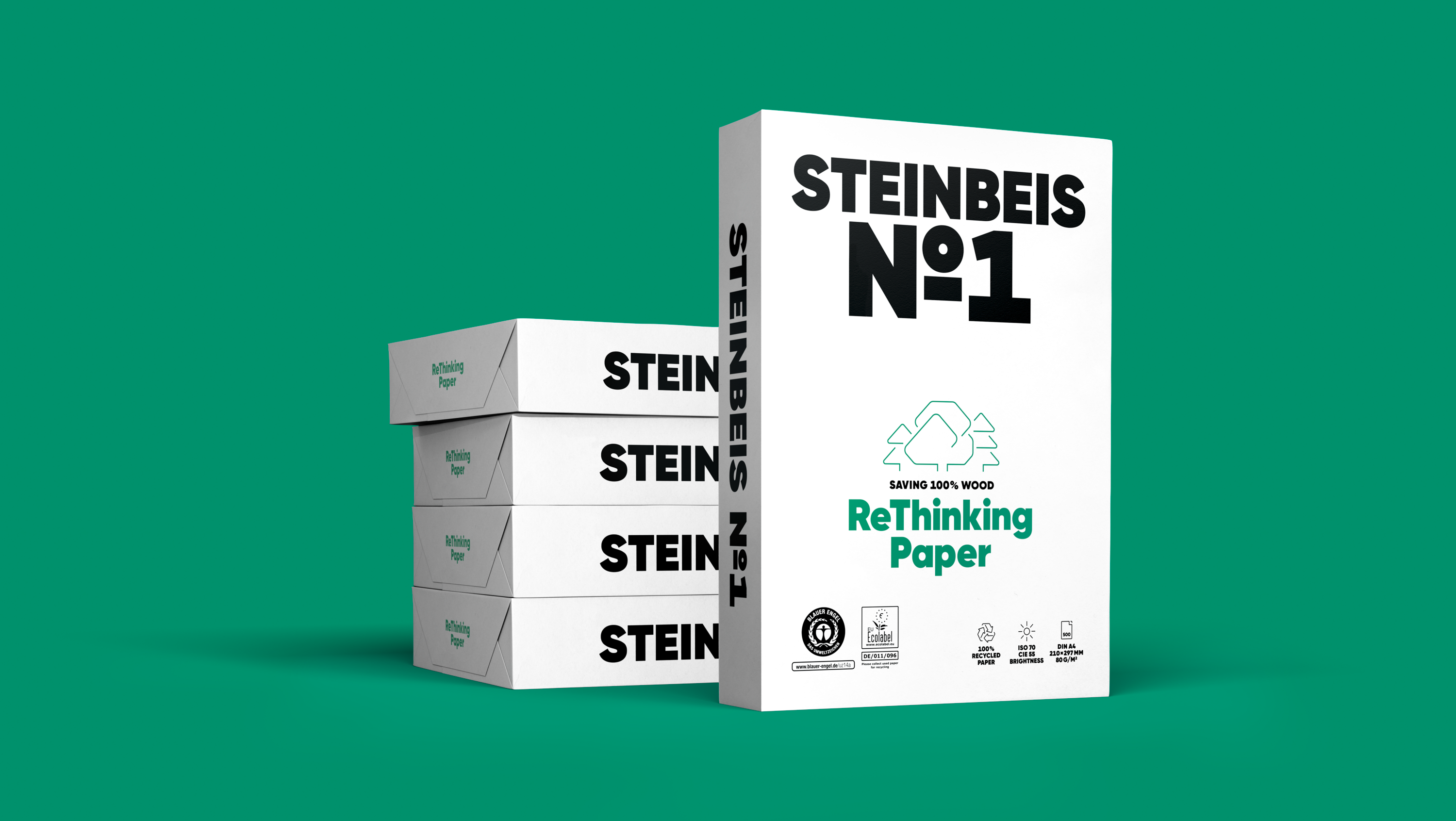
Paper plays a crucial role in the development of pupils' creativity and intellectual growth. It not only serves as a simple medium, but also promotes cognitive processes and supports various aspects of learning development. The physical act of writing on paper helps to structure thoughts and form ideas. This handwriting process allows for a deeper connection with the learning material and promotes understanding. The use of Recycled paper as a sustainable writing utensil in schools is also a conscious decision to minimise environmental impact. Sensitisation to ecological aspects is thus promoted while pupils are still at school and they learn how they can make a contribution to environmental protection through simple everyday decisions. In addition, the use of recycled paper promotes an appreciation of existing resources. Waste paper is recycled instead of cutting down new trees, thus helping to reduce the ecological footprint. Pupils can thus actively contribute to a sustainable future and at the same time develop their creative skills on an environmentally friendly medium.
"Blue Angel" as a guide
When buying writing utensils with the "Blue Angel" label, consumers can be sure that they are making an environmentally friendly choice and actively contributing to the protection of our nature. The "Blue Angel" is an environmental label that defines strict environmental criteria for the entire life cycle of products. This includes not only the extraction of raw materials and production, but also use and disposal.
Cover picture: Blocks/Unsplash
Author

As a senior editor, Benjamin Seibring specialises in developing content on sustainability, mobility, technology and lifestyle. An editorial traineeship at a German media group and his many years of experience in corporate publishing form the basis. With a high affinity for trend topics and innovative AI tools, he implements cross-media storytelling.