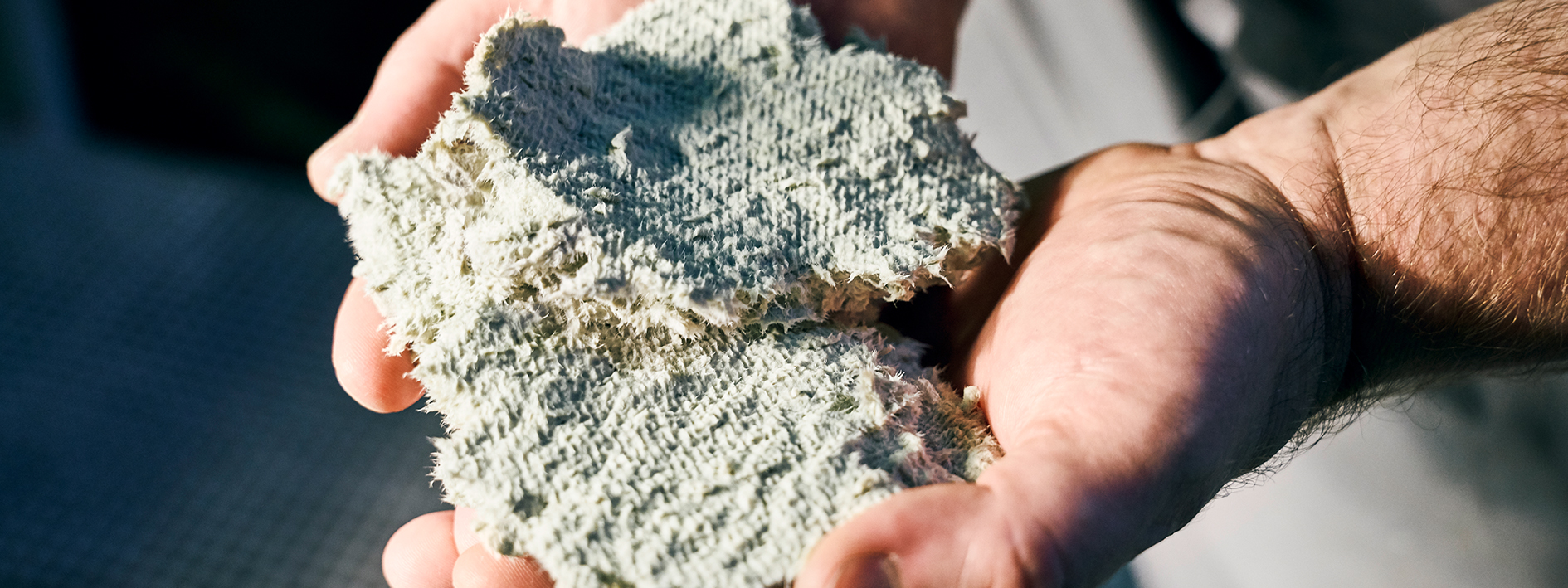
From grey to white: what happens during deinking at the Steinbeis paper mill
Without deinking – the removal of printing inks from waste paper – recycled paper would always have a grey tinge. As a look back at the history of paper recycling reveals, the concept of deinking is a very old one. However, it is only modern technology, such as that used in the deinking plant at the Steinbeis factory in Glückstadt, that enables the production of graphic-grade recycled paper with a high degree of whiteness – without compromising the environmental benefits of recycled paper.
In the beginning, there was de-inking
The process of deinking is as old as the idea of making new paper from waste paper. Deinking dates back to the time when paper was still made from textile rags. Rag-and-bone men sold so-called ‘hadern’ to paper mills. As a result of the increased demand for paper in the 18th century, hadern became a scarce raw material.
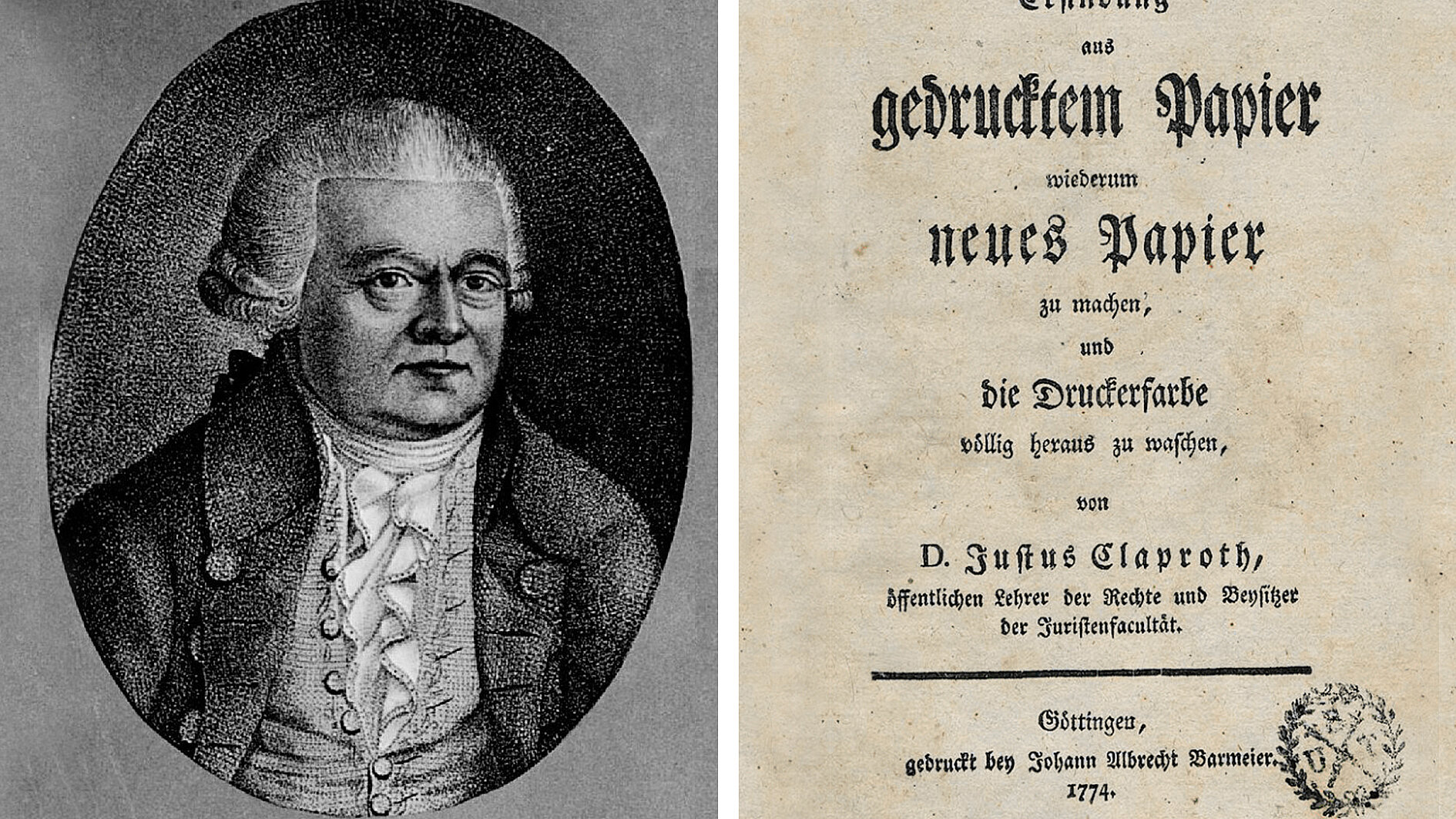
Justus Claproth, a lawyer and inventor from Göttingen, was aware of this scarcity of resources due to his work as a factory judge. His idea seems almost modern: the shortage of rags could be remedied by making new paper from used rag paper. Claproth would have called neither this ‘recycling’ nor the process he developed ‘deinking’ – but that is precisely what his treatise, published in 1774, is about: ‘A method for making new paper from printed paper and completely washing out the printing ink’.
Claproth’s process involved, amongst other things, treating waste paper with washing earth (Argilla fullonum) and then storing it for several days with the addition of lime to dissolve the ink and printing black. Together with the Göttingen paper miller Engelhardt Schmidt, Claproth put this theory into practice at Schmidt’s paper mill. The de-inked fibre pulp was then ground in a roller mill, yielding a material suitable for further processing into new paper. Claproth is thus regarded as the inventor of both recycled paper and de-inking.
Modern flotation deinking at Steinbeis Papier – step by step
More than 250 years after Claproth’s invention, wood fibres and cellulose fibres that have been chemically broken down to varying degrees have long since replaced textile fibres in mass production. Consequently, modern deinking is carried out in a completely different way. It is only since the 1950s that a sufficiently high degree of whiteness has been achieved to enable the production of bright recycled graphic paper. Prior to this, waste paper was mainly used for the production of cardboard or paperboard. The secret behind this new brightness is flotation.
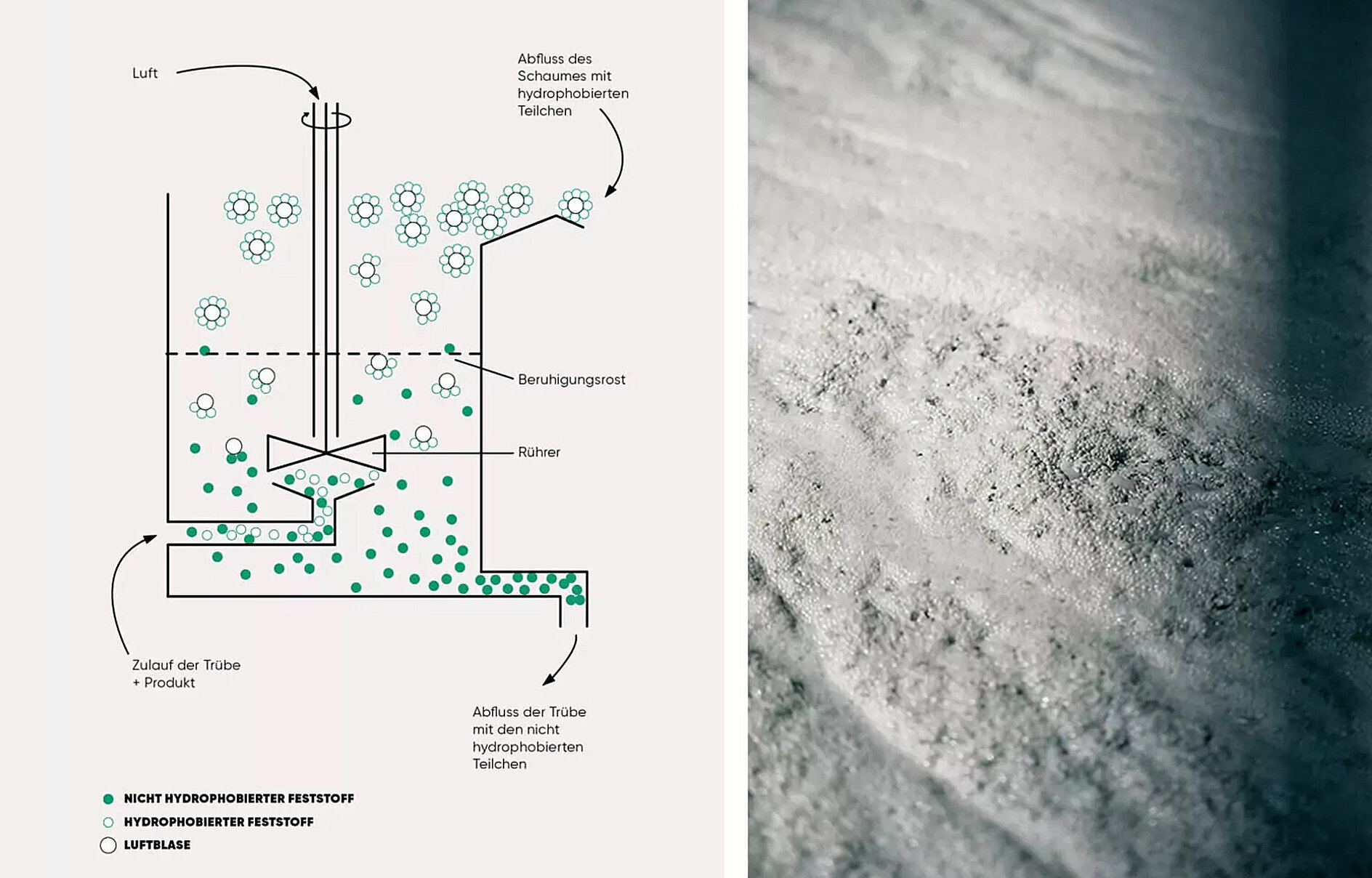
Flotation is the dominant process in Europe for de-inking waste paper. As a physical separation process, it is by no means limited to waste paper processing. Flotation also plays a role, for example, in wastewater treatment and ore processing. Its basic principle is that water-repellent (hydrophobic) particles attach themselves to air bubbles and rise, whilst water-attracting (hydrophilic) particles remain in the water. In this way, hydrophobic and hydrophilic particles can be separated. In the case of waste paper, the paper fibres are the hydrophilic particles, whilst the ink particles from the printing ink are hydrophobic.
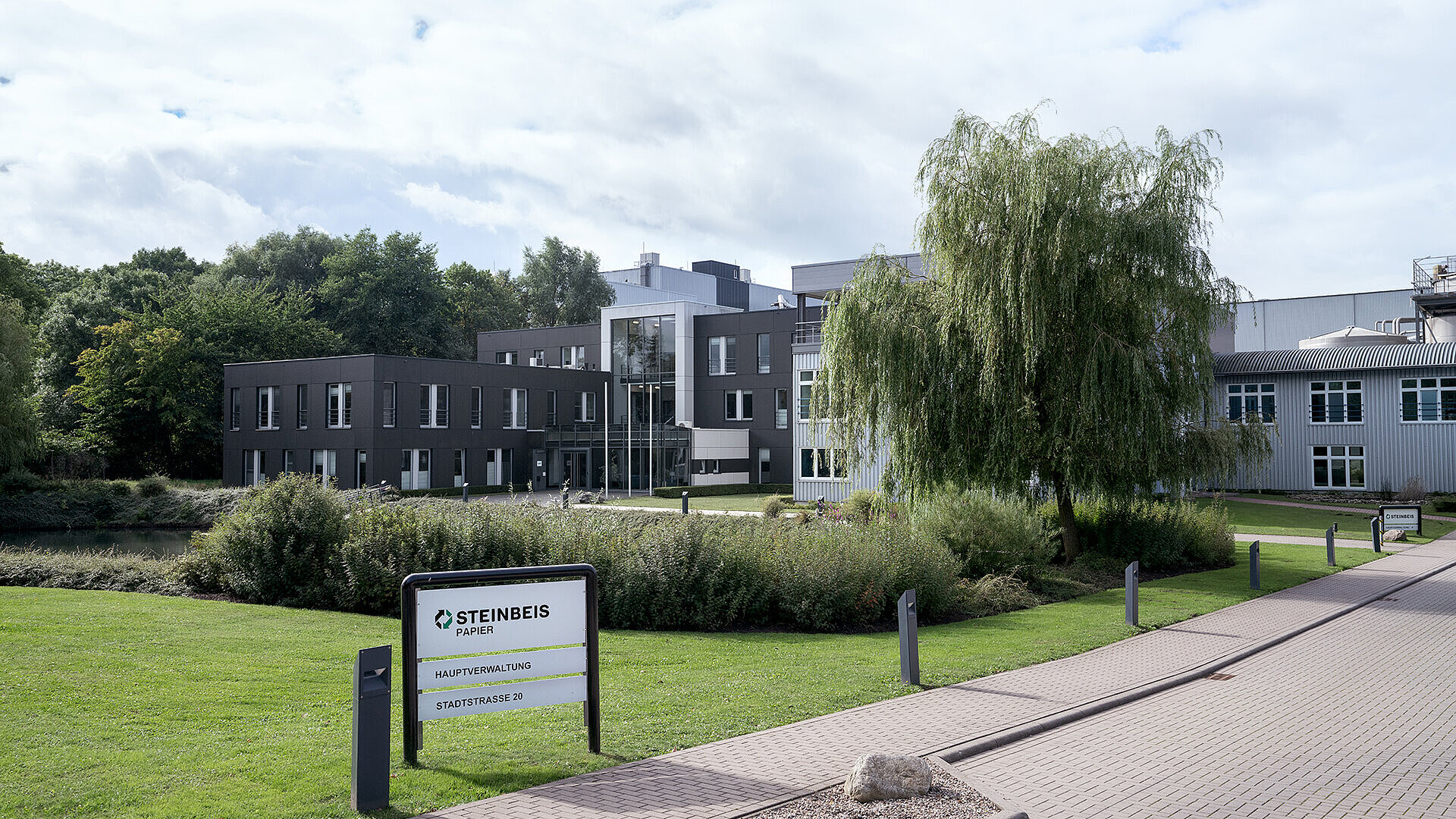
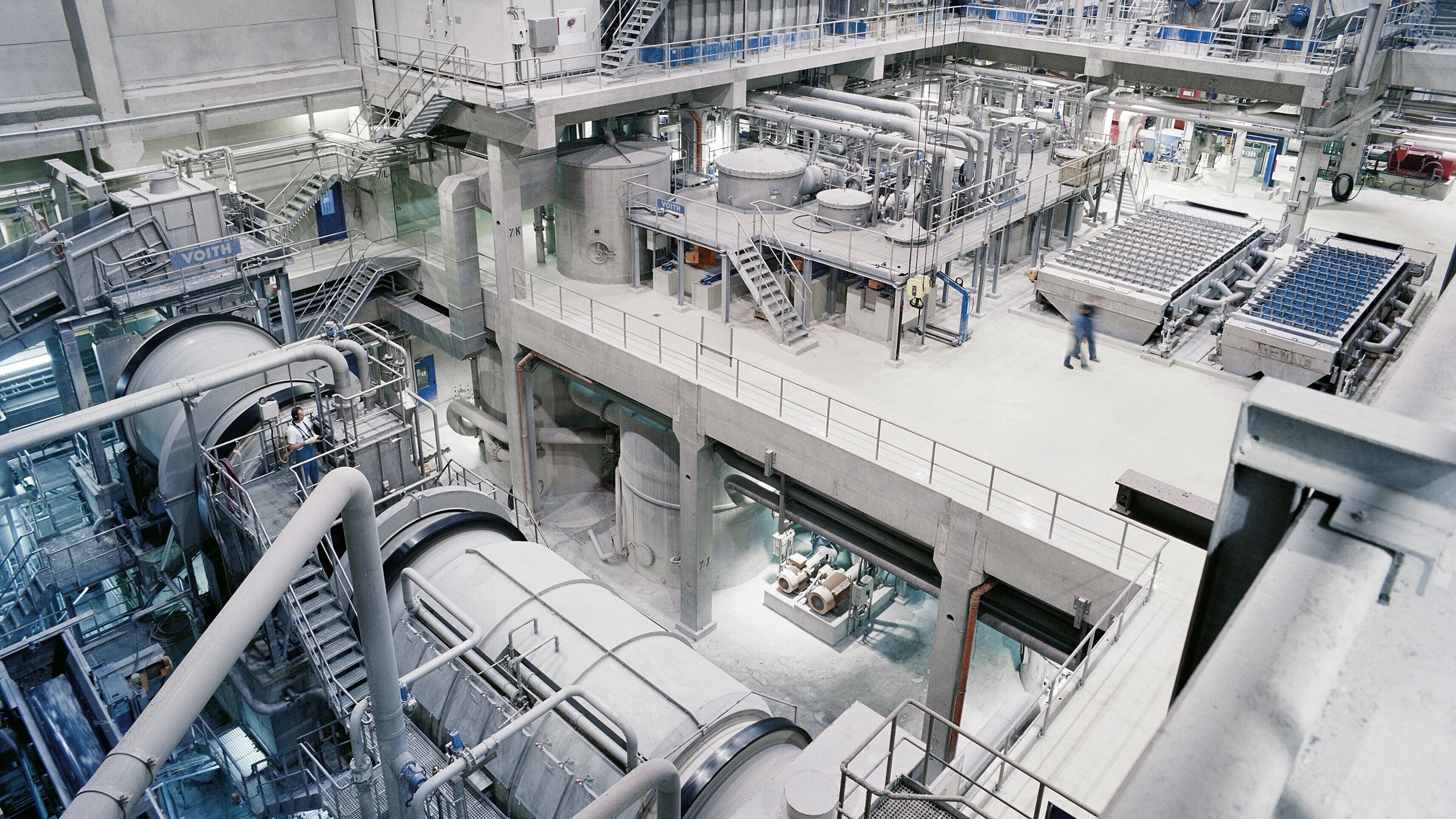
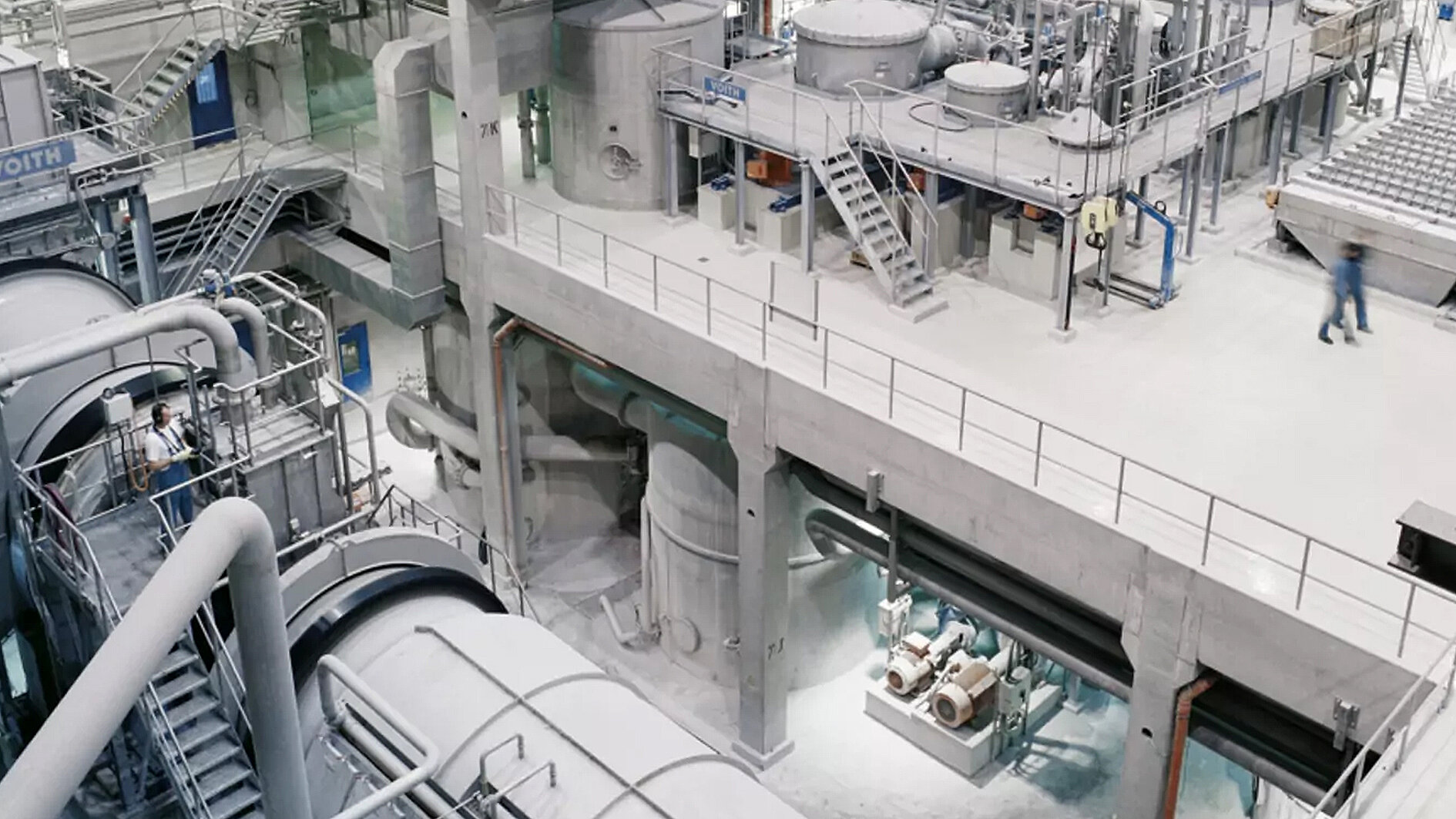
The Steinbeis Papier plant in Glückstadt is one of the most modern recycled paper mills in Europe. At Steinbeis, the deinking process takes place in the following steps:
- Step 1: Prior to flotation, the waste paper is pulped in water whilst being agitated, and foreign materials (e.g. staples, adhesive inserts, etc.) are removed through various cleaning stages. At the Steinbeis mill, only surface water from the River Elbe is used for this purpose, which is channelled into a largely closed-loop system. After intensive use, the water is finally treated in the mill’s own fully biological wastewater treatment plant so that it can be returned to the River Elbe.
The following additives are used in the deinking process:
Sodium hydroxide solution; this causes the paper fibres to swell further, thereby aiding the removal of printing inks.
Hydrogen peroxide: as a bleaching agent, it prevents the yellowing of the paper fibres that occurs in an alkaline environment.
Water glass (a water-soluble compound of silicic acid salts) stabilises the hydrogen peroxide to ensure its effect is utilised as efficiently as possible.
Soap collects and binds the detached printing inks, enabling them to be separated more effectively from the fibre mixture.
- Step 2: The resulting fibre suspension is fed into the so-called flotation cells. This is where the actual flotation process takes place. Aeration systems blow air into this suspension, causing air bubbles to disperse and rise. The hydrophobic ink particles adhere to the rising air bubbles. Carried by the air bubbles, the ink particles reach the surface of the suspension as hydrophobic particles.
- Step 3: The printing ink particles, bound by the soap, collect at the surface and form a foam (deinking sludge) which can be skimmed off.
- Step 4: At Steinbeis, the fibre suspension passes through several flotation stages until the degree of whiteness required for the respective graphic recycling paper is achieved.
The light-coloured fibre suspension is then dewatered. The resulting de-inked pulp (DIP) is pumped directly to the paper machine to produce sustainable Steinbeis graphic recycling papers. This integrated production process saves energy and avoids unnecessary transport journeys.
How harmful to the environment are the chemicals used in deinking?
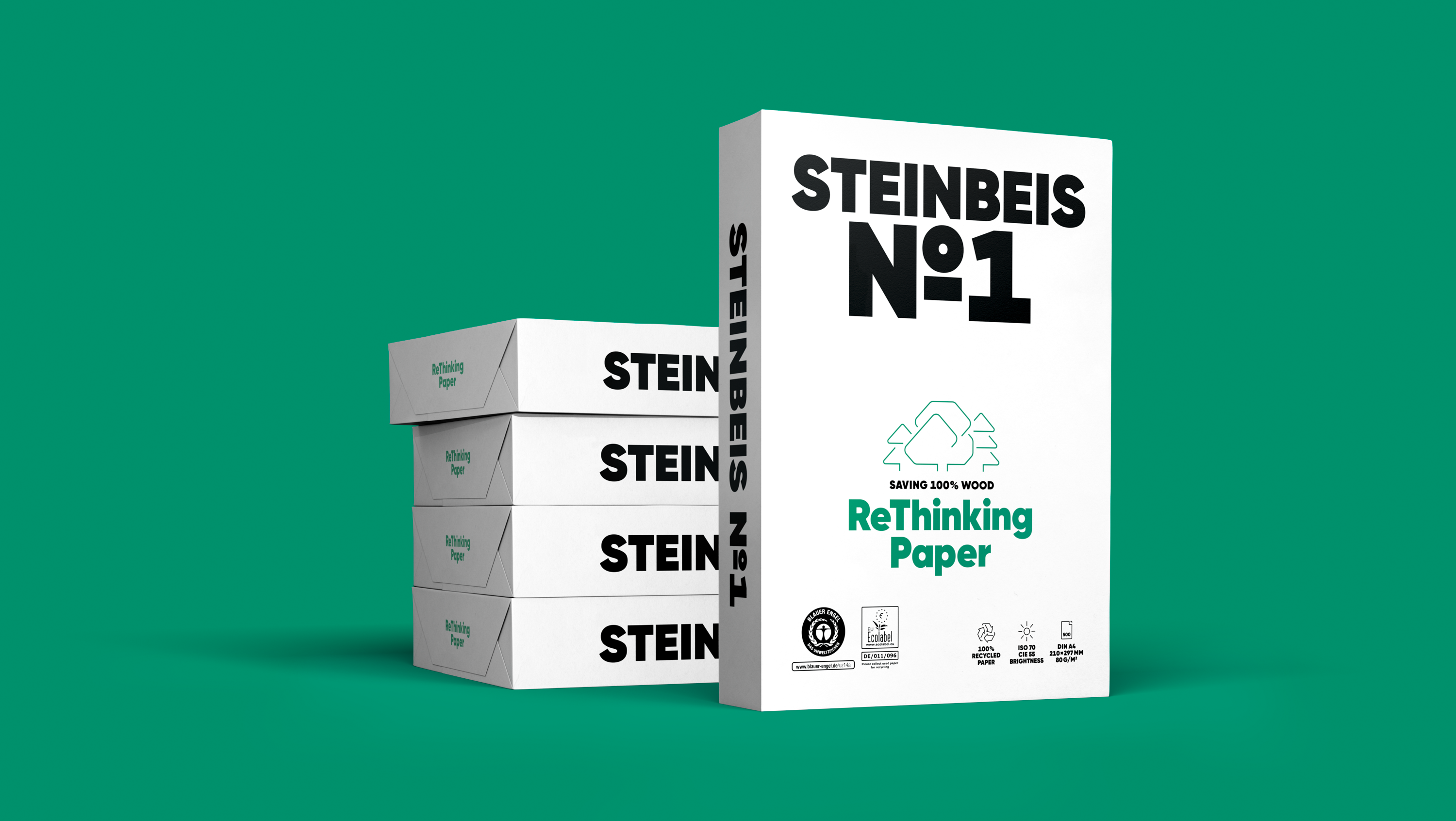
In its deinking process, Steinbeis Papier completely avoids the use of substances harmful to the environment and human health, in accordance with the criteria of the ‘Blue Angel’ eco-label (DE-UZ 14a). The chemicals used, such as caustic soda or hydrogen peroxide, are subject to clear limits and, when handled correctly, pose no risk to the environment. Hydrogen peroxide breaks down into water and oxygen during the process. It is approved by the ‘Blue Angel’ as an environmentally friendly bleaching agent. Unlike in the production of many virgin fibre pulps and papers, neither halogenated bleaching agents nor optical brighteners are used. The latter are difficult to biodegrade once they enter the environment.
Even the deinking foam can be recycled
Ideally, the recycling sector is a circular economy that channels all by-products into closed-loop systems or reuses them in other meaningful ways. So what happens to the foam after deinking? Even this is too valuable to simply dispose of. It still contains a sufficient proportion of fibres to be burnt for energy generation.
At its Glückstadt site, Steinbeis Energie operates a power station featuring state-of-the-art fluidised bed technology and combined heat and power generation. Here, the thickened paper fibre slurries are also converted into energy for the factory. But that’s not all: the ash left over from thermal recovery serves as a raw material for road construction.
It also depends on the type of waste paper used
There are factors that make deinking more difficult. These include, for example, non-hydrophobic printing inks or varnish-based print finishes. In the Steinbeis laboratory, staff replicate the deinking process using samples and a standard kitchen food processor. Each sample represents a batch of 25 tonnes, which is approved for production following a successful test.
These tests are important. This is because the brightness and purity of Steinbeis’s recycled papers also depend on the quality of the waste paper. To achieve the highest levels of brightness, Steinbeis Papier therefore uses lighter grades of waste paper. However, as all Steinbeis products carry the ‘Blue Angel’ label, they must consist of at least 50 per cent so-called lower and medium grades with a low initial brightness. Thanks to its modern deinking plant, Steinbeis nevertheless achieves outstanding levels of brightness.
Not all types of waste paper are suitable for deinking – nor do they need to be
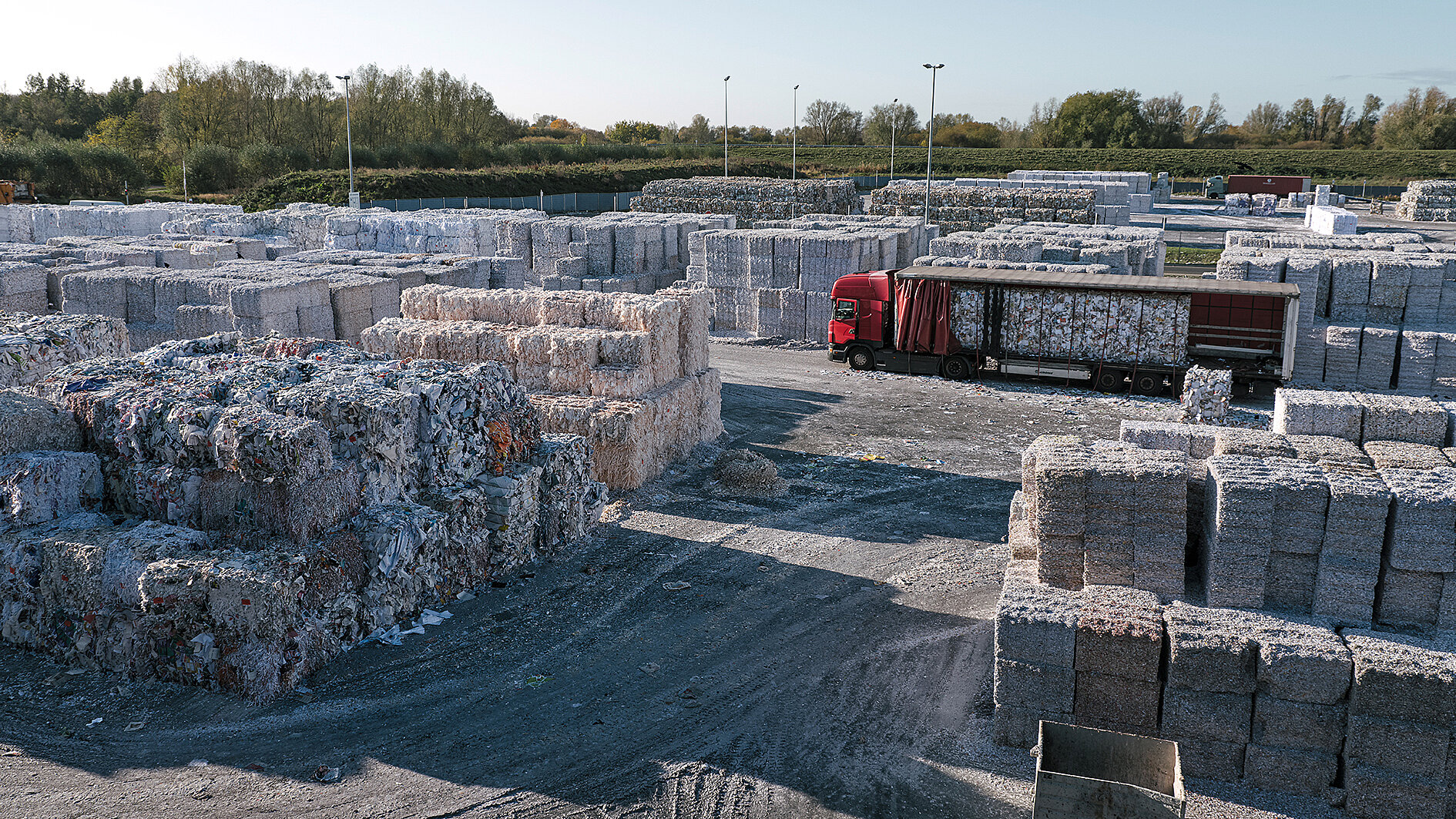
The European standard list of waste paper grades, EN 643, serves as a guide for paper recyclers. This list defines almost a hundred different grades. The definitions are based on the composition of the waste paper, for example in terms of the proportions of magazines, corrugated cardboard, cardboard or foreign matter. In most cases, these are mixtures, such as the main grade 1.01.00, ‘simple mixed waste paper’.
According to the EU standard, around 40 grades of waste paper are, in principle, suitable for deinking. The most important grade is EN 643 1.11.00, the explicit deinking material: sorted graphic waste paper consisting of at least 80 per cent newspapers and magazines, the main source of which is household collection (blue bin).
In 2025, 1,296,741 tonnes of material suitable for deinking were processed in Germany – out of a total of 15,809,429 tonnes of waste paper. What happens to the rest, which is not suitable for deinking? It is also put to use. For many applications, deinking is not necessary at all. This waste paper can be used, for example, to produce dark-coloured packaging materials such as shipping cartons, egg cartons, corrugated cardboard or paper tubes for toilet paper.
Deinking is the key process in the manufacture of recycled graphic paper
Flotation deinking is what makes Steinbeis’s light-coloured recycled graphic papers possible in the first place and has significantly expanded the range of applications for recycled papers – a huge leap forward in the history of paper recycling. Deinking is also a striking example of how recycling can be driven by different motivations: the scarcity of resources in the 18th century and the pursuit of sustainability by environmentally conscious producers in the 20th and 21st centuries. Yet both aspects are two sides of the same coin: sustainable management today prevents tomorrow’s resource shortages. For Steinbeis Papier, sustainability is the only way to ensure a viable industry for the future.
Cover image: Paper fibres (Photo: Florian Thoss for Steinbeis Papier)
Author
A German studies scholar with a Ph.D., he spent a long time conducting academic research on what others had written — until he changed careers in 2009. Since then, he has been writing as a freelance author about anything that interests him (or others) and is relevant. Environmental sustainability is at the top of that list. That’s why he focuses primarily on how we can live and conduct business sustainably.