"Corona shows that things can be different - if we want to"
21.12.2021- In this interview, Jessica Böhme, research associate at the Institute for Transformative Sustainability Research, explains how a socio-ecological transformation for climate protection can succeed after the coronavirus pandemic.
Mrs Böhme, how do you think we should talk about sustainability in the future?
We should show how a sustainable lifestyle can enrich the world and our own lives. Many people still associate sustainability with doing without. They think everything is controlled by bans. But the question is, what do the measures give us back? If there were fewer cars on the road, we could use the streets as a living space again, where children can play carefree and people can meet up with neighbours - isn't that great? Or let's take the topic of nutrition. The things that are good for the environment are also good for us. Organic meat that is not pumped full of antibiotics not only tastes better, but also puts less strain on your own body. Surely everyone knows a park or forest where they like to go for a walk. We should talk about how we can promote more of these natural, beautiful things.
What role does trust play when it comes to sustainability?
A major role. The United Nations Sustainable Development Goals have already set a wonderful milestone. If we as humanity can agree on these goals and trust that every country, every community and every person will endeavour to achieve them, then that would be better than countering them with control and measures. Distrust encourages misbehaviour. Trust promotes the desired behaviour. In addition, we need trust that it is worth making a commitment to the planet and to life, without of course being able to know exactly how it will turn out.
What can we learn from the coronavirus pandemic with regard to the climate and environmental crisis?
The coronavirus pandemic has shown that the necessary change is possible in a very short space of time if we want to. And that change also harbours opportunities. However, in order to really mobilise everyone, we should learn to respond to a crisis with more than just control and fear. Although this reaction is very human, it only helps to a limited extent. It does not always allow us to find the best solutions, but often only short-term ones. It makes sense for us to focus more on the causes of the coronavirus crisis and educate the population that pandemics are becoming more likely precisely because we are threatening ecosystems. For example, when we cut down forests, deprive animals of their habitat and cause humans and animals to live together in ever closer quarters. Recognising these connections is extremely important. At the moment, however, the focus is often primarily on mastering the situation. Of course, this is not fundamentally wrong, but we also need to address the causes in order to find long-term solutions.
How can we mobilise everyone in the fight against climate change?
We should distance ourselves from talking about a fight against climate change. Rather, it is about the question of how we organise our lives with the changing conditions. That's why it makes sense to tell stories that make us want to change and show that a different path is possible. Furthermore, we don't need to mobilise everyone. Firstly, because only a small proportion of the world's population actually contributes significantly to climate change, and secondly, because history shows us that between 10 and 20 per cent of the population is enough to bring about major changes. What we need now is a large number of people who are living these changes and helping to shape them.
And how can this be achieved? Are there any insights from science?
How we react to crises is based on a world view that is now outdated. In my research, I speak of a mechanistic view of the world. This means that we see the world as a machine that we can break down into individual parts. We think we can control it. If a part is broken, we repair it or replace it. But our world is not a machine, it is a complex system in which the consequences of our interventions are unpredictable. We can only make assumptions. We usually only realise whether these are right or wrong much later. We know from research into complex systems that it is not the individual measures that bring about major changes. For example, we change little when we initiate individual laws. Which is not to say that we shouldn't do this. But we experience the greatest changes when the relationships within the system change. So it's about the "in-between". For example, the relationship with other people: Is it characterised by competition or cooperation? The relationship with animals: Is it characterised by exploitation or appreciation? If this "in-between" changes, the system changes.
How exactly can we currently change these structures?
We should not aspire to change the whole world at once. There won't be a single solution for the whole planet anyway - the world is too diverse for that. It is much easier to examine what we can change and achieve in our own system - our everyday lives. Small experiments are the most promising way to do this. You can quickly find out what works and what doesn't, you can react immediately and improve. A certain error culture is the basis for this. Everyone needs to know that it's okay to make mistakes, recognise them and do better next time. That gets us a lot further than always pointing fingers at each other and looking for someone to blame. We can learn a lot from the start-up scene, which has mostly established this culture of trial and error.

What is necessary for change from a political and economic perspective?
The actions of companies and politicians are still largely determined by the pursuit of economic growth. We should ask ourselves whether this goal is still in keeping with the times. Personally, I believe that it has had its day and has done a lot of good, but now it is time for new goals. For example, preserving our livelihoods, enabling people and other living beings to live a good life, creating systems that promote life and the diversity of living beings and do not destroy them. The South Asian kingdom of Bhutan is often used as an example here, due to its established Gross National Happiness. The aim is to define the standard of living more broadly and to counter the conventional gross national income, which is driven by monetary endeavours, with a counter-concept. Economic factors continue to play a role, but so do ecological and social factors. I don't believe that the pursuit of growth is wrong. The question is rather whether we can imagine growth other than economic growth. And then how we build systems together that promote this other growth.
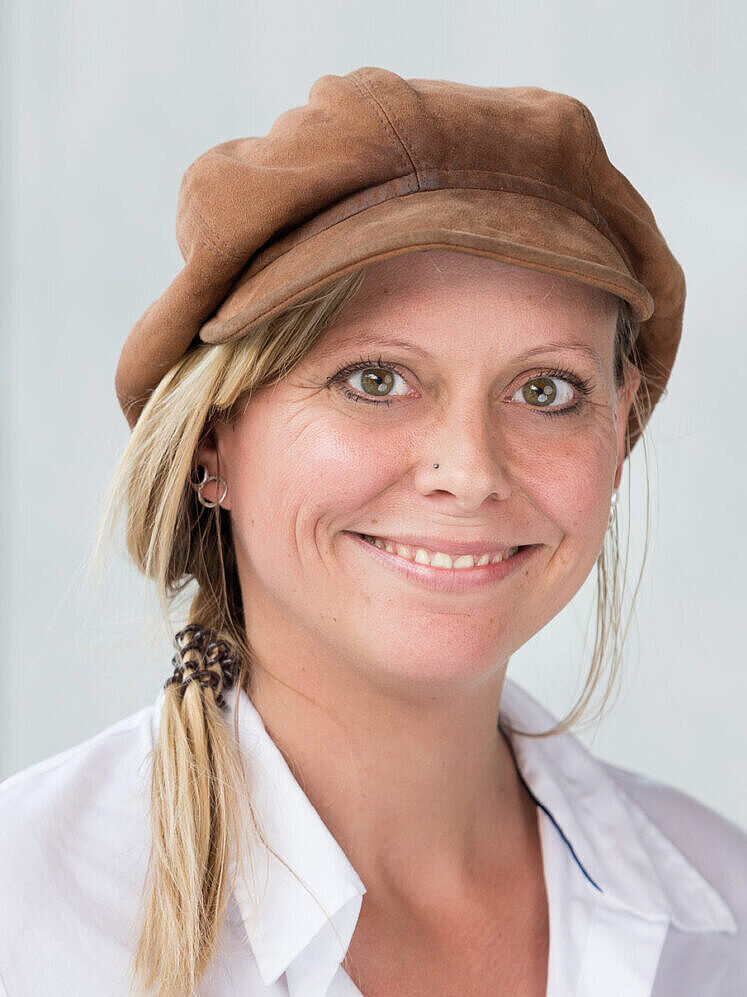
Jessica Böhme...
has been working as a research assistant on the AMA (A Mindset for the Anthropocene) project at the Institute for Transformative Sustainability Research in Potsdam since May 2018. She studied industrial engineering, sustainability management and journalism. Her research focuses on the connection between psycho-spiritual inner and socio-ecological outer transformation. In particular, she is concerned with the question of how sustainable lifestyles can be researched, promoted and lived and how sustainable lifestyles relate to the good and fulfilling life. She is currently writing her dissertation on the necessity and potential of a relational worldview in education for sustainable development.
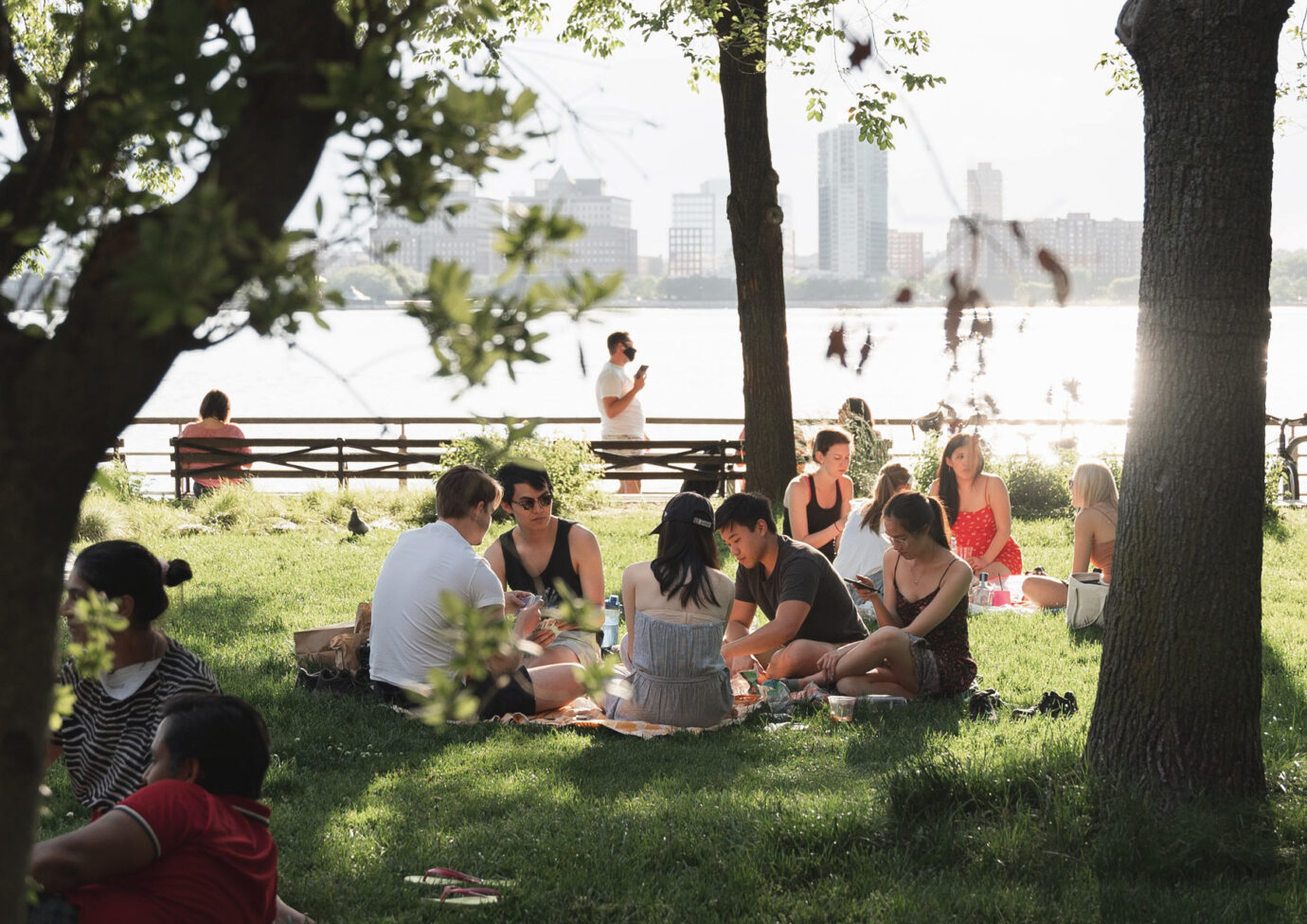
Cover picture: Mason Dahl/Unsplash
Author

Nadia Riaz-Ahmed is an online editor. She is most interested in everything to do with digitalization and new technologies.