Between the magic of paper and the power of digital - an essay
The wonderful thing about browsing in bookshops with coffee shops and real readers is the moment of surprise. When a book suddenly falls into my hands whose publication completely passed me by, even though it's "relevant" for me, as the new German saying goes. Like "Weiße Magie - die Epoche des Papiers" by Lothar Müller, honorary professor at Humboldt University Berlin and editor of the Süddeutsche Zeitung arts section. The predominance of paper as a "medium for images and signs is coming to an end", writes Lothar Müller with reference to the French philosopher Derrida. It is moving away from its "key position". It is ceding more and more of its civilisation-anchored recognition and power to the digital media. Paper has and had an executive power of communication, in that paper-based media such as newspapers disseminated what the world needed to know and law gazettes, texts and books defined what law and order was. Paper as a legitimised organ of announcement - digital formats are increasingly taking over this role.
The predominance of paper as a "carrier of images and signs is coming to an end", writes Lothar Müller with reference to the French philosopher Derrida. It is moving away from its "key position".
Liberation from writing cramps through the power of electronics
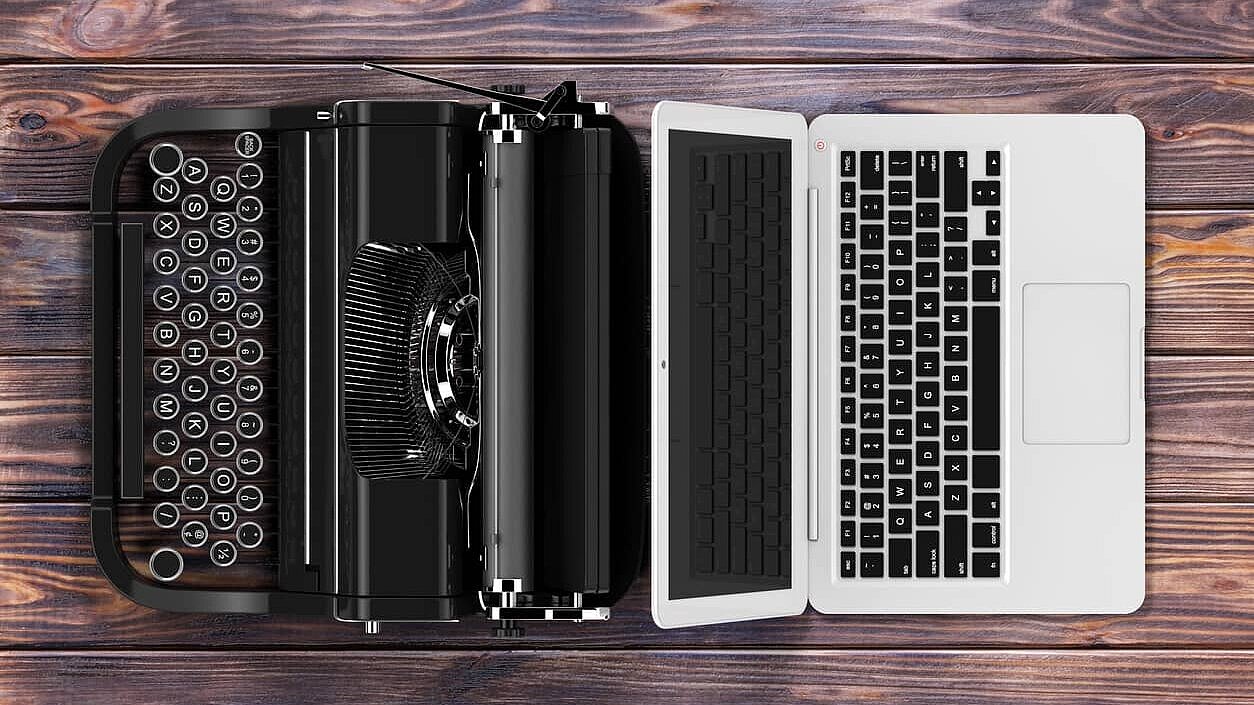
The title "White Magic" aroused my curiosity. Also because I was influenced by a culture of communication and writing that is both analogue and digital. The question of the continued existence of paper and printed matter in the digital future concerns me all the more because the medium of paper has been an important educational companion in my life. Starting with the first clumsy attempts at writing and scribbling on a slate, then switching to a notebook and pencil, and later to a fountain pen - not without causing minor collateral damage with ink and blotting paper. At university, it was then the college pad. I used metres of paper for excerpts and concepts. Until the IBM ballpoint typewriter and the personal computer freed my wrists from cramps, but also brought a new speed and new aesthetics to writing. No more awkward typing or tantrums because the footnotes on the page didn't look right. Writing was subjected to the order and rules of electronics - being able to produce and correct texts in real time and distribute them in all possible multi-channel directions was tantamount to a cultural revolution.
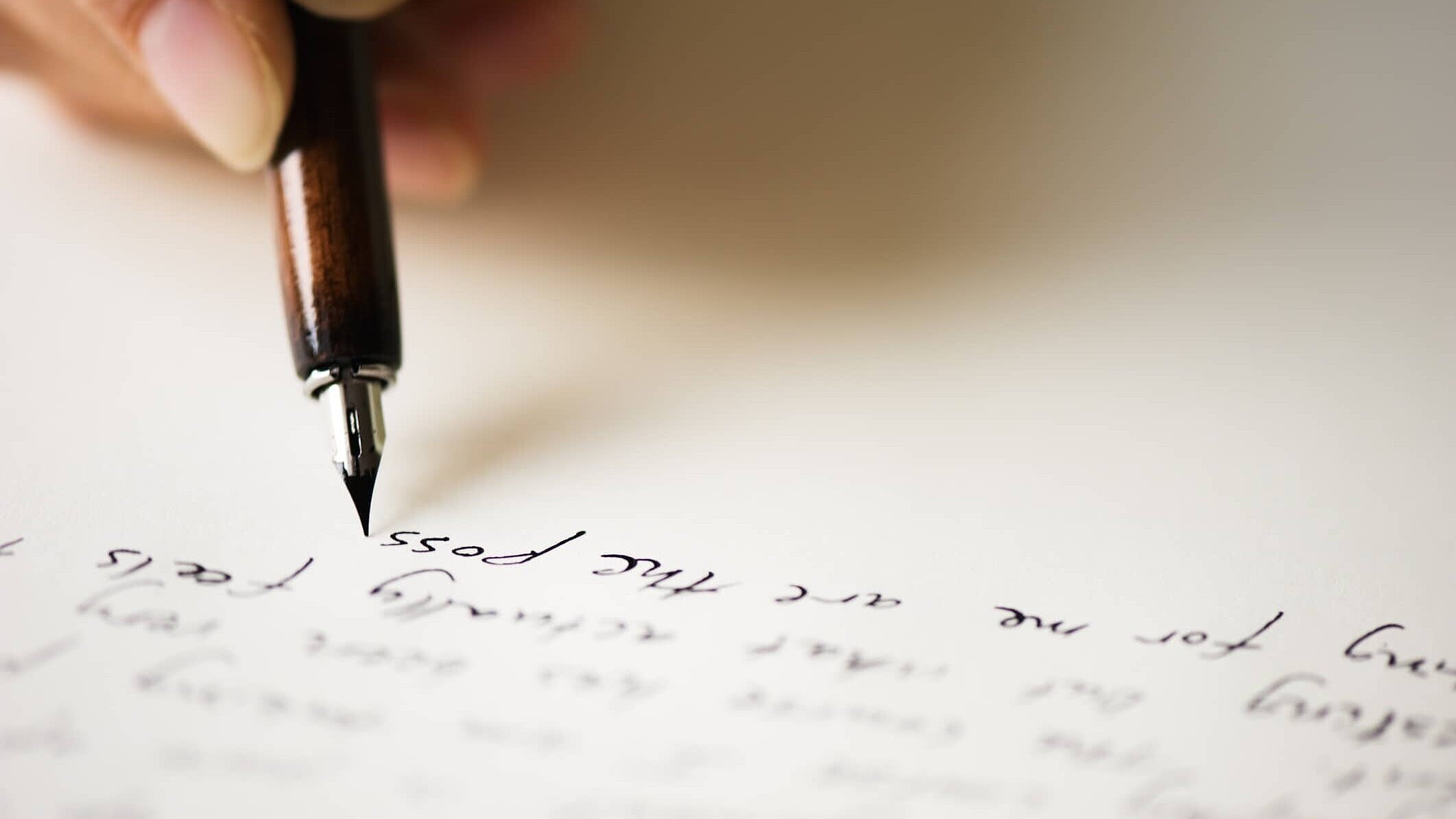
The cultural revolution - paper loses its key position
Today, writing takes place more and more in the public space of the Internet. Tweets, posts, opinions, recommendations, blogs, forums. Those who take part can act multifunctionally - as content producers, as recipients of content offerings, as "publishers" of manuscripts via print demand services. Everyone has the opportunity to potentially position themselves as a media brand and gain fans, subscribers and reach. The range of channels is diverse and the barriers to entry are low. This may make it easier to say goodbye to the haptic experience of paper: "Paper can be folded and creased, crumpled and cut, torn and burnt, covered on both sides with numbers, letters and lines, put away and pulled out again, sent or hidden. It comes in a variety of formats and qualities, from slips of paper to folios, from wrapping paper to decorative paper." (White Magic - the Epoch of Paper, Lothar Müller, p. 12, Hanser Verlag Munich, 2012).
Today, writing takes place more and more in the public space of the internet. Tweets, posts, opinions, recommendations, blogs, forums. Those who take part can act multifunctionally - as content producers, as recipients of content offerings, as "publishers" of manuscripts via print demand services.
WHAT ARE DIGITAL VALUES WORTH?
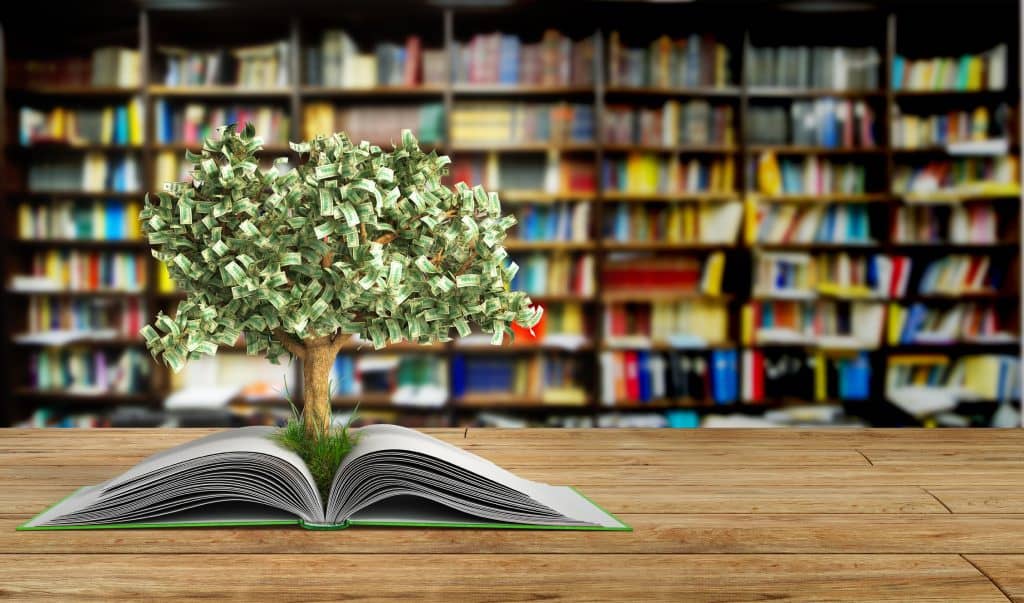
Paper allows for manual and processing diversity, which has produced true works of art and high-quality print objects of inestimable sentimental as well as financial value. Like historical books by Galileo or Copernicus, for which top prices are offered. It's hard to imagine that digital formats could even come close to achieving such values. In contrast to paper, digital formats are one-dimensional in their handling. As a user, I move around on a spatially consistent surface despite the features - unless I use 3D glasses. But simulating reality is only an as-if. Whereas I can "turn the page". Opinions on digital learning differ among educationalists and perceptual psychologists. Does it harm the creative sense or does it promote creativity? Are reception aesthetics determined today by intuitive use and displays? However, a competition between analogue and digital media, between conventional learning and e-learning, between paper and electronics does not clarify the question of whether we also want to replace handwriting and the use of paper with displays and apps. And whether we can change this at all.
THE LONG-TERM MEMORY OF PAPER
Digital media with exorbitant storage capacities are taking the place of the paper chronicler. In an interview with Liane von Billerbeck on Deutschlandfunk, Lothar Müller said: "So one of the important functions of paper was not only as a medium of expression for artists, but also, after all, as a storage medium that also allows long-term transmission (...) Libraries digitise pretty much everything, and that's a good thing, but at the same time they don't throw away the paper collections they have, of course, and that's also a sensible undertaking, because older paper in particular is capable of long-term preservation, so to speak, and these capabilities of paper (...) have, I think, helped it to penetrate all the capillaries of society." (What would art be without paper? Lothar Müller in conversation with Liane von Billerbeck 28/03/2017). The penetration of the "capillaries of society" (ibid.) also becomes clear in the example of a thought experiment by the writer Paul Valéry, to which Lothar Müller refers in his book "White Magic - the Epoch of Paper" - based on a microbe that destroys all paper in the world. Valery was alluding to the importance, "indispensability and omnipresence of paper in civilisation".
Libraries digitise pretty much everything, and that's a good thing, but at the same time they don't throw away the paper stocks they have, of course, and that's also a sensible undertaking, because older paper in particular is capable of being handed down over the long term, so to speak, and these capabilities of paper (...) I think that has contributed to the fact that it has penetrated all the capillaries of society in this way. from: Lothar Müller, White magic - the era of paper
A world without paper? Conceivable, but not desirable.
Against this background, we need to consider whether all the talk of the paperless office and the replacement of paper by digitalisation can be reduced to a market and competitive development? Or whether we can even imagine and want paper to disappear from the education, information and communication society? This question makes me a little nostalgic. To be honest. Although I have experienced the cultural change at first hand - the communicative socialisation change from handwriting to digital, from typewriters to laptops, from hours of excerpting in university libraries to digital research in online libraries and archives - a life without paper is unthinkable and undesirable for me. Today, I own two laptops, two smartphones, an e-book reader, a tablet and still have my library with almost 1,000 books. These still guarantee an electrifying haptic reading experience for me, in which I continue to add my post-its, notes and slips of paper. As my personal trademark.
Author: Klaus E. Jopp
https://www.jopp-communications.de/
Sources:
White magic - the era of paper, Lothar Müller, p. 12, Hanser Verlag Munich, 2012
What would art be without paper? Lothar Müller in conversation with Liane von Billerbeck 28/03/2017 https://www.deutschlandfunkkultur.de/digitales-zeitalter-was-waere-kunst-ohne-papier.1008.de.html?dram:article_id=382415
Cover/photos: iStockphoto: Eerik, Noska, doomu