"Beeswax cloths are an awareness-raiser"
24.11.2020 - Today, everyone is talking about beeswax wraps. But when Rosa Binder asked her husband Benedikt Wurth to make a beeswax wrap for her in 2014, the eco-wraps were still largely unknown in Europe. Here, the couple from the Waldviertel region in Austria explain what was particularly important during development - and why the Jausnwrap is more than just a product.
in 2014, Rosa's sister raved about beeswax wraps from America. Rosa was immediately fascinated and wanted to have one herself. However, ordering from the USA was out of the question. After all, for Rosa and Benedikt, what you can make yourself, you will make yourself. They were also already familiar with beeswax as a material. Benedikt's grandfather and father were already beekeepers, and his grandmother and mother sold homemade beeswax candles. Benedikt was no exception, although in the end he was particularly enthusiastic about making ear candles. This was very practical, as the cotton fabric and wax for the beeswax cloths were already in the house.
"It was a lot of fiddling around at the beginning." Benedikt Wurth
The plan to set up a company only developed gradually, and it took two years from the idea to the business. After all, the two were never interested in making a career or amassing wealth. Having more, earning more - growth, growth, growth, the basic pillars of capitalist activity - were of secondary importance to Benedikt and Rosa. Instead, they always approach new projects with a certain carefree ease - also in financial terms. If less money comes in at times, they simply spend less. The choice of the "right" raw materials was much more important to them than a business plan and the like. They had to be regional, sustainably produced, free from harmful substances and, last but not least, the honey had to come from species-appropriate beekeeping. "We didn't want to launch yet another product on the market just to launch another product on the market. It was extremely important for us to question where the added value lies and to do things differently - perhaps even better," emphasises Benedikt.
Take a close look at the raw materials - a must in the production of beeswax wraps if the product is to be taken seriously.
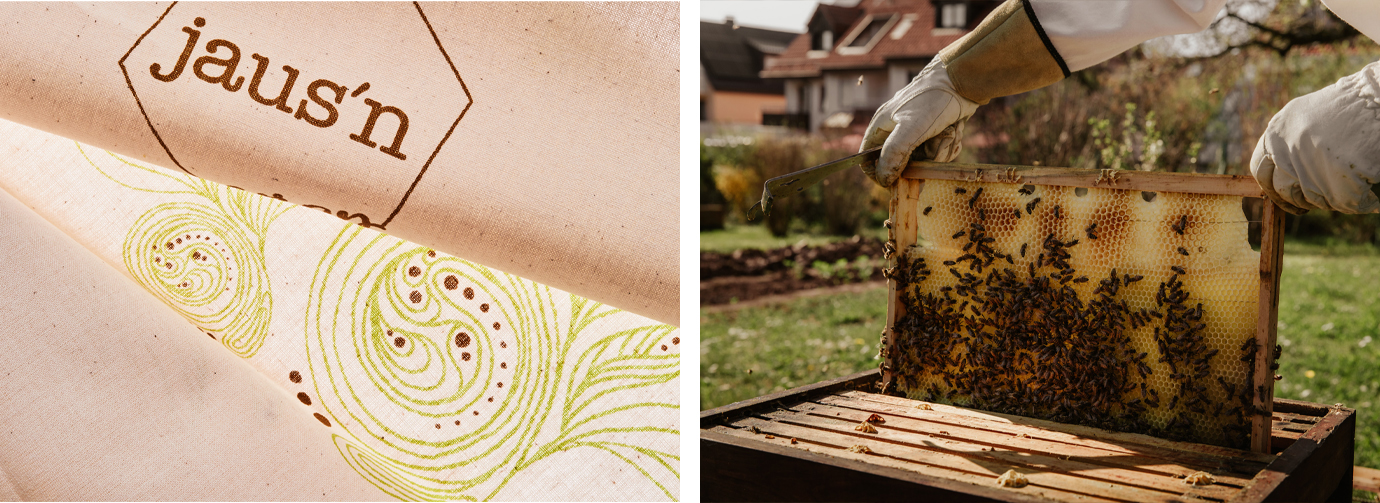
This marked the beginning of the search for the "right" producers who can provide evidence of the relevant organic certifications - starting with the beekeepers. On average, a bee colony has to toil for a year to produce one kilo of beeswax. If large quantities of beeswax are needed, that means a lot of bee colonies. It makes a big difference whether the beeswax comes from anonymous beekeepers in New Zealand or Irmi from Austria. Benedikt and Rosa really do know every beekeeper personally and can therefore be sure that the animals are treated appropriately. Regionality also means short transport routes, which of course also has an impact on the ecological footprint of the product. "Traceability at Jausnwrap goes so far that we can show customers which beekeeper the beeswax in their wrap comes from based on the batch number," explains Rosa.
As pioneers, we probably sometimes had a harder time than those who followed in our footsteps
The product and process development of the beeswax cloths was not always easy for the founding team. This was also due to the legal requirements. Precisely because they were the first in Europe, the authorities were particularly suspicious. For example, when it came to the viewing window. This is actually not permitted, as impurities could get onto the fabric. "Sometimes I have to smile when I see this with other manufacturers," admits Benedikt. However, they did not find the regulatory focus to be a bad thing. "On the one hand, it wasn't always easy, but on the other hand, we could be sure that we were really complying with all regulations and provisions and bringing a flawless product onto the market. This means safety for our customers, but also for us as producers," explains Rosa. The same hygiene regulations apply to the production of Jausnwrap as in the food industry. In addition, every batch is tested for toxins. This starts with the raw materials, because even if the wax comes from organic beekeepers, for example, the busy bees from conventionally cultivated fields could have carried pesticides into the hive. The colour on the cloths can also be tricky in that wax can absorb and pass on substances. However, Rosa gives the all-clear: "All cotton fabrics are IVN Best certified - from harvesting to printing. And to be absolutely sure, our beeswax cloths are tested, tested and tested again in the laboratory from the material to the end product."
IVN Best organic cotton is an even stricter certification than the more common GOTS. IVN Best certification means
- no use of pesticides, insecticides and artificial fertilisers
- no residues in the textiles made from them
- no leaching of the soil through monocultures
- no genetically modified varieties
- long-term preservation of soil fertility
- Consideration of social criteria

"The enthusiasm was simply amazing - it really pushed us." Benedikt Wurth
Benedikt and Rosa only had a relatively modest amount of wax cloths and flyers in their luggage for their first design market - after all, they didn't know how popular it would be. They never expected to be sold out after two hours. But that's exactly what happened. Even today, the two of them still rave about how enthusiastically the scarves were received. "There was a lot of uncertainty beforehand, which made the rush of people all the more surprising and wonderful," says Benedikt. The dialogue with their customers is very important to them. They deal with questions and feedback personally. Most of the feedback is positive. But they are also happy to accept constructive criticism - after all, nothing in the world is all black and white. What Benedikt sometimes wonders about is the frequent concern that there could be pesticides in the wax. "We poison the whole world and then think that the most natural things could make us ill with toxins. The consequence should not be not to use wax, but to change agriculture," he says, becoming very serious.
"We still produce on our local former farm. " Rosa Binder
During production, the carefully selected cotton fabrics are dipped in a wax bath. In addition to beeswax, this contains antibacterial tree resin from the black pine and sunflower oil from the region. Other manufacturers use jojoba oil for their beeswax cloths - often from Israel. Although this has many positive properties, it is not actually authorised by law as a food contact material in Austria and Germany. In principle, any company can request this authorisation from the state authorities. But why take the long route with an uncertain outcome when a good alternative is so close at hand?

"What do I like to use it for? The question is rather: What don't I like to use it for?" Rosa Binder
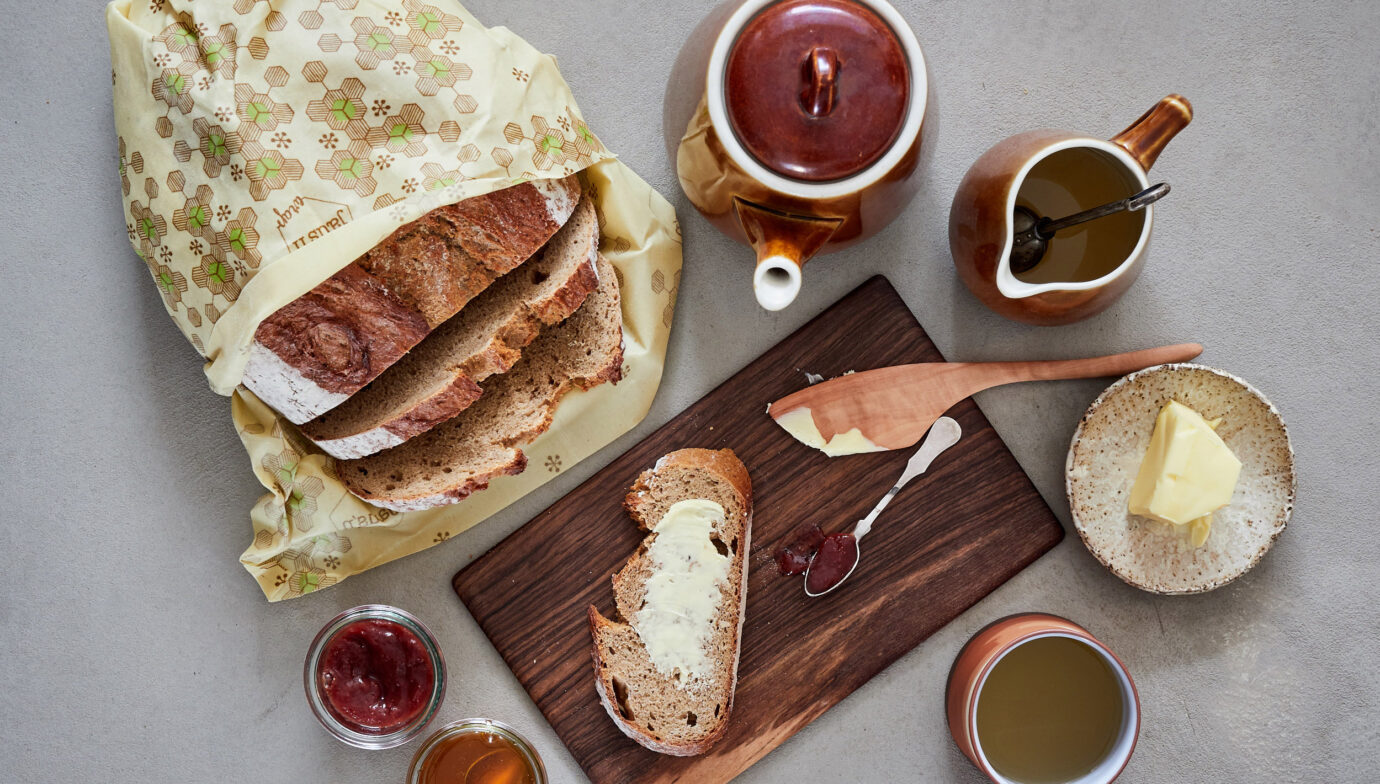
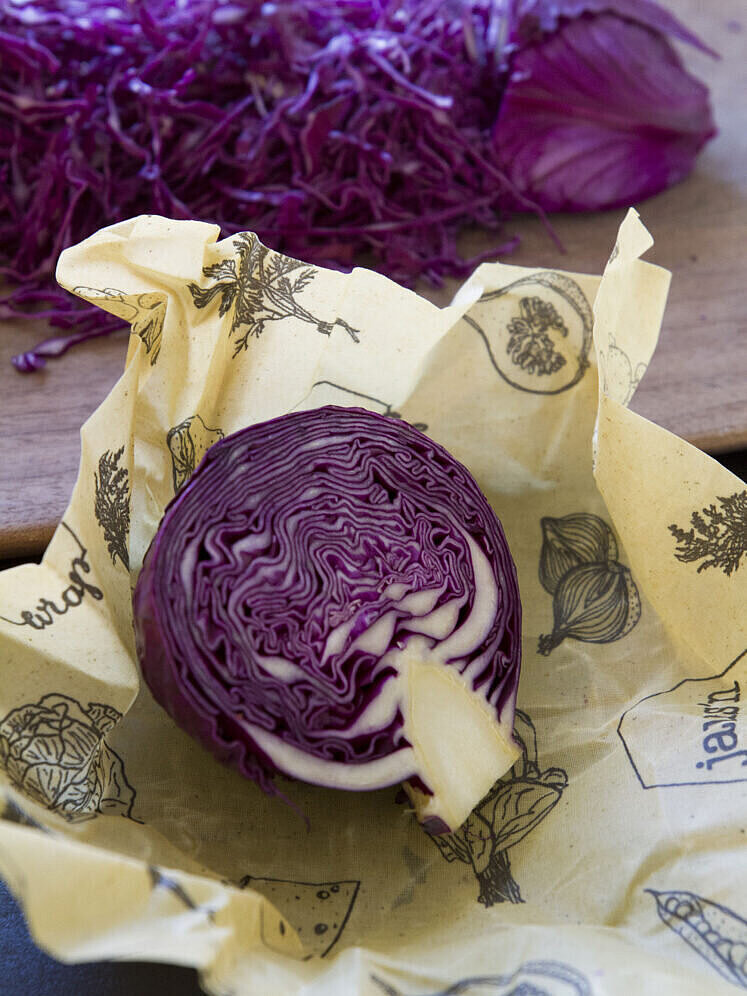
Jausn actually means snack or sandwich. But whether it's the fridge, freezer or bread compartment - food is wrapped in Jausnwrap throughout Benedikt and Rosa's kitchen. Only foods that are hygienically delicate, such as raw meat, should be avoided. Overall, it helps to be more careful with the food you pack. Benedikt and Rosa hope that this will give their customers a stronger connection to food and teach them how long something will keep for, rather than just following expiry dates.
"When you try it out, you quickly realise to what extent the cloth fulfils the desired purpose." Benedikt Wurth
Benedikt and Rosa realise that there are people for whom beeswax wraps are not for them - and that's okay. After all, not every customer has the same expectations and wishes. This also applies to durability. Some use the beeswax cloth for a year and then no longer find it attractive enough, while others still enjoy it after three years. The beeswax wrap has definitely outlived its useful life if it has come into contact with mould, smells unpleasant or has stains that can no longer be removed. A little tip: simply use the old beeswax wrap as a barbecue or chimney starter. Not only does it work well, it also smells great.
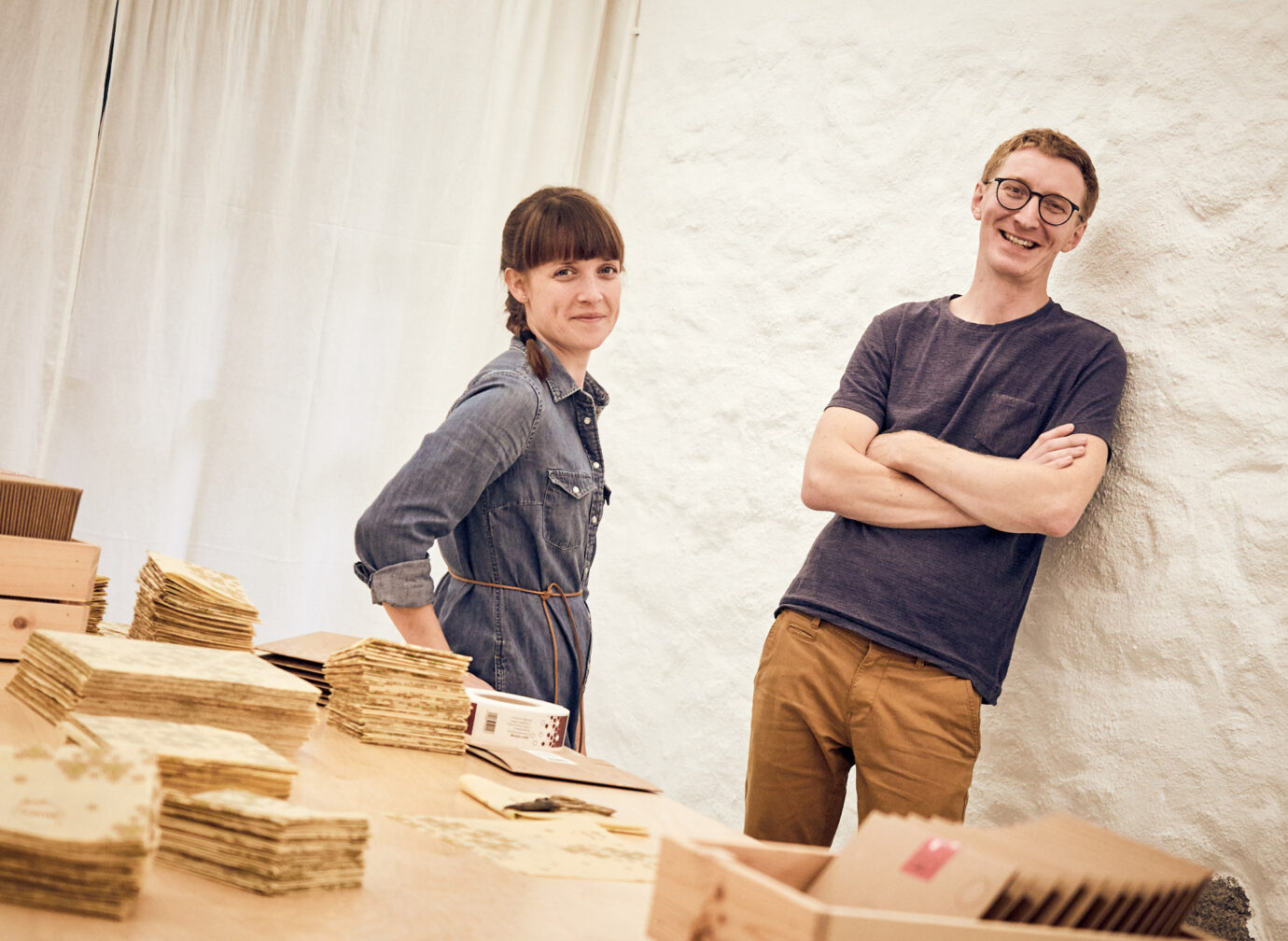
"If someone is unlucky and a food item has gone mouldy and the wrap is no longer usable, we send them a new one. After all, we want our customers to enjoy their Jausnwrap for a long time." Rosa Binder
So far, there is no climate or life cycle assessment that shows how beeswax wraps compare to cling film. In principle, the longer the wrap is used, the better it performs. Good care is therefore particularly important. When not in use, it is best to store it in its packaging. For oily dirt, wipe the surface with a little soap. If the Jausnwrap has a few crumbs on it, we recommend washing it in very cold water. This makes it quite hard and easier to clean. It is - of course - not dishwasher or washing machine safe.
"Hopefully beeswax cloths will never become a mass product." Benedikt Wurth
How will the packaging market develop in the future? The two are certain that the discrepancy between what customers want and what the market can supply will become ever greater. If only because many laws, some of them sensible, do not allow packaging to be dispensed with in many places. The beeswax wrap cannot and should not close this gap. "After all, it's more than just packaging," explains Benedikt. "Beeswax wraps are awareness-raising. That's their niche, and they're welcome to make themselves at home there." They are therefore all the more pleased that innovative alternatives are being researched in many places.
Pictures: Jausnwrap
Author
Valerie Bachert is a journalist, chief of staff and sustainability officer. She is interested in the areas of organic farming, conscious consumption, species extinction, social injustice and sustainable nutrition.