A sustainable triangular relationship
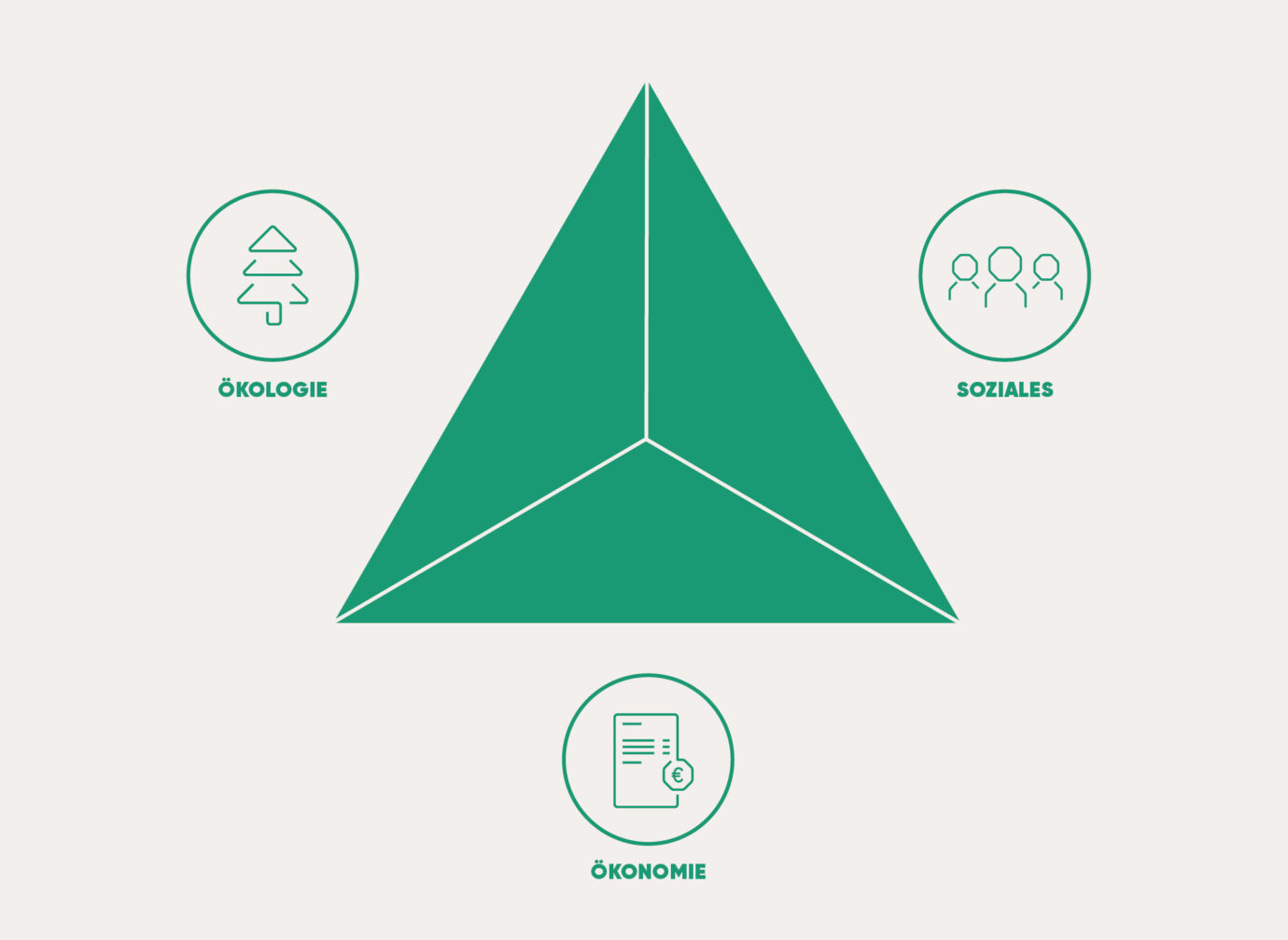
03.08.2021 - The sustainability triangle not only serves to symbolise the three dimensions of sustainability: ecology, economy and social issues. Rather, it is an approach and set of tools to show whether projects actually fulfil all criteria in equal measure. We take a closer look at the dimensions and examine whether the triangle works as a template for holistic sustainability.
Sustainability - for many people, this immediately conjures up images of climate and environmental protection. But the term has a much broader meaning. Basically, it refers to action parameters that serve to fulfil needs and yet ensure the regeneration of the resources used in the process. The United Nations Brundtland Report from 1987 already confirms the importance of such an orientation: "Sustainable development is development that ensures that future generations will be no less able to meet their needs than those living today." Sustainability has thus established itself as a guiding principle for political, economic and ecological action. The three sides of ecology, economy and social issues form the foundation for sustainable development. As all three areas are interdependent, the result is a visual triangle with mutual spheres of influence. It shows how economic and social developments must be harmonised with the environment and social interests in order to offer the current generation and, above all, future generations a perspective worth living in.

Ecology as a comprehensible unit
The ecological aspect remains the most obvious. The protest movement of a predominantly young generation and the accumulation of climate policy decisions show the relevance of this aspect in the sustainability triangle. First and foremost, this is about acting in an ecologically sustainable manner by conserving resources and, above all, using them in a targeted manner. The basic principle is that sustainable ecology can only work if people do not use more resources than can be regenerated in the same period of time. This principle is particularly well illustrated by the example of deforestation: If more trees are felled than can grow back, the ecosystem becomes unbalanced, which in turn leads to higherCO2 pollution.
One approach to improving this is the circular economy, which involves recycling materials that have already been used in production processes and minimising the use of natural resources. However, the use of renewable energies, increased energy efficiency and energy-saving models also contribute to a reducedCO2 footprint. An ecologically sustainable agenda also includes the protection of species and the preservation and expansion of habitats for flora and fauna. Ultimately, it is up to the individual to question their own consumer behaviour and make appropriate adjustments.
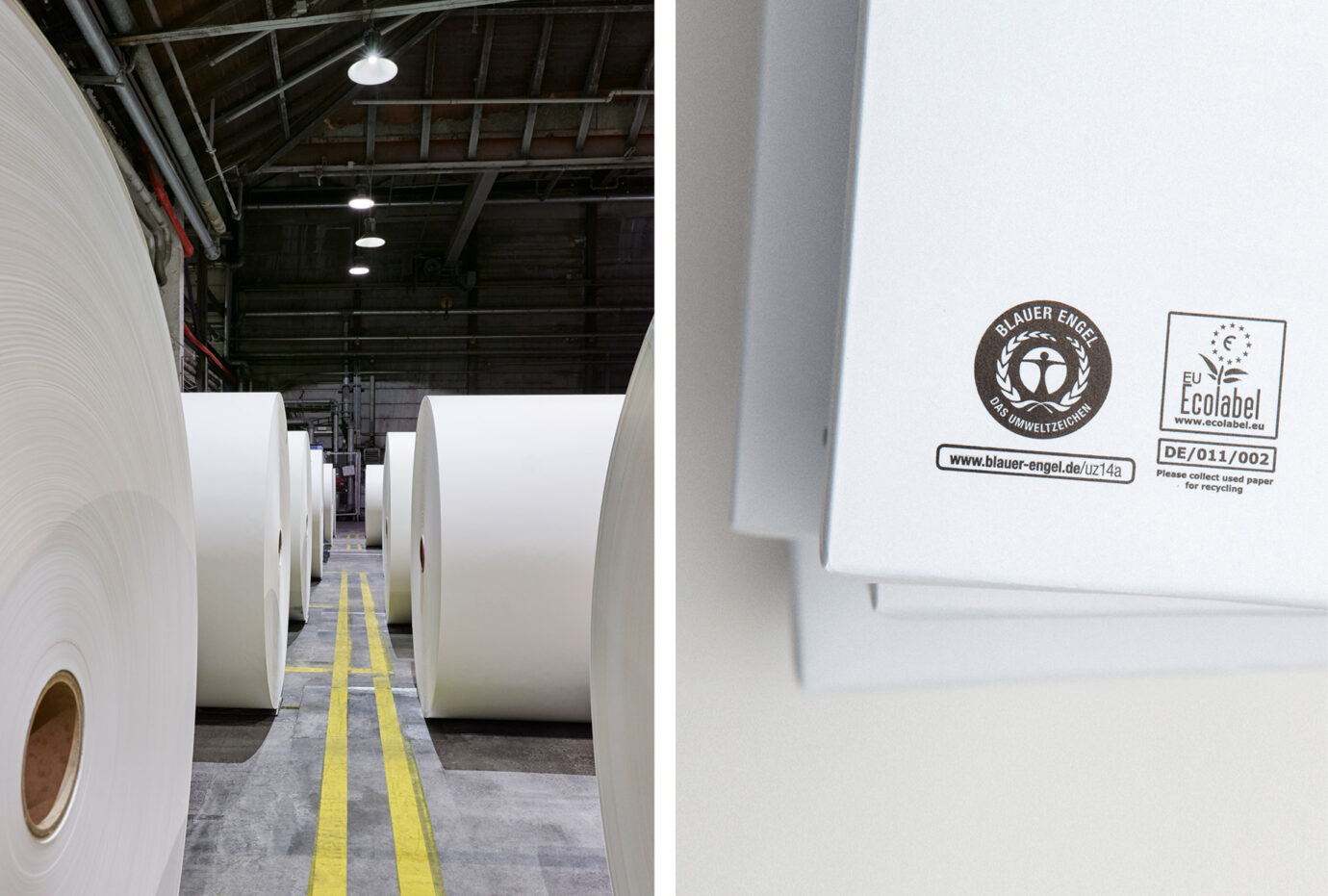
Criteria for economic sustainability
Economic systems in the 21st century have to face the challenges of resource scarcity, climate change and socio-economic instabilities such as financial crises or, more recently, pandemics. However, these fundamental changes also offer opportunities for companies to finally rethink. After all, they are the ones who have a decisive influence on society and the environment.
This could be thoughts on sustainable economic development, which aims to harmonise social, ecological and economic interests. Ergo: Economic growth no longer exists at any price. Companies need to broaden their perspective and set their sights on a long-term goal in order to create an economy that benefits everyone. Sustainable structures that incorporate all aspects are important for this: Cooperation that brings companies and people together, health management services for employees, consumer protection through voluntary certification systems, the promotion of biodiversity, optimisation of transport routes and the responsible use of resources in general.
And the advantages for companies are obvious:
- Cost reduction: sustainability or efficiency is also synonymous with lower costs.
- Greater transparency: Non-governmental organisations are paying more and more attention to how sustainable companies are. This creates a positive external image that is recognised and communicated by the relevant interest groups.
- Long-term customer loyalty: When purchasing products, customers are paying more attention to whether certain sustainability criteria are met in the company and in production. This is primarily about long-term relationships based on trust.
- Role model function and image: Sustainable business practices give companies a competitive edge, as they become more attractive to potential employees, consumers and ultimately the market.
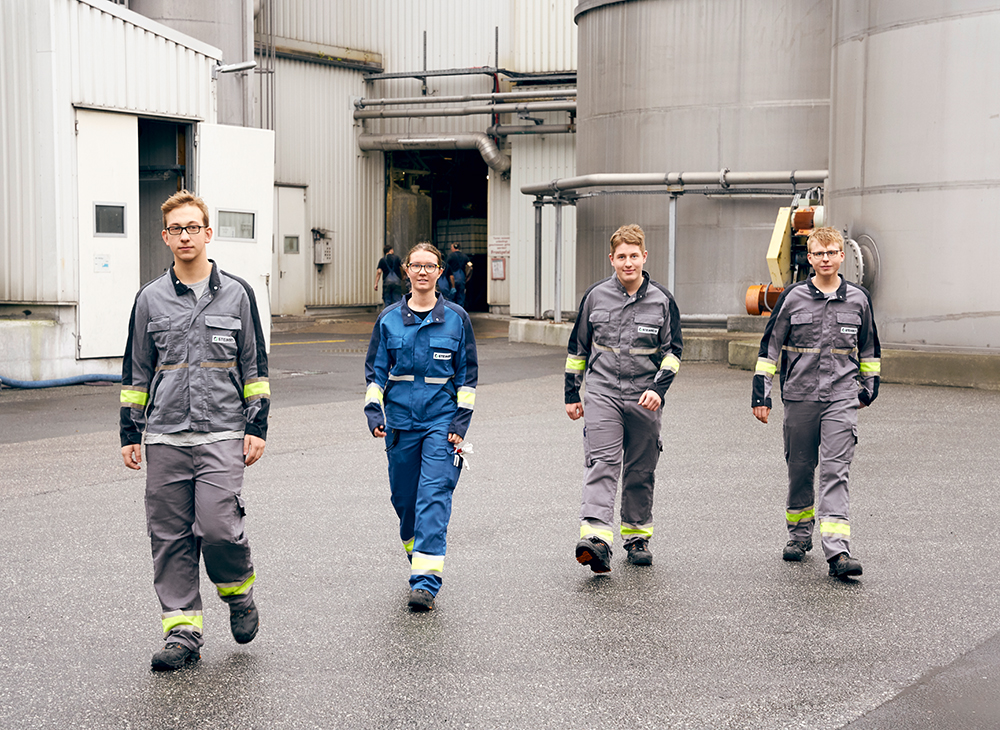
Social sustainability
The third page describes the social component of sustainability. The focus here is on the social values and systems of a society. Human rights, gender equality, access to education, labour and other resources are an indicator of social sustainability. Broken down to companies, social sustainability describes the way employees are treated and the dialogue with interest groups.
How the sustainability triangle works
When the three sides of equal length are joined together, an isosceles triangle is formed. The three dimensions of ecology, economy and social issues form the construct of sustainability in equal measure. The triangle is therefore an ideal tool for critically scrutinising projects and other entrepreneurial plans and checking their actual sustainability. One example illustrates the interdependence of all three dimensions: Recycled paper produced in cycles protects natural resources (ecological dimension). Energy-efficient production and innovative technologies make it possible to offer recycled paper in high quality and at an adequate price (economic dimension). The resulting economic success protects a company's jobs (social dimension). All sustainability criteria are therefore fulfilled.
The sustainability triangle combines the most important aspects. Critics believe that a political dimension could complement the triangle, as it has a massive impact on people's quality of life. Ultimately, it also combines all three aspects of sustainability and thus has an integrative effect in all areas.
Cover picture: Sally Anscombe/Getty Images
Sources:
www.oncampus.de/blog/2020/02/05/oekonomische-nachhaltigkeit-warum-auf-einmal-alle-darueber-reden/
https://projekt-enera.de/blog/was-ist-das-nachhaltigkeitsdreieck/
https://www.nachhaltigkeit.info/artikel/definitionen_1382.htm
Author

As a senior editor, Benjamin Seibring specialises in developing content on sustainability, mobility, technology and lifestyle. An editorial traineeship at a German media group and his many years of experience in corporate publishing form the basis. With a high affinity for trend topics and innovative AI tools, he implements cross-media storytelling.